


More news on this day
Travel across Europe faced fresh disruption today as extensive delays and a handful of cancellations at Paris Charles de Gaulle Airport rippled across the network, stranding passengers from Munich to Edinburgh and forcing last minute schedule changes for airlines including Air France, Aegean Airlines, HOP!, Malaysia Airlines and EgyptAir.
Get the latest news straight to your inbox!
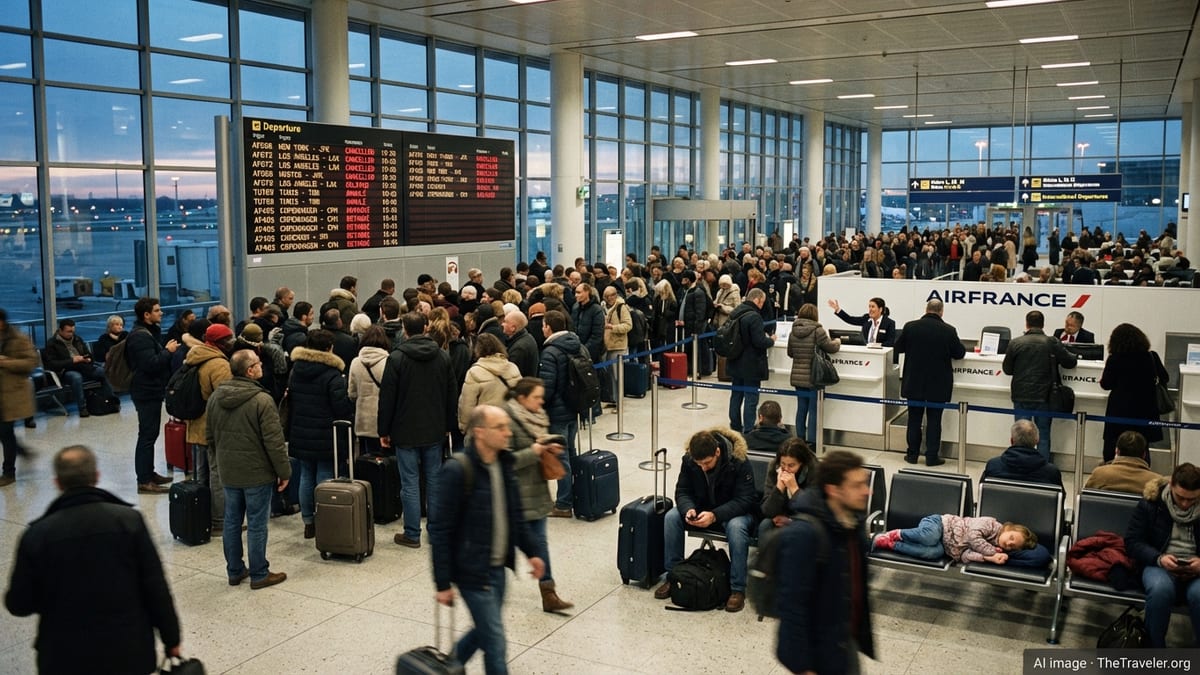
Delays Mount as Operations at CDG Falter
Publicly available flight tracking data and airport information boards on Wednesday indicate that operations at Charles de Gaulle have been hit by a wave of disruptions, with around 95 services running significantly late and at least two flights cancelled outright. The pattern of irregular operations has affected departures and arrivals throughout the day, building queues at gates and service desks and putting pressure on connection times for onward journeys.
Live status feeds for Air France show a cluster of services from Paris to major European cities either delayed or cancelled, with some mid-morning and early afternoon departures to destinations such as Munich and Hamburg marked as cancelled rather than retimed. Partner and codeshare services operated in conjunction with other global carriers have also been caught up in the disruption, widening the impact beyond Air France’s own network.
Other airlines using Charles de Gaulle, including regional unit HOP! and international partners such as Malaysia Airlines and EgyptAir, have experienced knock-on delays as they rely on shared facilities, ground handling and connecting passenger flows. Real-time tracker data reflects late departures on several routes that feed into or out of Paris, illustrating how even a small number of outright cancellations can cascade into broader schedule instability.
While no single official cause has been attributed in publicly accessible information, recent analyses of European air travel have pointed to a combination of factors that can trigger such episodes, including resource constraints, tight aircraft rotation times and weather-related flow restrictions that build progressively through the day.
Network Effects Reach Munich, Birmingham and Edinburgh
The disruption at Charles de Gaulle has been felt most acutely on European short-haul routes, where tight turnarounds and frequent services leave little room to absorb delays. Flight status boards show Paris links to cities such as Munich operating with extended delays, and at least one scheduled service on the route listed as cancelled, forcing passengers to rebook on later departures.
Connections between Paris and the United Kingdom have also been affected. Routes serving Birmingham and Edinburgh, typically operated under the Air France and HOP! brands, show a mix of delayed arrivals and departures, contributing to longer waiting times in terminals and uncertainty for passengers with onward rail or air connections. Even when flights continue to operate, extended taxi times and ground holds have pushed some services well beyond their planned arrival windows.
For many travellers, the complications at Charles de Gaulle are not limited to a single leg. The airport’s role as a major European hub means delays on the Paris end can disrupt itineraries that begin or end far from France. Passengers starting journeys in the United Kingdom, Germany or the Nordic countries and relying on CDG for onward connections to the Mediterranean, North Africa or long-haul destinations face increased risks of missed connections and unplanned overnight stays.
Travel forums and social media posts monitored today highlight cases where late inbound flights into Paris have left insufficient time for travellers to clear transit formalities and reach their connecting gates, particularly during busy afternoon peaks. In some instances, carriers have been forced to reroute passengers through alternative hubs or rebook them on next-day departures.
Disruptions Spread to Copenhagen, Bordeaux and Beyond
The ripple effects have extended well beyond central Europe and the UK. Schedules linking Charles de Gaulle with Copenhagen, Bordeaux and other regional destinations show multiple services operating off-schedule, according to online airport information and airline timetables. Some departures have been retimed repeatedly throughout the day, while others have pushed into late evening slots.
At Copenhagen Airport, arrival and departure boards list several Paris services with altered timings, contributing to congestion in already busy terminals and creating additional coordination challenges for ground transport, hotels and airport services. Passengers with tight connections from Copenhagen onto domestic Scandinavian routes appear particularly exposed to the shifting schedule.
In France, Bordeaux and other regional cities served by Air France and HOP! have seen delayed inbound flights from Paris compress the time available for turnarounds and onward operations. Regional airports typically have fewer alternative flights than major hubs, meaning a single prolonged delay can leave travellers with limited options for same-day rebooking.
Airlines that codeshare on these routes, including partners from Asia and the Middle East such as Malaysia Airlines and EgyptAir, are also indirectly affected. Their customers, booked on through-tickets that rely on punctual CDG connections, may find their long-haul segments at risk if initial legs arrive late into Paris.
Aegean, Partner Airlines and Broader European Strains
Aegean Airlines, which maintains a presence at Charles de Gaulle through its services connecting France with Greece, appears among the carriers experiencing schedule pressure. While its core operations remain focused on routes to and from the eastern Mediterranean, tracker data and recent published coverage underline how intertwined European networks have become, with disruptions in Paris quickly affecting feeder traffic for carriers based elsewhere.
Across the continent, published analyses of recent months’ operations have highlighted recurring strains on airline timetables, including airspace constraints over parts of Europe and the Middle East, fluctuating demand patterns and the lingering effects of previous industrial actions and staffing shortages. When combined with localized issues at a major hub such as CDG, these broader pressures can sharply reduce the system’s resilience to even modest shocks.
For passengers booked with partner airlines such as Malaysia Airlines and EgyptAir on tickets that route through Paris, the result can be hours-long delays, misaligned connections and the need for last-minute itinerary changes. Airlines typically seek to re-accommodate affected travellers on later flights or via alternative hubs, but high summer-season loads limit the number of available seats.
Observers of the European aviation sector note that episodes like today’s highlight the vulnerability of hub-and-spoke networks when several carriers rely on shared infrastructure. Even where safety is not in question and aircraft are technically available, bottlenecks in ground handling, security screening or air traffic flow management can quickly lead to widespread schedule disruption.
What Stranded Passengers Can Do
Consumer information services and passenger-rights organisations advise travellers caught up in irregular operations at Charles de Gaulle to monitor flight status carefully through airline apps and official airport information pages, rather than relying solely on printed boarding passes. Flight numbers and departure times can change multiple times during disruption events, with gate information often updated close to boarding.
In the European Union, regulations such as EC261 and related national legislation set out entitlements to care, rebooking and, in some cases, financial compensation when flights are heavily delayed or cancelled. Eligibility depends on factors including the reason for disruption, the length of delay and whether a replacement flight is offered within certain time windows, and passengers are encouraged to review the specific rules that apply to their itinerary.
Travel experts also recommend that passengers stranded at intermediate hubs like Paris, Munich or Copenhagen document their experiences, keeping boarding passes, delay notifications and receipts for meals or accommodation. Such records can be important when submitting claims directly to airlines or, if necessary, to alternative dispute resolution bodies.
With peak summer travel approaching, the situation at Charles de Gaulle serves as a reminder of the value of building extra time into connections, especially when routing through Europe’s busiest hubs. For those yet to travel, checking current performance trends and considering more robust connection windows may reduce the risk of being caught up in future disruption episodes.