


More news on this day
Seattle’s Link light rail returned to service Sunday after a late-night derailment near the International District/Chinatown area halted trains for hours, disrupted overnight travel and triggered an emergency bus bridge across the core of the system.
Get the latest news straight to your inbox!
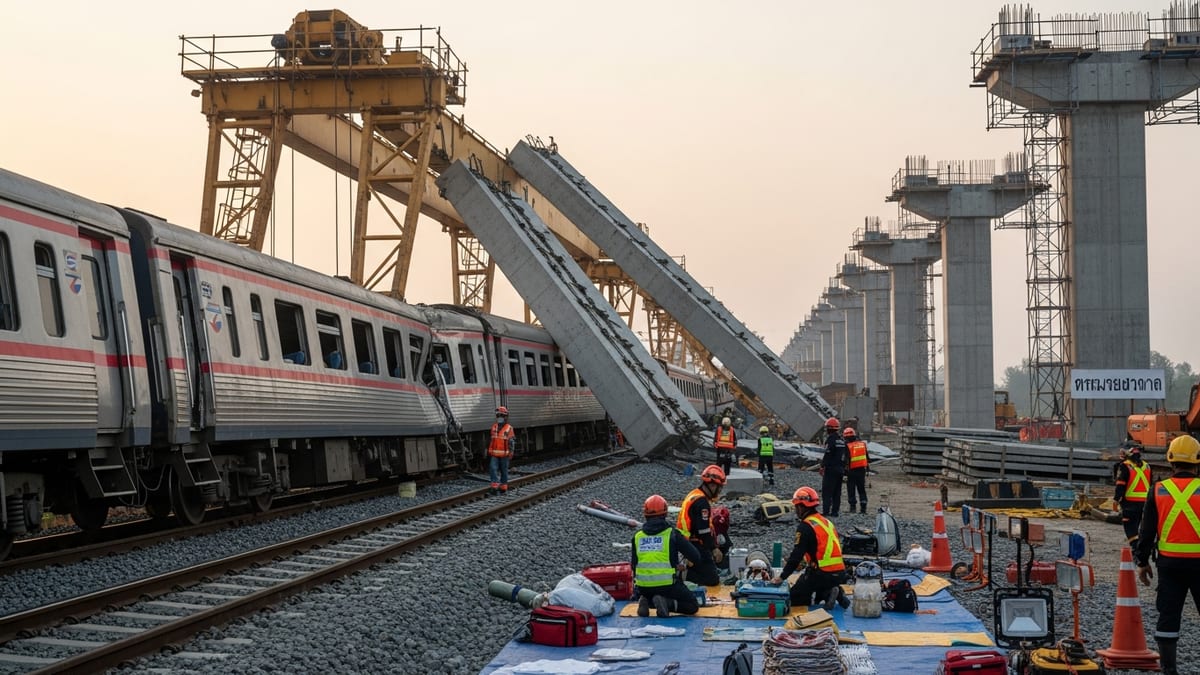
Service gradually restored after overnight shutdown
According to published coverage and rider accounts, a Link train derailed late Saturday night near downtown Seattle, prompting an immediate shutdown of service through the affected stretch. Trains were held at stations while power was cut in the area so crews could secure the trainset and inspect the tracks.
Publicly available information indicates that service was suspended on the main north south 1 Line for much of the night, with no trains running through the downtown tunnel while response and recovery work was underway. Riders reported being asked to disembark at nearby stations and transfer to street-level buses or other modes.
In the early hours of Sunday, Sound Transit alerts and local media reports began to note incremental progress, with test trains moving through the derailment zone and additional safety checks under way. By mid-morning, Link service had been restored, though trains initially operated at reduced speeds near the incident site and some trips remained delayed or crowded.
By midday Sunday, reports from riders suggested that headways had largely normalized, with full-length trains operating across the line and the temporary bus bridge standing down as regular service resumed.
Bus bridges and late-night riders face disruption
Because the derailment occurred late at night, many affected passengers were shift workers, hospitality employees and eventgoers returning home. Social media posts from riders described confusion as trains were abruptly terminated short of downtown and platforms filled with people waiting for replacement buses.
Transit alert pages and rider forums indicate that a bus bridge was assembled to link stations on either side of the closed section, mirroring the agency’s response to earlier track and power incidents. Buses ran along surface streets to connect key transfer points, but travel times were significantly longer than usual rail trips through the tunnel.
Some riders reported missing late-night connections to regional buses and airport-bound trains due to the extended travel times. Others described walking between downtown stations when bus shuttles became crowded. Several accounts noted that on-train and station announcements improved over the course of the night as the scope of the disruption became clearer.
As morning service ramped up and rails were cleared, the bus bridge was scaled back and rail operations took over the bulk of passenger demand. Even after trains returned, riders reported residual delays as the system worked through a backlog of early-morning trips.
Early indications point to infrastructure and vehicle checks
While a detailed cause analysis is still pending, publicly available statements and transit safety documents show that derailments on Seattle’s Link system remain relatively rare. Regional safety reports describe only a small number of derailment or near-derailment events since revenue service began, most linked to isolated equipment or track issues rather than systemic problems.
Images shared by riders after the latest incident show a train that appears to have left the rails at low speed near a junction, with at least one car slightly skewed relative to the track. There were no immediate reports of serious injuries, and passengers were able to evacuate under the guidance of agency personnel and first responders.
Published coverage indicates that engineers and maintenance crews carried out overnight inspections of the affected track, switches and overhead power system before allowing any trains to pass through under their own power. Test runs took place at reduced speeds, followed by closely monitored revenue trips as regular service resumed.
Transit safety specialists note that this kind of conservative restart protocol, with slow orders and intensive inspections, is standard practice after a derailment. The aim is to verify that rails, fasteners and train wheels have not been compromised and that any underlying mechanical issues have been identified before the corridor is fully reopened.
Riders question reliability as outages add up
The derailment comes on the heels of several other service interruptions affecting Link in recent months, including power issues, maintenance closures and earlier track repairs in the downtown tunnel. Rider discussions on local forums highlight growing frustration with recurring disruptions that can strand passengers or lengthen commutes without much warning.
Publicly available information from past incidents shows that Sound Transit has frequently relied on bus bridges and all-day or late-night shutdowns to complete infrastructure work and respond to unplanned outages. While these measures keep trains off damaged or under-maintenance sections, they can also create bottlenecks for people who depend on high-frequency rail service.
Some transit advocates argue, in blogs and community forums, that the system’s mixed alignment through city streets and constrained downtown tunnel leaves little redundancy when something goes wrong. Others point to the overall safety record of light rail, noting that when derailments do occur, they are usually low speed, with limited physical damage compared with highway crashes.
Despite the criticism, ridership data in recent years has shown steady growth as new extensions open and more neighborhoods gain rail access. The latest incident is likely to renew debate over how quickly Seattle’s light rail network can be expanded and modernized while maintaining day-to-day reliability for existing riders.
Focus turns to communication, safety and future upgrades
In the wake of the derailment, attention is turning to how the agency communicates with passengers and what changes might reduce the impact of similar events in the future. Rider accounts from Sunday highlight both the importance of real-time alerts and the challenges of providing clear, consistent updates across trains, stations and mobile devices during a fast-changing situation.
Transit planning reports for the region already emphasize investments in state-of-good-repair work, upgraded signaling and track components, and expanded late-night support services when rail is disrupted. The latest derailment is likely to feed into those planning efforts, adding pressure to strengthen monitoring of track conditions and vehicle performance.
For now, passengers are once again able to travel the length of the line by rail after hours of uncertainty. As weekday commuting patterns resume, many riders will be watching closely to see whether the system operates smoothly in the days ahead or whether Sunday’s derailment is followed by new waves of disruption.
How the agency balances transparent communication, robust maintenance and long-term expansion plans may shape public confidence in Seattle’s light rail for years to come, particularly as the region continues to lean on transit to absorb growth and reduce congestion.