


More news on this day
A serious collision between two southbound passenger trains near Bedford in Bedfordshire on June 19 has led to a major incident being declared, with at least one fatality, dozens of injuries and severe disruption to one of Britain’s busiest north–south rail corridors.
Get the latest news straight to your inbox!
What is known about the Bedfordshire train collision
Publicly available information indicates that the collision occurred on Friday afternoon north of Bedford, on the main line into London St Pancras. Reports suggest both trains were travelling southbound when they came into contact on the same stretch of track, in an area served by East Midlands Railway services linking the Midlands and northern England with the capital.
Tracking data cited in early coverage places the incident shortly after 5 p.m. local time, at a point where services accelerate toward London following departures from Bedford. Initial accounts from passengers describe a sudden impact that threw people forward in their seats, followed by visible injuries in several carriages.
Emergency services were dispatched in large numbers, including air ambulance units, with local police and fire services treating the crash as a major incident. Rail staff began evacuating passengers from the affected trains and from other services held on the line behind the collision, guiding them to safety along the tracks.
By early evening, regional and national outlets were reporting one confirmed death and multiple serious injuries. The full number of people affected remained unclear as rescue operations continued into the night and hospitals in the wider Bedfordshire and north London area received casualties.
Impact on rail services for domestic and international travellers
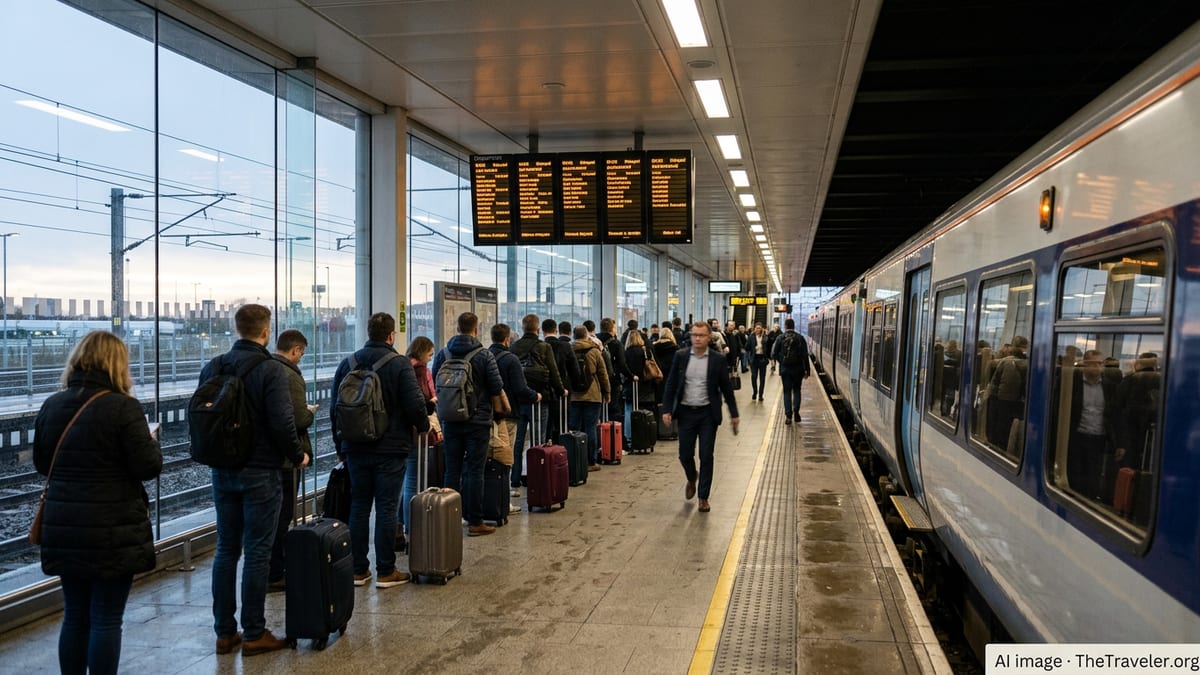
The crash has triggered widespread disruption across the Midland Main Line, a key corridor used daily by commuters, domestic leisure travellers and international visitors transferring between London and destinations such as Nottingham, Derby, Leicester and Sheffield. Services into and out of London St Pancras were suspended or heavily reduced, with trains held at stations far to the north to avoid adding congestion to the affected area.
For travellers arriving into London by air, the incident puts additional pressure on onward rail links. St Pancras sits alongside King’s Cross and is connected to Eurostar services to continental Europe, as well as Thameslink routes serving Luton Airport and Gatwick Airport. With parts of the network blocked near Bedford, passengers face extended journey times, diversions and last minute platform changes.
Rail operators introduced diversions where routes and capacity allowed, sending some services via alternative lines. However, the nature of the main line through Bedford means there are limited parallel options, and the need to keep the accident site clear for investigators has sharply curtailed train movements through the area.
Travellers planning to use the route over the weekend are being advised through journey planners and social media updates to expect cancellations, significantly longer journey times and possible replacement road transport. Those with flexible itineraries are being encouraged to delay non essential trips until the line is stable and clear.
Safety systems and early questions around the cause
Attention is already turning to how two modern passenger trains could collide on a heavily signalled and monitored section of main line track. Early online discussion among rail specialists has referenced the possibility of a signal being passed at danger, though this has not been formally established and remains subject to investigation.
Britain’s main line network is equipped with multiple layers of safety systems designed to prevent such incidents, including signalling protocols and technology intended to intervene if a train fails to respond to a stop signal. Previous collisions on similarly equipped routes have often led to detailed inquiries into the interaction between human decision making, signalling design and train protection systems.
In this case, investigators from the national rail accident body are expected to examine data recorders from the trains, signalling logs, trackside equipment and any maintenance records relevant to the section of line near Bedford. They are also likely to analyse braking performance, weather conditions and any reports of earlier technical issues.
Until those findings emerge, published commentary is treating any suggestion of precise causes as speculative. The priority on the ground remains the treatment of those injured, the safe removal of the damaged rolling stock and the protection of evidence that will inform long term safety lessons.
Local response and community impact in Bedfordshire
The collision has had an immediate impact on communities in and around Bedford, a town that sits at a strategic junction between London and the East Midlands. Roads near the railway were temporarily closed to allow emergency vehicles unhindered access, creating local traffic disruption alongside the rail shutdown.
Publicly available information shows that local hospitals instituted emergency protocols to accommodate incoming patients, while nearby community facilities prepared to support stranded passengers. Residents reported helicopters and sirens throughout the afternoon and evening as the response continued.
For many local commuters, the crash occurred on what would normally be a routine journey home toward London or northbound destinations. Social media posts from the area describe a sense of shock that such a serious accident has occurred on a line that thousands of people use daily without incident.
Community attention is now focused on support for the injured and their families, as well as on clear, timely information about when it will once again be possible to travel safely through the affected section of track.
What travellers should do in the coming days
Tourists and business travellers with plans involving London St Pancras and destinations along the Midland Main Line are being urged, through public travel updates, to check live information closely before setting out. Many rail tickets in Britain allow for travel on alternative routes when major disruption occurs, and operators generally relax restrictions in the immediate aftermath of serious incidents.
For those connecting from Eurostar or from flights into London, it may be advisable to consider alternate hubs and routes, such as services from London Euston, Marylebone or King’s Cross, depending on the final destination. Coach operators and domestic airlines may also see increased demand while rail capacity is reduced.
Passengers who were on the affected trains or on services delayed as a result of the collision are typically entitled to refunds or compensation under existing delay and cancellation policies. Details vary by operator, and claims generally require proof of travel such as tickets or booking confirmations.
Given the severity of the incident, disruption is likely to continue beyond the initial rescue phase, extending into the period when investigators and engineers work on site. Travellers planning to pass through Bedfordshire in the next several days should factor in additional journey time, flexible arrangements and the possibility of last minute changes as rail operators and infrastructure managers work to restore safe, reliable service.