


More news on this day
Passengers flying through the UK’s Manchester Airport faced fresh delays on Monday after an air traffic control technical fault disrupted parts of the network, according to multiple published reports, adding pressure to an already strained late-summer schedule.
Get the latest news straight to your inbox!
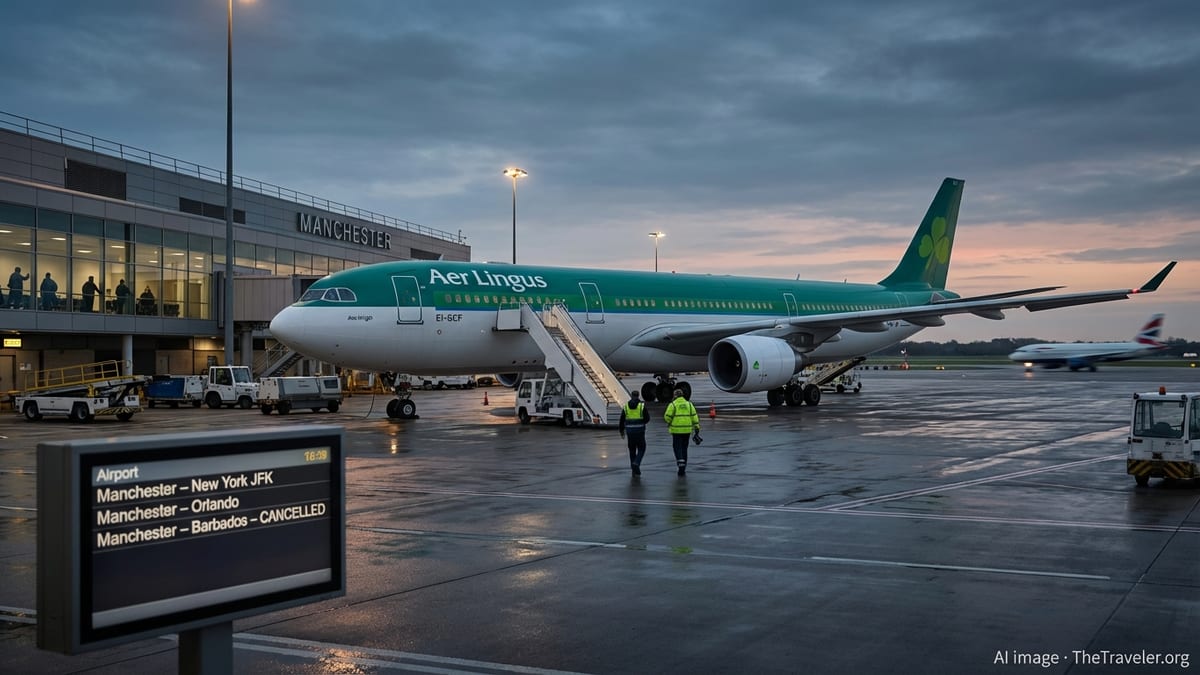
What happened at Manchester and what travelers saw
Published coverage indicated that departures and arrivals at Manchester Airport were affected by an air traffic control failure on September 21, 2026, with delays reported across parts of northern UK routes. While disruption levels varied by airline and time of day, the incident added to a run of reliability concerns across the UK’s aviation system this month.
Manchester is one of the UK’s busiest regional hubs, handling a dense mix of domestic services, European short-haul routes, and long-haul flights. Even when a fault is short-lived, knock-on delays can build quickly as aircraft and crews end up out of position and scheduled departure slots are missed.
Some coverage also pointed to wider impacts beyond Manchester, with several airports in the north and in Scotland seeing notable disruption. That pattern reflects how air traffic constraints in one part of the system can ripple into others when routes share the same high-level airspace management.
NATS technical issues have triggered repeated disruption in September
This latest Manchester disruption came less than two weeks after a larger UK-wide incident on September 8, 2026, when a technical fault affected the UK’s air traffic system and prompted widespread delays and cancellations across major airports. Publicly available reporting described that earlier event as significant enough to take days for airline schedules to fully recover.
NATS, the UK’s principal air navigation service provider, recently published preliminary findings on the September 8 incident, describing a software-related issue that led to restrictions being placed across the UK while systems were restarted and flight data reloaded. The report indicated the fault centered on flight processing, with operational impacts that spread well beyond the original affected area.
On September 21, additional published reporting described the day’s technical issue as another disruption affecting the wider UK network, with impacts reported at airports including Manchester. Coverage also referenced cancellation totals across the UK on Monday, underscoring how quickly a technical interruption can translate into real-world schedule reductions.
Why an ATC failure can slow flights even after systems recover
Air traffic control disruptions can lead to two different layers of travel pain: immediate stops or restrictions on departures, and a longer recovery period as airlines rebuild rotations. When aircraft are held on the ground or forced to depart later, that delay can cascade into later sectors, especially for aircraft scheduled to operate multiple flights in a single day.
Even if a technical fault is resolved quickly, traffic management restrictions may remain in place to keep airspace safe and orderly while flight plans and controller workloads normalize. That can mean slower departure rates, spacing requirements that reduce overall capacity, and uneven impacts depending on route, altitude, and direction of travel.
For a large airport like Manchester, the practical effect for travelers is that a short delay at mid-morning can become a missed connection by afternoon, particularly for itineraries transiting through other congested hubs. It can also affect baggage flows and gate availability if arriving aircraft land late and stands are occupied longer than planned.
Passenger rights and what to do if your Manchester flight is disrupted
For passengers, the first step is confirming real-time flight status with the airline operating the service and checking Manchester Airport’s live departure and arrival information before heading to the terminal. During ATC-related events, departure times can shift multiple times as slots are reassigned.
In the UK and EU framework, compensation eligibility often depends on the cause. The UK Civil Aviation Authority has previously emphasized that some air traffic control disruptions may be treated as “extraordinary circumstances,” which can affect whether standard compensation is due, even when airlines still have obligations around care such as meals, accommodation where required, and rebooking or refund options depending on the situation.
Travelers booked out of Manchester who have time-sensitive plans may also want to review whether their ticket includes same-day rerouting options via alternate UK gateways. In practice, availability can tighten quickly during network disruptions, so rebooking decisions tend to be most successful when made early, once the operating airline’s options are clearly presented in its app or customer service channels.