


More news on this day
Buenos Aires is grappling with severe air travel disruption as a wave of flight cancellations and delays at its two main airports ripples across Argentina’s domestic network, leaving travelers stranded and highlighting mounting strains on the country’s aviation and transport systems.
Get the latest news straight to your inbox!
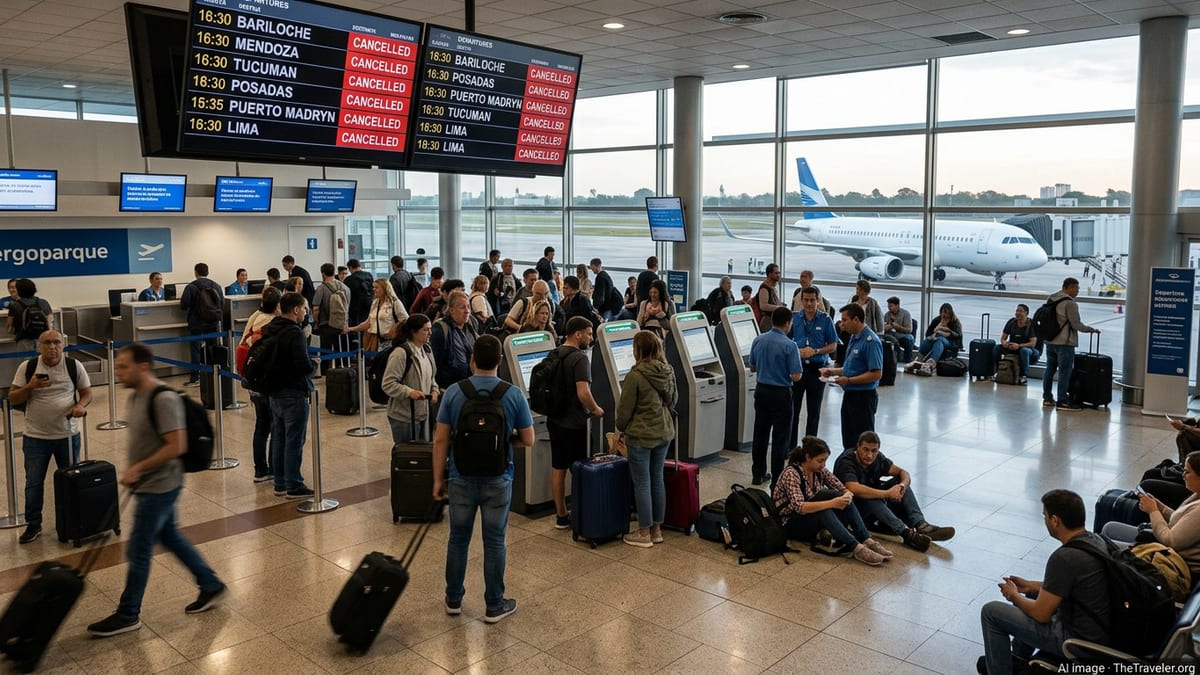
Heavy Disruption at Buenos Aires Hubs
On June 13, Buenos Aires’ twin hubs, Aeroparque Jorge Newbery and Ministro Pistarini International Airport in Ezeiza, experienced extensive schedule disruptions that affected a significant share of domestic operations. Live airport boards and flight-tracking platforms showed clusters of delayed and canceled flights throughout the day, particularly on routes linking the capital with key provincial cities such as Córdoba, Mendoza, Bariloche and Iguazú.
The disruption followed a difficult Friday in which dense morning fog over the metropolitan area severely reduced visibility. Published coverage from local outlets indicated that on June 12 several services were forced to divert from Ezeiza to Córdoba and Asunción, while a number of flights at low-cost carriers were canceled outright due to the weather and knock-on operational issues.
Although conditions improved by Saturday, the backlog of displaced aircraft and crew continued to push the system beyond capacity. Publicly available flight status information showed aircraft leaving Buenos Aires well behind schedule, with cascading effects for later rotations across the domestic grid.
The result was a patchwork of delays and cancellations that left passengers queueing for rebooking and compensation, and forced many to improvise alternative routes through secondary cities or overland transport.
Domestic Grid Under Mounting Strain
The latest turbulence comes at a time when Argentina’s domestic aviation network is already under stress. National flag carrier Aerolíneas Argentinas remains the backbone of internal connectivity, operating from hubs at Aeroparque and Ezeiza, but faces a complex operating environment that includes rising charges, volatile demand and infrastructure bottlenecks.
In early May, the International Air Transport Association published an analysis warning about steep increases in air navigation fees in Argentina, including a sharp rise in domestic charges. Industry groups argued that such cost pressures, combined with high fuel prices and currency weakness, risked forcing airlines to trim frequencies, consolidate routes or raise fares across the country.
Low-cost operators, which had expanded over the past decade to serve secondary cities and tourist gateways, are confronting their own constraints. Provincial regulators in Patagonia recently highlighted a pattern of repeated cancellations by at least one budget airline over the previous six months, imposing financial penalties and calling attention to reliability concerns on routes critical for regional tourism.
The convergence of these structural issues with acute weather disruption in Buenos Aires has amplified the impact on travelers. What might once have been a contained delay episode has instead exposed how thinly stretched the domestic grid has become, particularly at the start of the Southern Hemisphere winter season.
Travelers Face Complex Knock-On Effects
For passengers, the immediate consequences are missed connections, unexpected overnight stays and rapidly dwindling options. Reports shared through social media and travel forums over recent months describe a pattern of last-minute schedule changes, airport swaps within the Buenos Aires area and day-of-travel cancellations on popular routes such as Buenos Aires to El Calafate, Ushuaia and Puerto Madryn.
Those experiences appear to have intensified during the latest disruption, with travelers encountering rebookings that shifted them between Aeroparque and Ezeiza, or routed them through alternative hubs hours away from their original plans. In a country where many domestic itineraries involve tight connections to international departures, even a short delay can result in a cascade of missed flights.
The challenge does not end at the airport perimeter. The wider Buenos Aires transport network has been experiencing tension of its own, with bus operators in the metropolitan area warning of possible service reductions amid rising fuel and operating costs. Public statements from industry groups over recent weeks have floated the prospect of new work stoppages, adding another variable for travelers attempting to reach or leave the airports by road.
Combined, these factors have created a situation in which a single day of fog and operational disruption has evolved into a broader mobility crisis affecting both domestic tourists and residents who depend on air links for essential travel.
Wider Implications for Tourism and the Regions
The timing of the disruption is particularly sensitive for Argentina’s tourism economy. June marks the approach of the peak winter travel period for destinations such as Bariloche, Ushuaia and other Patagonian resorts, which rely heavily on steady airlift from Buenos Aires to feed hotels, ski areas and tour operators.
Provincial authorities and local business groups have repeatedly stressed that frequent cancellations and schedule uncertainty can discourage both foreign visitors and Argentines from committing to long-planned trips. Recent decisions by some carriers to suspend or scale back services to smaller cities have already raised concerns about reduced connectivity, higher prices and potential damage to regional development goals.
In this context, the latest wave of cancellations across Buenos Aires takes on added significance. Instead of an isolated weather event, it is being interpreted by many observers as another data point in a broader story of fragile infrastructure and financial strain in the aviation sector.
Tourism operators warn that if reliability issues persist, travelers may shift to alternative gateways in neighboring countries, or concentrate itineraries in fewer, better-served destinations, further weakening the business case for maintaining marginal domestic routes.
What Travelers Should Expect in the Short Term
Publicly available guidance from airlines and travel agencies underscores the importance of contingency planning for those flying into or out of Buenos Aires over the coming days. Passengers are being advised to monitor flight status closely, allow extra time to move between Aeroparque and Ezeiza if their itinerary involves both airports, and prepare for the possibility of last-minute schedule changes.
Industry analysts note that, while the immediate weather conditions that triggered the latest disruptions are temporary, the underlying cost and capacity pressures on Argentina’s aviation system are unlikely to ease quickly. That points to a period of continued volatility, with the potential for further localized episodes of severe disruption whenever operational challenges arise.
For now, travelers headed to Argentina’s interior are urged to build flexibility into their plans, consider overnight buffers before critical international connections, and stay informed through airline communications and local media. The current turmoil in Buenos Aires serves as a reminder that in Argentina’s stretched domestic grid, even routine winter fog can be enough to paralyze the country’s primary air gateway and ripple across the national map.