


More news on this day
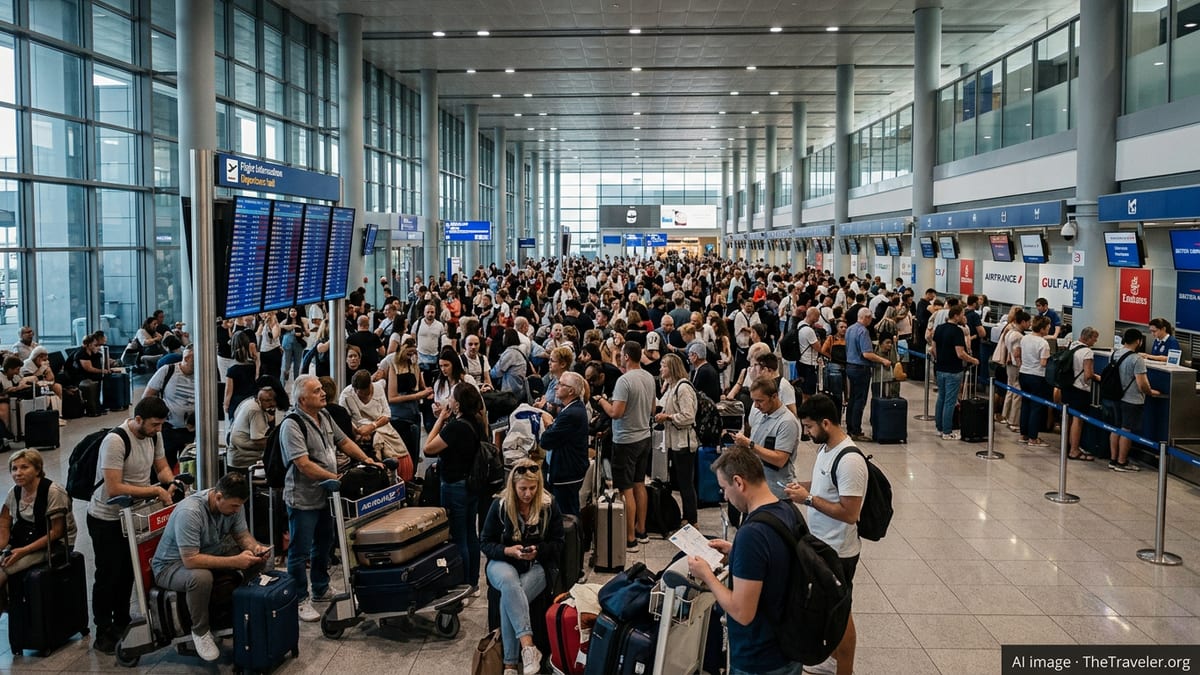
Travelers moving through Athens International Airport on June 3 faced a day of severe disruption, as publicly available flight-tracking data indicated 261 delayed departures and arrivals and four cancellations affecting services to major hubs including London, Paris, Rome, Berlin, Cairo and several regional destinations.
Get the latest news straight to your inbox!
Wave of Disruption Hits Greece’s Busiest Hub
The disruption at Athens International Airport unfolded across the morning and early afternoon peak, creating long queues at check in, security and boarding gates as airlines attempted to recover schedules. Operational data indicated that a broad mix of carriers was affected, with Aegean, Ryanair, Lufthansa and British Airways among those seeing multiple delayed rotations into and out of the Greek capital.
Services to primary European hubs such as London, Paris, Rome and Berlin bore the brunt of the delays, with knock-on impact on connecting itineraries further afield. Flights to Middle Eastern and North African destinations, including Cairo, were also affected as aircraft and crews arrived late into Athens and struggled to return to regular patterns.
While four cancellations represented a small share of the day’s total movements, the scale of delays created connectivity problems for passengers relying on tight transfer windows. Missed onward flights and disrupted itineraries rippled outward across airline networks, with some travelers forced to rebook for later in the week.
The disruption came during a period of sustained growth for Athens International Airport, which has reported year-on-year increases in both passenger numbers and flight movements. This higher baseline activity has left the airport and its airline partners more exposed when irregular operations emerge.
Pressure on Flag Carrier Aegean and Low-Cost Operators
Aegean, Greece’s largest airline and the dominant carrier at Athens, faced particular pressure as delays accumulated on both domestic and international routes. With a high proportion of connecting traffic funneled through the capital, even relatively short holdups created challenges for passengers heading on to island destinations or returning to major European cities.
Low-cost operators, including Ryanair, were also caught up in the disruption. These carriers typically operate tight aircraft rotations with quick turnarounds, which makes them vulnerable when early delays cascade through the schedule. Reports from passengers highlighted late departures on popular city routes that link Athens with London and other Western European airports.
Legacy European airlines such as Lufthansa and British Airways, which operate multiple daily frequencies between Athens and their home hubs, also experienced schedule issues. Delays on these routes not only affected point-to-point travelers but also those booked onto long-haul services beyond London, Frankfurt or Munich, adding complexity to rebooking efforts.
Publicly available airline scheduling information shows that carriers have already been operating in a constrained environment this season, with wider European capacity adjustments and occasional air traffic control restrictions contributing to a fragile operating backdrop. The Athens disruption appeared to intensify these existing pressures rather than stem from a single isolated cause.
Knock-On Effects for Passengers to London, Paris, Rome, Berlin and Cairo
Routes connecting Athens to major capitals such as London, Paris, Rome and Berlin are among the airport’s busiest, handling large numbers of business travelers, tourists and onward connections. Delays on these services translated into missed trains, hotel check-ins and tour departures, as passengers sought alternative arrangements on short notice.
Travelers bound for Cairo and other regional destinations also felt the impact. The Athens to Cairo corridor functions as a bridge between Southern Europe and North Africa, and disruption at one end can quickly affect schedules at the other. Late evening and overnight flights were particularly exposed as airlines attempted to reposition aircraft for the following day.
Reports on traveler forums described crowded departure areas, extended waiting times at boarding gates and difficulty obtaining timely information about revised departure times. Some passengers attempting tight self-connected itineraries through Athens found that delays on inbound flights left too little time to clear formalities and reach onward departures, resulting in additional out-of-pocket costs.
Travel advisories from consumer rights organizations continue to emphasize the importance of allowing longer connection windows at busy European hubs, particularly during peak travel months when airports are operating close to capacity. The events in Athens reinforced that message for passengers planning complex multi-leg journeys through Greece.
Regulatory Context and Passenger Rights Under EU and UK Rules
The scale of delays at Athens brought renewed attention to passenger protections under European and UK legislation. Under EU Regulation 261 and its UK equivalent, travelers facing long delays or cancellations on qualifying flights may be entitled to assistance, reimbursement of reasonable expenses and, in some cases, financial compensation, depending on flight distance, delay duration and the underlying cause.
Consumer-focused resources highlight that eligibility often depends on whether the disruption is considered within the airline’s control. Technical issues with aircraft or crew placement typically fall into this category, while air traffic control restrictions or severe weather are usually treated as extraordinary circumstances. For passengers traveling to or from Athens on European or UK carriers, understanding these distinctions is critical when submitting claims.
Publicly available guidance also notes that travelers should keep records of boarding passes, booking confirmations and receipts for meals, hotels and alternative transport arranged during a disruption. These documents form the basis of many claims processes administered by airlines or third-party compensation services operating under EU and UK frameworks.
The Athens episode is likely to generate a new wave of claims and inquiries as travelers seek redress for missed holidays, business meetings and onward connections. Legal experts and consumer advocates have previously pointed to similar irregular operations at European hubs as case studies in how compensation rules are interpreted in practice.
What Travelers Through Athens Should Expect Next
Operational data and recent experience at other European airports suggest that it may take time for schedules at Athens to fully normalize, particularly for carriers with tight aircraft utilization. Even after the most acute phase of disruption passes, residual delays can persist as airlines gradually reposition aircraft and crews.
Travel planners advise that passengers with upcoming departures from Athens in the coming days should monitor flight status frequently and build additional time into their journeys, especially if connecting onward through hubs such as London, Paris, Rome, Berlin or Cairo. Flexible hotel bookings and transport arrangements can help mitigate the risk of last-minute changes.
Travel industry analysis highlights that Athens International Airport has been operating in a period of sustained growth in recent years, with rising passenger numbers and an expanding route network. While this reflects Greece’s strong tourism appeal and the central role of Athens as a regional hub, it also increases the likelihood that unexpected operational constraints will lead to visible disruption for travelers.
For now, attention is focused on how quickly airlines and the airport can stabilize operations and restore confidence ahead of the peak summer season. The events of June 3 will serve as a reminder that even well-established hubs can face sudden operational stress, with consequences felt not only in Greece but across a web of destinations stretching from major European capitals to neighboring regions.