


More news on this day
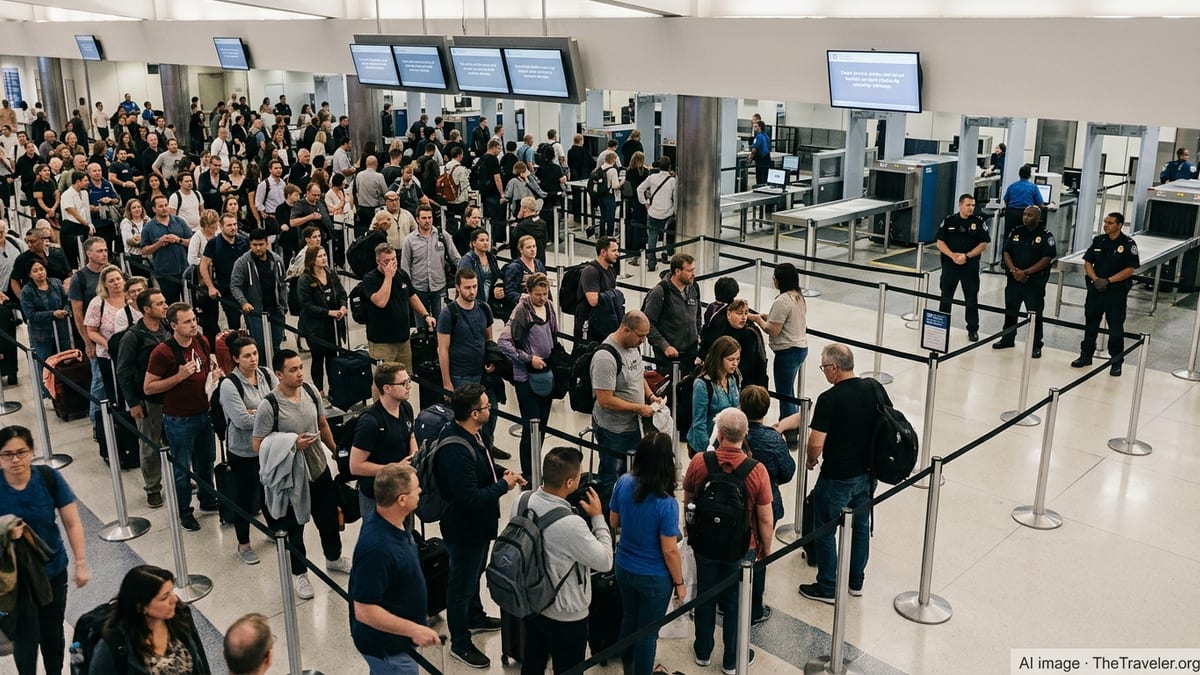
Passengers at Oslo Gardermoen Airport faced long queues, missed connections and overnight uncertainty as a wave of disruption delayed 129 flights and canceled nine more across one of Scandinavia’s busiest hubs.
Get the latest news straight to your inbox!
Domestic and International Traffic Hit Across Key Routes
Operational data for Thursday, June 25, shows widespread disruption at Oslo Gardermoen affecting both domestic and international traffic, with 129 departures and arrivals reported delayed and nine canceled. The impact has been felt across services connecting Oslo with major Norwegian cities such as Bergen and Trondheim, as well as important regional destinations including Stavanger and other Scandinavian and European cities.
Flights operated by SAS, Norwegian Air Shuttle and Widerøe have been particularly affected, according to publicly available flight-tracking boards, with additional delays reported on services run by KLM, Lufthansa, Air France and other European network carriers. The knock-on effect has been visible on both morning and evening peaks, where short-haul feeder services are essential for onward long-haul and intra-European connections.
While some of the disrupted services involve point-to-point domestic routes, others are part of complex itineraries linking Oslo to hubs such as Amsterdam, Frankfurt and Paris. These routes carry a mix of business travelers, tourists and transfer passengers, amplifying the consequences of schedule changes when even relatively short delays accumulate.
Real-time departure and arrival boards show delays ranging from minor schedule slippages to multi-hour hold-ups, as aircraft, crews and ground-handling operations attempt to realign with the day’s timetable. The combination has left many travelers facing missed onward flights, rebookings and, in some cases, unexpected overnight stays near the airport.
Knock-on Effects for Passengers and Onward Connections
The concentration of delays at a hub such as Oslo Gardermoen quickly creates a ripple effect across airline networks. When an early domestic feeder flight to Oslo arrives behind schedule, passengers booked onto onward services to other Norwegian cities or European capitals often find their minimum connection times eroded, leading to missed departures and the need for rerouting.
Travelers heading to Bergen, Trondheim and Stavanger reported extended waits as departures were repeatedly pushed back on airport information screens. For some, the disruption involved multiple rolling delays, with departure times updated in small increments that made it difficult to know whether to remain in the gate area, seek alternative transport or pursue hotel options for the night.
International passengers transiting in Oslo from long-haul services have also been caught up in the disruption. When connecting flights operated by partner airlines are delayed or canceled, travelers may lose access to carefully sequenced itineraries designed around alliance hubs and code-share agreements. That can push rebooking efforts into already busy flights later in the day or on subsequent dates, especially at the height of the summer travel period.
Families, tourists and business travelers alike face additional challenges such as rearranged ground transportation at their destination, rescheduled meetings and lost prepaid accommodation nights. The lack of certainty around revised departure times adds to the stress, particularly for those unfamiliar with the airport layout or local transport options.
Carriers Affected Include SAS, Norwegian and Major European Airlines
The day’s disruption at Oslo Gardermoen has involved a broad mix of airlines and aircraft types. Reports indicate that SAS, Norwegian Air Shuttle and regional carrier Widerøe account for a large share of the delayed and canceled services, reflecting their role as primary operators for domestic and intra-Nordic traffic.
At the same time, publicly available flight data points to disruptions on flights operated by major European network carriers including KLM, Lufthansa and Air France. These airlines connect Oslo to key hubs in Amsterdam, Frankfurt and Paris, feeding travelers into long-haul networks that extend to North America, Asia and beyond. Even short delays on these sectors can disrupt tightly timed connecting banks at the respective hubs.
Low cost and leisure-focused operators serving Mediterranean destinations and secondary European cities are also affected, with some departures from Oslo experiencing schedule changes or late-running operations. For travelers heading to holiday destinations on fixed check-in times, cruise departures or package itineraries, such delays can carry additional consequences.
Although Oslo Gardermoen has been recognized in recent years for strong on-time performance by independent industry analyses, intense peak-period traffic, staffing constraints and aircraft rotation issues can still produce irregular operations on individual days, as the current pattern of 129 delayed and nine canceled flights illustrates.
Rights, Refunds and Practical Steps for Stranded Travelers
For passengers stranded at Oslo Gardermoen, understanding legal protections and practical next steps is crucial. Under European passenger rights regulations, travelers may be entitled to assistance such as meals, refreshments and hotel accommodation during extended delays, as well as monetary compensation in certain circumstances involving cancellations or long delays not caused by extraordinary circumstances.
Publicly available consumer guidance recommends that affected passengers retain boarding passes, booking confirmations and receipts for out-of-pocket expenses, and request written confirmation of the disruption from the airline where possible. This documentation can be helpful when later seeking refunds, compensation or reimbursement through airlines, travel agencies or travel insurance providers.
Airline and airport information screens remain the primary source for real-time updates on gate changes, revised departure times and baggage information. Travelers are advised to monitor both the main departures and arrivals boards and any airline-specific notifications within booking apps or text messages, as last-minute operational changes can occur when aircraft and crews become available.
For those facing missed onward connections, consumer advocates commonly recommend contacting the carrier that issued the ticket rather than separate partner airlines, since the ticketing airline is typically responsible for rebooking under the conditions of carriage. Passengers booked through online travel agencies may need to coordinate both with the platform and with the operating airline to secure the most viable alternative routing.
What Today’s Disruption Means for Upcoming Summer Travel
The scale of delays and cancellations at Oslo Gardermoen today serves as a reminder of how quickly conditions at a major hub can change, even at airports that usually score highly for punctuality. With the busy summer season underway in Europe, air traffic levels are rising toward pre-pandemic volumes, placing additional demands on airlines, air traffic control and ground-handling resources.
Travel industry observers note that isolated days of significant disruption can occur even in well-managed operations when multiple factors coincide, such as weather constraints at destination airports, technical issues in the wider network or tight aircraft turnarounds during peak hours. When those factors converge at a hub that serves as a primary gateway for an entire region, the result can be a high number of delayed flights in a single day.
For travelers planning trips through Oslo in the coming weeks, the current disruption underscores the value of building extra time into connections, especially when combining separate tickets or mixing low cost and full-service carriers. Allowing a wider buffer between flights can provide additional protection if delays ripple through the schedule.
Passenger groups also highlight the importance of travel insurance policies that explicitly cover delays, missed connections and additional accommodation costs. While not every disruption will qualify for compensation, having both regulatory protections and insurance support can mitigate the financial impact when travel plans are unexpectedly derailed at a major hub like Oslo Gardermoen.