


More news on this day
Flight disruption across the United States continues to unsettle summer travel, with publicly available tracking data showing more than 100 cancellations and over 4,500 delays affecting major carriers and airports from California to Florida.
Get the latest news straight to your inbox!
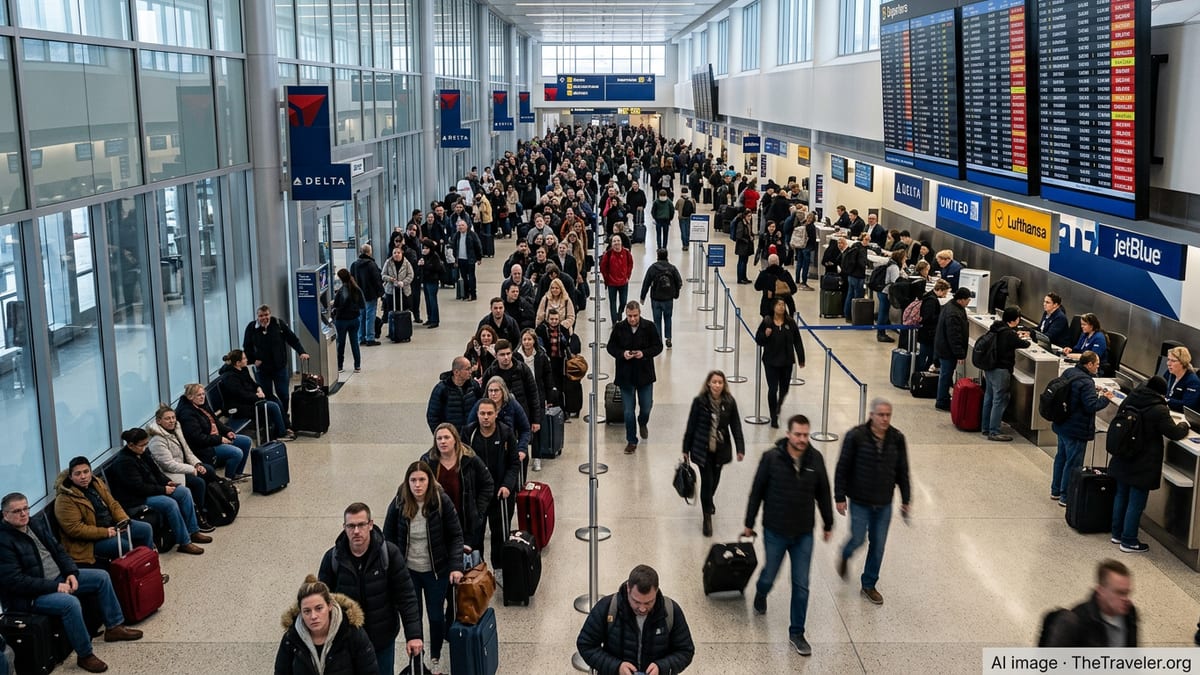
Wide-Ranging Disruptions Across Key States
Travel data for late June 2026 indicates that operational problems are spread across a broad swath of the country, with California, Nevada, Florida, Illinois, Tennessee, New Jersey and Minnesota among the hardest hit. Major hubs and popular leisure gateways in these states have reported sizeable clusters of late and cancelled departures, creating bottlenecks that ripple through the national network.
According to published coverage that compiles live statistics from flight tracking platforms, the latest disruptions involve just over 100 cancelled flights and more than 4,500 delayed services within, into or out of the United States. These figures represent a snapshot over a single operating day, underscoring how even a relatively modest rate of cancellations can translate into thousands of passengers facing missed connections, rebookings and extended time in terminals.
Reports indicate that the problem is not isolated to any single region. On the West Coast, airports serving California and Nevada have seen waves of late departures, while in the Southeast and Midwest, Florida, Tennessee and Illinois have also experienced elevated delay levels. In the Northeast and Upper Midwest, New Jersey and Minnesota have reported knock-on effects as late-arriving aircraft and crews struggle to get back on schedule.
Observers note that while the headline number of cancellations remains far below those seen during major winter storms earlier in 2026, the high volume of delays is enough to stretch airline operations and airport infrastructure, especially during peak summer travel periods when aircraft and staff are already heavily utilized.
Major Airlines Under Pressure
The latest data shows that a wide range of U.S. and regional carriers are caught up in the disruption. American Airlines, SkyWest, Envoy Air, Southwest, JetBlue and Frontier are among those reporting significant numbers of delayed flights, reflecting their extensive domestic networks and reliance on busy hub airports.
Coverage based on live tracking feeds suggests that some large network carriers are dealing with several hundred delayed services in a single day, with smaller but still notable numbers for regional operators that provide crucial connectivity to secondary cities. At times, a single carrier’s performance at one hub has a disproportionate impact, sending schedule issues cascading across other airports where those aircraft and crews are scheduled to operate later in the day.
Regional affiliates such as SkyWest and Envoy Air are particularly exposed because they operate dense schedules of short-haul flights that depend on quick turnarounds. When storms, air traffic constraints or ground delays slow those rotations, the result can be a chain of missed slots and crew timing issues. Low-cost and leisure-focused airlines such as Southwest, JetBlue and Frontier are also affected as they concentrate large numbers of passengers on relatively few daily frequencies, magnifying the impact when a rotation runs late.
Industry analysts point out that no single airline appears immune. Even carriers with robust operational buffers have faced challenges balancing aircraft positioning, maintenance windows and crew duty limits once large numbers of flights run behind schedule.
Causes: Weather, Congestion and Tight Schedules
Publicly available information and recent historical data suggest that a mix of factors is driving the current wave of disruption. Seasonal thunderstorms in key regions, including the Midwest, Southeast and Mountain West, have triggered temporary ground stops and flow restrictions at major hubs. When those constraints coincide with peak departure banks in cities such as Chicago, Las Vegas, Miami or Minneapolis, backlogs can develop rapidly.
Air traffic congestion remains another recurring pressure point. High-density corridors along the East and West Coasts, as well as transcontinental routes linking California and Nevada with New Jersey and Florida, often operate near capacity. When weather, runway works or equipment outages reduce available airspace or runway throughput, flights may be held on the ground or rerouted, increasing block times and pushing crews toward their duty limits.
Experts also highlight structural vulnerabilities in current airline schedules. Many carriers run close to full utilization of aircraft and staff during the busy summer period, leaving limited slack to absorb disruption. Once a morning departure from, for example, California or Illinois departs late, that aircraft may operate three or four additional segments during the day, spreading delays to airports as far apart as Nevada, Tennessee, New Jersey or Minnesota.
Recent travel-industry analyses have noted that even on days when cancellations appear relatively modest, the sheer volume of delayed flights can create a perception of widespread chaos for travelers, as long lines at check-in, security and customer service desks amplify the operational strain happening behind the scenes.
Airports and Passengers Bear the Brunt
Airports across the affected states are feeling the impact as terminals and ramp areas contend with aircraft lingering at gates, late inbound arrivals and rolling gate changes. In large hubs in Illinois, California and Florida, congestion builds as airlines juggle limited gate space and prioritize certain flights for quicker turnarounds, sometimes at the expense of later departures to smaller markets such as those in Tennessee or Minnesota.
For passengers, the most visible consequences are missed connections, re-routings and unexpectedly long days in the terminal. Travel forums and social media posts from recent days have documented cases in which multiple short rolling delays eventually culminated in a late-night cancellation, leaving travelers scrambling for hotel rooms or overnight seating in crowded concourses.
Families heading to vacation destinations in Nevada and Florida, as well as business travelers commuting between major financial and tech centers in California, Illinois and New Jersey, have reported the knock-on effects of even minor schedule changes. A delay of 45 minutes on an early morning departure can, in many cases, be enough to jeopardize a carefully planned same-day return.
Passenger-rights organizations and consumer advocates continue to advise affected travelers to monitor their flight status closely, build longer connection buffers into itineraries, and consider early-morning departures where possible, as those tend to be less affected by the cumulative delays that build up through the day.
What Travelers Can Expect in the Days Ahead
Analysts reviewing current patterns suggest that, in the near term, travelers should be prepared for further pockets of disruption, especially on days when thunderstorms or high winds are forecast near major hubs in California, Nevada, Florida and the Midwest. Recovery from a single day of significant delays can take several subsequent days, particularly for airlines with tight schedules and limited spare aircraft.
Travel-planning services and delay trackers also note that system strain is likely to increase on peak travel days around weekends and holidays, when passenger volumes are highest. With aircraft loading factors already elevated during the summer, finding same-day alternatives after a cancellation may prove challenging, especially on routes connecting smaller cities in states such as Tennessee and Minnesota with large coastal hubs.
Public data from tracking platforms indicates that while airlines are working to stabilize operations, the combination of volatile weather patterns, heavy summer demand and constrained airport and airspace capacity will continue to pose risks to punctuality. Travelers booking journeys that touch multiple high-traffic airports in states like California, Illinois, New Jersey and Florida may wish to factor this heightened risk into their plans.
Industry observers suggest that the coming weeks will provide a crucial test of airlines’ ability to manage irregular operations during the heart of the summer season. For now, the latest tally of more than 100 cancellations and over 4,500 delays serves as a reminder that even an ordinary travel day can quickly become complicated across such a tightly interconnected system.