


More news on this day
Travelers across Canada faced fresh disruption as Quebec City’s Jean Lesage International Airport reported 31 delayed departures and four cancelled flights, affecting operations for Air Inuit, Air Canada, PAL Airlines, Pascan Aviation and several other carriers and sending knock-on effects through regional and national routes.
Get the latest news straight to your inbox!
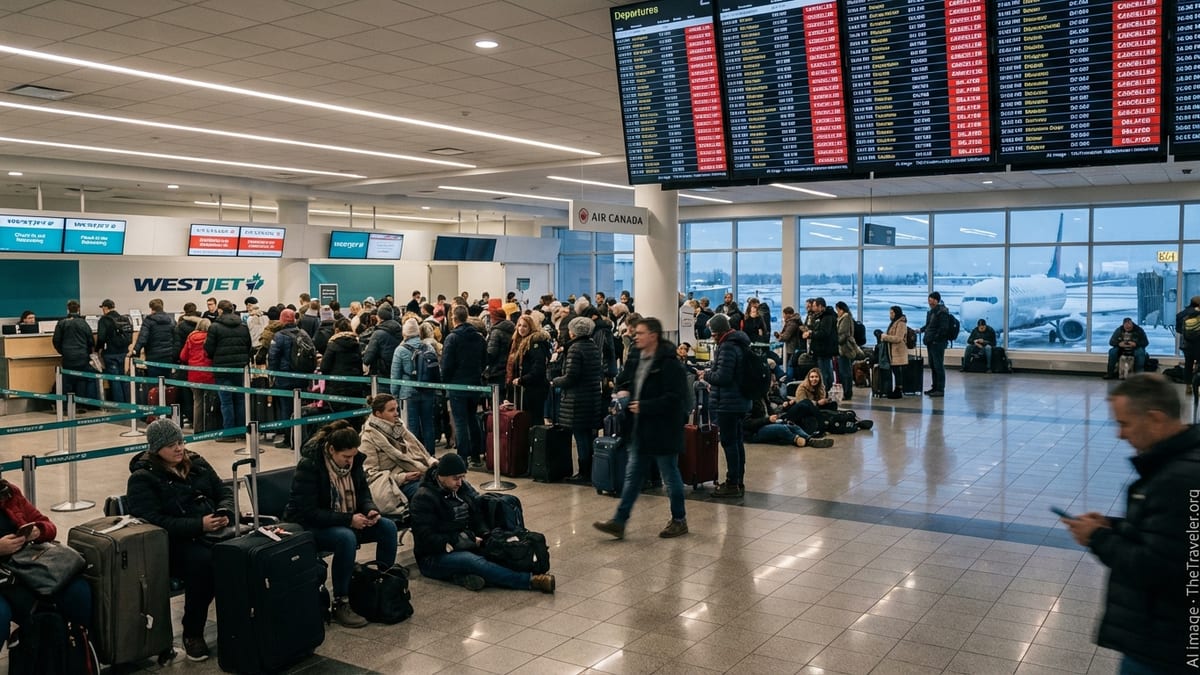
Regional Hub Sees Day of Persistent Disruptions
Publicly available operational data indicates that Quebec City’s Jean Lesage International Airport experienced an unusually high number of schedule disruptions, with 31 flights delayed and four cancelled in a single operating period. The affected services included a mix of regional and mainline routes, many of them short-haul connections that feed passengers into larger hubs across Canada.
The airport, which serves as a key link between Quebec’s regions and major cities such as Montreal, Toronto and numerous northern communities, relies heavily on carriers including Air Inuit, Air Canada, PAL Airlines and Pascan Aviation. When multiple departures from a hub of this size are delayed or cancelled, even by relatively small margins, the impact can quickly cascade through the rest of the day’s schedule.
Reports indicate that the delay total at Quebec City was broadly in line with a wider pattern of disruption seen at Canadian airports in recent weeks, where a combination of tight aircraft utilization, staffing constraints and volatile summer weather has left little margin for recovery when problems arise.
Although operations continued throughout the day, departure boards showed mounting knock-on delays as aircraft and crews arrived late from earlier flights or required rescheduling, contributing to growing congestion in the regional network.
Air Inuit, PAL and Pascan Highlight Vulnerability of Regional Links
The disruption at Quebec City particularly affected regional operators such as Air Inuit, PAL Airlines and Pascan Aviation, which connect smaller and remote communities to the provincial capital and beyond. These carriers often operate with limited spare aircraft and crews, meaning that a single delayed arrival can interfere with several subsequent sectors.
Flight schedules published by Air Inuit and other carriers show dense rotations in and out of Quebec City and other regional airports during the late spring and early summer period. When delays accumulate, aircraft may miss critical operating windows at smaller airfields that have shorter opening hours or limited ground services, forcing cancellations or extended waits for passengers.
For travelers in northern and coastal communities, these interruptions can mean missed medical appointments, disrupted work plans and costly overnight stays. According to published coverage on recent Canadian air travel performance, regional travelers often have fewer alternative routing options and must wait for the next day’s service when flights are cancelled or heavily delayed.
Industry observers note that while regional airlines have worked to stabilize schedules after the pandemic period, they remain sensitive to any shock in the system, whether related to weather, aircraft maintenance or air traffic flow constraints at larger hubs.
Air Canada and National Carriers Feel the Knock-On Effects
Major national carriers, led by Air Canada and supported by partner airlines, also felt the impact of the disruption at Quebec City. Short-haul links between Quebec City and larger hubs such as Montreal and Toronto are crucial for feeding passengers onto cross-country and international services. Delays on these feeder flights can result in missed connections and rebookings that reverberate across the network.
According to publicly available information on recent travel conditions in Canada, carriers have already been managing elevated levels of schedule volatility across several major airports, including Toronto Pearson and Montreal Trudeau. When secondary hubs like Quebec City experience their own spike in delays and cancellations, it becomes more challenging for airlines to reposition aircraft and crews or to find spare capacity for stranded passengers.
Operational notices from large Canadian airlines emphasize that they continue to apply standard measures for disrupted flights, including rebooking travelers on later services, arranging overnight accommodation when required and providing food and beverage vouchers in line with applicable regulations. However, the volume of recent disruptions nationally has made rapid recovery more difficult, particularly during peak travel periods.
This latest flare-up at Quebec City adds to broader questions about how carriers and airports can build more resilience into tightly scheduled domestic networks, especially as traffic levels approach or exceed pre-pandemic volumes.
Passengers Confront Missed Connections and Overnight Stays
For passengers at Quebec City and on connecting routes across Canada, the combined total of 31 delays and four cancellations translated into missed connections, rebooked itineraries and unexpected overnight stays. Airline communication channels and airport departure boards showed rolling updates as schedules were adjusted throughout the day.
Travel forums and recent media coverage of Canadian air travel highlight growing frustration among passengers who feel that recurring delays have become a routine part of flying. While many travelers accept that weather and safety-related issues can disrupt operations, there is increasing scrutiny of how airlines handle communication, compensation and rebooking during extended disruptions.
Under Canada’s Air Passenger Protection Regulations, travelers on eligible flights may have access to specific standards of treatment and, in some cases, financial compensation, depending on the cause and length of a delay or cancellation. Public guidance encourages passengers to retain boarding passes and receipts for additional expenses and to consult carrier policies to understand their rights.
Travel experts generally recommend that passengers build longer connection times into itineraries that rely on multiple domestic legs, particularly when traveling through airports that have recently reported higher levels of disruption. For those with critical time-sensitive commitments, such as international departures or significant events, same-day regional connections can carry heightened risk during periods of operational stress.
Wider Pattern of Strain on Canada’s Domestic Air Network
The operational difficulties at Quebec City’s Jean Lesage International Airport form part of a wider pattern of strain across Canada’s domestic air network in 2026. Recent reporting has pointed to a combination of factors, including localized weather events, a tight labor market for aviation workers and lingering impacts from altered route structures introduced during and after the pandemic.
Data compiled from national travel coverage shows that multiple major Canadian airports have posted elevated numbers of delayed and cancelled flights in recent days, affecting both large network carriers and regional operators. The disruption at Quebec City, with 31 delays and four cancellations, underlines how even mid-sized hubs can play an outsized role in the reliability of cross-country travel.
Industry analysts note that Canadian carriers are simultaneously responding to strong seasonal demand, changing fuel costs and evolving regulatory expectations around passenger rights. Balancing these pressures with operational reliability remains a central challenge, particularly on shorter domestic sectors where aircraft and crew utilization is high and turnaround times are short.
As airlines and airports work through the current wave of disruptions, travelers using Quebec City and other Canadian gateways may continue to face day-to-day variability in departure and arrival times. The latest figures from Jean Lesage International Airport underscore how quickly that variability can escalate into a broader interruption of routes across the country.