


More news on this day
Air travel across Australia and New Zealand faced major disruption on Sunday as publicly available flight-tracking data showed more than 400 services delayed and a growing number cancelled, affecting routes operated by Virgin Australia, Jetstar, Qantas, Air New Zealand and several international carriers.
Get the latest news straight to your inbox!
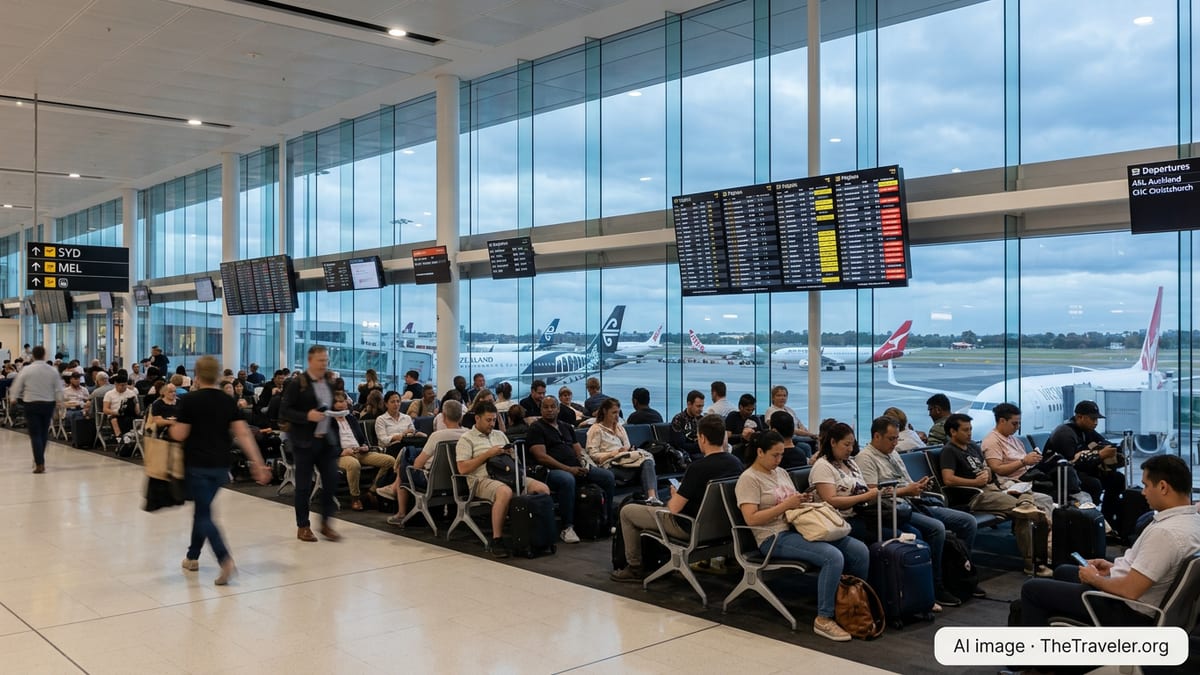
Widespread Delays Across Key Hubs
Tracking platforms and airport boards for 14 June indicated heavy congestion at major gateways including Melbourne, Sydney, Auckland and Wellington, with a combined tally of around 411 delayed flights and at least 14 cancellations reported during the peak of the disruption period. The impact was most visible on busy trans Tasman and domestic corridors used by commuters, business travellers and holidaymakers.
At Sydney and Melbourne, several departures and arrivals showed hold times extending beyond an hour, as tight turnarounds and congested airspace pushed schedules off track. In New Zealand, Auckland and Wellington recorded clusters of late departures and arrivals, as airlines worked to reposition aircraft and crews while managing high weekend demand.
Publicly available information indicated that while the bulk of affected services departed late, a smaller but significant share was cancelled outright, forcing rebookings, missed connections and extended waits in terminals. Travellers reported long queues at check in counters and service desks as carriers attempted to consolidate passengers onto remaining flights.
The uneven pattern of delays and cancellations meant that some routes continued to operate close to schedule while others experienced rolling disruption through the day. This created uncertainty for passengers with onward connections, particularly those transiting between domestic and international terminals in Sydney and Auckland.
Major Carriers Bear the Brunt
Virgin Australia, Jetstar, Qantas and Air New Zealand shouldered most of the disruption across the region’s domestic and short haul international networks. Flight status data showed numerous services from these airlines departing significantly behind schedule, especially on trunk routes linking Melbourne, Sydney, Brisbane, Auckland, Wellington and Christchurch.
Multiple delayed departures between Wellington and Auckland highlighted the strain on New Zealand’s main domestic corridor, with some services running more than an hour behind schedule. Similar knock on effects were visible on flights feeding into Auckland from regional centers, where smaller aircraft are particularly vulnerable to earlier delays in the day.
Across the Tasman, Qantas and Air New Zealand services connecting Auckland and Sydney, as well as Melbourne and Auckland, showed schedule pressures as aircraft and crews cycled through late arriving sectors. Jetstar and Virgin Australia flights also appeared on delay boards, particularly those tied to busy east coast domestic banks in Australia.
While long haul intercontinental operations were comparatively less affected, disruption on feeder routes into Sydney, Melbourne and Auckland created challenges for passengers connecting to overnight services to Asia, North America and the Middle East. In some cases, delayed domestic flights left travellers with narrow margins to clear security and immigration before international departures.
Weather, Congestion and Operational Strain
Published coverage and recent performance reports suggest that a combination of seasonal weather, congested airspace and ongoing operational pressures has left airlines and airports in Australia and New Zealand with limited flexibility when schedules begin to slip. Strong winds, low cloud and fog are recurring challenges for airports such as Wellington and Auckland, while peak hour traffic in Sydney and Melbourne often pushes ground and air control systems close to capacity.
Recent government and regulatory data on on time performance in both countries highlight how quickly punctuality can deteriorate when conditions deteriorate. Even modest increases in flight volumes during school holidays and major events can lead to compounding delays when aircraft and crews are tightly scheduled, particularly on short haul sectors that operate multiple return services per day.
Operational factors including crew availability, maintenance requirements and aircraft rotations can further amplify the impact of bad weather or temporary air traffic restrictions. When one aircraft is delayed early in the day, the same aircraft may carry that delay across several subsequent flights, extending the disruption window for passengers well into the evening.
Industry analyses have also pointed to the lingering effects of the pandemic era on staffing and fleet planning. Airlines in the region have been rebuilding capacity while navigating pilot and engineer shortages, leaving limited spare resources to absorb shocks when disruption hits multiple hubs at once.
Impact on Travellers and Regional Connectivity
The latest wave of disruption underscores how dependent regional connectivity in Australasia has become on a relatively small number of key airports and carriers. Travellers moving between secondary cities often rely on connections through Sydney, Melbourne, Brisbane or Auckland, meaning a delay at one major hub can cascade across several itineraries.
Passengers on short trans Tasman hops faced particular challenges on Sunday, as missed connections in one country could translate into lengthy waits for the next available service. With many routes operating only a handful of daily frequencies, a single cancellation can push rebooked passengers into flights departing many hours later, or even the following day.
For tourists on tightly timed itineraries, the loss of sightseeing days and prepaid bookings can be significant. Domestic passengers in New Zealand and Australia have also increasingly raised concerns about the reliability of regional flights, noting that late arrival into gateway cities can jeopardize long planned international departures.
In response to growing frustration, consumer advocates in both countries have urged travellers to build more buffer time into itineraries that require connections, particularly during winter weather seasons or peak holiday periods. They also point to the importance of understanding each airline’s policies on rebooking, meal vouchers and accommodation in the event of long delays or cancellations.
What Passengers Can Do Next
With disruption likely to continue into the evening as airlines work through the backlog, travel planners advise affected passengers to monitor flight status closely through airline apps, airport displays and independent tracking tools. Checking in online and arriving at the airport early can provide additional leeway if security lines or bag drops are busy.
Travellers whose flights are significantly delayed or cancelled are generally encouraged to accept rebooking offers as soon as they appear in airline systems, as remaining seats on alternative services can be snapped up quickly during large scale disruption. Those with urgent commitments may also consider routing through alternative hubs or even booking separate one way segments if their budgets allow.
For upcoming trips, travel specialists often recommend choosing longer connection times on itineraries that pass through Sydney, Melbourne or Auckland, especially in the early morning and evening peaks when congestion is common. Booking the first flight of the day on critical domestic sectors can also reduce exposure to knock on delays from earlier rotations.
As airlines and regulators continue to review punctuality and resilience across Australian and New Zealand networks, Sunday’s extensive delays and cancellations serve as another reminder of the fragility of tightly wound schedules. For now, travellers across the Tasman corridor face another day of uncertainty, reshuffled plans and crowded departure halls as the system slowly returns to normal.