


High on the summit ridge of Mount Le Conte in Great Smoky Mountains National Park, LeConte Lodge has inspired a kind of quiet obsession among hikers. With no road access, no electricity in guest cabins, and a waiting list that often fills nearly a year in advance, it is arguably the most coveted overnight stay in the Smokies. But with rising room rates, the cost of getting to Gatlinburg, and the very real effort of hiking 5 to 9 uphill miles just to check in, many travelers now ask a practical question: is LeConte Lodge actually worth the price and the work it takes to reach it?
Get the latest updates straight to your inbox!
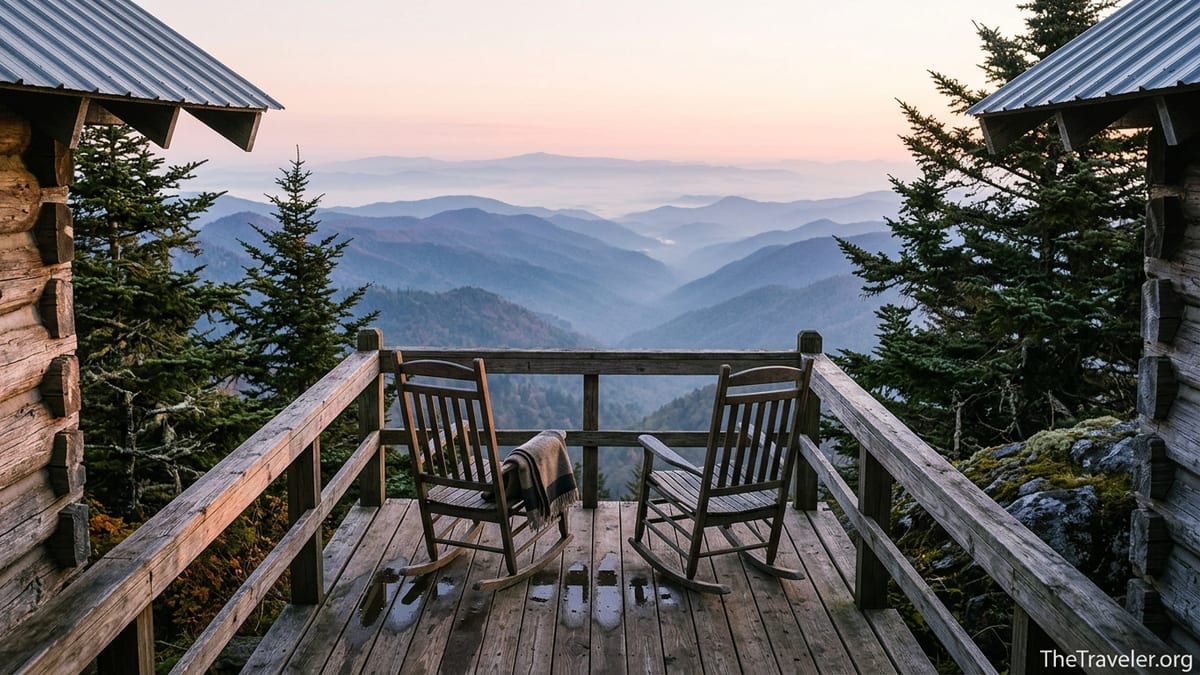
What Exactly Is LeConte Lodge?
LeConte Lodge is a rustic collection of cabins and a central dining hall perched at roughly 6,400 feet on Mount Le Conte, one of the signature peaks of Great Smoky Mountains National Park. It is the only place inside the park where you can legally sleep in a permanent structure on a mountaintop and be served hot meals morning and night. The lodge predates the national park itself and today operates under a concession contract with the National Park Service, open roughly late March through late November each year.
Unlike backcountry shelters on the Appalachian Trail, LeConte Lodge offers real beds, kerosene lanterns, and served family-style dinners and breakfasts. Guests stay in simple wooden cabins or multi-room lodges with tin roofs and rough-hewn porches. There is no electricity in the guest cabins, no Wi-Fi, and no showers. Water comes from a spring, and toilets are pit-style outhouses, although they are kept clean and stocked. The overall feel is summer-camp rustic, not high-end mountain resort.
Because there is no road access, everything that appears on your dinner plate or your bed has traveled up the mountain by foot. Traditionally, a llama pack train comes up the Trillium Gap Trail several times a week to deliver food, propane, and linens and to haul trash back down. That logistical reality shapes both the lodge’s pricing and its character. Guests are very aware they are staying in a place that exists only through a delicate, hard-earned supply chain.
From a traveler’s point of view, LeConte Lodge is less a hotel and more an immersive backcountry experience with four walls and hot biscuits. The atmosphere in the dining hall, where strangers from all over the country trade trail stories over beef stew and cornbread, feels more like a trekking lodge in the Alps than a typical U.S. national park accommodation.
How Hard Is It To Get There?
Reaching LeConte Lodge requires a genuine mountain hike. There are no shortcuts, cable cars, or service roads. The shortest and most popular route is the Alum Cave Trail, roughly 5 to 5.5 miles one way with close to 2,700 feet of elevation gain, depending on which map or GPS track you follow. The trail starts on Newfound Gap Road about a 20 to 25 minute drive from Gatlinburg and climbs steadily from creekside forests through narrow rock corridors to exposed ledges with cable handrails in the final miles.
Other routes are longer but sometimes less steep. The Trillium Gap Trail, which the llama train uses, is approximately 6.7 to 8.9 miles one way depending on whether you start at the main Trillium trailhead or higher at the closer parking area. It passes Grotto Falls and winds through deep forest before climbing to the summit ridge. The Rainbow Falls Trail clocks in around 6.5 to 7 miles one way, with steady ascent and a rocky, sometimes rough tread. The Bullhead and Boulevard Trails are longer and more remote and are usually chosen by experienced hikers looking for solitude or a loop route.
In practical terms, most reasonably fit hikers used to day hikes of 7 to 10 miles can tackle Alum Cave or Trillium Gap in 4 to 6 hours with breaks, carrying a daypack. That said, the elevation gain, humidity, and rugged footing surprise many visitors who only know the Smokies from scenic drives. If you are flying in from near sea level, plan a warm-up hike like Chimney Tops, Charlies Bunion, or the lower section of Alum Cave a day or two before your LeConte ascent. That will give you a feel for Smokies trail conditions and weather.
Weather itself is part of the effort. Mount Le Conte often runs 10 to 20 degrees cooler than Gatlinburg, with frequent fog, wind, and sudden thunderstorms. Even in early summer, hikers occasionally encounter sleet or hail near the top. Trail reports are full of anecdotes of people leaving 80-degree valley temperatures in shorts only to arrive at a sleety, 40-degree summit in wet cotton. Earning your place at LeConte Lodge means planning like a backpacker: carrying rain gear, insulating layers, headlamp, water treatment or extra water, and basic first-aid, even if you are just “going to a lodge.”
What Does a Night at LeConte Lodge Actually Cost?
LeConte Lodge publishes a rate sheet each year, and by the 2024 season, prices for a basic cabin with meals typically sit in the low-to-mid hundreds of dollars per person per night, before tax. Exact numbers vary by cabin type and occupancy, but many parties find that by the time they add taxes and the cost of getting to Gatlinburg, a two-person overnight at the lodge often rivals or exceeds a night in a mid-range hotel in town or a cabin rental with modern amenities.
What makes the value equation different is that LeConte Lodge is almost always sold out. Reservations for the next season open in the autumn and popular spring and fall weekends can book up quickly. Travelers often send in a request by email or phone and then wait to see what dates they are offered. Some guests accept midweek or shoulder-season dates simply to get any spot at all. Others pick up cancellations closer to the season. This pent-up demand has allowed prices to creep upward while still keeping occupancy high.
In addition to the nightly rate, you will pay standard trip costs: lodging before and after the hike in Gatlinburg or Pigeon Forge, meals in town, gas or flights to reach eastern Tennessee, and a parking tag for Great Smoky Mountains National Park if you will leave your car at the trailhead for more than 15 minutes. While the daily parking tag fee is modest, you still need to factor it in and purchase it in advance or at a visitor center before heading to the trailhead.
For some travelers, especially couples or small groups, the cost feels justifiable when compared with guided trips or backcountry lodges in other parts of the world. For others, particularly families with children or budget-conscious road trippers, the tab for a single night on the mountain can feel steep relative to nearby off-mountain cabins that offer multiple bedrooms, kitchens, and hot tubs for similar or only slightly higher nightly rates.
Comfort, Food, and the On-Mountain Experience
Once you arrive at LeConte Lodge, comfort is measured differently than it would be in a typical hotel. Cabins are simple but cozy, with wooden bunk beds or double beds, foam mattresses, and thick wool blankets. You will have kerosene lanterns for light, a wash basin with cold water, and rocking chairs on the porch. Nights can be chilly even in midsummer, so most guests sleep layered in base layers or light fleece under the wool blankets.
Meals are a highlight and are included with most overnight bookings. Dinner is served family-style in the main lodge dining room at long communal tables. A typical menu might feature hearty beef or chicken stew, mashed potatoes, green beans or other vegetables, applesauce, cornbread, and dessert such as cobbler. Breakfast the next morning usually includes pancakes or biscuits, eggs, bacon or sausage, grits, cereal, and hot drinks. There is enough food to satisfy hungry hikers, and seconds are generally encouraged.
There are trade-offs. You will not find craft cocktails, barista coffee, or elaborate vegetarian menus. Special diets can sometimes be accommodated if arranged well in advance, but options are limited by what can be carried in on llamas and stored without full refrigeration. Water for drinking is provided, but you may want to bring electrolyte mixes or your preferred tea or instant coffee packets if you are particular. The lodge sells a small selection of souvenirs and basic snacks like candy bars, but not the full array of supplies you would find in a town outfitter.
What nearly everyone remembers more than the food or the beds is the atmosphere. Evenings often involve watching sunset from Cliff Top, a short walk from the lodge, where the rolling ridges of the Smokies turn blue and purple as lights twinkle faintly from the far-off valley. On clear mornings, guests walk to Myrtle Point for sunrise and a sweeping view over the eastern peaks. Back at the lodge, people linger on the porches in rocking chairs, wrapped in fleece or blankets, trading stories by lantern light. It feels unhurried and unplugged in a way many travelers rarely experience anymore.
Is It Worth It for Different Types of Travelers?
Whether LeConte Lodge is “worth it” depends heavily on who you are and what you expect from a mountain trip. For strong hikers who love long days on trail and appreciate rustic comfort at the end, the lodge can feel like a tremendous value. You get a challenging but manageable day hike, a hot shower–free but cozy night with good food, and a bucket-list summit sunrise without having to carry a full backpacking kit. For many in this group, the lodge becomes an annual tradition.
For experienced backpackers, the calculus is more nuanced. Some thru-hikers and backcountry regulars prefer the solitude and flexibility of camping at nearby backcountry sites or staying at the Mount Le Conte shelter, which requires a backcountry permit but costs far less than the lodge. They may see LeConte Lodge as a pleasant splurge once in a while rather than a necessity. Others relish the chance to trade a tent for a cabin for one night and still wake up on the summit ridge.
For families, especially those with children under 10, the decision is trickier. The mileage and elevation gain make the hike a serious undertaking for younger kids, and wet or cold weather can quickly turn a fun adventure into a forced march. Some families ease into it by hiking only partway up Alum Cave to the bluffs as a day trip and saving the full lodge experience for when kids are older. Those who do go with school-age children often choose the somewhat gentler grade of Trillium Gap and build in plenty of time, snacks, and layers.
Travelers who primarily value modern conveniences may be disappointed. If your ideal mountain stay includes private bathrooms, hot showers, fast Wi-Fi, and climate control, nearby cabins in Gatlinburg, Pigeon Forge, or Wears Valley will offer far more comfort for the money. In that case, it can make sense to visit Mount Le Conte as a long day hike instead, enjoying the same trails, summit views, and lodge atmosphere briefly before heading back down to town for the night.
Practical Tips to Maximize Value
If you decide LeConte Lodge might be worth the splurge, a few practical choices can help you get the most from the experience. First, be realistic about your fitness and choose your route accordingly. Alum Cave offers the most dramatic scenery in the least distance but is also steeper and more exposed. Trillium Gap is longer but has a more moderate grade and the bonus of Grotto Falls and, on certain days, the llama train. Rainbow Falls can be very rocky and is often wet near the waterfall. Many guests choose to go up one route and down another to see more of the mountain, using Alum Cave one way and either Trillium or Rainbow on the return.
Second, pack deliberately. Think in terms of a light overnight trek. Most guests carry a 20 to 30 liter daypack with a change of clothes, a warm layer, rain shell, headlamp, basic first-aid kit, snacks, and at least two liters of water. Trekking poles are useful on steep, rocky sections and particularly helpful for knees on the descent. The lodge provides bedding and meals, so you do not need a sleeping bag or cooking gear, which keeps pack weight down.
Third, time your trip with weather and crowds in mind. Spring and fall weekends are understandably popular for cool temperatures and foliage, but they also bring crowded parking lots and traffic on Newfound Gap Road. Shoulder periods, such as midweek in late April or early November (weather permitting), can offer a better balance of open reservations and quieter trails. Expect cooler temperatures at the summit at any time of year and check the lodge’s daily blog or park updates before heading out.
Finally, build in time to enjoy the mountaintop. Many guests hike up, arrive by midafternoon, check in, and then have a few hours to explore before dinner. Short side trips to Cliff Top, Myrtle Point, and High Top, the true summit of Mount Le Conte, are essential parts of the experience. Sunrise and sunset are often the most memorable moments of the entire trip, so consider them part of what you are paying for, just as much as the cabin and meals.
The Takeaway
LeConte Lodge occupies a rare space in American national parks: a high-mountain lodge that must be earned on foot, yet offers enough comfort to attract everyone from seasoned hikers to first-time summit seekers. The price has climbed alongside its popularity, and the effort to reach it is real. You will likely spend several hundred dollars for a night, sweat through multiple miles of uphill trail, and forgo modern comforts like showers and electricity.
In return, you receive something that is increasingly scarce in busy parks: a feeling of remoteness, community, and quiet in a place that most visitors only glimpse from a distance. You wake to lantern light and the sound of wind in spruce-fir trees, not traffic. You share breakfast with people who were strangers the day before but have now shared a mountain. You step out to watch the sun break over layers of blue ridges without a guardrail or vehicle in sight.
For travelers who value those moments more than thread counts or resort amenities, the cost and effort are not just justified, they are integral to the experience. Without the hike, LeConte Lodge would be just another rustic inn. Because of it, a stay here feels like a small expedition. If that kind of hard-earned mountain memory appeals to you, then yes, LeConte Lodge can absolutely be worth the price and the climb. If it does not, you may be happier treating Mount Le Conte as an ambitious day hike and enjoying the Smokies’ comforts down in the valley.
FAQ
Q1. How far in advance do I need to book LeConte Lodge?
Most travelers should plan to request reservations about a year ahead, when the lodge opens its booking window for the following season. Cancellations do appear later, but peak weekends and fall foliage dates usually fill quickly.
Q2. Which trail is best for first-time visitors to LeConte Lodge?
The Alum Cave Trail is the most popular first-time route because it is the shortest path to the lodge and offers dramatic scenery, though it is steep and can feel exposed in places. Hikers who prefer a more moderate grade often choose Trillium Gap instead.
Q3. Do I need special hiking experience to reach LeConte Lodge?
You do not need technical climbing skills, but you should be comfortable hiking 10 to 12 miles round trip with significant elevation gain on uneven, sometimes wet or rocky terrain. Regular walkers and day hikers who train a bit beforehand usually manage well.
Q4. What happens if the weather turns bad on the day of my hike?
LeConte Lodge operates in a mountain environment where rain, fog, and storms are common, so trips continue in most conditions. In severe weather, such as thunderstorms, ice, or high winds, you may need to adjust start times, carry extra layers, or change your route. It is important to check park and lodge updates and be prepared to hike safely or, in rare cases, reschedule.
Q5. Are children welcome at LeConte Lodge?
Children are allowed, and many families enjoy the experience, but parents should honestly assess whether their kids can handle the mileage, elevation, and rustic conditions. The hike is demanding for younger children, and there are steep drop-offs on some sections of trail, so close supervision is essential.
Q6. Can I stay at Mount Le Conte without paying lodge rates?
Yes. Backpackers can apply for a backcountry permit to stay at the Mount Le Conte shelter near the lodge, which costs less but offers basic wooden platforms and no meals. Some hikers also visit the lodge on a long day hike and return to trailhead accommodations that night.
Q7. What is included in the nightly rate at LeConte Lodge?
Rates typically include your cabin, dinner, and breakfast. Bedding, lanterns, and basic cold-water washing facilities are provided. You pay separately for items like souvenirs, hot drinks outside meal times, and gratuities for staff if you choose to leave them.
Q8. Is LeConte Lodge open year-round?
No. The lodge usually operates from late March through late November. Exact opening and closing dates vary slightly each year depending on weather, trail conditions, and park operations.
Q9. Do I need a car to reach the trailheads for LeConte Lodge?
Most visitors use a personal vehicle or rental car to reach trailheads such as Alum Cave or Trillium Gap. Public transportation is limited, and while some private shuttle services and tour operators exist in the Gatlinburg area, they require advance arrangements and add to overall cost.
Q10. How does LeConte Lodge compare to staying in Gatlinburg or a cabin rental?
Staying in town or in a nearby cabin usually provides better amenities for the price, such as private bathrooms, showers, Wi-Fi, and easier access to restaurants and attractions. LeConte Lodge trades those comforts for remoteness, trail access, and a unique mountaintop setting that many guests consider a once-in-a-lifetime experience.