


More news on this day
Sweltering conditions on Britain’s railways have become a flashpoint of a wider national heat emergency, as passengers report being stranded for hours on packed trains with broken air conditioning while a rare red alert heat warning sends children home from school and pushes thousands more people to work from home.
Get the latest news straight to your inbox!
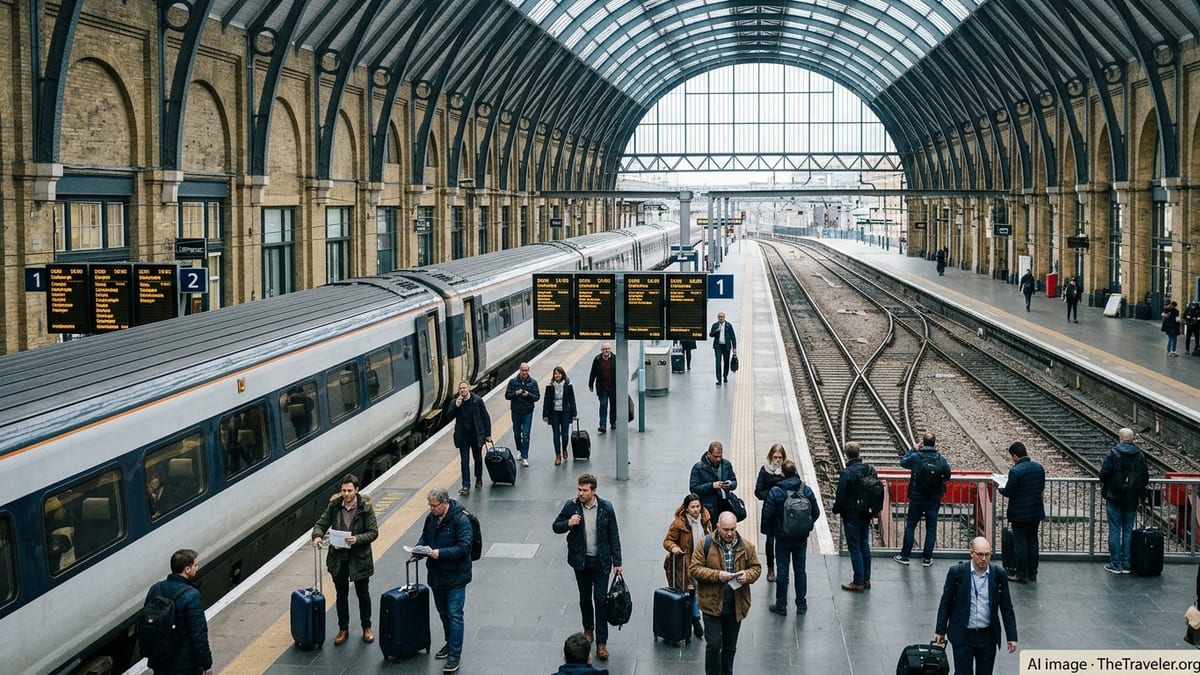
Passengers describe ‘oven’ conditions on stranded trains
Reports emerging from routes across England indicate that multiple services have been halted or severely delayed during the current heatwave, with on-board air conditioning systems failing as temperatures outside climb toward 37C and above. Social media posts and passenger testimonies describe carriages becoming stiflingly hot, with limited ventilation and little access to drinking water as services sit immobilised on the tracks.
One widely shared account described a train in the extreme heat zone that became stranded for hours, leaving passengers in what they likened to an “oven” environment, with no effective cooling and toilets reportedly out of service. Similar experiences have been detailed by commuters on long-distance intercity services and busy commuter lines, where older rolling stock and heavily used cooling systems appear to be struggling under sustained, unusually high temperatures.
Operational updates from rail operators and industry bodies over recent days have repeatedly warned of delays, cancellations and speed restrictions as the UK’s infrastructure strains under the heat. Publicly available information shows that extreme temperatures can cause tracks to expand and risk buckling, overhead power lines to sag and train air conditioning units to trip out, leading not only to timetable disruption but also to comfort and safety concerns for those stuck on board.
Travel advice has shifted in tone as the heatwave has intensified. Rail firms have urged passengers to carry water, avoid travel at the hottest times of day if possible, and be prepared for services to be altered at short notice, underscoring how vulnerable the network remains when conditions edge beyond its traditional design limits.
Red heat alerts reshape daily life across Britain
The disruption on the railways is unfolding against the backdrop of a rare red extreme heat alert covering large parts of England and Wales. Forecasts suggest that temperatures in some inland areas could challenge or exceed the upper 30s Celsius, an intensity that public health agencies associate with a risk to life, particularly for older people, young children and those with underlying health conditions.
Government and health guidance during such alerts typically urges people to stay indoors during the hottest part of the day, close curtains on sun-facing windows, and drink plenty of fluids. Warnings advise against strenuous outdoor activity and highlight the dangers of confined, poorly ventilated spaces such as parked cars, small top-floor flats and crowded public transport, echoing the concerns voiced by passengers stuck on superheated trains.
Many local councils and transport bodies have reiterated messages encouraging only essential travel during the peak of the heatwave. This has heightened attention on those who have little choice but to be mobile at the hottest times, including shift workers, key staff in health and retail, and commuters whose jobs cannot be performed remotely. For these groups, the combination of reduced rail timetables, long waits on exposed platforms and the risk of on-board air conditioning failure creates a difficult set of trade-offs between income, obligation and physical wellbeing.
The country’s experience draws parallels with the record-breaking UK heatwave of 2022, when extreme temperatures forced large-scale modifications to rail services and prompted a formal review of how infrastructure and emergency planning should adapt to a warming climate. Current conditions are reviving questions over how quickly those recommendations can be implemented and whether they go far enough.
Schools shorten days as parents keep children at home
While commuters wrestle with rail disruption, parents and schools are facing their own dilemmas. Public health advice highlights classrooms packed with 30 or more children, minimal shade in playgrounds and buildings designed to retain heat as particular risk factors when temperatures surge into the high 30s. In some areas, families report being encouraged to keep children at home on the hottest days, especially where red health alerts are in force.
Published guidance from education unions and health bodies notes that there is no statutory maximum classroom temperature in UK law, leaving headteachers to weigh up local conditions and carry out risk assessments. In practice, this has led to a patchwork approach: some schools move lessons to cooler ground-floor spaces, relax uniform rules and increase shaded outdoor time, while others introduce half days or remote learning when temperatures and classroom humidity rise too high.
Parents are sharing experiences of children struggling to concentrate in airless rooms and coming home exhausted from sweltering bus journeys. Nursery and early years settings in particular have signalled that they may close temporarily if indoor temperatures cannot be kept within safe limits, pointing to the increased vulnerability of very young children to heat stress and dehydration.
This emerging pattern of heat-driven disruption is adding to pressures on working families. When children are told to stay at home, parents without flexible jobs or paid leave can find themselves forced into difficult choices, balancing income security against concerns about sending children into overheated settings or onto crowded, overheated public transport.
Work from home culture collides with climate reality
As temperatures spike, many employers have renewed guidance encouraging staff to work from home where possible, partly to ease pressure on transport networks but also to reduce the number of people commuting in potentially hazardous heat. Office workers report being advised to avoid peak travel hours and to log on remotely if their journey requires multiple train connections or travel through areas under red heat alerts.
The picture at home, however, is far from straightforward. Large parts of the UK housing stock were built for colder, wetter climates and are heavily insulated to trap warmth in winter. During heatwaves, this can turn top-floor flats and modern, well-sealed houses into what many residents describe as “ovens,” particularly in urban areas where night-time temperatures remain high and natural ventilation is limited.
Some households have begun experimenting with ad hoc cooling strategies, such as designating a single “cool room” for sleeping, using portable air conditioning units or fans with bowls of ice, and keeping blinds closed throughout the day. Yet access to effective cooling is uneven, with differences tied to income, housing type and geography. Renters in older buildings or shared accommodation may have little control over insulation, ventilation or the ability to install permanent cooling systems.
The rise of heat-related remote work is therefore exposing a new dimension of inequality. While those in well-shaded, airy homes experience working from home as a form of climate resilience, others find that avoiding the commute merely shifts the problem indoors, creating long days of concentrated heat stress in spaces not designed for prolonged high temperatures.
Calls grow for heat-proofed transport and infrastructure
Events on Britain’s railways during the current heatwave are sharpening calls from passenger groups and campaigners for more sustained investment in climate-resilient infrastructure. Engineering briefings indicate that higher-specification track, greater monitoring of rail temperatures and more robust overhead power systems could reduce the need for widespread speed restrictions and service cuts during hot spells.
On-board conditions are a particular focus. Advocacy groups argue that modern, reliable air conditioning should be standard on all busy intercity and commuter routes, and that contingency planning must go beyond timetable changes to address what happens when trains fail in the heat. Suggestions include better access to emergency water supplies, improved communication with stranded passengers and clearer thresholds for when services should be withdrawn rather than risk leaving people trapped in extreme temperatures.
Public health experts and urban planners also point to the broader context, noting that the frequency and severity of European heatwaves have increased in recent decades. For the UK, this means that infrastructure originally designed around temperate norms is encountering conditions once regarded as exceptional on a more regular basis, from softened road surfaces to overheating hospital wards and data centres.
As Britain navigates another week of life under the red alert banner, the image of passengers stuck in “oven” trains has become a potent symbol of a country being forced to confront the realities of a hotter future. How quickly rail networks, schools, workplaces and homes can adapt is likely to shape not only travel patterns, but also public confidence in the systems meant to keep daily life moving when temperatures soar.