


More news on this day
A Metro train derailed outside College Park on Saturday, leading to the evacuation of eleven passengers and briefly disrupting service on a key commuter corridor, according to early reports from local transit watchers and publicly available incident information.
Get the latest news straight to your inbox!
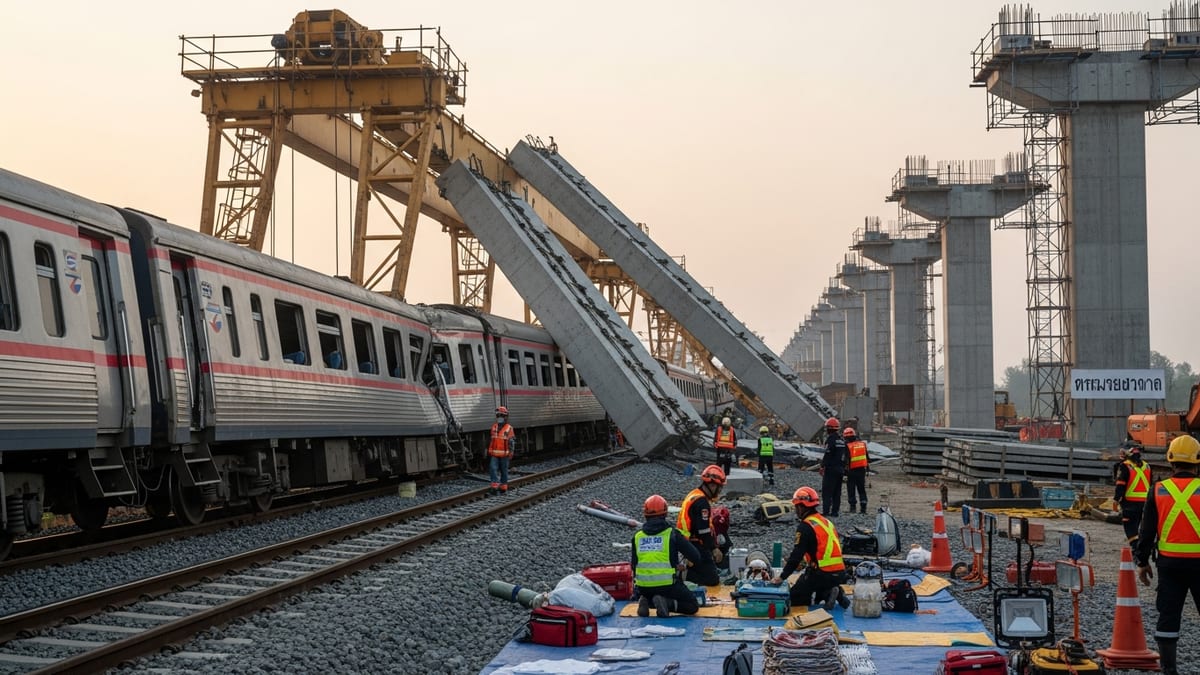
Derailment Near College Park Disrupts Holiday Weekend Travel
Initial accounts circulating on local transit forums and social media indicate the derailment occurred near the transition from elevated structure to ground level just south of College Park station. The location is on a heavily used stretch of track that carries riders between the Maryland suburbs and central Washington, D.C., an area that typically sees increased traffic over the Fourth of July holiday.
Posts attributed to regular Metro riders describe a train identified as 525 leaving the rails at low speed as it approached the station area. The incident reportedly unfolded late Saturday morning, with images and descriptions suggesting the lead portion of the train shifted off the track while remaining upright. No smoke or apparent fire was described in early witness accounts.
Transit-focused discussion boards report that service was halted in the immediate area while rail controllers and emergency responders assessed the scene. Riders on adjacent trains described extended delays and single-tracking in the corridor as rail traffic was rerouted around the affected section.
Local media outlets had not yet published full incident summaries by early afternoon, and regional transit agencies were still updating online status boards. Publicly visible alerts pointed to a service disruption near College Park consistent with a track-related incident.
Eleven On Board, One Minor Injury Reported
Discussion threads on a Washington-area transit forum dedicated to Metro operations indicate that approximately eleven passengers were aboard the affected train at the time of the derailment. Early information from those tracking the incident suggests that one passenger sustained a minor injury, while the remaining riders were able to leave the train without serious medical issues.
Comments from individuals who said they were either on the train or in contact with riders describe a controlled evacuation assisted by emergency crews. Passengers were reportedly guided along the right-of-way to a safe area, with power to the third rail believed to have been cut prior to the movement of people along the trackside.
Publicly visible incident summaries and the absence of multi-agency emergency alerts suggest that no life-threatening injuries were identified in the immediate aftermath. Area hospitals did not issue broad casualty notifications connected to the derailment as of early Saturday afternoon.
In line with customary practice after similar events in the region, the train involved is expected to be removed for detailed inspection once the track area is stabilized and documented. Passengers evacuated from the train were anticipated to be offered alternate transportation from the nearest safe access point to the line.
Service Adjustments and Delays for Riders
Information shared across rider alert feeds and social media pointed to significant delays for passengers traveling through the Green and Yellow Line corridor near College Park following the incident. Trains were reported to be holding outside stations for extended periods as controllers reorganized service patterns around the blocked track segment.
Riders described single tracking through the affected zone, a standard operating response when one of the two tracks cannot be used. This approach allows limited service to continue in both directions but typically results in reduced frequency and crowded platforms further down the line.
Some commuters reported being instructed to transfer to shuttle buses or to use alternate stations on intersecting lines where possible. Others indicated that they chose to exit early and use ride-hailing services or regional rail, underscoring the cascading impact a localized derailment can have on personal travel plans.
Transit observers noted that the derailment occurred on a day when many residents rely on rail service to reach holiday events in downtown Washington and the National Mall area. The timing increased the visibility of the disruption and prompted a surge of online discussion among both regular riders and occasional holiday travelers.
Safety Context and Recent Metro Incidents
The incident near College Park comes against a backdrop of heightened attention to rail safety in the Washington region. Previous reports by transportation agencies and independent watchdogs have highlighted issues such as track geometry problems, heat-related rail expansion, and aging infrastructure as ongoing concerns for the system.
National Transportation Safety Board documentation and earlier investigations into Metro derailments elsewhere in the network have linked certain past incidents to track width irregularities and deferred maintenance. In those cases, reports have recommended tighter inspection intervals, more frequent replacement of worn components, and more conservative speed limits in vulnerable segments.
Transit specialists observing Saturday’s event noted that the derailment reportedly occurred at a structural transition point, where the line shifts from elevated guideway to ground-level track. Such locations are typically subject to special engineering attention because of the differing forces acting on the rail and supporting structures.
While it remains too early for any formal determination of cause, the incident is likely to be scrutinized in the context of prior safety audits and the region’s broader push to modernize its rail system. Publicly available records show that Metro and regional regulators have invested in additional inspection technology and track monitoring programs in recent years following earlier high-profile events.
Developing Situation and Next Steps
As of Saturday afternoon, information about the derailment near College Park was still emerging, with transit agencies, emergency responders, and safety investigators expected to provide more detailed accounts as the situation evolves. Railcars and track components must typically be inspected in place before heavy equipment can move them, a process that can extend service disruptions into the evening hours.
Published coverage of previous derailments in the Washington area indicates that investigators generally examine rail alignment, train speed, recent maintenance records, and environmental conditions such as high heat or heavy rain. Data from the train’s onboard systems and control center logs are also typically reviewed to reconstruct the sequence of events.
Rider advocacy groups and transportation analysts are likely to focus on how quickly and clearly information is shared with passengers during and after the incident. Early online comments from riders in the corridor suggested some confusion about the nature of the disruption before details of the derailment began to circulate on transit-focused forums.
The event near College Park adds a fresh case study to the ongoing conversation about urban rail safety in the United States. As more verified information becomes available, the derailment and the evacuation of eleven passengers are expected to inform future decisions on inspection regimes, capital investment priorities, and how agencies manage both infrastructure stress and rider communication during peak travel periods.