


More news on this day
A single-car derailment just outside College Park–University of Maryland station on July 4 disrupted Metro’s Green and Yellow lines, complicating holiday travel for riders headed to and from Washington, D.C.
Get the latest news straight to your inbox!
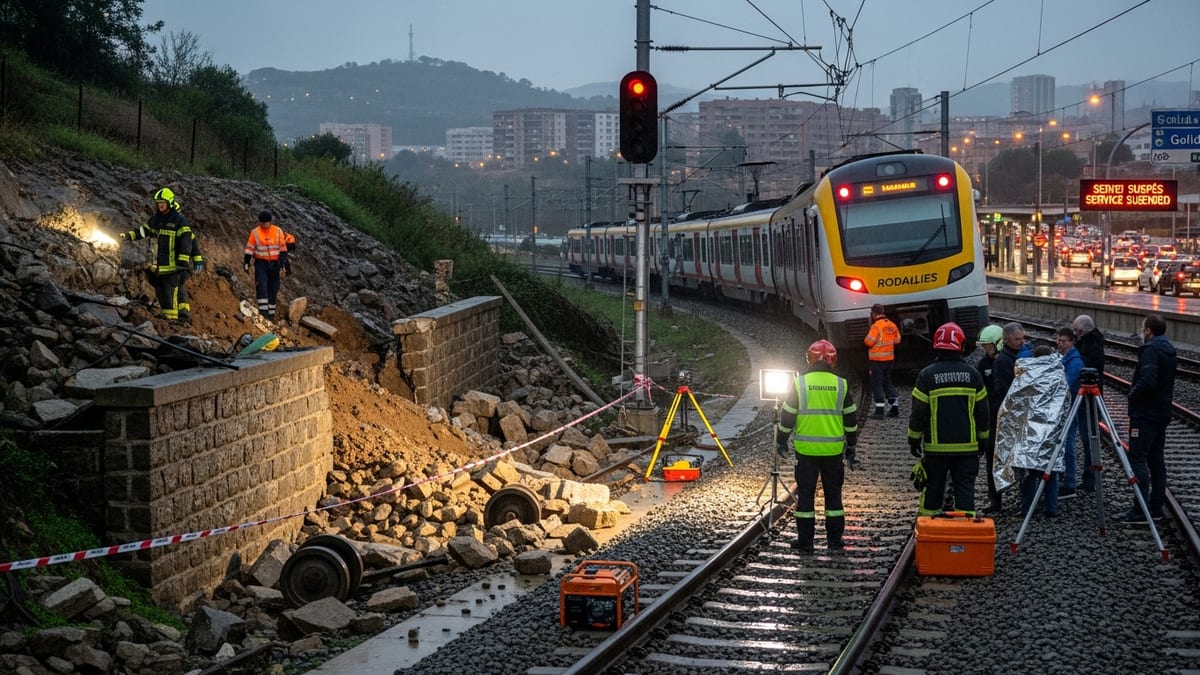
Derailment reported near College Park on busy holiday morning
Reports circulating on the afternoon of July 4 indicate that a Green Line train experienced a single-car derailment north of College Park–University of Maryland station, in the direction of Greenbelt. Accounts describe the incident as occurring on the approach to the station, near the transition from elevated structure to ground level.
Based on publicly shared information, the affected train was operating toward Greenbelt when one railcar left the tracks while the remainder of the trainset remained upright. Early rider accounts referenced a sudden jolt and an abrupt stop outside the station, followed by announcements instructing passengers to remain on board while the incident was assessed.
As of early afternoon, there were no widely reported serious injuries associated with the incident. Available descriptions emphasize that the car involved came off the rails at low speed, reducing the risk of more severe damage.
The derailment occurred on a day of elevated ridership, as Metro had promoted extended service and holiday travel to Independence Day events across the region. The timing added strain to an already busy network, particularly for riders in Prince George’s County relying on the Green and Yellow lines for direct service into central Washington.
Service outages and bus bridges on Green and Yellow lines
Following the derailment, publicly available rider alerts and social media posts pointed to a rapid suspension of train service through the affected segment. Trains were turned back at nearby stations, leading to gaps in service between College Park and Greenbelt and ripple effects along the broader Green and Yellow lines.
Informal summaries of Metro notices describe substitute bus service being organized between key Green Line stations, with specific routes identified to connect Greenbelt, College Park and Hyattsville Crossing. Riders reported that buses were making additional stops to approximate normal station access while rail operations were paused in the derailment area.
Passengers on both the Green and Yellow lines experienced significant delays, with headways increasing and some trains terminating short of their usual endpoints. According to rider accounts, Yellow Line trains were particularly affected at the northern end of the shared Green and Yellow corridor, where service patterns were adjusted to avoid the blocked section near College Park.
Some travelers opted to reroute through other lines or transfer hubs, using stations such as Fort Totten and L’Enfant Plaza to reach downtown destinations. Still, the loss of direct Green and Yellow service through College Park and toward Greenbelt added extra travel time and uncertainty for many Fourth of July plans.
Impact on Fourth of July travel plans and regional events
The derailment unfolded against the backdrop of Metro’s expanded Independence Day service, which included frequent trains and fare incentives to help manage crowds heading to fireworks, concerts and festivals. Riders in the College Park and Greenbelt area had been encouraged to use the Green and Yellow lines for direct access to central Washington and the National Mall.
With part of the Green Line out of service, many holiday travelers found themselves needing to improvise. Accounts from riders describe missed connections, longer waits for shuttle buses and crowded platforms at transfer stations where passengers attempted to reconfigure their routes at short notice.
For residents and visitors staying near the University of Maryland and surrounding communities, the disruption narrowed transit options on a day when parking and road congestion in downtown Washington were already expected to be heavy. Some riders reported abandoning rail entirely in favor of carpooling or rideshare services once it became clear that delays would extend into the afternoon.
Despite the setback, many trains elsewhere on the system continued operating at enhanced frequencies, and travelers closer to central Washington were able to proceed with their plans largely unaffected. The localized nature of the derailment limited the worst operational impacts to the northern end of the Green and Yellow corridor.
Safety context and ongoing response near College Park
Available information indicates that the train remained upright and that damage was largely confined to the derailed car and track infrastructure in the immediate area. Visual descriptions from riders and bystanders point to emergency and maintenance personnel arriving near the site to evaluate the car, inspect the rails and stabilize the scene before any attempt to re-rail equipment or move the train.
The area between College Park and Greenbelt has seen extensive construction and testing activity in recent years, including work related to the Purple Line light rail corridor. While there is no confirmed link between ongoing construction and the July 4 incident, the shared transportation corridor has been subject to frequent work windows and complex operating conditions.
Past safety documentation for the region’s rail network has detailed previous low-speed derailments on or near the Green Line, prompting infrastructure inspections and ongoing monitoring of track geometry, rail fasteners and supporting structures. The July 4 derailment near College Park is likely to draw fresh scrutiny to those efforts as investigators examine the condition of the track and equipment involved.
Publicly available updates suggest that a full restoration of normal service will require clearance from inspectors once the derailed car is removed and repairs or adjustments are completed. Until then, Green and Yellow line riders in northern Prince George’s County are being advised through posted alerts and rider channels to expect reduced frequencies, possible bus bridges and changing travel times as Fourth of July celebrations continue.
What riders can expect as service gradually resumes
As the response progresses, reports indicate that Metro is working to isolate the affected track segment, remove the derailed car and conduct detailed inspections before reopening the line. This process typically involves verifying rail alignment, checking track circuits and inspecting adjacent cars for any secondary damage.
Once single tracking or partial service is restored, riders are likely to encounter longer waits between trains and platform crowding at stations just outside the closure area, especially at College Park and Greenbelt. Experience from previous disruptions suggests that it can take several hours, and in some cases longer, for train spacing and normal service patterns to stabilize even after tracks are cleared.
For the remainder of the holiday period, riders in the College Park corridor may benefit from building additional time into their journeys, monitoring Metro’s service alerts and considering alternative routes where practical. Transfer stations on unaffected lines are expected to remain key pressure points as holiday travelers adjust plans in response to the derailment.
With fireworks, evening events and return trips still ahead, the single-car derailment outside College Park has added an unexpected complication to what is typically one of the busiest transit days of the summer, underscoring the importance of resilient service planning on the Green and Yellow lines.