


More news on this day
Travelers connecting through Istanbul Airport toward Dubai, Paris and onward global destinations are facing fresh disruption after key Flydubai and Air France flights were canceled, leaving passengers stranded in Türkiye and forcing last-minute changes to international travel plans.
Get the latest news straight to your inbox!
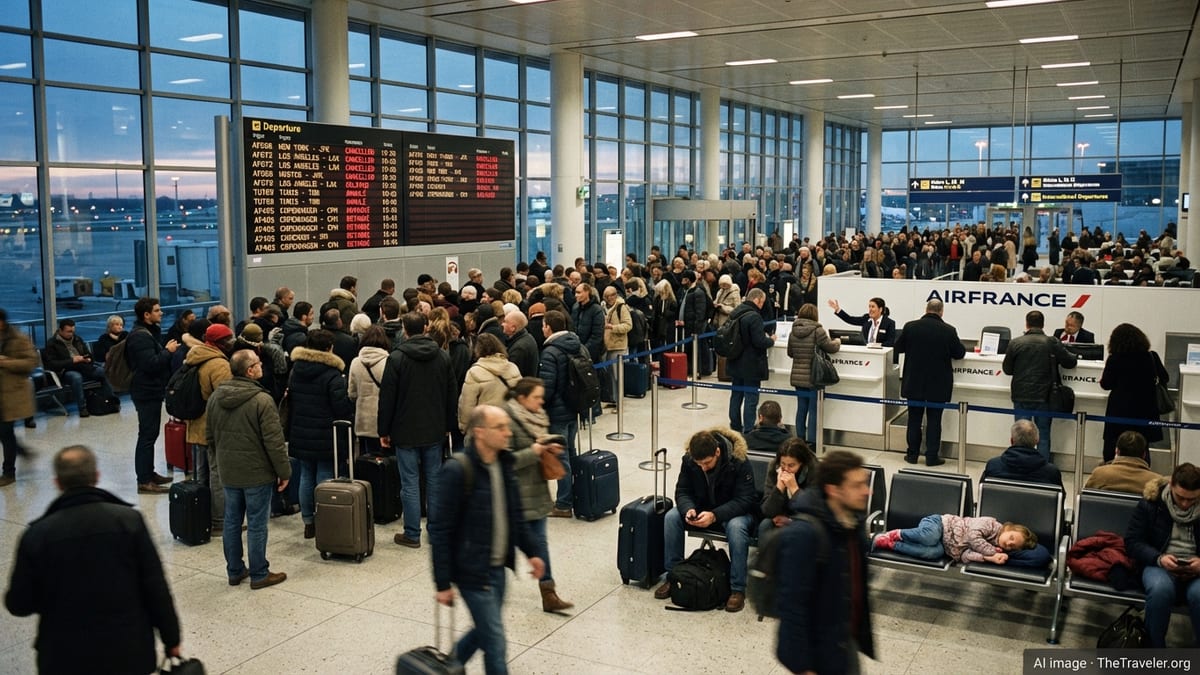
Fresh Disruptions Hit Istanbul’s Role as a Global Hub
Recent operational turbulence in regional airspace and at Gulf airports has reverberated into Türkiye, where reports indicate that at least two high-demand services linking Istanbul with Dubai and Paris were withdrawn from schedules or canceled at short notice. Istanbul Airport, a critical bridge between Europe, the Middle East and Asia, has again found itself managing stranded passengers and unscheduled layovers.
Published coverage on Middle East airspace restrictions and reduced operations at major hubs such as Dubai shows that airlines including Flydubai have been operating thinner schedules and adjusting routings, contributing to pressure on alternative gateways like Istanbul. When individual flights are then removed from service, the impact on connecting travelers can be significant, especially for those relying on Istanbul as a transfer point between long-haul legs.
In this latest episode, passengers booked on a Flydubai service from Istanbul to Dubai and an Air France connection from Istanbul to Paris reported day-of-travel cancellations and rebookings that extended journey times or forced overnight stays in Türkiye. While the number of affected travelers has not been publicly quantified, full or near-full loads on these routes suggest that hundreds of itineraries may have been altered.
The situation underlines how quickly disruption in one part of the aviation network can cascade through others. Even when Istanbul Airport itself remains operational, schedule changes at Gulf and European hubs can ripple through code shares and partner services, suddenly shifting demand and straining rebooking options for carriers serving Türkiye.
Why Dubai and Paris Routes Are Under Particular Strain
Industry data and recent reports on the broader region point to several overlapping factors behind the stress on Istanbul’s connections to Dubai and Paris. Airspace closures and restrictions linked to regional tensions have prompted airlines across the Middle East to reroute or cut services, particularly on corridors touching the Gulf, which in turn has constrained capacity for travelers seeking to reach Dubai as a key transit and business destination.
Dubai has been at the heart of recent operational challenges, with multiple accounts describing days of disrupted traffic, temporary suspensions and a gradual return to limited or reduced schedules at the city’s airports. Low-cost and hybrid carriers such as Flydubai have been central to restoring connectivity, but the fluid situation has made last-minute timetable changes more likely on some legs, including services feeding in from Istanbul.
On the European side, published coverage shows that Air France and other major carriers have been periodically reshaping networks in response to higher fuel costs, evolving demand patterns and operational constraints on certain long-haul sectors. Against that backdrop, a point-to-point flight such as Istanbul to Paris can be vulnerable to short-notice adjustments, especially when aircraft and crews are needed elsewhere in the network.
When disruptions affect both Gulf and European hubs around the same time, Istanbul’s dual role as a connector to Dubai and Paris becomes a liability as well as a strength. Travelers who depend on tightly timed itineraries through Türkiye to link North America, Europe, Africa and Asia can find that a single cancellation on either route effectively breaks an entire long-haul journey.
Stranded Passengers Face Delays, Limited Alternatives and Complex Rebookings
Reports from recent disruption waves across the wider region describe familiar scenes for those stranded in Türkiye after the latest Istanbul cancellations. Passengers arriving at the airport to find their Flydubai or Air France flights withdrawn have encountered long queues at service counters, uncertainty around hotel arrangements and competing advice about whether to remain airside or exit and recheck later.
In some cases, travelers holding separate tickets for onward legs from Dubai or Paris have been especially exposed. Publicly available guidance from travel rights organizations notes that when passengers book split itineraries, a cancellation on the first leg can leave them responsible for missed onward flights if those sectors are operated by different airlines. That risk is magnified amid regional disruption and tighter capacity where same-day alternatives may be scarce.
According to consumer advocacy summaries of recent Middle East disruption, many airlines are offering rebooking onto later services, vouchers or refunds rather than immediate confirmed alternatives, particularly when networks are operating below normal frequency. For stranded Istanbul passengers trying to reach Dubai, this can mean waiting for seats on already busy flights into the UAE or rerouting through alternative hubs such as Doha, Abu Dhabi or European gateways before connecting again.
Travelers headed for Paris face similar complications. If their original Air France flight from Istanbul is canceled at short notice, rebooking may involve detours via other European cities or longer layovers, especially when aircraft rotations have already been affected by earlier disturbances elsewhere in the network.
Passenger Rights and What Travelers Can Do Now
Passenger rights and available remedies depend heavily on the carrier and routing. For flights operated by European airlines such as Air France and departing from Türkiye to the European Union, travelers may fall under EU passenger protection rules that can provide compensation and assistance in cases of certain cancellations or long delays, subject to exemptions when disruptions are caused by extraordinary circumstances such as airspace closures.
By contrast, services on non-EU carriers such as Flydubai are typically governed by the airline’s own conditions of carriage and by national regulations in the countries of departure and arrival. Publicly available documents outlining Flydubai’s current policies emphasize schedule-change notifications, options to rebook within defined windows, or credits and refunds in specific scenarios, though exact entitlements can vary by fare type and the cause of disruption.
Travel advisors recommend that passengers currently booked on Istanbul to Dubai or Istanbul to Paris flights take several precautionary steps. Travelers are encouraged to monitor their booking through airline apps or websites rather than relying only on airport departure boards, and to ensure contact details in reservations are up to date so that any last-minute changes can be communicated quickly.
In the event of a cancellation, experts in consumer travel guidance suggest documenting all expenses related to accommodation, meals and local transport in Türkiye, retaining boarding passes and booking confirmations, and filing claims promptly through airline customer channels. Where separate tickets or partner carriers are involved, coordinating directly with each airline may be necessary to reconstruct complex itineraries.
Planning Ahead for Travel Through Istanbul, Dubai and Paris
The latest Istanbul disruptions linked to Flydubai and Air France highlight the value of building additional resilience into travel plans that traverse sensitive air corridors. With regional security dynamics, weather and capacity constraints all playing a role in recent months, itineraries threading Istanbul with Gulf and Western European hubs can change with little warning.
Travel experts advising on current Middle East and European connectivity suggest allowing longer minimum connection times when routing through Istanbul into Dubai or Paris, particularly when separate tickets or different airline alliances are involved. Booking through-tickets on a single carrier group or alliance, where possible, can also reduce the risk that one leg of a journey is treated as entirely separate from the next in case of disruption.
Some frequent travelers are also opting to keep contingency plans in mind, such as alternative routings via secondary hubs or flexible hotel reservations at transit points like Istanbul. With travel demand to the Gulf and Western Europe expected to remain strong, spare capacity on popular corridors may be limited whenever operational shocks occur, making early rebooking more important.
For now, publicly available operational updates suggest that airlines are gradually stabilizing their schedules across the region while still warning of potential last-minute changes. Passengers planning to use Istanbul as a springboard to Dubai or Paris in the coming days are being advised by travel information services to stay alert to updates and to treat flight status checks as an essential part of pre-departure preparation.