


More news on this day
Departing passengers across Europe are facing an escalating security crunch this April, with staff shortages, new biometric border checks and severe weather combining to leave dozens stranded at departure gates or watching their flights leave without them.
Get the latest news straight to your inbox!
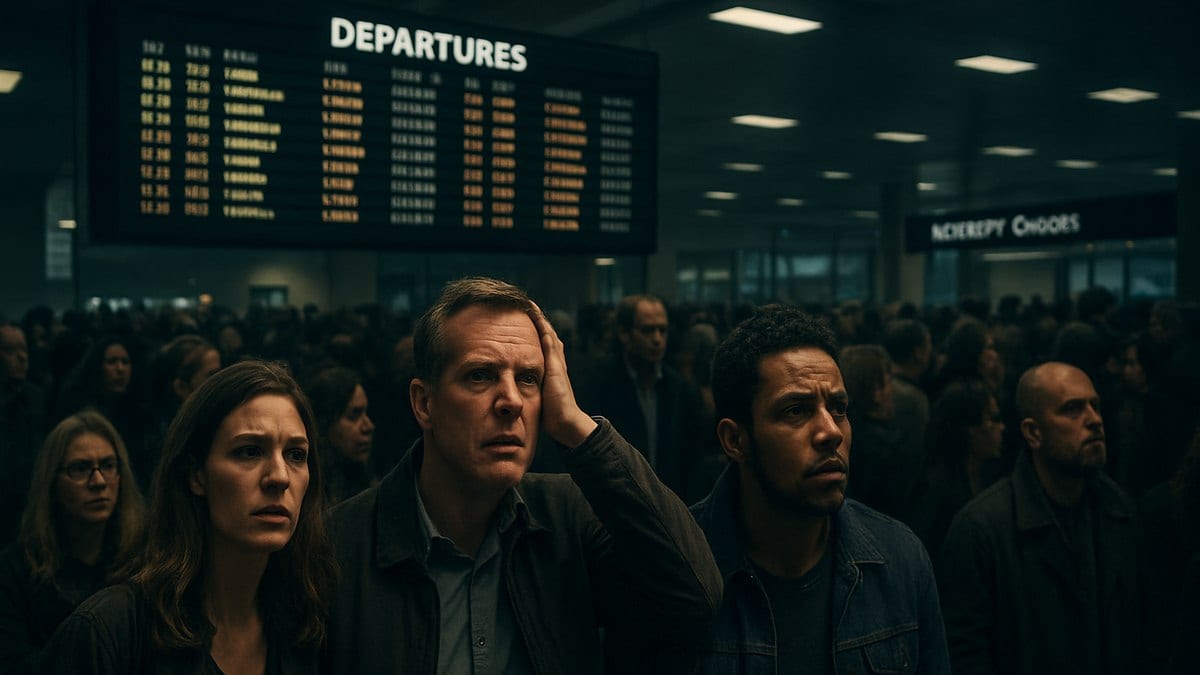
Ghost Departures Highlight Security Staffing Fragility
Fresh reports from France underscore how vulnerable European airports have become when security staffing breaks down. At Vatry Airport in eastern France, a Ryanair flight to Marrakech departed without its passengers after security staff reportedly failed to appear for duty, leaving 192 ticketed travelers unable to clear screening in time to board.
Publicly available information on the incident indicates that airport security positions went unfilled on the day of departure, effectively closing the checkpoint for outbound travelers while the aircraft itself remained technically ready to operate.
Coverage of the episode describes airport and airline planners weighing whether to keep the aircraft on the ground indefinitely in the hope that replacement staff could be found, or to operate the flight empty in order to protect crew hours and downstream scheduling. The decision to depart without passengers has drawn sharp criticism from travelers and consumer advocates, who argue that staffing resilience at security checkpoints is now a core element of service reliability.
Commentary around the Vatry disruption also points to a blurred line between airport and airline responsibilities when government-mandated security processes fail. While European passenger rights rules focus on carrier-controlled disruptions, travelers left in the departure hall by a closed security lane are discovering that compensation and care provisions are far from guaranteed.
Biometric Border Rollout Triggers Wave of Missed Departures
At the same time, the European Union’s new biometric Entry Exit System is generating its own security bottlenecks on the departure side. The system, which went fully live across the Schengen area in April, requires non EU nationals to provide fingerprints and facial scans at border control. Early evidence from multiple airports suggests that processing times have lengthened sharply, sending queues snaking back toward departure gates.
Reports from Milan Linate describe one EasyJet flight to Manchester carrying barely a fraction of its booked passengers after more than 100 travelers were still trapped in hours long border queues when boarding closed. Published coverage indicates that only 34 of the 156 people with reservations made it onto the aircraft, with others facing rebooking battles, extra accommodation costs and disrupted onward plans.
Industry analyses note that airports across Italy and Portugal have at times paused or scaled back use of the new biometric kiosks to clear backlogs, only to restart them later in the day. Trade bodies representing airports and airlines have warned that two to three hour waits at border control are already being recorded at peak times, and that these conditions are likely to push more travelers into missed departures as the spring and summer travel season ramps up.
Travel forums and consumer advisories now recommend that non EU passengers treat border control as a critical part of departure planning, not just arrival formalities. With EES checks embedded in the outbound flow at many terminals, a late start through security and passport control can mean watching a flight leave from the gate area despite having arrived at the airport well in advance.
Security Queues Stretch Terminals Beyond Capacity
In the United Kingdom, London Stansted has become an emblem of how quickly security lines can overwhelm terminal layouts. Recent accounts describe queues stretching beyond two hours during busy bank holiday periods, with passengers reporting abandoned baggage, missed flights and last minute scrambles through the concourse as boarding closed.
Travel reports from the airport recount hundreds of people massed well before the main screening area, effectively converting large sections of the departure hall into a static security queue. Some travelers have described reaching airline service desks only after their flights had already left, forcing expensive same day rebooking or overnight stays at nearby hotels.
Observers link the congestion at Stansted to a combination of near peak capacity operations, seasonal surges in leisure travel and tight staffing margins. Once security lines exceed the space specifically designed for them, they begin to block access to shops, boarding gates and customer service counters, compounding the sense of chaos for departing passengers.
Similar patterns are visible in anecdotal reports from other European gateways, where non EU lanes for passport control are handling larger volumes of travelers subject to enhanced checks. Without additional staff and reconfigured layouts, security zones risk becoming the single point of failure for entire departure banks.
Weather Turbulence Meets Structural Weaknesses
Adverse spring weather is amplifying the effect of these security related choke points. Data compiled by air passenger advocacy platforms for the weekend leading into April 21 indicates that more than 1,100 flights were delayed and around 550 were canceled across Europe, with significant disruption centered on Munich, Amsterdam Schiphol and Barcelona.
Thunderstorms and low visibility conditions have long produced delays at busy hubs, but analysts note that today’s knock on effects differ from pre pandemic patterns. Once flights begin to stack up, security and border control bottlenecks can slow recovery, as new waves of passengers arrive at terminals that are already stretched by earlier disruptions.
In practical terms, this means a traveler leaving Barcelona for a short haul European destination can be hit twice: first by a weather related delay that compresses the departure window, and second by a congested security or passport checkpoint that makes it harder to reach the gate once boarding begins. As aircraft and crew circulate through multiple airports each day, isolated storms in one country can translate into missed departures and overnight strandings in another.
Commentary from aviation specialists suggests that climate patterns bringing more intense localized storms will make such compound disruptions more common. Without additional investment in flexible security staffing, surge capacity and automated processing, the threshold at which routine weather turns into widespread passenger stranding may continue to fall.
Passenger Experience Caught Between Security and Accountability
Across these incidents, one theme is consistent: departing passengers are bearing the brunt of a security system that has not kept pace with traffic growth or technological change. Whether the trigger is a no show security team at a regional French airport, the slow rollout of biometric borders in Italy, or infrastructure limitations at a major UK hub, the result is often the same. Dozens of travelers find themselves stranded not by aircraft defects or air traffic control restrictions, but by chokepoints at the very start of the journey.
Public guidance from travel companies and consumer rights groups increasingly emphasizes self protection. Travelers are advised to arrive earlier than usual, move through bag drop and security before stopping elsewhere in the terminal, and keep detailed records of queue times and airline communications in case claims become necessary.
At the policy level, airport associations and airline groups are using the current wave of disruptions to argue for more flexible staffing models, better coordination with border agencies and contingency plans that prioritize passenger movement through security zones. Some industry statements characterize the present moment as a stress test for how Europe balances tighter security with the promise of seamless mobility.
For now, the lived reality for many travelers is more prosaic. A missed family holiday flight in Milan, a ghost departure from rural France, or an abandoned city break from London all point to the same conclusion for passengers planning spring and summer trips. In 2026, the greatest risk to making a European departure on time may not be in the skies, but in the queues between the check in desk and the gate.