


More news on this day
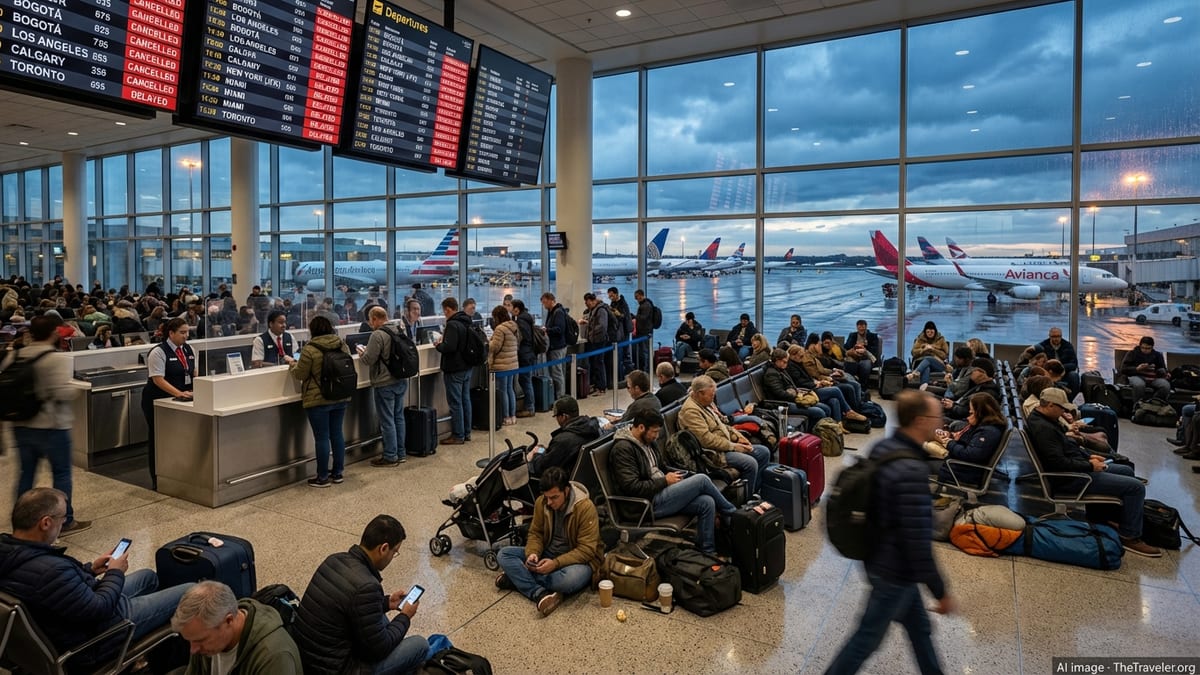
Passengers at Miami International Airport faced another day of disrupted travel on June 26, as a new wave of delays and cancellations rippled across major routes linking the United States with Canada, Venezuela, Colombia, Brazil and Caribbean destinations.
Get the latest news straight to your inbox!
Disruptions Mount at a Critical U.S.–Latin America Hub
Miami International Airport, one of the busiest gateways between North America and Latin America, once again saw its operations stretched on Friday. Publicly available tracking data and industry reports for June 26 point to more than one hundred delayed flights and multiple cancellations, affecting departures and arrivals operated by American Airlines, Air Canada, Delta Air Lines, Qatar Airways, LATAM Airlines, Avianca and several smaller carriers.
The pattern follows a broader trend of operational strain at Miami in recent months, where spikes of more than 100 delays in a single day have periodically disrupted schedules. Earlier in the year, independent air-travel rights monitors highlighted similar surges tied to weather systems across the Southeast and network congestion spreading from other hubs. While the specific count for June 26 centers on 114 delays and eight cancellations, the underlying picture is one of recurring pressure on a crowded international hub.
Government dashboard information on June 26 listed only modest en route delays in the Miami area, suggesting that many of the disruptions originated from airline scheduling, aircraft rotations and knock-on effects from other airports, rather than a single large-scale air traffic control event. That combination of local and network issues has made Miami particularly vulnerable during peak travel periods.
Miami’s status as a primary connecting point for flights between the United States, South America and the Caribbean means that even a relatively contained disruption can cascade quickly, turning minor timetable slips into missed connections and overnight stays for passengers headed onwards to South American capitals or island resorts.
American, Delta, Qatar, LATAM and Avianca Among Most Affected
Traffic statistics from the Miami-Dade Aviation Department show that American Airlines dominates operations at Miami, with Delta, LATAM, Air Canada, Avianca and Qatar Airways all running key long-haul and regional services through the airport. On peak disruption days, those same airlines are often most visible on delay boards because of their heavy schedules in and out of the hub.
Recent daily snapshots compiled by travel news outlets and flight-tracking services indicate that American Airlines in particular has experienced recurring operational challenges this month, with rolling delays and overnight pushes on certain long-haul services. Discussions among frequent travelers on public forums describe incremental delay notices that stretch a routine schedule slip into an overnight disruption, especially for international flights requiring specific crews and aircraft types.
Delta Air Lines, Qatar Airways, LATAM and Avianca also feature in the latest Miami disruption tallies, largely on services connecting to major South American cities such as Bogotá, Lima and São Paulo, as well as transatlantic and Middle Eastern routes via partner hubs. On June 26, reports from aviation-focused media highlighted how delays on flights to destinations including Maiquetía serving Caracas, Rio de Janeiro and Caribbean points added to the disruption count, with some aircraft arriving late and departing behind schedule for their next legs.
Air Canada and its leisure affiliates, which rely on Miami as a key Florida gateway for Canadian travelers heading to Caribbean islands and South America, have also been listed among carriers experiencing knock-on delays. Even when individual flights depart close to scheduled time, minor ground holds or late-arriving crews can be enough to push them into the wider tally of delayed operations.
Routes to Canada, Venezuela, Colombia, Brazil and Caribbean Islands Under Strain
Among the most affected passengers on June 26 were those traveling on cross-border services linking the United States with Canada and major Latin American markets. Published coverage of airport performance in Miami shows that flights to and from Bogotá, Caracas, Rio de Janeiro, São Paulo and key Caribbean destinations frequently appear in disruption data whenever the airport experiences a spike in delays.
Several Colombian services operated by Avianca and American Airlines, which provide crucial links between Miami and Bogotá for both business and visiting-friends-and-relatives travel, have recently encountered schedule pressure. Real-time trackers for June 26 showed at least one Bogotá to Miami arrival pushing past its scheduled time, highlighting how delays can originate on inbound legs before affecting departures back to South America.
Connections to Venezuela, particularly flights serving Maiquetía near Caracas, have drawn attention in the latest disruption reports because of their limited frequency and high reliance on specific carriers. When even one of these flights is delayed or cancelled, travelers often face fewer same-day alternatives. Caribbean itineraries, such as those to San Juan and resort islands, are also vulnerable since they are popular for short leisure trips where even moderate delays can consume a significant portion of a weekend break.
Canadian-bound passengers from Miami have reported facing tighter connection windows and rebookings when southbound flights arrive late into Florida. With Miami positioned as both a destination and a connecting hub for Canadians heading toward Latin America and the Caribbean, disruptions on either side of the border can leave travelers facing long waits for re-routed itineraries.
Passengers Confront Long Lines, Uncertain Rebooking and Limited Protection
For passengers, the operational statistics translate into hours spent in terminal queues and at boarding gates waiting for updated departure times. Social media posts and message-board accounts from the past week describe lengthy lines at customer service desks in Miami as travelers seek seat assignments on later flights, hotel vouchers or meal assistance when disruptions stretch into the night.
Consumer-rights advocates and travel law resources note that protections for U.S.-based passengers remain limited compared with some international regimes. While European rules offer fixed compensation in certain circumstances when disruptions are within an airline’s control, U.S. regulations focus more narrowly on safety and disclosure. Airlines operating from Miami publish their own customer service commitments, which may include meal or hotel support for delays and cancellations caused by factors within the carrier’s control, such as crew scheduling or aircraft maintenance.
However, publicly available policy explanations highlight that many disruptions are categorized as weather-related or attributable to air traffic control constraints, designations that generally reduce the likelihood of financial support for travelers. This distinction has become a frequent point of frustration for passengers at Miami and other large hubs, who often see clear skies at departure time while learning that earlier storms along the route or at other airports are being cited as the root cause of delays.
Travel specialists regularly advise affected passengers in Miami to document actual arrival and departure times, keep receipts for unexpected expenses such as hotel stays and meals, and explore airline complaint channels or third-party claims services where international regulations might apply on certain itineraries. These steps can help clarify whether a disruption stemmed from factors inside or outside airline control and whether any reimbursement is available.
Broader Implications for Peak Summer and Regional Connectivity
The latest wave of delays and cancellations at Miami International Airport arrives just as the North American summer travel season intensifies. Forecasts from aviation and tourism agencies point to strong demand on cross-border routes throughout 2026, with Miami expected to handle growing passenger volumes linked to regional events and the build-up to the 2026 FIFA World Cup matches scheduled in South Florida.
Operational pressure at Miami has implications well beyond Florida. Because the airport acts as a central connecting node between the United States, Canada, South America and the Caribbean, any local disruption can echo across a wide geography. Travelers bound for secondary cities in Colombia or Brazil, or for smaller Caribbean islands reached via Miami connections, may feel the impact of even relatively contained timetable changes.
Industry observers say the June 26 disruption figures underline the importance of resilient scheduling, adequate staffing and investment in airport infrastructure at Miami as passenger numbers rise. The airport’s carrier mix, heavily weighted toward American Airlines and a cluster of key international partners, means that operational decisions by a small number of airlines can significantly shape the experience of thousands of travelers on any given day.
For now, passengers planning to travel through Miami International Airport in the coming weeks are being encouraged by travel advisors to build in longer connection times, monitor flight status closely, and consider early-morning departures where feasible, as these are often less exposed to the cascading effect of late-arriving aircraft and crews that has contributed to the recent spikes in delays and cancellations.