


More news on this day
Sutton Coldfield railway station in the West Midlands has formally welcomed a new four-legged member of its team, with resident cat Betty Junior gaining an official role in rodent control as part of efforts to improve the station environment for growing numbers of rail passengers.
Get the latest news straight to your inbox!
Local Station Turns to a Feline Recruit
Reports circulating in local coverage and community forums indicate that Betty Junior, a black-and-white cat already familiar to regular users of Sutton Coldfield station, has been given an acknowledged position as a “junior mouse catcher.” The appointment reflects a long tradition of cats being used around railway premises in the United Kingdom to deter rodents and protect food, wiring, and building fabric.
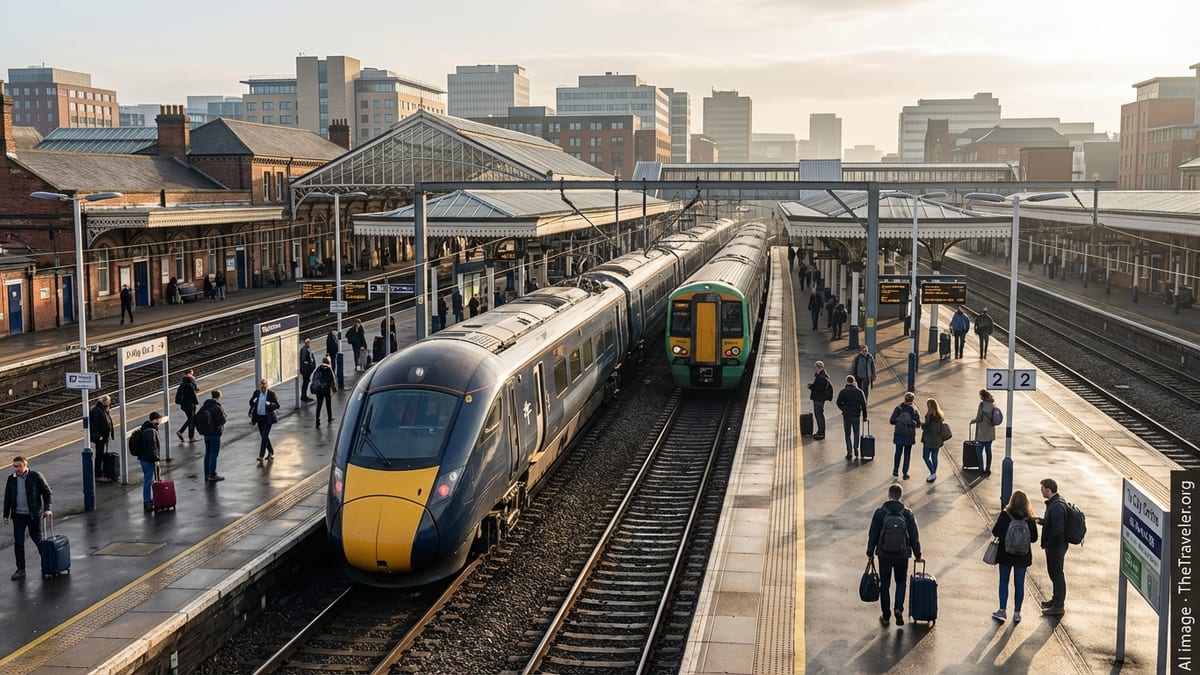
Sutton Coldfield is a key stop on the Cross-City Line serving commuters between Birmingham and Lichfield, with passenger numbers recovering in recent years in line with broader rail travel trends. Publicly available information on the station shows that it occupies a Victorian-era building with structural features that can provide ample hiding places for mice and rats, making routine pest management a continuing concern.
While Betty Junior’s title is informal, the decision to highlight the cat’s role has been framed as both a practical pest-control measure and a light-hearted way to create a friendlier atmosphere for everyday rail users. The station environment, which blends heritage architecture with modern facilities, provides numerous vantage points where the cat is often seen by passengers waiting for trains or visiting on-site businesses.
Online reaction suggests that the move has already increased interest in the station and its resident feline. Travellers and local residents have shared photographs and anecdotes, describing Betty Junior as a familiar presence around platforms and concourse areas and noting that the cat has become a talking point for people passing through the town’s main rail gateway.
Heritage Architecture and Modern Pest Challenges
The appointment of a station cat at Sutton Coldfield highlights a wider challenge facing older railway sites in Britain, where ornate 19th-century buildings coexist with contemporary passenger services. Such structures can be difficult to seal completely against rodents, and gaps in brickwork, roof spaces and under-platform voids often require ongoing intervention.
Industry guidance typically combines professional pest-control contracts with measures such as rigorous waste management, secure storage of food products and reductions in clutter. Introducing or recognising a resident cat fits into this landscape as an additional, low-tech deterrent that aligns with public expectations of humane and environmentally low-impact control methods.
Published coverage of similar initiatives at other UK stations and businesses has noted that the presence of a cat can discourage rodents from settling in the area, even when individual animals are not actively hunting. The scent and movement of a predator can be sufficient to alter rodent behaviour, particularly in spaces where food waste is tightly managed.
At Sutton Coldfield, Betty Junior’s presence appears to complement existing measures rather than replace them. The station’s relatively enclosed concourse and adjacent commercial outlets, including a popular independent coffee operation, create conditions where a visible deterrent is especially welcome during early mornings and late evenings when staff numbers may be lower.
Rail Travel Recovery and Passenger Experience
The timing of Betty Junior’s formal recognition coincides with continued efforts across the UK rail network to attract passengers back to trains following pandemic-era declines. Operators and station managers have sought to improve cleanliness, safety perceptions and overall ambience, with some locations emphasising local character and small-scale community initiatives.
Sutton Coldfield’s role as a commuter hub for the wider Birmingham area means that even marginal improvements in passenger satisfaction can have a noticeable impact on daily travel patterns. A well-maintained, welcoming station environment can encourage occasional users to travel more frequently by rail rather than by car, supporting local air quality and congestion objectives.
Publicly available passenger feedback on similar station-cat schemes elsewhere in the country suggests that such mascots can contribute to a more relaxed atmosphere, particularly for anxious or infrequent travellers. While the core focus remains on operational reliability and safety, small touches of personality are increasingly recognised as part of a broader strategy to make public transport more appealing.
Betty Junior’s growing profile at Sutton Coldfield fits this pattern, combining a functional purpose with an element of charm. The cat’s presence offers a distinctive identity for the station within the regional rail network, helping it stand out in social media posts and local news coverage that often highlight community-driven improvements.
Community Response and Animal Welfare Considerations
Reaction among local residents and regular passengers has largely been positive, with many welcoming the formal acknowledgement of a cat that has been part of the station’s daily life for some time. Comments shared across community channels praise both the personality of Betty Junior and the way the cat appears to interact calmly with crowds and station staff.
At the same time, animal welfare organisations typically emphasise that working or resident cats in public places require appropriate care, including regular veterinary checks, vaccinations, microchipping and safe spaces away from busy thoroughfares. Although specific arrangements for Betty Junior have not been detailed in publicly available material, the growing attention on station cats generally has led to broader awareness of best practice for their health and safety.
Such schemes often rely on informal partnerships between local volunteers, nearby businesses and station managers to ensure that feeding routines, shelter and rest areas are provided consistently. Clear signage and public information can also help passengers understand how to interact responsibly with animals on transport premises, including not feeding them unsuitable food and respecting their space.
The enthusiasm surrounding Betty Junior’s role at Sutton Coldfield suggests that the community is keen to see both effective rodent control and good animal welfare standards observed. As the cat becomes more widely known, interested groups may seek additional information about how her care is organised and how similar initiatives could be replicated at other locations.
A Growing Trend of Feline “Staff” on Public Transport
Betty Junior’s appointment adds Sutton Coldfield to a growing list of British transport locations where resident cats have developed semi-official roles. High-profile examples in London and other major cities have demonstrated that cats can become minor local celebrities, with dedicated social media accounts, merchandise and charitable fundraising efforts.
Observers note that such mascots can provide a low-cost way for transport hubs to cultivate a more approachable image, particularly for younger passengers and families. In many cases, the cats are associated with campaigns encouraging responsible travel, kindness to animals or support for local shelters.
The recognition of Betty Junior as a junior mouse catcher reflects this broader pattern, positioning Sutton Coldfield station as an example of how traditional pest-control solutions can intersect with modern expectations around customer experience and community identity. If early public reaction is a guide, the cat’s presence is likely to remain a distinctive feature of the station for the foreseeable future.
As rail travel continues to adapt to changing commuter habits, small-scale initiatives like the Sutton Coldfield station cat offer a glimpse of how transport infrastructure can blend functionality with local character. For many passengers, a glimpse of Betty Junior on the platform may soon become as much a part of the journey as the trains themselves.