


More news on this day
Five people were killed and at least five others injured when an Amazon-branded cargo jet overran a runway at Miami International Airport, burst into flames and plowed through vehicles beyond the airfield perimeter on Sunday, according to multiple news reports and aviation authorities.
Get the latest news straight to your inbox!
Runway overrun turns deadly outside Miami International
Publicly available information indicates the widebody cargo aircraft, identified in reports as a Boeing 767 operating for Amazon’s Prime Air network, was attempting to land at Miami International Airport on the afternoon of September 6 when it failed to stop within the paved runway area. The jet continued past the end of the runway, crossed a perimeter road and came to rest beyond the airport fence line near a commercial area west of the terminals.
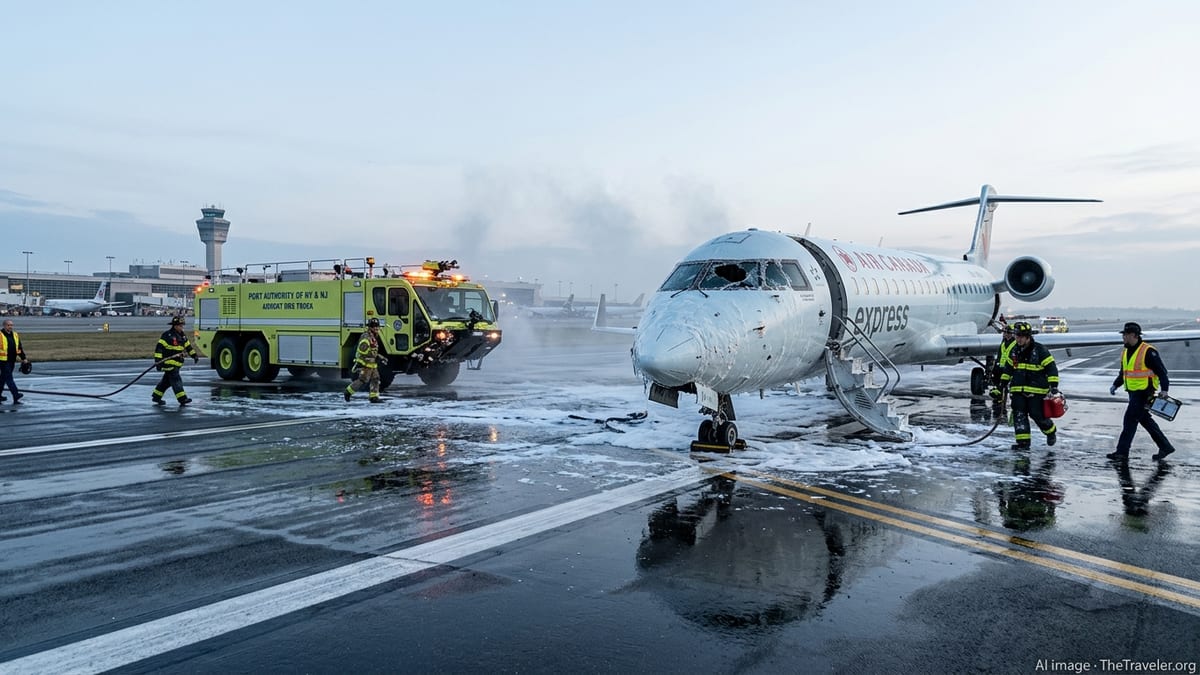
Reports from national and local outlets state that the aircraft struck multiple vehicles as it left airport property, causing a post impact fire that sent a column of thick black smoke over the airport. Images and video shared by broadcasters and on social media show the fuselage broken, the wings heavily damaged and fire crews surrounding the wreckage with foam as flames burned in nearby vehicles.
According to published coverage, five people were confirmed dead in the aftermath, with at least five others transported to area hospitals. Early reports indicate the fatalities include people on the ground in vehicles struck along the aircraft’s path as well as occupants of the jet, though detailed breakdowns of victims had not been fully released as of Monday.
Miami Dade Fire Rescue reported through public posts that more than 60 units responded to the crash scene. A ground stop was issued at Miami International while emergency crews fought the fire, searched damaged vehicles and secured leaking fuel, leading to significant disruption at one of the nation’s busiest passenger and cargo hubs.
Prime Air cargo operation under scrutiny after Miami disaster
Flight tracking data and media reports identify the aircraft as a Prime Air operated Boeing 767, part of the dedicated cargo fleet Amazon uses to move packages between its U.S. distribution centers. The jet was reportedly arriving from an out of state origin and had nearly completed its landing roll when it overran the runway, according to preliminary descriptions compiled from radar traces and witness accounts cited in news coverage.
Publicly available photos show the aircraft bearing Amazon’s signature blue Prime livery, with the wreckage coming to rest beyond a roadway bordering the airport. Some imagery indicates the jet ended up close to commercial lots and warehouse style facilities that serve nearby logistics and automotive operations, underscoring how tightly packed aviation, highway and industrial zones are around Miami International.
According to reporting from national outlets, the incident has drawn immediate attention to the safety performance of contracted cargo carriers operating for e commerce companies. Amazon’s air cargo network uses a mix of partner airlines flying branded aircraft, including older converted passenger jets like the 767, to support next day and same day delivery timelines across North America.
While investigators have not released any findings on the cause of the Miami crash, aviation analysts quoted in media reports note that runway overruns can stem from a combination of factors such as approach speed, touchdown point, runway conditions and braking performance. The National Transportation Safety Board and Federal Aviation Administration are expected to examine flight data recorders, maintenance records and crew training documentation as part of a comprehensive inquiry.
Airport closures and cascading impacts for travelers
Miami International Airport temporarily halted arrivals and departures after the crash while fire crews and paramedics worked at the scene, according to airport statements cited in news reports. At one point all runways were reported closed, triggering delays and diversions for both domestic and international flights.
Tracking services and media coverage show dozens of flights affected on Sunday evening, with some inbound aircraft holding in the air before diverting to alternate Florida airports such as Fort Lauderdale Hollywood International and Palm Beach International. Airlines began gradually resuming operations after the fire was contained and debris was assessed, but residual delays extended into Monday’s schedules for both passengers and airfreight customers.
For travelers and cargo operators, the crash highlights the vulnerability of major hubs when a serious incident occurs on or near a runway. Miami International handles heavy volumes of widebody passenger aircraft and freighters each day, particularly to Latin America and the Caribbean, and any prolonged closure can ripple through airline networks and supply chains across the region.
Logistics industry observers cited in coverage suggest that shippers relying on Miami as a primary gateway may temporarily reroute freight through other southeastern hubs until runway operations and investigative work at the crash site stabilize. Perishable shipments and time sensitive goods are particularly exposed to such disruptions, though contingency plans and alternative routings can mitigate some of the immediate impact.
Investigation focuses on landing conditions and aircraft performance
Early accounts referenced by national and local outlets indicate the Prime Air jet appeared to land long and fast relative to the available runway length, based on preliminary tracking data and video captured by bystanders. However, investigators are expected to rely on flight data and cockpit voice recorders to reconstruct the exact sequence of events, including the aircraft’s speed, configuration and touchdown point.
Weather conditions at the time included showers and unsettled skies typical for late summer in South Florida, but there were no immediate indications in published reports that severe storms or extreme crosswinds were present at the moment of landing. The investigation will examine whether runway surface conditions, such as standing water, contributed to reduced braking effectiveness, along with the performance of the jet’s thrust reversers, spoilers and anti skid systems.
Aviation safety specialists note in media analyses that runway overruns involving heavy jets can have catastrophic consequences when airport boundaries sit close to public roads or developed land. In Miami’s case, the aircraft’s path off the runway and across an adjacent roadway placed motorists directly in harm’s way, a factor that appears to have driven the high casualty count reported in this crash.
Regulators and airport planners may revisit the adequacy of runway safety areas and engineered materials arresting systems at busy hubs where space is constrained. Miami has seen previous runway excursions over the decades, and comparisons are already being drawn in coverage between Sunday’s crash and earlier cargo overrun incidents that, while serious, did not produce the same level of loss of life on surrounding roads.
Travelers weigh safety concerns amid images of burning jet
Video of the burning Amazon branded jet and the mangled vehicles it struck circulated widely on news broadcasts and social platforms within hours, prompting renewed public discussion about aviation risk, particularly around older cargo aircraft and densely built airport surroundings. Commenters and frequent flyers quoted or referenced in media reports described the footage as a stark reminder that even routine landings at major airports can turn tragic under the wrong circumstances.
Commercial aviation remains one of the safest modes of transportation by most statistical measures, and serious accidents involving large jets at U.S. airports are relatively rare. Nonetheless, high profile crashes such as the Miami overrun often lead to calls for closer oversight of contracted cargo operations, updates to runway safety infrastructure and renewed training emphasis on go around decisions when approaches become unstable.
For travelers passing through Miami in the coming days, airport information channels advise allowing extra time, monitoring airline apps for gate or schedule changes and being prepared for lingering knock on effects. As investigators work through the wreckage and analyze data in the weeks ahead, the Miami crash is likely to shape discussion about how major hubs manage runway risk where airport fences stand only a short distance from busy city streets.
Associated Press: At least 5 dead after Amazon cargo plane barreled off runway at Miami airport
CBS Miami: At least 5 dead, 5 injured after Amazon cargo plane overruns runway
ABC News: Amazon cargo plane overruns runway at Miami International Airport
Forbes: Amazon cargo plane crashes at Miami International Airport
USA Today via Yahoo News: Amazon cargo plane overruns Miami airport runway, 5 dead