


More news on this day
Passengers moving through Miami International Airport on September 6 and 7 encountered extensive delays, diversions and cancellations after an Amazon-operated cargo plane overran a runway, crashed beyond the airfield and caused a deadly fire near the busy Florida hub.
Get the latest news straight to your inbox!
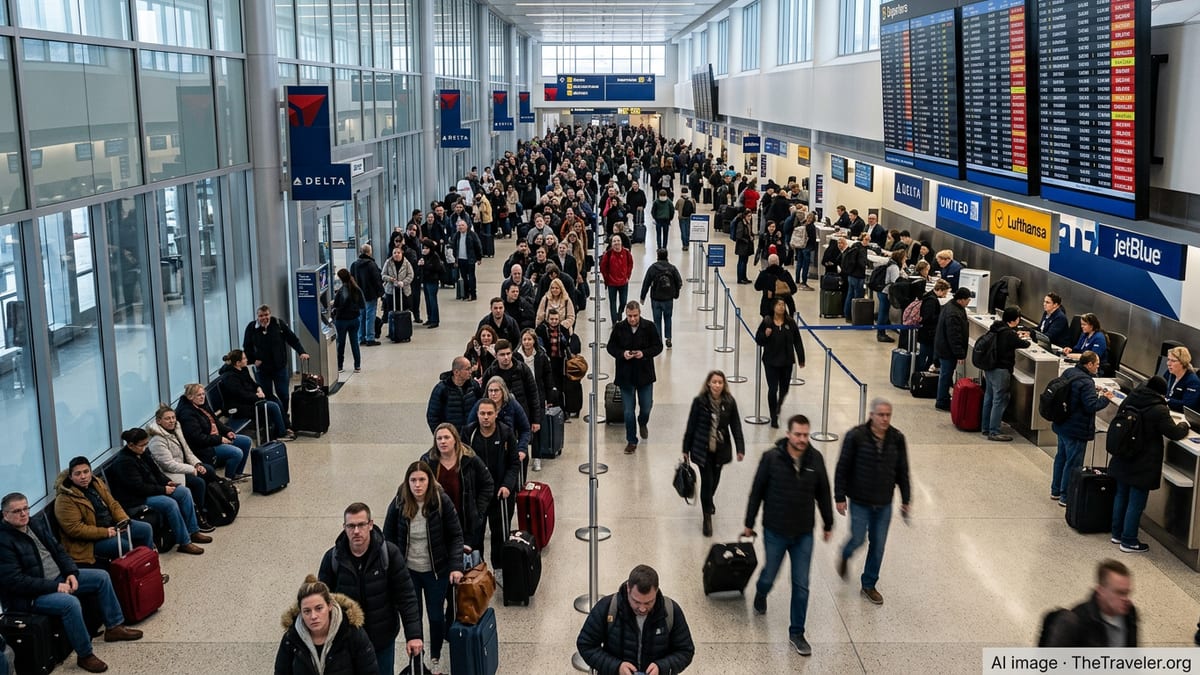
Deadly runway overrun sparks ground stop at MIA
Publicly available reports describe the incident as involving a Prime Air Amazon cargo aircraft that overshot a runway at Miami International Airport on Sunday, September 6, before crossing a perimeter area and striking multiple vehicles outside the airfield boundary. The aircraft became engulfed in flames, with images and video shared by local outlets showing a plume of black smoke rising near the airport complex.
Coverage from local and national media indicates that at least five people were killed and several others injured in the crash and resulting fire. The victims include individuals in vehicles struck beyond the runway as well as those on board the aircraft, according to initial tallies published by major news organizations.
Airport operations halted in the immediate aftermath. Reports from Miami-based broadcasters and aviation tracking services show that a full ground stop was issued on Sunday afternoon, with all runways at Miami International temporarily closed while emergency crews responded, fires were contained and debris was assessed on and around the runway.
By Sunday evening, the Federal Aviation Administration’s advisory system reflected a shift from a full ground stop to a ground delay program, signaling a gradual resumption of movements but with significant constraints. Notices cited a disabled aircraft and runway taxi impacts as the primary causes, underscoring how a single runway excursion can ripple across a complex hub.
Inside the terminal: hours-long waits and shifting departure times
For travelers already inside Miami International Airport, the sudden halt translated into long queues at departure gates, rebooking counters and customer service desks. Regional television coverage showed crowded concourses and passengers watching boards as departure times slid later into the day, with some flights pushed well into the night or into the following morning.
FAA delay summaries on Sunday pointed to outbound traffic destined for Miami facing average delays measured in hours at the height of the disruption. One federal status update cited delays of several hours for flights heading to the airport while the disabled aircraft remained in place and crews worked to restore safe runway availability.
Travel-industry reporting on Monday morning suggested that, although the most severe restrictions had eased, delays were still averaging more than an hour for some departures and arrivals tied to Miami. Passengers connecting through the hub, particularly those with tight layovers, appeared to be among the most affected, with missed onward flights and unexpected overnight stays reported across social channels and consumer forums.
Inside the terminal, airline staff worked within these constraints to reroute customers through other hubs, place travelers on later departures and arrange hotel accommodations where required by carrier policies. The pace of recovery has been closely linked to how quickly ground teams can clear the affected area and how much usable runway capacity the airport can safely operate.
Flight diversions ripple across Florida and beyond
The sudden loss or reduction of runway capacity at Miami prompted a series of diversions across Florida’s airport network. Coverage from regional outlets indicates that Orlando International Airport received multiple unexpected arrivals as aircraft bound for Miami were redirected while the ground stop was in effect.
Additional reports point to other regional airports, including Palm Beach County’s facilities and Fort Lauderdale, handling unscheduled traffic as airlines sought nearby alternatives to deplane passengers and refuel aircraft. Some international flights reportedly diverted to more distant hubs, reflecting a broader effort to keep long-haul operations moving while Miami’s capacity was constrained.
For affected passengers, diversions often meant disembarking hundreds of kilometers from their intended destination. Many then relied on hastily arranged onward flights, bus connections or one-way car rentals to complete their journeys. Travel forums and social posts on Sunday and Monday referenced lengthy waits on parked aircraft, refueling holds and extended queues at immigration and customs checkpoints at diversion airports.
These knock-on effects were not limited to Florida. Because Miami functions as a major connecting point for Latin America and the Caribbean, delays and diversions there created schedule complications for flights across the Americas, including aircraft and crew rotations planned to pass through the hub on Sunday night and Monday.
Ongoing investigations and what travelers should expect next
Federal and local investigators have begun examining the circumstances surrounding the runway overrun, with aviation safety agencies indicating through public statements that they are collecting evidence from the scene, cockpit recorders and air traffic control data. Early video circulating online shows the cargo jet touching down well along the runway before continuing off the paved surface, though specialists caution that a full analysis typically takes months.
In the near term, passengers booked to travel through Miami International are being advised by airlines and government transport agencies to check flight status frequently, arrive early and remain prepared for residual delays or gate changes. Flight-status tools and the FAA’s system impact pages continued to list delay programs linked to the disabled aircraft into Monday, signalling that schedules had not fully normalized.
Travel planners suggest that those with flexible itineraries consider connecting through alternative hubs where possible while Miami works through the backlog of affected flights. For travelers who must pass through the airport, simple adjustments, such as allowing longer minimum connection times and keeping essential items in carry-on luggage, can help manage uncertainty while the situation stabilizes.
As investigations progress and the damaged aircraft and vehicles are cleared from the area, Miami International Airport is expected to gradually restore normal runway capacity. Industry observers note that large hubs typically recover over several scheduling waves rather than in a single day, meaning that some disruptions could persist even after the visible signs of the crash have been removed.
Local 10 Miami coverage of passenger delays
CBS Miami report on the Amazon cargo plane crash
Travel Weekly summary of Miami Airport delays
FAA current delay information for Miami International Airport