


More news on this day
Passengers traveling through Miami International Airport are facing mounting delays and cancellations after an Amazon-branded cargo jet overran a runway, killing five people and injuring five more in a fiery crash that continues to disrupt one of the United States’ busiest aviation hubs.
Get the latest news straight to your inbox!
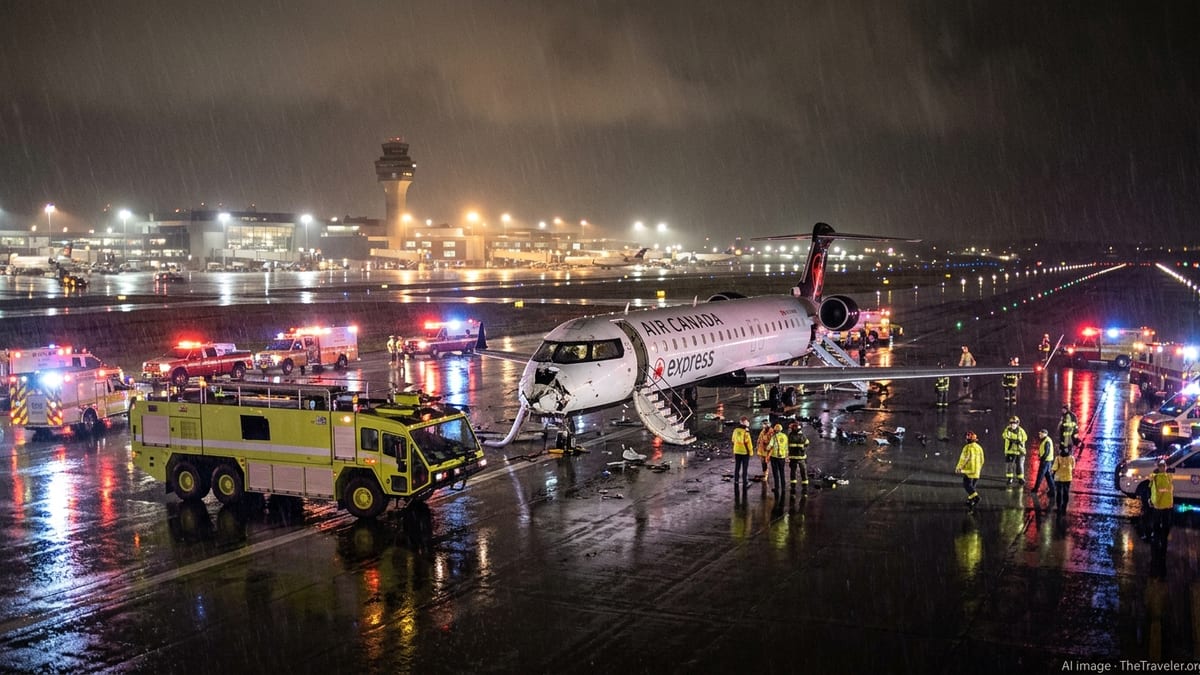
Runway overrun sends cargo jet across roadway and into vehicles
Publicly available information indicates the accident happened on Sunday afternoon, September 6, when a Boeing 767 freighter operating as an Amazon Air flight from Puerto Rico attempted to land at Miami International Airport. The aircraft reportedly touched down on Runway 9 and failed to stop, continuing off the paved surface.
According to published coverage, the jet barreled through the runway safety area, broke through the airport perimeter and crossed a roadway bordering the airfield before striking multiple vehicles. The aircraft and several of the vehicles caught fire, sending a thick column of smoke into the air that was visible across much of the Miami area.
Reports compiled from multiple outlets indicate five people were killed and five injured. Several of the victims were traveling in ground vehicles struck by the aircraft as it left airport property, while others were on board the freighter. The Boeing 767, a 32-year-old airframe converted from passenger to cargo service in 2015, was described as heavily damaged by fire.
Photographs and video reviewed in news reports show the aircraft resting nose-down beyond the runway, surrounded by debris and scorched vehicles. Emergency crews used foam and water to extinguish the blaze as plumes of gray and black smoke drifted over nearby terminals and parking facilities.
Ground stop and runway closures ripple across Miami’s flight schedule
The overrun prompted an immediate ground stop at Miami International Airport, halting arrivals and departures for a period on Sunday afternoon while emergency services responded and the area around Runway 9 was secured. Flight-tracking data cited in multiple reports shows several hundred flights experiencing disruption as the incident unfolded.
Accident coverage compiled from aviation and local news sources indicates that roughly 200 to 250 flights were delayed or canceled on Sunday as the airport reduced operations and rerouted aircraft away from the affected area. Airlines diverted some inbound flights to other South Florida airports, while others held aircraft on the ground awaiting updated departure slots.
By Monday morning, reports show that two of Miami International’s four runways remained closed while investigators documented the scene and recovery crews worked to remove the wreckage. With half of the airport’s runway capacity temporarily offline, schedules remained compressed, leading to additional delays, missed connections and longer-than-usual taxi times.
Airport passenger volumes in early September are typically strong given Miami’s role as a gateway to Latin America and the Caribbean. The sudden loss of runway capacity on a busy travel day amplified the impact of the crash on both domestic and international customers transiting the hub.
Travelers urged to monitor flights as delays and cancellations mount
Travelers heading to or from Miami International in the days following the crash are being urged in published guidance to check flight status frequently and build extra time into their journeys. Airlines have been updating departure and arrival times as runway availability, crew schedules and aircraft positioning are adjusted around the ongoing closure.
Local broadcast coverage from Miami notes that terminal departure boards on Monday showed an elevated number of delayed and canceled flights across multiple carriers. Some passengers reported being rebooked through alternative hubs such as Orlando, Atlanta or Dallas as airlines sought to bypass congestion in Miami.
Public advisories referenced in news reports recommend that passengers use airline apps or websites and sign up for text alerts rather than relying solely on airport displays. With runway operations still constrained, schedules remain subject to change throughout the day, particularly during peak morning and evening banks.
For travelers connecting onward to Latin America or the Caribbean, experts cited in travel industry analysis suggest confirming whether itineraries can be rerouted through other regional gateways if Miami’s disruption threatens tight connections or same-day returns.
Investigators examine landing, braking and weather conditions
Federal safety investigators have opened a formal inquiry into why the Amazon-branded freighter failed to stop on the runway. Public statements and coverage of briefing materials indicate that the investigation is expected to focus on several factors, including where along the runway the aircraft first touched down and whether its landing speed and configuration were within normal limits.
Reports drawing on preliminary information indicate that specialists will review flight data and cockpit voice recorders, as well as evaluate braking performance, thrust reverser use, spoiler deployment and the condition of the aircraft’s tires and braking systems. Weather conditions at the time of landing, including rain, wind and runway surface contamination, are also expected to be examined.
Aviation safety reporting notes that the Boeing 767 involved was operating for Amazon through a contracted cargo carrier, a common arrangement for e-commerce flights. Investigators are expected to review the operator’s training, crew scheduling and maintenance records as part of a broader look at systemic contributors to the accident.
While runway overruns are a known risk in commercial aviation, detailed analysis following such events often leads to updated procedures, enhanced training or changes to infrastructure such as improved runway safety areas and arresting materials designed to slow or stop aircraft that leave the pavement.
Impact on cargo operations and South Florida’s travel market
Miami International serves as a critical cargo gateway, particularly for e-commerce shipments and perishable goods moving between the Americas and global markets. The damaged freighter and temporary reduction in runway capacity have added strain to air freight operations that rely on precise timing for overnight deliveries.
Industry coverage suggests that some Amazon-branded and other cargo flights may be rerouted to alternate airports in the short term, while load plans are rebalanced to maintain service levels. This can have a knock-on effect for passenger airlines that share ramp space and air traffic control resources with freight operators.
For leisure and business travelers, the incident underscores the interconnected nature of cargo and passenger operations at large hubs. Even though the crash involved a dedicated freighter, the resulting closures and safety perimeter expanded across parts of the airfield used by commercial airlines, leading to the widespread delays now unfolding in Miami.
Travel analysts note that once investigators release the crash site and runway repairs are completed, Miami International is expected to restore normal operations. Until then, visitors heading to South Florida are likely to encounter crowded gates, rolling delays and increased competition for remaining seats on alternative routings.
AccuWeather: At least 5 dead after Amazon cargo plane overruns runway in Miami
UPI: Amazon cargo plane overruns Miami runway, killing 5
ABC News: 5 dead, 5 injured after Amazon cargo plane overruns runway at Miami International Airport