


More news on this day
Thousands of travelers are facing canceled and diverted flights after an Amazon-branded cargo jet overran a runway at Miami International Airport, killing at least five people and forcing a rare full ground stop at one of the nation’s busiest hubs.
Get the latest news straight to your inbox!
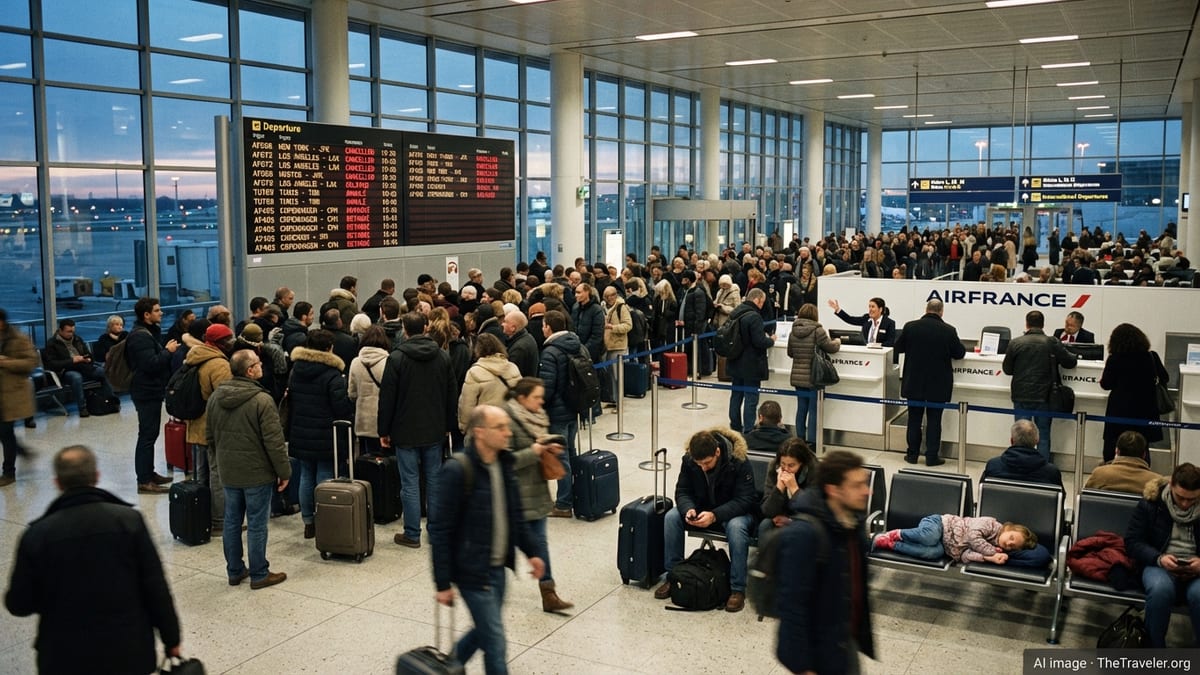
Runway overrun triggers rare shutdown at major U.S. hub
Published coverage indicates that Prime Air Flight 7598, a Boeing 767-300 cargo aircraft operating for Amazon, overran Miami International Airport’s diagonal runway shortly after 2 p.m. local time on Sunday, September 6. The jet continued past the pavement, through the airport perimeter and into nearby vehicles, where it erupted in flames and sent a thick plume of black smoke over western Miami.
Reports from aviation authorities and local media describe a catastrophic scene, with the widebody aircraft coming to rest beyond the northwest end of the airfield. Initial tallies from publicly available information indicate at least five people were killed and five others injured, including individuals in vehicles struck beyond the airport fence, as investigators began documenting the wreckage.
In the immediate aftermath, Miami International imposed a full ground stop, halting all departures and arrivals while fire crews battled the blaze and rescue teams searched damaged vehicles. All runways and taxiways were initially closed, an uncommon step at a major U.S. airport, effectively shutting down one of the country’s key gateways to Latin America.
According to flight-tracking data referenced in multiple reports, the crash involved a flight arriving from San Juan, Puerto Rico, operated by Miami-based cargo carrier 21 Air on behalf of Amazon’s Prime Air network. Federal investigators have opened an inquiry into what caused the widebody freighter to overrun the runway on landing.
Hundreds of flights canceled, diversions ripple across the Southeast
The full airfield closure and subsequent partial reopening have produced a cascade of disruptions for passengers across the United States and the Caribbean. Data compiled by flight-tracking services and cited in regional coverage show more than 160 flights canceled and more than 300 delayed at Miami International by Sunday evening, with additional disruptions building into Monday.
With Miami’s runways unavailable for hours, arriving passenger flights diverted to other Florida airports, including Orlando and West Palm Beach, as well as hubs farther north such as Charlotte. Airline passengers described on social media how long-haul international services were rerouted midflight, forcing unscheduled connections and overnight stays far from their intended destination.
Even after the initial ground stop was lifted, the backlog of aircraft and the temporary closure of the affected runway left Miami operating at reduced capacity. Published airport and airline information shows that carriers have been preemptively canceling or combining flights to manage limited arrival and departure slots, concentrating remaining operations on unaffected runways.
Miami’s role as a critical connecting point for Latin America and the Caribbean has amplified the impact. Travelers departing island destinations reported indefinite delays as outbound flights to Miami were held on the ground awaiting clearance, while some services were reassigned to alternate U.S. gateways when it became apparent that MIA’s disruption would stretch through the night.
Travelers confront uncertainty, long waits and changing itineraries
Inside the terminals, travelers have been contending with rapidly shifting departure boards and limited information as airlines rework schedules in real time. Local television coverage from the airport shows long lines at ticket counters as passengers seek rebooking options, along with crowds gathering around gate displays whenever status updates appear.
Publicly available accounts from stranded travelers describe hours-long waits for revised itineraries, as airlines search for scattered seats on remaining flights to Florida or connect passengers via alternative hubs such as Atlanta, Dallas and New York. Some Miami-bound travelers have opted to accept reroutes into Orlando, Tampa or Fort Lauderdale and then complete their journey by car.
Hotel availability has quickly tightened around the region, according to travel forums and online booking data, particularly for properties near alternate airports receiving diverted flights. With the incident occurring over a busy late-summer and holiday-travel period, many visitors already in South Florida are also grappling with potential delays on their return journeys as airlines reposition aircraft and crews.
Ground transportation is feeling the strain as well. Rideshare drivers and intercity bus operators reported elevated demand on Sunday evening as newly arrived passengers in Orlando and other diversion points attempted to reach South Florida by road. Some travelers noted that rental car rates spiked as inventory near substitute airports was quickly spoken for.
Early investigation and runway reopening timeline remain in flux
Federal investigators and airport officials are in the early stages of reconstructing the crash sequence. According to national and local reports, teams are documenting skid marks, runway conditions and aircraft systems, while also planning to retrieve data and cockpit voice recorders from the wrecked Boeing 767. Analysts emphasize that causes in runway overrun cases can range from weather and runway contamination to mechanical issues or operational decisions on the flight deck.
Clearing the wreckage and repairing damage to the runway environment are expected to influence how quickly Miami can fully restore normal operations. Published statements indicate that the disabled aircraft remains at the northwest end of the field, limiting access around the affected runway and requiring specialized heavy equipment to safely remove the airframe without further risk to investigators or nearby infrastructure.
Airport status information suggests that some runways have gradually reopened for limited operations, but that full capacity is unlikely until the crash site is cleared and any surface damage is assessed and, if necessary, repaired. Travelers holding tickets into or out of Miami over the next several days are being advised, through airline and airport channels, to monitor flight status closely and consider flexible plans.
Airlines are beginning to implement travel waivers, according to carrier advisories, allowing customers to rebook away from the peak disruption window without change fees. However, rebooking options remain constrained by already-busy late-summer schedules and the heavy reliance on Miami as a connecting hub for traffic to and from Latin America.
What passengers should do if they are booked through Miami
For travelers with upcoming itineraries involving Miami International Airport, published travel guidance suggests starting with a direct check of flight status via airline websites or mobile apps rather than relying solely on third-party booking platforms. Same-day and next-day flights are most vulnerable to operational changes as airlines continue to adjust schedules in response to runway availability.
Industry advisers note that travelers originating from cities with multiple Florida options may benefit from proactively exploring routings to nearby airports such as Fort Lauderdale, Orlando or Tampa, particularly if their final destination is elsewhere in the state. Some carriers are already shifting capacity to those airports to accommodate displaced Miami-bound passengers.
Travelers on international itineraries are encouraged to pay close attention to connection times and potential misalignments between inbound and outbound legs. In some cases, published booking tools are still displaying standard schedules even as airlines manually rework operations, making it important to confirm that connecting flights are operating as planned before beginning a journey.
Given the evolving investigation and the ongoing effort to restore full runway capacity, travel analysts expect lingering disruptions at Miami to persist beyond the initial 24 to 48 hours after the crash. Passengers are being urged, through public advisories, to build extra time into their plans, keep digital travel documents and notifications up to date and remain prepared for last-minute gate or routing changes as the airport gradually returns to normal service.
CBS Miami: Travelers face canceled flights after deadly Miami crash
AP News: At least 5 dead after Amazon cargo plane barrels off runway
Local 10: Passengers at MIA dealing with delays after fatal crash