


More news on this day
Michigan’s already strained highway network is facing an intense stress test as the Independence Day rush collides with a packed construction season, prompting the state to temporarily rearrange lane restrictions across 179 road and bridge projects while an estimated 2.6 million holiday travelers pour onto the roads.
Get the latest news straight to your inbox!
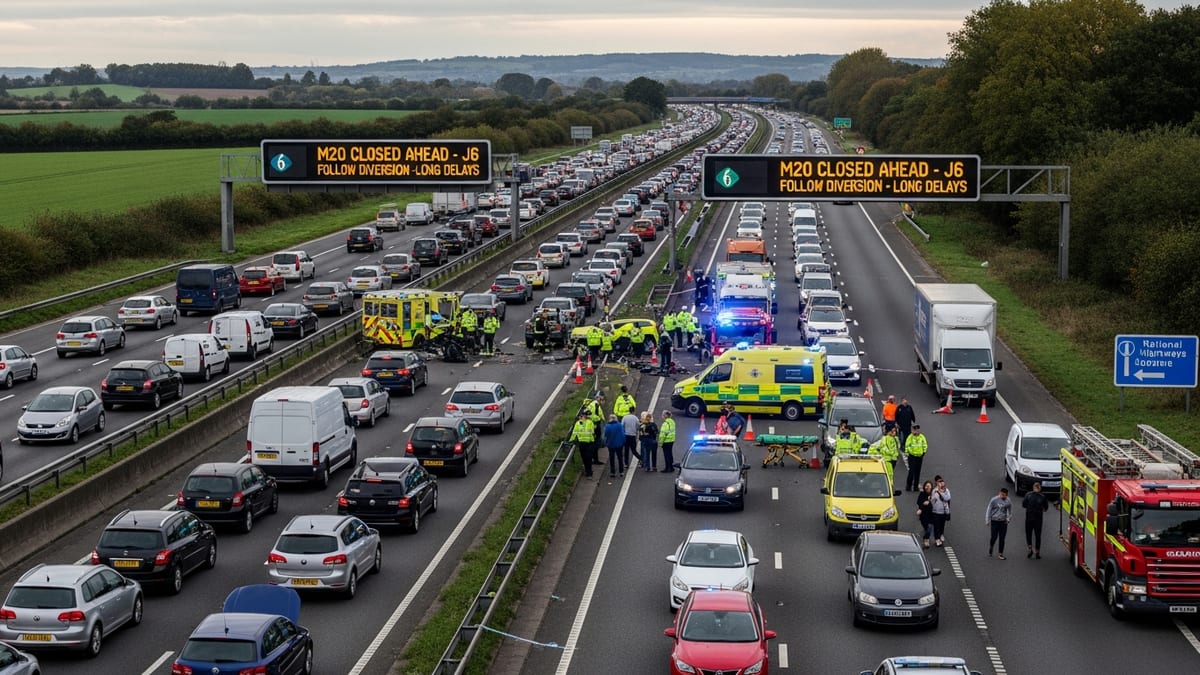
Holiday Travel Surge Meets Saturated Work Zone Map
AAA projections for the upcoming Independence Day period indicate that approximately 2.6 million Michigan residents will travel at least 50 miles from home, setting or matching record levels of holiday movement across the state. Recent forecasts highlight especially heavy demand for road trips, with drivers accounting for the vast majority of those journeys as families take advantage of the mid-summer break and the long holiday weekend.
This surge is landing on a road network that is already under sustained pressure from years of catch-up repairs and major reconstruction. Public reports and advocacy analyses describe a system where roughly one-third of major roads are in poor condition and many bridges require significant maintenance, even as Michigan expands key freeway corridors. Combined with seasonal limits on when heavy construction can safely be carried out, that reality has created a dense map of lane closures and traffic shifts just as peak travel begins.
Travel demand over the July 4 period has grown steadily in recent years, with national AAA outlooks repeatedly forecasting new highs for Independence Day traffic. In Michigan, recent holiday seasons have followed the same pattern, as motorists return to pre-pandemic habits and extend weekend getaways into full vacation weeks, increasing the likelihood of prolonged congestion around metro Detroit, Grand Rapids, and popular northern destinations.
Statewide, the combination of record road use and layered construction zones is raising concerns that even relatively small incidents or breakdowns could cascade into long delays on key interstate and US routes.
MDOT’s Lane Strategy: Lifting Restrictions, Not Just Adding Closures
In response to the projected surge, the Michigan Department of Transportation has signaled a shift from routine construction scheduling toward a holiday-oriented traffic management approach. Publicly available statements and regional news coverage indicate that MDOT is temporarily lifting lane restrictions on nearly 60 percent of its active road and bridge projects for the July 4 period, mirroring similar strategies used on recent Memorial Day and Independence Day weekends.
Out of 179 ongoing projects across the state network, lane restrictions are being suspended on more than a hundred, with orange barrels and temporary barriers pulled back in selected locations to restore additional capacity. The aim is to keep as many lanes open as possible on heavily traveled routes while still maintaining safety in areas where work cannot be paused or where geometry makes full reopening impractical.
This approach hinges on carefully sequencing work and traffic control so that crews can step back from certain high-volume stretches in time for the holiday exodus, then re-establish closures after the peak. MDOT used a similar playbook ahead of previous holiday weekends, lifting restrictions on about 60 percent of projects statewide while leaving some critical work zones in place at chokepoints that would otherwise require lengthy shutdowns.
Despite these adjustments, drivers should still expect to encounter narrowed corridors, reduced speed limits, and shifted traffic patterns, particularly where major freeway reconstructions or long-term bridge repairs are underway. The realignment of lane restrictions is intended to reduce, rather than eliminate, congestion on some of the busiest holiday travel days of the year.
Choke Points and Regional Hotspots for July 4 Drivers
Recent construction program summaries and local traffic reports show that active work continues across a wide footprint, with metro Detroit, west Michigan, mid-Michigan, and key north-south tourist routes all affected. Even with a majority of projects relaxing their lane restrictions, dozens of sites will remain partly shut down due to safety needs or ongoing critical work.
In the Detroit area, multi-year reconstruction on major corridors has already produced long-running lane closures and ramp shifts. Although some barrels will be cleared for the holiday, drivers can still encounter constrained sections on approaches to the I-75, I-94, and I-696 corridors, where complex staging limits how much capacity can be restored without jeopardizing structural work in progress.
Elsewhere, construction on US and M routes that serve as gateways to lakeshore towns and northern campgrounds may continue to pinch capacity, especially where two-lane roads drop to a single open lane with alternating traffic. Reports from previous holiday periods in Michigan show that even short one-lane segments can quickly back up as caravans of vacation traffic arrive within peak afternoon windows.
In and around Grand Rapids, Lansing, and other mid-sized cities, drivers may also confront a patchwork of local and state projects that intersect at busy commercial corridors. Regional commentators have noted that overlapping closures in these areas can concentrate vehicles into fewer viable routes, amplifying delays during summer’s heaviest travel days.
Record Demand Exposes Long-Term Infrastructure Strains
The July 4 traffic crunch is highlighting underlying questions about Michigan’s long-term road strategy. Recent policy reports point to decades of underinvestment relative to the size of the highway network, as well as rising material and labor costs that make each new lane mile substantially more expensive than in the past.
Advocacy groups have drawn attention to the tension between maintaining aging infrastructure and pursuing large-scale widening and expansion projects. Analyses of state transportation spending patterns show billions committed to rebuilding and enlarging major freeways, even as a sizable share of existing roads and bridges remain rated in poor condition. Critics argue that expanded highways can encourage additional driving and sprawl, locking in a cycle of congestion, wear, and future reconstruction.
At the same time, MDOT and local partners are working within a narrow construction season defined by Michigan’s winters, which accelerates pavement damage while limiting when concrete and asphalt work can be carried out. That dynamic compresses many high-impact projects into the same warm-weather months when tourism and recreational driving are also at their peak.
With holiday travel now consistently testing the limits of the system, the tension between short-term traffic relief and long-term investment choices is increasingly visible to motorists stuck in construction-related backups during peak getaway weekends.
What Travelers Can Expect on the Road This Holiday Week
For drivers, the immediate impact of MDOT’s July 4 adjustments will be felt in the form of marginally better traffic flow through some key corridors compared with a scenario in which all work zones remained fully restricted. More open lanes on select projects should help absorb at least part of the surge, especially during the busiest outbound and return periods identified in AAA forecasts.
Nonetheless, with a record or near-record number of Michiganders expected on the move, congestion is still likely during late afternoon and early evening hours, as well as mid-day windows around popular departure times. Public trip-planning guidance for recent holidays has consistently urged travelers to leave early in the day, avoid traditional rush-hour windows, and build in extra time for unexpected slowdowns at construction pinch points.
Motorists navigating the state network this week can anticipate a mix of fully open stretches, partial lane drops, and narrowed shoulders, particularly where long-term rebuilding projects cannot safely suspend work. Reduced speed limits and tighter merges may still generate bottlenecks even where only a single lane is closed, especially when combined with heavy holiday traffic volumes and summer weather.
The broader pattern suggests that while Michigan’s temporary reshuffling of lane restrictions across 179 projects may prevent a full-scale traffic crisis, the underlying limits of the system will remain highly visible to travelers as they head out for Independence Day festivities.