


More news on this day
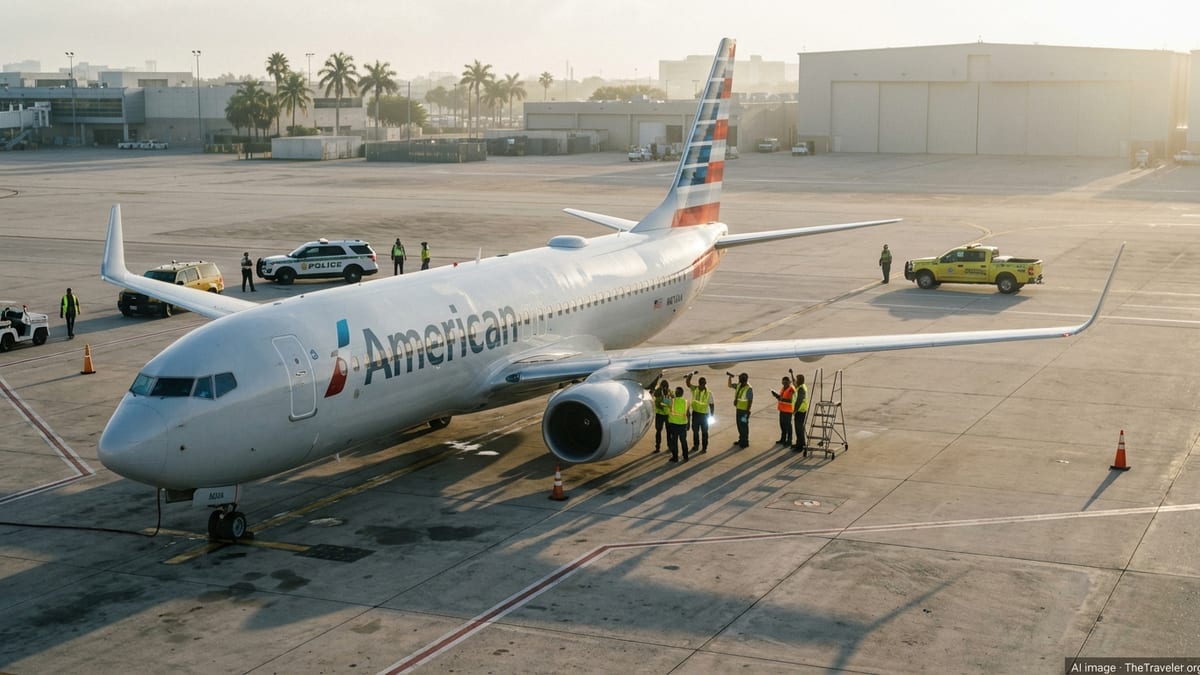
A mid-air brawl on a recent American Airlines flight approaching Miami International Airport reportedly delayed the aircraft’s landing and reignited concern over disruptive passenger behavior in U.S. airspace.
Get the latest news straight to your inbox!
Dispute Over Seat Space Escalates Before Landing
According to published coverage and eyewitness accounts shared on social media, the disturbance began in the final phase of the flight, as the aircraft was on approach to Miami. Reports indicate that a disagreement over personal space and seating quickly escalated into a physical altercation between passengers.
Video clips circulating online appear to show several travelers standing in the aisle, with raised voices and shoving as cabin crew attempt to intervene. The footage suggests that the confrontation involved more than two people before it was brought under control, creating visible alarm among nearby passengers.
Publicly available information indicates that the crew requested passengers to remain seated while the situation was contained, but the altercation continued long enough to disrupt normal preparations for landing. The flight ultimately completed its journey to Miami, but the sequence of events contributed to a delay in the final approach and arrival.
American Airlines has been referenced in multiple media reports about the incident, which note that the carrier is reviewing what took place on board. As of now, open-source reporting does not indicate any serious injuries, but it underscores the potential risk that in-cabin disputes pose during critical phases of flight.
Delay to Miami Arrival Highlights Safety Priorities
Accounts of the incident suggest that the captain and crew prioritized stabilizing the cabin environment before committing to the final landing. While detailed operational data for the specific flight have not been publicly released, observers familiar with airline procedures note that crews may request additional vectors or holding patterns from air traffic control when order in the cabin is disrupted.
Maintaining full attention to checklists and communication in the cockpit is especially important during approach and landing. Any distraction or uncertainty in the cabin can add complexity for the crew, and aviation safety guidance generally favors delaying non-essential tasks until the situation is under control. In this case, the reported delay to landing is consistent with a conservative operational stance.
Travel industry analysts point out that even relatively short in-air delays can ripple through a carrier’s schedule at a major hub such as Miami. Late arrivals can affect connecting passengers, aircraft turn times, and crew duty limits. Although the disruption on this flight appears limited to a delay rather than a diversion, it offers a clear example of how individual passenger behavior can affect broader operations.
For passengers on board, the delay occurred at a particularly sensitive moment, with the aircraft already close to its destination. Social media posts from the flight describe a tense atmosphere as travelers waited for the situation to settle and the aircraft to land safely.
Rising Concerns Over Unruly Passenger Incidents
The disturbance on the American Airlines flight into Miami comes amid ongoing concern about in-flight misbehavior in the United States. Publicly available data from federal aviation regulators in recent years show that reports of unruly passenger events, while down from pandemic-era peaks, remain elevated compared with earlier decades.
Published coverage of recent cases has featured a range of issues, including disputes over masks, attempts to access restricted areas of aircraft, and confrontations over seat recline and legroom. In several high-profile incidents across various carriers, passengers have been restrained with tape or zip ties after allegedly threatening crew or attempting to open aircraft doors.
Experts in aviation safety and airline operations note that cabin conflicts are particularly problematic during taxi, takeoff, and landing. These are the most demanding phases of flight, when crew resources are heavily focused on procedures and communication. Any fight or loud confrontation can distract cabin crew from safety duties, complicate emergency preparedness, and increase stress for other passengers.
The Miami incident, centered on a dispute over seat space, fits a wider pattern highlighted by consumer advocates, who say shrinking seat pitch and full flights contribute to tensions on board. While most disagreements are resolved verbally, this case shows how quickly a minor dispute can become a broader safety concern.
Regulatory and Airline Responses to In-Flight Misconduct
In response to a series of incidents in recent years, federal authorities in the United States have emphasized a “zero tolerance” approach toward serious in-flight disruption. Public statements and enforcement records show that passengers found to have interfered with crew or endangered others can face substantial civil penalties and, in some cases, criminal charges.
Airlines, including American, maintain their own internal conduct policies. These typically allow carriers to refuse transport to passengers involved in serious misbehavior and to ban individuals from future flights. In practice, carriers also rely on crew training that emphasizes de-escalation, clear communication, and coordination with airport-based security resources upon arrival.
Following events like the reported brawl on the approach to Miami, transportation analysts expect closer review of whether existing procedures and training were sufficient, and if additional measures, such as targeted crew briefings or refined boarding practices, might help prevent similar conflicts. Carriers sometimes adjust internal guidance after high-visibility incidents even when no formal regulatory changes are made.
Consumer advocates argue that continued transparency about enforcement actions and airline policies is important for deterrence. Public discussion of penalties and bans, they say, sends a signal that aggressive behavior in the confined space of an aircraft will not be treated as a minor infraction.
What the Incident Means for Travelers Heading into Peak Season
The reported brawl and resulting delay into Miami arrives just as U.S. carriers prepare for busy late spring and summer travel periods. Industry forecasts suggest that domestic demand will remain strong, particularly to sun and beach destinations served through hubs such as Miami International Airport.
Travel experts recommend that passengers anticipate crowded flights and limited space, especially in economy cabins. Simple steps, such as clarifying armrest use, avoiding sudden seat recline during meals, and flagging issues to crew early rather than confronting other travelers directly, can reduce the chances of misunderstandings escalating.
Some analysts also point to the role of clear communication from airlines. Preflight announcements and digital messaging that remind passengers of behavioral expectations, outline seat etiquette, and explain the consequences of noncompliance may help set the tone before tensions arise. The Miami incident is being cited in commentary as a fresh example of why such reminders remain relevant.
For now, the American Airlines flight that experienced the mid-air fight is being treated in media coverage as another data point in the broader discussion about civility and safety in commercial aviation. As the busy travel season approaches, the episode serves as a stark reminder that even a brief confrontation in the cabin can affect not only the individuals involved, but also the timing and comfort of an entire planeload of travelers.