


More news on this day
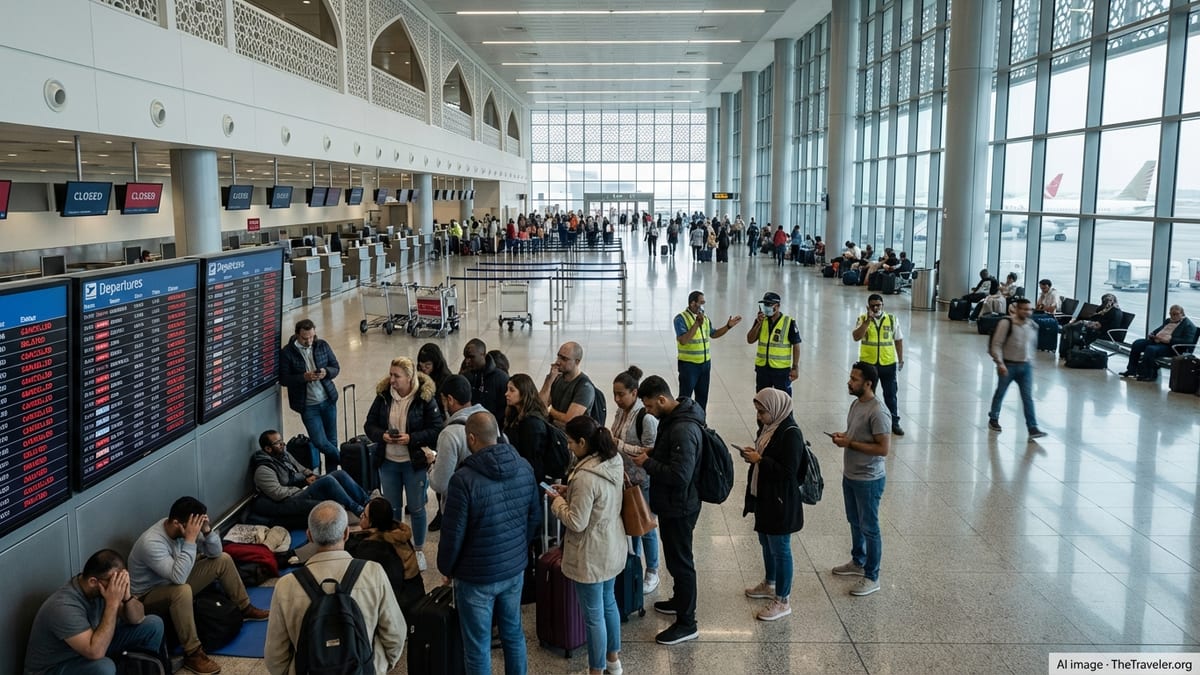
Air travel across parts of the Middle East faced renewed disruption on June 9, 2026, as operational data from airline and airport sources pointed to 20 flight cancellations and about 185 delays affecting services in Qatar, the United Arab Emirates, Saudi Arabia and Iraq.
Get the latest news straight to your inbox!
Fresh Turbulence in a Region Already on Edge
The latest figures underline how fragile the regional aviation recovery remains after months of volatility linked to shifting airspace restrictions and security concerns. While airspace over many Gulf states is technically open, carriers serving hubs in Doha, Dubai, Abu Dhabi, Riyadh and key Iraqi cities continue to adjust schedules in response to evolving risk assessments and longer routings.
Publicly available tracking dashboards and airport departure boards on June 9 showed clusters of cancellations and extended delays on both short-haul and long-haul routes. The impact was most visible in peak connecting banks at major hubs, where even modest schedule changes can cascade into missed onward connections for travelers bound for Europe, Asia and North America.
Travel intelligence briefings issued in recent days describe a network that is operating, but with diminished resilience. Longer flight times around sensitive airspace, tighter crew duty limits and aircraft repositioning have all reduced the margin for recovery when minor operational setbacks occur, increasing the likelihood that weather, technical checks or congestion will translate into measurable delays.
Although the June 9 disruption fell short of the mass shutdowns seen earlier in 2026, the pattern of scattered cancellations and widespread delays has become a recurring feature of the region’s aviation landscape. For many passengers, the practical effect is a sense that any journey via the Gulf or Iraq now carries a higher risk of last-minute change than it did a year ago.
Qatar and UAE Hubs Manage Capacity Under Constraint
In Qatar, schedules into and out of Doha’s Hamad International Airport continued to operate within a framework of restricted airspace corridors. Travel advisories describe Qatari airspace as open but limited, requiring some flights to adopt longer routings and altered cruising levels. That operational reality reduces runway and airspace capacity during peak periods, increasing the susceptibility of the timetable to knock-on delays.
On June 9, several departures and arrivals involving Doha experienced late pushes from the gate or revised estimated times of arrival as aircraft negotiated congested regional corridors. While the number of outright cancellations linked specifically to Qatar remained modest, the wider network effect contributed to the regional tally of 20 cancellations and 185 delays.
Across the United Arab Emirates, the situation was similar but more concentrated at the primary international gateways. Dubai International and Abu Dhabi International reported a mix of delayed departures, extended turnaround times and a handful of cancellations as airlines balanced high summer-season demand with operational buffers built into timetables since earlier crises in 2026.
Reports indicate that carriers using Dubai and Abu Dhabi have shifted more capacity into early-morning and late-night waves in order to navigate restricted overflight zones and avoid peak congestion periods. That adjustment has helped keep most flights operating but left less slack in the system when aircraft arrive late or require additional maintenance checks.
Saudi and Iraqi Airports Feel the Strain of Network Disruption
Saudi Arabian airports, including Riyadh, Jeddah and Dammam, also experienced knock-on effects from the June 9 disruption. Publicly accessible operational data shows that while many flights departed broadly on time, several services connecting through Gulf hubs or overflying sensitive areas registered delays that ranged from 30 minutes to several hours.
Saudi Arabia’s domestic and regional network has been particularly exposed to wider Middle East disruptions throughout 2026, as carriers have had to reroute around closed or restricted airspace at various points in the year. The country’s role as both a destination and a major transit point for religious and business travel means even a small number of cancellations can strand large numbers of passengers during busy periods.
In Iraq, the June 9 disruption was more concentrated but still significant for affected travelers. Airports in Baghdad and other major cities recorded a series of late departures and at least a few cancellations on routes linking to Gulf hubs and regional capitals. Given Iraq’s limited alternative options and a smaller pool of operating carriers, individual flight cancellations carry an outsized impact, often forcing passengers to wait for the next operating service rather than switch easily to competing departures.
Travel security assessments published this week frame Iraq as part of a wider belt of fragile connectivity stretching from the northern Gulf through the Levant. While airports remain open, schedules are being recalibrated frequently, and any escalation in regional tensions has the potential to trigger further last-minute adjustments.
Legacy of Earlier Airspace Closures Still Rippling Through
The June 9 figures cannot be viewed in isolation from the broader context of 2026, a year in which Middle East aviation has been repeatedly hit by airspace closures, drone incidents and targeted strikes on or near critical infrastructure. Earlier in the year, temporary shutdowns over several states and damage at certain hubs led to mass cancellations and diversions, forcing airlines to reconfigure networks and park or reposition aircraft.
Industry analyses released over recent months highlight how these events have reshaped flight planning across the region. Longer routings around restricted zones have increased fuel burn and crew costs, prompting some carriers to thin out frequencies or temporarily suspend marginal routes. Even as ceasefires and diplomatic efforts have reduced the frequency of acute incidents, airlines have been slow to restore full pre-crisis schedules, preferring to keep contingency capacity in reserve.
Financial forecasts from airline associations and regional economic bodies point to a notable downgrade in expected 2026 profitability for Middle Eastern carriers, in part because of the ongoing cost of disruption. Network planners are attempting to balance demand recovery with an environment in which a single overnight security incident can render key air corridors unusable for days at a time.
This backdrop helps explain why 20 cancellations and 185 delays on a single day can occur without a clear, singular triggering event. Instead, the system remains in a state of heightened sensitivity, where routine operational challenges interact with geopolitical risk to produce sporadic but persistent instability in published timetables.
What the Latest Disruption Means for Travelers
For passengers planning to transit Qatar, the UAE, Saudi Arabia or Iraq in the coming days, the June 9 disruption serves as a reminder that extra planning remains essential. Publicly available guidance from consumer groups and travel risk consultancies emphasizes proactive monitoring of flight status through airline apps, airport information screens and independent tracking platforms, particularly for itineraries involving tight connections.
Travel advisers also note the importance of understanding ticket conditions and minimum connection times before departure. Where possible, building longer layovers into itineraries or opting for earlier flights in the day can reduce the risk that a late inbound sector leads to a missed onward connection, especially at busy hubs such as Doha and Dubai.
From a rights perspective, the patchwork of national regulations and airline policies across the Middle East means entitlements to compensation or rebooking support can vary considerably. Analysts recommend that travelers familiarize themselves with the operating carrier’s published policies on delays, cancellations and rerouting, and keep documentation such as boarding passes and delay notifications in case claims are filed later.
With regional tensions still unresolved and operational conditions subject to rapid change, aviation observers expect the pattern of intermittent disruption to continue in the short term. While most flights across Qatar, the UAE, Saudi Arabia and Iraq are still taking off and landing broadly as scheduled, the events of June 9 underline that the region’s aviation sector has not yet returned to the predictability that many long-haul travelers once took for granted.