


More news on this day
As regional airspace closures and intermittent security disruptions continue to ripple across the Middle East, a loose coalition of states including Qatar, the United Arab Emirates, Bahrain, Israel and Turkey has moved to soften the impact on stranded visitors, rolling out temporary visa extensions, fee waivers and relaxed exit procedures in major hubs from Doha and Dubai to Manama, Tel Aviv and Istanbul.
Get the latest news straight to your inbox!
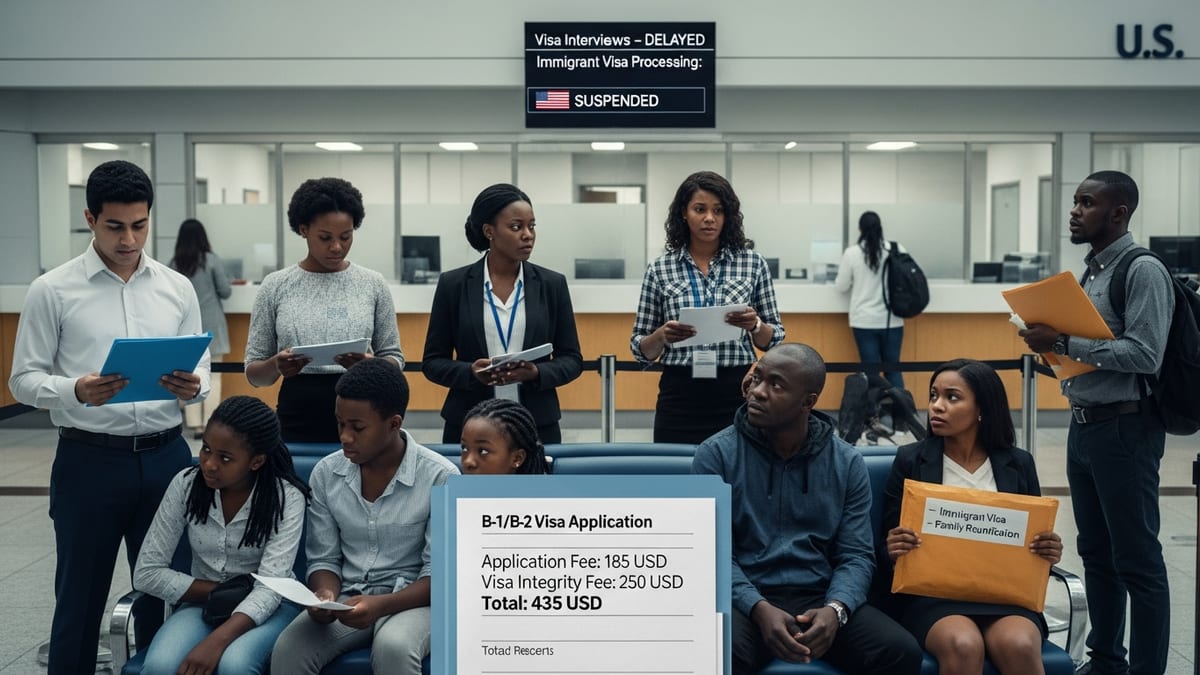
Coordinated Relief Measures Emerge Across Key Transit Hubs
Publicly available government notices and travel advisories indicate that several Middle Eastern states have converged on a broadly similar approach to the sudden build up of stranded travelers: keep people in legal status, suspend or reduce overstay penalties and make it easier to leave when flights become available. While each country has acted through its own legal framework, the combined effect is a patchwork of emergency protections that now spans many of the region’s busiest hubs.
Qatar drew early attention in late February and early March 2026 when authorities introduced an automatic, no‑fee one month extension for almost all categories of entry visas, applied electronically and without the need for visitors to file applications in person. Coverage from regional outlets and immigration consultancies described the measure as a humanitarian response to a sudden closure of Qatari airspace that left tourists, business travelers and transit passengers stuck in Doha as flights were canceled or rerouted.
Similar themes quickly appeared in neighboring states. In the United Arab Emirates, reports from travel media and European broadcasters highlighted a commitment to waive overstay fines for visitors whose trips were disrupted by the same wave of cancellations, particularly those caught in Dubai and Abu Dhabi after onward sectors were removed from airline schedules. Bahrain, facing its own airspace restrictions, was reported to have adopted a grace period for visitors whose visas expired after the closures, temporarily suspending financial penalties while exit routes were reestablished.
Across the eastern Mediterranean, Turkish and Israeli notices on consular and aviation channels have likewise pointed stranded travelers toward leniency provisions, with both countries signaling that visitors indirectly affected by diverted or canceled flights would be offered short, simplified extensions or a relaxation of usual overstay enforcement. Together, these moves form a de facto safety net for travelers zigzagging between Middle Eastern connection points at a time of elevated uncertainty.
Automatic Visa Extensions Aim To Keep Travelers In Legal Status
At the heart of the region’s response are automatic or streamlined visa extensions designed to prevent visitors from falling out of legal status simply because they cannot leave. In Qatar, official announcements summarized in immigration bulletins and corporate tax alerts described a blanket, one month top up for expiring or recently expired entry visas, from standard tourist entries to short term business permits. The extensions were handled through existing electronic systems, meaning travelers were not required to queue at immigration offices or pay additional fees while airports operated at minimal capacity.
In the UAE, publicly available guidance referenced by international broadcasters noted that tourists stranded after the disruption would be allowed to depart without paying the usual overstay fines, so long as they exited once commercial options reopened. Bahrain’s approach, according to the same coverage, involved a defined window in which visitors whose visas lapsed after the initial airspace closure would not be penalized, effectively creating a retroactive grace period that tracks the duration of the crisis.
Turkey and Israel, both heavily reliant on connecting and inbound traffic, have blended short term extensions with case by case flexibility. Consular pages and travel trade updates describe temporary rules that allow affected visitors to regularize their stay with reduced paperwork, shorter processing times and, in some circumstances, fees that are deferred or waived. In practice, this has meant that travelers stranded in Istanbul or Tel Aviv after regional detours or last minute cancellations have been able to remain in the country lawfully while they source alternative itineraries.
Together, these measures have turned visa policy into a primary tool for humanitarian relief, at least in the short term. By extending status automatically and pausing enforcement, governments have attempted to ensure that stranded travelers do not face detention, fines or future travel bans purely because of circumstances beyond their control.
Penalties, Exit Permits And Overstay Rules Temporarily Softened
Alongside the headline decision to extend visas, a second pillar of the Middle East response has focused on softening the consequences of unavoidable overstays and simplifying exit procedures once flights resume. In countries where overstaying is normally met with daily fines, reentry bans or even detention, public communications have emphasized that travelers caught by the current crisis will be treated differently from standard violators.
In the UAE, this has translated, according to travel sector reporting, into commitments to clear overstay fines for tourists who can demonstrate that grounded flights or closed airspace prevented timely departure. Bahrain is reported to have implemented a similar stance, explicitly linking its fine waivers to visa expiries that occurred after the disruption began and extending protection for a short period beyond the formal reopening of airspace.
Qatar’s temporary policy package, summarized in analyses from global mobility and tax advisory firms, not only extended visas but also reduced the need for ad hoc exit permits for visitors departing once limited services restarted. Although exit permits have been progressively phased out for most foreign nationals in recent years, the latest guidance suggests that stranded travelers leaving on emergency or special flights have been channeled through simplified border controls designed to move passengers quickly without additional administrative burdens.
In Turkey and Israel, aviation and consular notices have highlighted flexible treatment at the point of departure, with border officials instructed through formal circulars to prioritize exit over enforcement where a traveler’s overstay can be traced to canceled connections or closed corridors. That emphasis on pragmatic departures has been particularly significant for those transiting Istanbul, Tel Aviv, Dubai or Doha on complex multi leg journeys between Europe, Asia and Africa.
Regional Airspace Closures Drive Unprecedented Cooperation
The breadth of these measures reflects the scale of the operational shock that hit Middle Eastern aviation at the end of February 2026. Flight tracking data, airline advisories and maritime and port bulletins show how the closure or restriction of several key airspace corridors forced carriers to cancel or reroute services across the Gulf, Levant and eastern Mediterranean, turning major hubs into temporary holding points for tens of thousands of travelers.
Doha’s Hamad International Airport, Dubai International, Istanbul Airport, Bahrain International and Tel Aviv’s Ben Gurion Airport each experienced days in which normal schedules were effectively suspended. Airlines including Qatar Airways and Gulf carriers in the UAE introduced limited, prioritized rotations to repatriate vulnerable passengers, but many travelers still faced prolonged waits in hotels, transit lounges or temporary accommodation.
It is within this context that the emerging alignment on visa relief can be understood. With passengers frequently shuttling between countries as they pieced together new routes home, rigid national rules on overstays or exit permissions risked creating cascading legal problems for people already displaced by the airspace closures. By relaxing enforcement simultaneously, Qatar, the UAE, Bahrain, Turkey and Israel have effectively acknowledged that the current disruption is transnational in nature and that a coordinated, traveler focused response is essential to restoring confidence.
Regional policy trackers compiled by global consulting and immigration firms suggest that this informal cooperation has taken shape rapidly, often within days of the initial shutdowns. While there is no single multilateral agreement governing the various extensions and waivers, the similarities in design and timing point to a high degree of information sharing among governments and civil aviation authorities.
Time Limits, Rolling Reviews And What Travelers Should Expect Next
Despite the generous scope of the initial relief measures, there are clear signs that governments view them as temporary tools rather than permanent reforms. In Qatar, for example, immigration law bulletins and official summaries now note that the automatic visa extension regime has been formally wound down, with standard validity periods and renewal requirements reinstated in June 2026 as airspace gradually reopened and commercial capacity returned.
Commentary from legal and mobility specialists indicates that similar recalibrations are expected in other jurisdictions as soon as evacuation backlogs clear and regular schedules stabilize. Fine waivers in the UAE and Bahrain have been tied explicitly to the period of disruption, while the more flexible interpretation of overstay rules in Turkey and Israel is framed as applicable only to those whose travel plans were directly impacted by the crisis.
For stranded travelers, this means the window of automatic protection is narrowing, even as some flight options remain limited or indirect. Public guidance from airlines and tourism boards across the region continues to advise visitors to check the latest entry and exit conditions before traveling, monitor the status of connecting flights, and, where possible, keep documentation that shows how their itinerary was affected by cancellations or diversions.
Industry analysts note that the coordinated response of Qatar, the UAE, Bahrain, Turkey and Israel may prove to be a template for future crises that spill across borders, combining automatic visa cushions, temporary suspension of penalties and streamlined exit procedures. For now, however, the focus is on shepherding the remaining stranded passengers through Doha, Dubai, Manama, Istanbul and Tel Aviv and back onto stable ground, before extraordinary measures give way to the region’s more familiar, and typically strict, visa regimes.