


More news on this day
Regional security tensions are once again rippling through global aviation, with fresh delays reported in Kuwait and long running suspensions by Singapore Airlines and Air France further constraining already fragile links to the Middle East.
Get the latest news straight to your inbox!
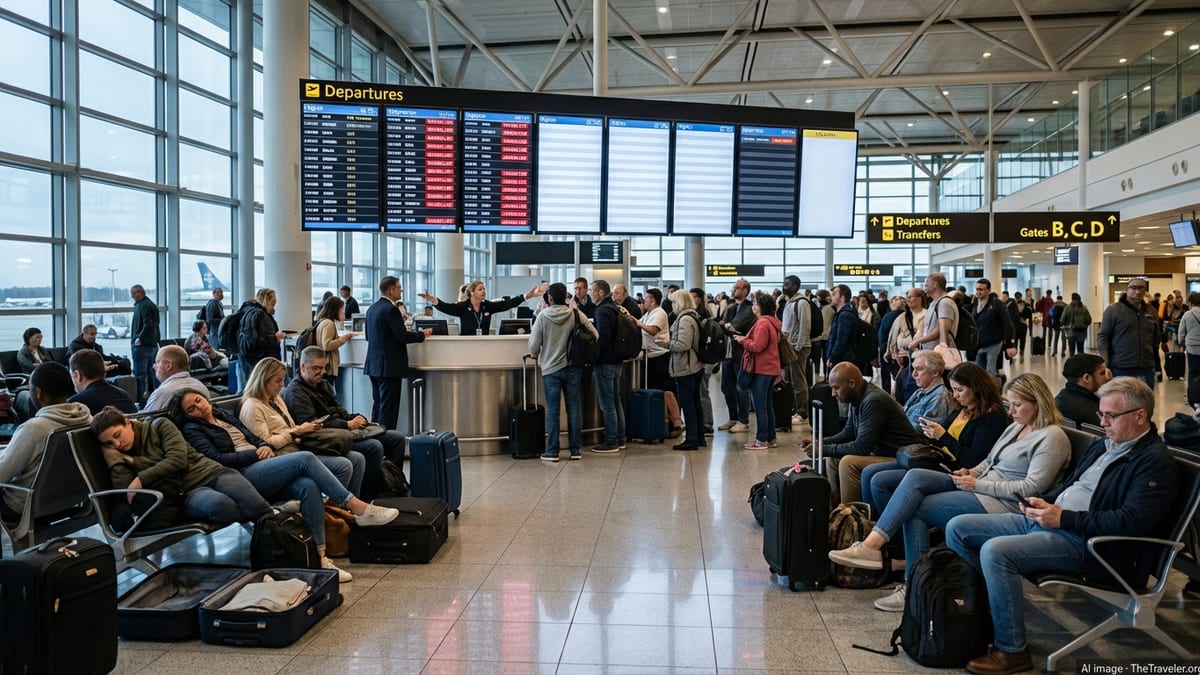
Delays and reduced operations at Kuwait International Airport
Flight operations at Kuwait International Airport remain volatile following missile and drone incidents and several temporary airspace closures in recent weeks. Publicly available notices and travel advisories indicate that traffic is running on a reduced schedule, with services consolidated through specific terminals and many carriers still operating modified timetables.
Government travel guidance updated in mid July notes that Kuwait International Airport is currently operating mainly through Terminals 4 and 5, serving national carrier Kuwait Airways and low cost airline Jazeera Airways, while the main Terminal 1 remains closed. Flight schedules are reduced and subject to change at short notice, and regional observers report that precautionary restrictions are being adjusted in line with shifts in the wider security environment.
Specialist aviation risk publications describe Kuwait’s airspace as affected by the broader Iran related conflict, referencing previous drone and missile activity near the airport and warning that nearby maritime and overland corridors may also be exposed to overflights and debris. While the airport has reopened after several complete shutdowns, airlines and cargo operators continue to flag the potential for delays, diversions and capacity limits on routes touching Kuwait.
Travel agents and advisory platforms tracking Kuwait departures and arrivals highlight a patchwork of schedules, with some airlines resuming services while others keep suspensions in place. Passengers connecting through Kuwait report last minute itinerary changes, with some transit itineraries cancelled or rebooked on alternative routings as operators respond to evolving restrictions.
Singapore Airlines extends Middle East suspensions
Singapore Airlines is maintaining a cautious stance toward the Middle East corridor, extending a series of suspensions and cancellations that have been in place since the onset of the current regional crisis. According to a travel advisory updated in mid July, the carrier has cancelled multiple flights on routes affected by the geopolitical situation through at least early August, while previously announced route suspensions to key Gulf markets remain in force.
Earlier company statements outlined the suspension of services to Dubai in the United Arab Emirates and Jeddah in Saudi Arabia, citing security and airspace concerns. The latest advisory reiterates that selected flights across the affected region will not operate until at least 2 August 2026, and encourages passengers to monitor flight status pages and contact their booking channels for re accommodation options.
Singapore Airlines has adjusted capacity elsewhere in its long haul network to absorb some of the displaced demand, particularly on Asian and European sectors that can bypass conflict affected airspace. However, industry analysis suggests that the loss of nonstop connectivity between Southeast Asia and certain Gulf hubs is adding pressure to already crowded alternative gateways as travelers are funneled through longer, more northerly or southerly routings.
For passengers, the extended suspensions translate into longer journey times, more complex itineraries and limited last minute availability during the busy northern summer period. Some regional travelers are rerouting via airports in South Asia or through secondary European hubs, often involving overnight connections and additional screening where airlines avoid overflights of contested airspace.
Air France maintains halt on multiple Middle East routes
Air France is also keeping a firm line on Middle East operations. The airline’s summer 2026 schedule update confirms an extension of the suspension of flights to Tel Aviv, Beirut, Dubai and Riyadh, with the carrier reallocating aircraft to meet strong demand on transatlantic and Asia bound services instead.
According to the published schedule overview, Air France is using larger aircraft and adding flights on routes to cities such as Bangkok, Singapore, Delhi and Tokyo, partly to compensate for the lost capacity on Middle East sectors and to meet robust demand on long haul connections that avoid the most sensitive airspace. The strategy mirrors that of several European competitors that have shifted focus from Gulf and Levant markets toward more stable long haul corridors.
French and European aviation safety directives in recent months have urged operators to exercise heightened caution in Kuwait’s airspace and in surrounding conflict affected regions. This regulatory backdrop has reinforced airlines’ decisions to keep certain routes offline, even when some airports in the region have formally reopened for limited traffic.
Passengers who once relied on direct services from Paris to Gulf and Levant cities are now more likely to find one stop itineraries via other European hubs or through North African and Turkish gateways. While alternative options exist, booking data compiled by travel platforms shows higher fares on remaining routes and a rise in multi stop journeys, especially for travel originating in smaller European cities.
Global network impact and longer routings
The turbulence in Middle East airspace is reverberating across global flight networks. Industry updates on the 2026 Iran related conflict describe how successive waves of airspace closures and airport disruptions in Kuwait, the United Arab Emirates and parts of the Gulf have led to thousands of cancellations and widespread rerouting.
Airlines that continue to serve the broader region are increasingly planning longer detours that skirt conflict zones, adding flight time and fuel burn to journeys linking Europe and Asia. Analysts tracking flight paths note that certain services now arc north over Central Asia or take southerly tracks over the Arabian Sea, reducing exposure to high risk areas but stretching schedules and reducing aircraft utilization.
Logistics providers report that cargo flows into Kuwait, Bahrain and Iraq face particular strain, with limited capacity and irregular schedules contributing to backlogs. One recent supply chain bulletin highlighted ongoing delays for shipments to these markets and warned that further airspace adjustments could disrupt planned routings with little notice.
For passengers, the practical impact includes extended travel times, tighter aircraft capacity and a greater likelihood of missed connections when upstream legs are delayed. Travel management companies are advising corporate clients to allow more generous buffers between connecting flights and to monitor itinerary changes closely in the days leading up to departure.
What travelers transiting the region should expect
With Kuwait still experiencing intermittent disruption and major carriers such as Singapore Airlines and Air France prolonging suspensions, travelers with itineraries touching the Middle East are being urged by airlines and travel advisers to plan for uncertainty. Public guidance from national foreign ministries emphasizes that flight schedules may change at short notice where security assessments shift, and that even reopened airports can face sudden slowdowns.
Passengers booked to connect through Kuwait, Dubai or other Gulf hubs are increasingly encouraged to check their booking status frequently and to consider flexible tickets or routes that provide alternatives if a particular airport becomes constrained. Those holding tickets on suspended routes are generally being offered rebooking on alternative services, travel credits or refunds, according to airline policy updates.
Travel insurance has also moved into sharper focus. Consumer advocates recommend that passengers review policy terms for coverage of war or conflict related disruption, since many standard products contain exclusions for events linked to hostilities. Specialist policies or add ons may be required for travelers whose journeys depend on transiting sensitive airspace or high risk hubs.
While there are signs of gradual normalization in some parts of the region, the combination of local infrastructure damage, ongoing security assessments and conservative routing by global airlines means that delays and suspensions are likely to remain part of the travel landscape through the height of the summer season. For now, flexibility and close monitoring of airline advisories are emerging as the key tools for anyone planning to fly through the Middle East.