


More news on this day
Thunderstorms sweeping across North Texas on Wednesday evening led to more than 900 flight delays at Dallas Fort Worth International Airport and Dallas Love Field, causing widespread disruptions for travelers across the country.
Get the latest news straight to your inbox!
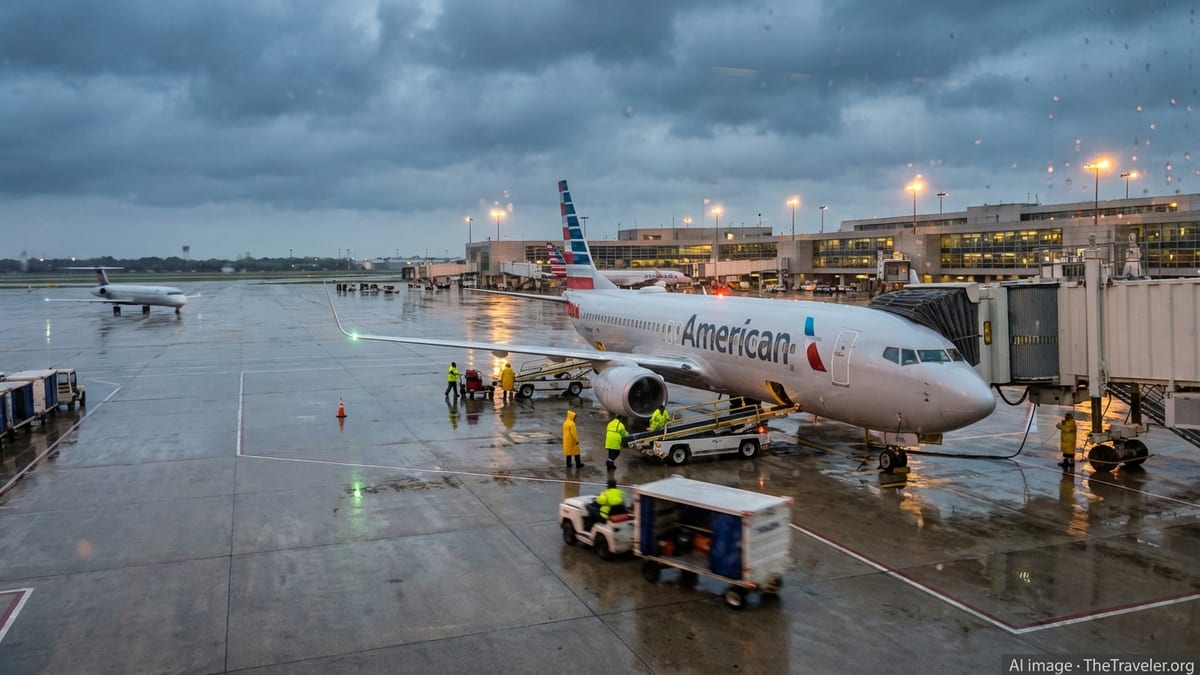
Severe Weather Snarls Evening Operations
Publicly available flight-tracking data indicate that by early Wednesday evening, Dallas Fort Worth International accounted for the bulk of the disruption, with roughly 750 delayed flights, while Dallas Love Field logged about 160 delays. The operational slowdown developed as storms moved through the Dallas Fort Worth area, prompting traffic-management measures that reduced the flow of aircraft into and out of the region.
Reports indicate that multiple ground stops and flow restrictions were implemented as thunderstorms passed near key arrival and departure corridors. These measures limited the number of flights allowed to depart for, or arrive at, the two Dallas airports, leading to growing queues of aircraft and knock-on delays stretching through the evening hours.
According to published coverage that draws on Federal Aviation Administration advisories and flight-tracking services, average departure and arrival delays climbed into the tens of minutes at both airports, with some flights delayed considerably longer as the storm cells lingered over North Texas. Airlines adjusted schedules, held aircraft at origin airports, and rerouted some flights in an effort to work around the most intense weather.
The ripple effects were felt well beyond North Texas. Because Dallas Fort Worth International serves as a major connecting hub for domestic and international routes, delays there quickly cascaded through airline networks, affecting passengers in cities across the United States and on overseas itineraries.
Ground Stops and Reduced Capacity Complicate Recovery
Information from national airspace status tools shows that traffic-management initiatives, including temporary ground stops and ground-delay programs, played a central role in the scale of the disruption. These programs are used to slow the rate of arrivals and departures when thunderstorms reduce the usable airspace around an airport, effectively cutting the facility’s capacity until conditions improve.
At Dallas Fort Worth International, storms combined with staffing constraints to further limit the number of flights controllers could safely handle at once, according to media reports summarizing federal traffic-advisory data. With fewer arrival and departure slots available, airlines were forced to hold flights at gates, delay pushbacks, and, in some cases, keep aircraft on the ground at outstations until slots opened in North Texas.
Dallas Love Field, which operates in the same congested airspace, also experienced delays as it adjusted to the weather and traffic restrictions. Public data indicate that average delay times there were generally shorter than at Dallas Fort Worth International but still significant enough to disrupt evening schedules and connections for travelers relying on the airport’s point-to-point network.
Even after the most intense storms moved east, recovery was gradual. Airlines worked through a backlog of late-arriving aircraft and crews that had exceeded scheduled duty windows. The combined effect meant some flights were pushed deeper into the night, while others were ultimately canceled or rebooked for the following day.
Travelers Face Missed Connections and Overnight Disruptions
The surge in delays created a challenging evening for passengers passing through both Dallas airports. With more than 900 late flights between Dallas Fort Worth International and Dallas Love Field, many travelers missed connections, faced rebookings onto later flights, or encountered extended waits at gates and on board parked aircraft.
Passenger accounts shared on social platforms and in local coverage described long lines at customer-service counters as travelers sought alternative itineraries. Some reported being held on arriving aircraft awaiting gate availability at Dallas Fort Worth International, while others noted last-minute gate changes and rolling departure times as airlines tried to fit delayed flights into a compressed operating window.
Airport operations teams at both facilities shifted into disruption-management mode, focusing on managing crowded gate areas and keeping information boards updated as airlines revised schedules. While basic services at the terminals remained available, the volume of affected passengers placed added pressure on concessions, airport parking, and ground transportation late into the night.
For some travelers whose flights were pushed beyond legal crew-duty limits or into the following morning, the delays resulted in unexpected overnight stays in the Dallas area or intermediate cities. Travel planners note that such cascading impacts are common when severe weather coincides with the busy evening bank of departures and arrivals at a major hub.
Stormy Summer Pattern Highlights Vulnerability of Hub Airports
The latest disruption fits into a broader pattern of weather-related interruptions that have affected North Texas airports during the early part of the summer travel season. In recent days, scattered thunderstorms across the region have repeatedly slowed operations at Dallas Fort Worth International, prompting earlier rounds of delays and cancellations documented by local media and aviation data services.
Industry analysts note that large hub airports like Dallas Fort Worth International are particularly vulnerable during convective weather events. Because so many connecting flights are scheduled to arrive and depart within tight time frames, even a brief period of reduced capacity can trigger significant congestion as aircraft compete for arrival and departure slots.
Dallas Love Field, while smaller, shares the same regional airspace and is exposed to many of the same storm systems. When traffic-management initiatives are put in place across the Dallas area, both airports may face restrictions, amplifying the overall impact on travelers using North Texas as either an origin, destination, or connection point.
Forecasts from federal meteorological agencies for mid-July indicate that unsettled conditions and periodic storm chances are likely to persist across parts of Texas. That outlook suggests the potential for additional weather-related disruptions during what is already one of the busiest travel periods of the year for U.S. airports.
What Travelers Can Do When Severe Weather Hits
Travel organizations and consumer advocates often emphasize preparation when storms threaten major hubs like Dallas Fort Worth International and Dallas Love Field. They advise that travelers monitor forecasts closely in the days leading up to a trip and use airline apps or text alerts to track potential schedule changes in real time.
Public guidance from aviation agencies and airlines suggests building extra time into connections that route through weather-prone hubs during stormy seasons. Choosing earlier departures, when possible, can provide more options for same-day rebooking if delays accumulate later in the day. Some carriers also allow no-fee itinerary changes when severe weather is expected to affect key airports, which can give passengers more flexibility to adjust travel plans.
For those already at the airport during a disruption, experts recommend staying informed through airport displays and official airline communication channels, rather than relying solely on third-party apps. Keeping essentials such as medications, chargers, and basic toiletries in carry-on bags can also make extended waits and unexpected overnight stays easier to manage.
The more than 900 delays recorded across Dallas Fort Worth International and Dallas Love Field on Wednesday underscore how quickly routine summer thunderstorms can upend even well-planned trips. As stormy weather remains in the forecast, travelers connecting through North Texas are likely to continue weighing flexibility and contingency planning as essential parts of their journey.