


More news on this day
A new high-speed rail corridor between Xi’an and Shiyan has pushed through the Qinling Mountains with some of China’s longest and most complex tunnels, marking a major breakthrough for cross-regional connectivity and tourism in central China.
Get the latest news straight to your inbox!
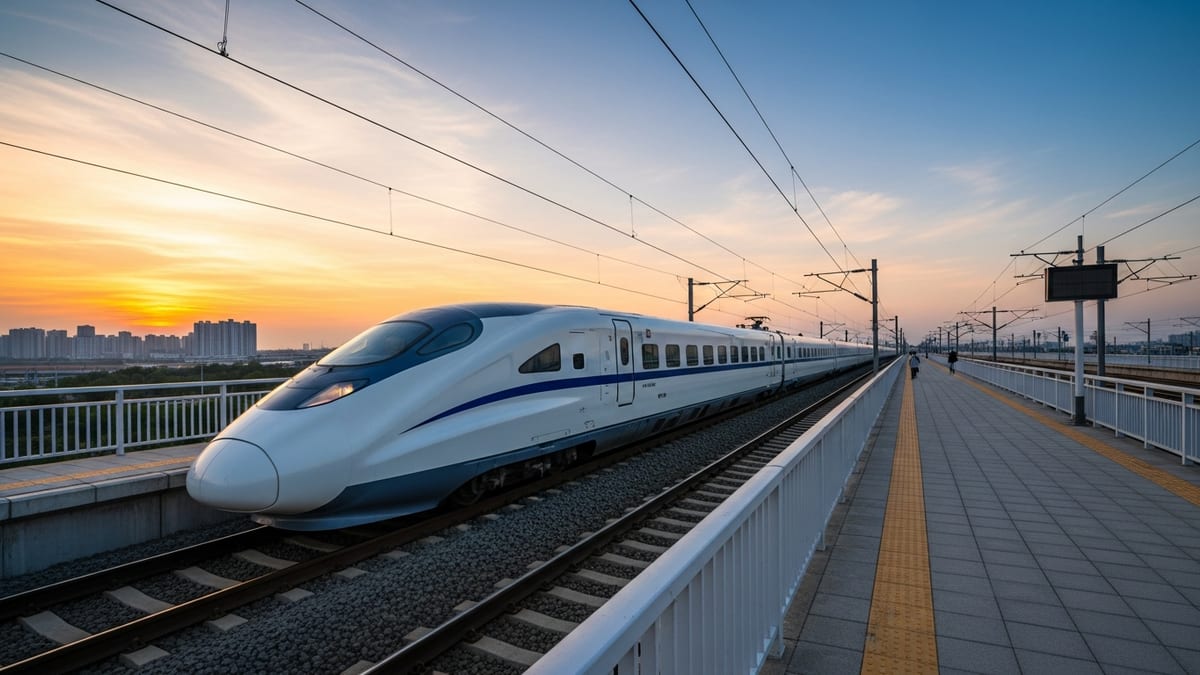
A New High-Speed Gateway Through the Qinling Range
The Xi’an–Shiyan high-speed railway is part of China’s expanding 350-kilometer-per-hour network, linking the historic city of Xi’an in Shaanxi province with Shiyan in neighboring Hubei. The route cuts directly across the Qinling Mountains, a natural boundary between northern and southern China that has long constrained transport capacity and journey times.
According to publicly available project information, the line is designed to reduce end-to-end travel from more than five hours on existing routes to less than two hours. The breakthrough of its longest mountain tunnels has been described in industry coverage as a decisive milestone, paving the way for full tracklaying, comprehensive testing and eventual passenger operations.
Engineering case studies indicate that planners adopted a largely tunnel-and-viaduct alignment to maintain high speeds across rugged terrain. By minimizing gradients and sharp curves, the route aims to combine shorter distances with smoother operations, while also limiting the footprint on ecologically sensitive slopes and valleys in the Qinling region.
The line originates at Xi’an East, a new hub in the city’s fast-growing eastern suburbs, and runs southeast toward Shiyan East. Once fully integrated with other national corridors, it is expected to become a key north–south connector, linking inland provinces more efficiently with coastal economic centers.
Record-Length Tunnels Under the Qinling Mountains
The defining feature of the Xi’an–Shiyan corridor is its sequence of ultra-long mountain tunnels, led by the Qinling Mabaishan Tunnel and the Xiling Tunnel. Specialized tunneling reports list the Qinling Mabaishan structure at nearly 23 kilometers in length, placing it among the longest railway tunnels in China and reinforcing the line’s reputation as a showcase for deep-buried mountain engineering.
The Xiling Tunnel, another signature structure on the route, has been described in engineering bulletins as the longest Class I high-risk tunnel on the project. Located in the mid- to low-altitude Qinling terrain in Shangluo, Shaanxi, it presented a combination of fractured rock, high ground stress and complex groundwater conditions that required careful sequencing of excavation and lining works.
Project documentation highlights the use of precision blasting, large-section excavation and high-performance concrete linings to maintain stability over long distances underground. Intelligent monitoring systems have reportedly been installed to track deformation, water inflows and surrounding rock behavior in real time during and after construction, enabling early intervention where necessary.
These tunnels also incorporate dedicated safety features such as cross-passages, emergency walkways and specialized ventilation systems. In addition, the railway has installed signal base stations and radiating cables inside key bores to sustain communications and train control functions at high speed beneath the mountains.
Cutting Travel Times and Redrawing Regional Maps
Published coverage in Chinese and international media describes the Xi’an–Shiyan line as a new high-speed axis across central China. By directly piercing the Qinling barrier instead of detouring around it, the route compresses journey times between Shaanxi and Hubei and offers a faster alternative to conventional lines still limited by steep gradients and constrained capacity.
For Xi’an, already a major junction on multiple high-speed routes, the new connection enhances its role as a national rail hub. Passengers traveling from northern and northwestern regions gain a more direct high-speed option toward central China and the middle reaches of the Yangtze River, feeding into a wider web of routes to Wuhan, Chongqing and other large cities.
For Shiyan and the surrounding areas, the line is expected to significantly improve access to larger markets and services. Analysts note that by linking a mid-sized inland city to the country’s premier high-speed grid, the project can support the development of advanced manufacturing clusters, logistics parks and service industries that depend on reliable, time-sensitive transport.
Transport planners frequently point to such corridors as catalysts for more balanced growth within China’s interior. Shorter travel times across once-formidable mountain ranges allow people, goods and capital to move more freely, potentially easing regional disparities and encouraging both domestic and international investment.
Tourism, Heritage and Environmental Considerations
The corridor also opens new possibilities for tourism on both sides of the Qinling Mountains. Xi’an, home to the Terracotta Army, city walls and imperial heritage sites, gains closer links to the natural and cultural attractions around Shiyan, including the Wudang Mountains, a renowned center of Taoist temples and martial arts culture.
With journey times compressed to under two hours, tourism operators expect more weekend and short-break itineraries that combine ancient capitals and mountain retreats in a single trip. This pattern has been observed on other high-speed routes in China, where improved access has expanded visitor catchment areas and extended travel seasons.
At the same time, the line traverses ecologically sensitive zones in the Qinling region, home to protected species and important watershed areas. Technical reports on comparable projects in the mountains stress the need for strict construction controls, careful tunnel spoil management and long-term monitoring of slope stability and water resources to minimize environmental impacts.
For the Xi’an–Shiyan line, public sources indicate that route selection, extensive tunneling and the use of viaducts were intended to reduce surface disturbance. Future operations will be closely watched by researchers and conservation groups studying how high-speed infrastructure interacts with biodiversity corridors, especially in habitats that support rare bird and mammal species.
Part of a Larger National High-Speed Strategy
The breakthrough of the Qinling tunnels on the Xi’an–Shiyan route aligns with a broader national strategy to extend high-speed rail deeper into central and western China. Planning documents and sector analyses describe the line as a component of a longer north–south axis intended to knit together provincial capitals, emerging industrial cities and border gateways.
In this context, the Qinling crossing is both a symbolic and practical achievement. It demonstrates the technical capacity to build and operate very long tunnels under complex mountains at speeds up to 350 kilometers per hour, while also signaling continued investment in inland connectivity at a time when many countries are reassessing large-scale infrastructure spending.
As the project progresses from structural completion to system integration, testing and eventual commercial service, attention is likely to focus on service patterns and pricing, the balance between intercity and regional stopping services, and how the line integrates with urban transit at Xi’an East and Shiyan East stations.
For travelers, the most immediate impact will be measured in minutes and hours saved. For the Qinling region, the new rail link represents a profound shift in how people and places on either side of the mountains experience distance, access and opportunity.