


More news on this day
Air travel across the Middle East faced another day of heavy disruption on September 4, as operational constraints and regional tensions combined to produce 910 flight delays at major airports, with Dubai and Erbil among the most affected hubs, according to live tracking data and regional aviation updates.
Get the latest news straight to your inbox!
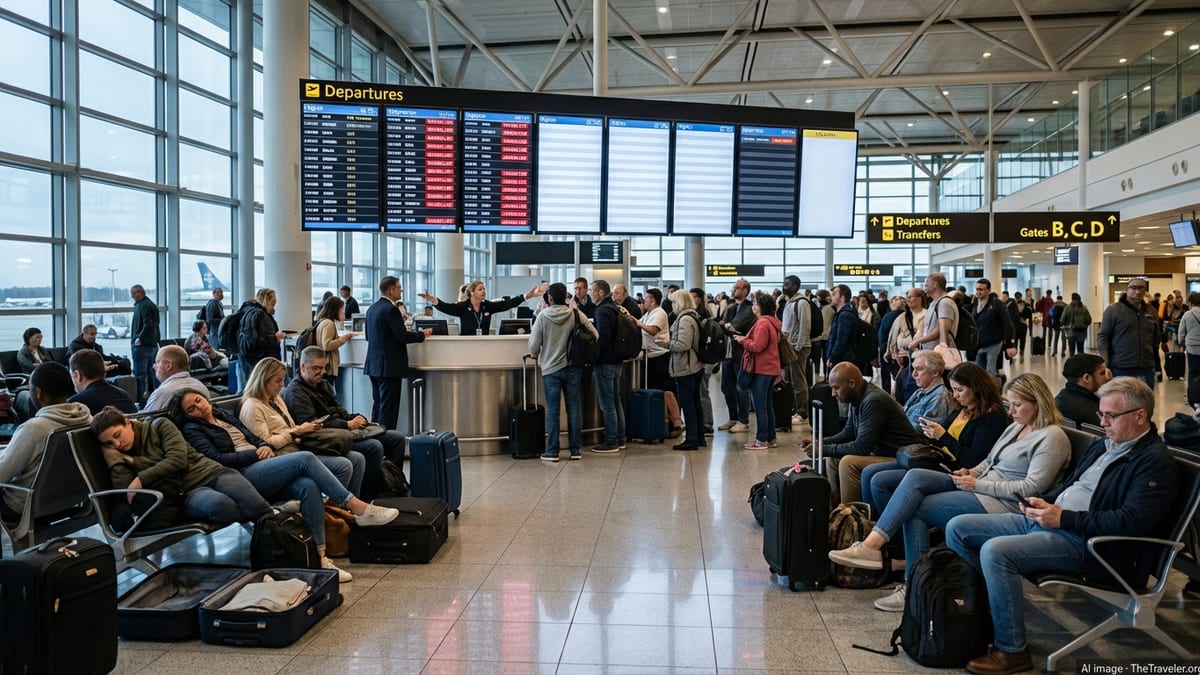
Delays Mount Across Major Middle East Gateways
Live global tracking platforms show elevated levels of disruption across key Middle Eastern hubs, with hundreds of services delayed and a smaller but persistent number of cancellations. Aggregated figures for September 4 indicate around 910 delayed flights across the region’s principal international airports, including Dubai International, Doha, Riyadh and Kuwait City, reflecting a continuation of the pattern reported in recent weeks.
Dubai International Airport, one of the world’s busiest long haul gateways, recorded several hundred delays today, according to real time statistics from aviation data services. One major tracker reported more than 300 delayed departures and arrivals in Dubai alone, along with a handful of cancellations, signalling ongoing schedule pressure even though airport operations remain open.
Regional monitoring reports describe a combination of congested airspace, shifting routings around sensitive zones and knock on effects from earlier disruptions as contributing factors. Airline schedules across the Gulf and Levant corridors have been repeatedly adjusted this year, and carriers continue to manage rolling delays as aircraft and crews cycle through constrained networks.
Industry supply chain bulletins note that while full scale airspace closures have eased compared with earlier peaks in 2026, intermittent restrictions and reroutes over parts of Iraq, Iran and the eastern Mediterranean continue to compress available capacity. This has translated into longer flight times, tighter turnarounds and greater vulnerability to cascading delays when individual services fall behind schedule.
Dubai Strains Under Volume as Airlines Rebalance Networks
Dubai’s role as a super connector hub means that any disturbance in regional or long haul patterns quickly multiplies across its banks of arrivals and departures. Flight status dashboards for Dubai International today show an elevated number of services operating behind schedule, spanning short haul connections within the Gulf and longer routes linking Europe, Asia and Africa.
Publicly available information from Dubai Airports confirms that operations at the emirate’s main gateway remain active, with flight status pages updating throughout the day to reflect revised departure and arrival times. Travelers transiting through the hub are being urged by airlines and airport channels to check live status before heading to the terminal and to anticipate potential changes to connection windows.
Emirates and flydubai, the two largest operators at Dubai International, continue to adjust their timetables in response to regional constraints. Emirates’ travel advisories in recent months have highlighted that flights to and from Dubai have not always operated at full schedule, with rebooking and flexible change policies made available to affected passengers. While the carrier has restored much of its global network, periodic disruptions in surrounding airspace have created further challenges for on time performance.
Logistics and cargo updates focused on the Middle East underline that Dubai and Abu Dhabi remain operational but face episodic bottlenecks. Forwarders have reported that constrained routings and selective restrictions in parts of the region can push additional volume through the United Arab Emirates, increasing pressure on ground handling and turnaround times at peak hours and amplifying delay statistics on busy days.
Erbil and Northern Iraq See Intermittent Disruption, Continued Operations
In Iraq’s Kurdistan Region, Erbil International Airport remains open and handling scheduled flights, but it has experienced intermittent operational uncertainty in recent weeks. Local media coverage in July described a short lived suspension of movements at Erbil and nearby Al Sulaymaniyah during a period of heightened security tension, followed by a rapid resumption of normal activity as the situation stabilized.
Airport flight information published today by Erbil International Airport shows a full slate of arrivals and departures, including multiple daily links to Dubai and other regional hubs. Live departure boards list services to and from Istanbul, Amman, Doha and Dubai operating, with only minor delays recorded on individual flights. Aviation tracking platforms similarly display regular movements on core routes, underlining that the airport remains an active node in northern Iraq’s connectivity despite the broader regional backdrop.
Nevertheless, regional supply chain bulletins point out that Iraqi airspace, including corridors serving Erbil and Baghdad, has been subject to restrictions at various points in 2026. These measures, which can include temporary reroutes or altitude limitations, tend to lengthen sector times and can reduce usable capacity on certain days, feeding into the overall tally of delayed services counted across Middle Eastern airports.
Travelers using Erbil are therefore experiencing a more nuanced picture than simple closure or normality. While scheduled passenger operations are broadly intact, timekeeping can be affected by decisions taken far beyond the immediate vicinity of the airport, as airlines adapt flight paths around restricted zones and factor additional buffers into their timetables.
Ripple Effects for Global Connections and Cargo Flows
The accumulation of 910 delays across Middle East airports today has implications that extend well beyond the region. As a significant share of Europe Asia and Africa traffic connects via Gulf and Levant hubs, even modest disruptions in departure times can cause missed connections, rebookings and overnight stays for passengers traveling between continents.
Aviation analytics shared publicly in recent weeks show that major hubs such as Dubai, Doha and Riyadh continue to handle large volumes of connecting traffic, meaning a delayed inbound service can disrupt dozens or even hundreds of onward itineraries. This dynamic is particularly acute on days when multiple routes are adjusted simultaneously due to weather, airspace flow controls or regional security considerations.
Cargo flows are also affected. Specialized logistics updates tracking pharmaceutical and high value freight movements note that route changes and reduced flexibility on key Middle East corridors have extended transit times compared with historical norms. While operators have introduced multimodal solutions, including sea air combinations and alternative gateways, compressed air capacity continues to translate into tighter schedules and greater exposure to delay.
For shippers and passengers alike, the pattern emerging today underlines the importance of monitoring live information as conditions evolve. With regional tensions, operational constraints and strong seasonal demand all in play, the Middle East’s leading airports are likely to face continued pressure on punctuality even as they remain open for business.
What Travelers Through Dubai and Erbil Should Watch
For travelers scheduled to fly through Dubai, Erbil or other Middle Eastern hubs in the coming days, publicly available guidance consistently emphasizes the need to verify flight status close to departure. Airline and airport portals, as well as independent tracking platforms, provide near real time updates on departure times, gate changes and any emerging disruption.
Dubai Airports’ digital channels allow users to search for specific flights by route or number and filter by date, offering a straightforward way to confirm whether a service is delayed or on time. In Erbil, the airport’s own flight information page refreshes every few minutes, listing estimated and actual times for arrivals and departures and flagging any significant changes in schedule.
Regional travel advisories from foreign ministries and consular services further recommend building in additional connection time when planning itineraries through the Middle East, especially on complex multi stop journeys. Some travelers are also opting to travel with hand baggage where possible to simplify rebooking if delays cause misconnected flights.
As the situation remains fluid, industry observers expect that airlines and airports will continue to fine tune schedules and routings in response to day by day developments. The elevated delay figures recorded today highlight the degree to which the Middle East’s position at the crossroads of global air travel can magnify the impact of any operational or geopolitical friction on passengers across multiple continents.
FlightAware live delay and cancellation statistics for Dubai International Airport
Erbil International Airport live flight information
Marken Middle East airspace and supply chain disruption update (June 2026)
Gulf News coverage of recent UAE flight cancellations and regional tensions