


More news on this day
Seattle is consolidating its position as a Pacific Northwest travel hub, with fresh data showing tourism gains powered by record-setting Alaska cruise traffic, expanding outdoor recreation and a steadily strengthening hotel market.
Get the latest news straight to your inbox!
Alaska Cruise Traffic Reaches New Highs
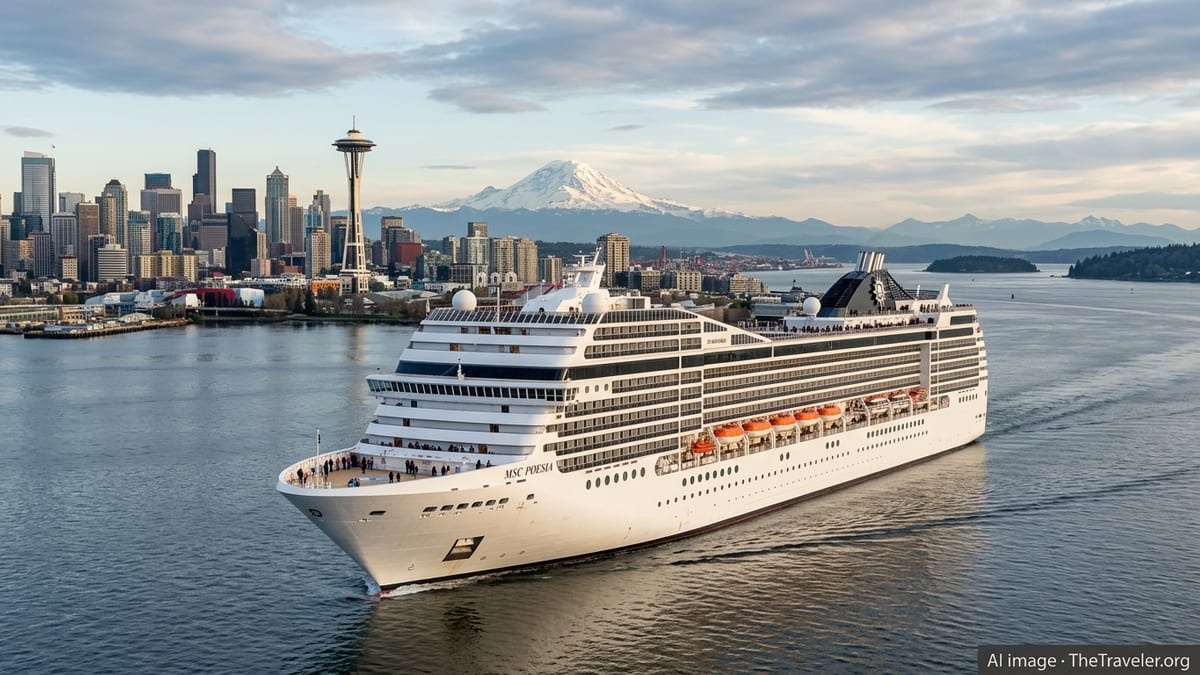
Seattle’s role as a leading gateway to Alaska is translating directly into tourism momentum. Port of Seattle data and recent analyses show cruise passenger volumes climbing from near zero in 2020 to roughly 1.78 million in 2023, 1.75 million in 2024 and an estimated record 1.9 million passengers in 2025, underscoring a rapid rebound and expansion of the market.
Port figures indicate that Alaska cruising through Seattle now generates around 1.2 billion dollars in annual economic impact when passenger spending, provisioning and related services are included. The cruise sector also supports thousands of jobs in Washington state, with an industry report for 2024 estimating 12,000 jobs and 2.9 billion dollars in total output linked to cruising statewide.
The 2024 season marked the 25th year of cruises between Seattle and Alaska, with the port recording approximately 1.75 million passengers and preparing for additional calls and ships in subsequent seasons. Forecasts and published cruise fact sheets point to at least 15 cruise lines and more than two dozen ships homeporting in Seattle in the mid-2020s, reinforcing the city’s status as the country’s busiest home port for Alaska itineraries.
This cruise activity is tightly connected to visitor behavior on land. Surveys of Alaska cruise passengers conducted for the port show significant spending in the region before and after voyages, from hotel stays and dining to neighborhood tours and attractions, giving a measurable boost to Seattle’s visitor economy beyond the waterfront terminals.
Visitor Spending and Hotel Performance Strengthen
The broader tourism picture in Seattle has also improved alongside cruise growth. An earlier tourism economic impact update from Visit Seattle highlighted 8.2 billion dollars in visitor spending in King County in 2022, and more recent coverage indicates that the metropolitan area welcomed around 40 million visitors in 2024, demonstrating a substantial recovery in leisure and business travel.
Hotel performance data compiled in 2024 hospitality market reports describe a market that has largely regained pre-pandemic momentum. Analysts note solid improvements in occupancy and room rates across the city, supported by record-breaking summer tourism and a resurgence in both corporate and leisure demand. One end-of-year report for 2024 points to robust investment activity, with Washington’s hotel sales volume exceeding 400 million dollars and Seattle singled out as a market of opportunity.
Travel volume through Seattle–Tacoma International Airport has moved in tandem with these trends. Airport statistics show roughly 52.6 million passengers passing through SEA in 2024, a 3.4 percent increase on the prior year and a level that edges past pre-2020 counts. This throughput reflects the combined pull of the Alaska cruise season, international air service growth and Seattle’s broadening appeal as a city break destination.
Lodging tax data compiled at the state level adds another indicator of recovery. Washington’s Joint Legislative Audit and Review Committee, which tracks tourism-related use of local lodging taxes, reports tens of millions of attendees at funded events between 2014 and 2023, with a substantial share traveling more than 50 miles or from out of state, suggesting that destination marketing and visitor infrastructure around Seattle continue to draw longer-distance travelers.
Outdoor Recreation Boosts Seattle’s Appeal
Outdoor access remains one of Seattle’s strongest selling points, and new economic data underline how important this segment has become. The U.S. Bureau of Economic Analysis estimates that outdoor recreation accounted for 639.5 billion dollars in U.S. GDP in 2023, or about 2.3 percent of the national economy. In Washington state, subsequent analysis of that data places the outdoor recreation industry’s economic value at about 22.5 billion dollars.
Within that statewide figure, the Seattle area benefits from its position as a gateway to national parks, forest trails, islands and waterways. Publicly available tourism statistics for Washington show tens of thousands of jobs tied to recreation and entertainment, while visitor surveys highlight activities such as hiking, kayaking, biking and skiing as key trip motivators. The clustering of outdoor gear brands, outfitters and tour operators around Seattle further reinforces the city’s reputation as a base camp for exploring the region.
National outdoor recreation data also point to strong growth in supporting travel spending, including hotels, restaurants and transportation. This pattern aligns with reports from Seattle’s hospitality sector that link rising room demand to travelers combining urban stays with excursions to nearby mountains and coastlines.
Destination marketing campaigns have increasingly emphasized this hybrid experience. Recent cruise-season guides and visitor materials describe itineraries that pair Alaska sailings with days spent exploring Puget Sound, visiting local beaches and parks, or venturing toward Mount Rainier and the Olympic Peninsula, creating a multi-layered visitor proposition that blends city culture with accessible wilderness.
Investments in Infrastructure and Sustainability
As visitor numbers grow, public agencies and industry partners are investing in infrastructure intended to manage that demand and improve the traveler experience. At the waterfront, the Port of Seattle has expanded cruise terminal capacity and services such as the Port Valet program, which allows passengers to check luggage directly through to the airport so they can spend additional time in the city before departure.
On the sustainability side, the port reached a notable environmental milestone as the 2024 cruise season concluded. Reports indicate that all three of Seattle’s cruise berths are now equipped for shore power, allowing properly outfitted ships to connect to electricity while docked and reduce emissions from running engines in port. The port’s environmental and sustainability reporting also highlights requirements for cruise vessels to plug in where possible and the phaseout of certain firefighting foams containing persistent chemicals, signaling a broader effort to align growth in traffic with climate and water-quality goals.
Improvements at SEA Airport accompany these changes on the maritime front. Recent financial and performance briefings from the airport authority note terminal upgrades and expanded international service, including new long-haul flights that improve access for overseas visitors considering Seattle as a starting point for Alaska itineraries or Pacific Northwest road trips. These enhancements are framed as part of a long-term strategy to accommodate rising passenger volumes while improving operational efficiency.
Within the city, investments in attractions and waterfront redevelopment are reshaping the visitor landscape. The continued build-out of the Seattle Aquarium’s new facilities and the transformation of former highway infrastructure into pedestrian-friendly public spaces near the water are frequently cited in tourism materials as expanding options for cruise passengers and overnight visitors looking to extend their stays.
Competitive Position Among U.S. Urban Destinations
Seattle’s recent performance places it among a select group of U.S. cities where tourism has not only rebounded but moved into new territory. Compared with many urban destinations that remain focused on regaining pre-2020 visitor levels, published coverage suggests that Seattle is leveraging its dual identity as both a tech and cultural center and a staging point for outdoor adventures to attract a broader mix of travelers.
The cruise sector’s concentration on Alaska itineraries gives Seattle a distinct product within the national cruise landscape, drawing premium passengers at a higher rate than the global average according to industry impact reports. This segment tends to spend more per trip, especially on pre- and post-cruise hotel nights, dining and experiences, amplifying the city’s economic gains from each ship call.
At the same time, macro data on Washington’s tourism industry show opportunities for continued growth in visitor spending and job creation. Statewide tourism analyses describe uneven recovery across regions but highlight King County, anchored by Seattle, as a driver of overall visitor revenue. Outdoor recreation and nature-based travel are expected to remain central pillars, strengthened by the city’s transportation links and expanding flight network.
Against this backdrop, Seattle’s strategy of pairing Alaska cruising with local outdoor experiences appears to be resonating. With record cruise counts, growing hotel demand and a sizable outdoor recreation economy converging, the city is positioned to capture a larger share of domestic and international travel in the coming seasons.
https://www.portseattle.org/page/economic-impact
https://seattletrendlines.com/posts/2026-08-24-port-seattle-cruise-passengers/
https://www.bea.gov/news/2024/outdoor-recreation-satellite-account-us-and-states-2023