


More news on this day
Air travel across key Middle Eastern hubs is facing another wave of disruption as updated aviation data for late May 2026 indicate at least 435 delays and 18 cancellations affecting flights through Dubai, Muscat, Jeddah, Cairo and other airports, with services operated by FlyDubai, Air Arabia, Oman Air, flyadeal, Saudia and additional carriers among those impacted.
Get the latest news straight to your inbox!
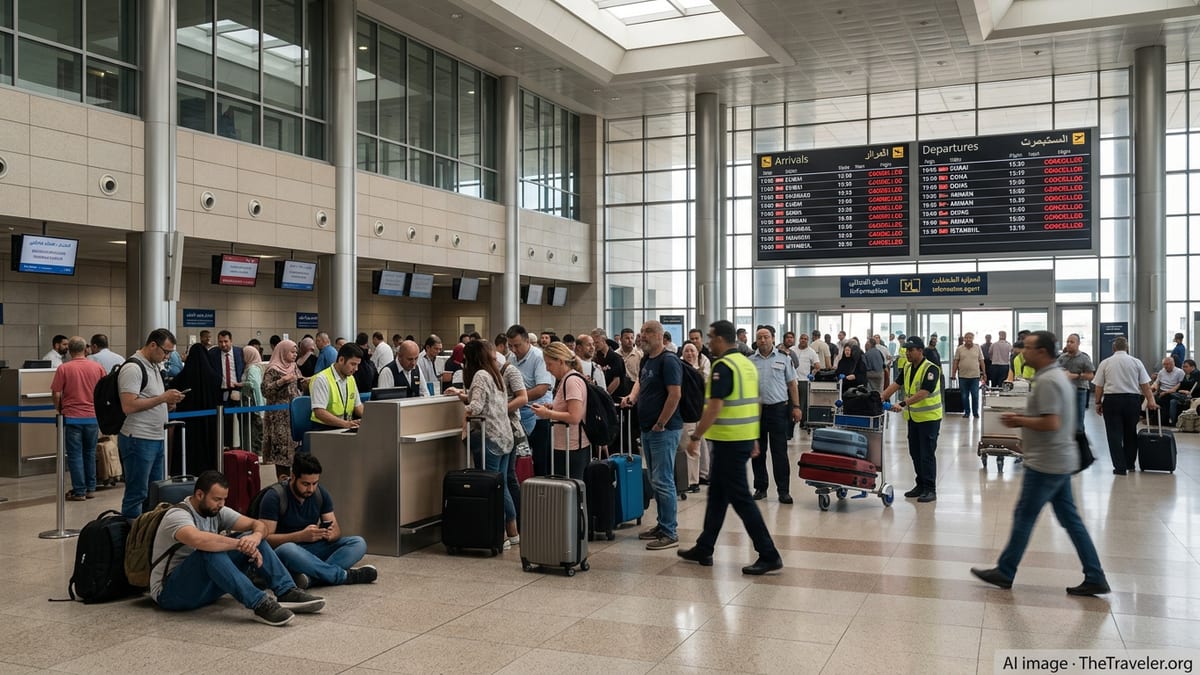
Fresh Operational Strain Across Gulf and North African Hubs
Published flight-tracking summaries and regional travel advisories show that the latest round of disruption is concentrated at major connecting hubs in the United Arab Emirates, Oman, Saudi Arabia and Egypt. Dubai International and Sharjah in the UAE, Muscat in Oman, Jeddah in Saudi Arabia, and Cairo in Egypt feature prominently in delay and cancellation tallies compiled in recent days.
The combined figures point to 435 delayed departures and arrivals alongside at least 18 outright cancellations across this corridor, underscoring how fragile recovery remains after months of weather, airspace and operational challenges. The numbers build on previous waves of disruption reported since late 2025, when dense fog, staffing constraints and regional route changes repeatedly triggered mass delays.
Publicly available information indicates that while most services are still operating, knock-on effects are proliferating as aircraft and crews fall out of position. Even modest schedule changes at one hub are feeding into missed connections and rolling delays at others, as airlines attempt to reroute traffic around constrained airspace and congested terminals.
Reports from aviation analytics platforms suggest that disruption has been particularly acute on high-density short- and medium-haul routes linking Gulf and Egyptian cities, where aircraft typically operate multiple rotations a day and have limited slack built into schedules.
FlyDubai, Air Arabia, Oman Air and Saudia Among Carriers Affected
Budget and full-service airlines alike are being drawn into the latest disruption cycle. FlyDubai and Air Arabia, both key players in the low-cost segment, have previously recorded clusters of cancellations and dozens of delays at Dubai, Sharjah and other UAE airports during recent weather and congestion events. Current data patterns indicate that these carriers are again among those seeing schedule changes, with ripple effects on regional business and leisure itineraries.
Oman Air continues to operate against a difficult backdrop of airspace constraints and earlier route suspensions. Recent advisories highlight ongoing adjustments to its network as Muscat absorbs diverted and rerouted traffic from neighboring states. Industry reports note that passengers booked on affected Oman Air services are being moved to alternative dates or routings where possible, although options remain limited during peak periods.
In Saudi Arabia, Saudia and low-cost operators such as flyadeal are also appearing in disruption logs tied to Jeddah and other major airports. Published coverage in recent weeks has documented days when these hubs reported multiple cancellations and dozens of delays, particularly on routes linking the kingdom with the UAE and Egypt.
Egyptian carriers, including those operating out of Cairo and Alexandria, have similarly faced intermittent schedule changes. Online travel forums and regional outlets continue to carry accounts of passengers affected by late-notice cancellations between Egypt and Gulf cities as airlines respond to evolving operating conditions.
Airspace Restrictions and Weather Complicate Recovery
While routine operational and staffing issues remain part of the picture, analysts point to a combination of regional airspace restrictions and periodic weather systems as key drivers behind the ongoing volatility. Earlier in 2026, large-scale airspace closures across sections of the Middle East led to more than a thousand cancellations in a single day, forcing airlines to redraw routings and add significant flying time to previously direct sectors.
Those closures have since partially eased, but publicly available bulletins from airlines, airports and logistics groups stress that corridors remain limited and subject to sudden change. Aircraft are often funneled through narrower flight paths over Saudi and Omani airspace, increasing congestion and shrinking flexibility when operational issues arise.
At the same time, seasonal weather patterns have produced episodes of low visibility and storms over parts of the Gulf, repeating scenarios seen in late 2025 when fog contributed to hundreds of delays at Dubai and Abu Dhabi. When such conditions coincide with constrained airspace and busy holiday periods, schedule resilience can erode quickly.
Travel industry commentary notes that carriers are attempting to rebuild punctuality by adding turnaround buffers and selectively trimming frequencies on some routes. However, the need to preserve connectivity for key markets, combined with aircraft and crew availability limits, means that full schedule stability remains elusive.
Impact on Passengers and Travel Plans
For travelers, the renewed spike in delays and cancellations means longer journey times, missed connections and overnight stays at intermediate hubs. Reports from recent disruption events in Dubai, Jeddah and Cairo describe long queues at transfer desks, crowded airport hotels and passengers rebooked on flights departing many hours or even days later than planned.
Passengers on multi-leg itineraries are proving particularly vulnerable, especially those connecting between Europe, Asia and Africa through Gulf and Egyptian hubs. When a first segment is delayed or canceled, onward flights often depart as scheduled due to tight turnaround windows, leaving travelers seeking alternative routes via Doha, Abu Dhabi, Muscat or secondary Saudi airports.
Consumer organizations and travel advisors in the region are urging passengers to monitor itineraries closely in the 24 hours before departure, use airline apps to track aircraft positioning, and build greater buffer time into high-stakes journeys such as cruises, events or visa-related travel. They also highlight the importance of retaining boarding passes, delay notifications and expense receipts in case passengers later pursue compensation or insurance claims.
Published guidance notes that compensation rules vary widely depending on the airline, the country of departure and the reason for disruption. Some carriers serving the Gulf provide meal vouchers, hotel stays and rebooking options after certain delay thresholds, while European consumer regulations can apply on flights departing from or operated by airlines based in the European Union.
What Travelers Should Do Now
With conditions remaining fluid into late May 2026, aviation analysts suggest that passengers treat schedules involving Dubai, Muscat, Jeddah, Cairo and nearby hubs as subject to change at short notice. Flexible tickets, longer layovers and travel insurance that explicitly covers delays and cancellations are being emphasized in current travel planning advice.
Travel planners recommend checking flight status repeatedly from 24 hours before departure until arrival, as some airlines continue to adjust schedules on the day of travel. Where possible, travelers are encouraged to register for real-time alerts through airline and airport channels and to verify any changes directly within booking records.
For those yet to book, routing decisions may also take account of the current pattern of disruption. Some corporate travel policies are reportedly incorporating alternative routings via less congested hubs, even at slightly higher cost, to protect mission-critical trips from cascading delays in the Gulf.
As the summer peak approaches, how quickly airlines and airports in the UAE, Oman, Saudi Arabia and Egypt can stabilize operations will be closely watched by the region’s tourism and business sectors. For now, the latest delay and cancellation figures underline that travelers should remain prepared for a degree of uncertainty when flying through these key Middle Eastern gateways.