


More news on this day
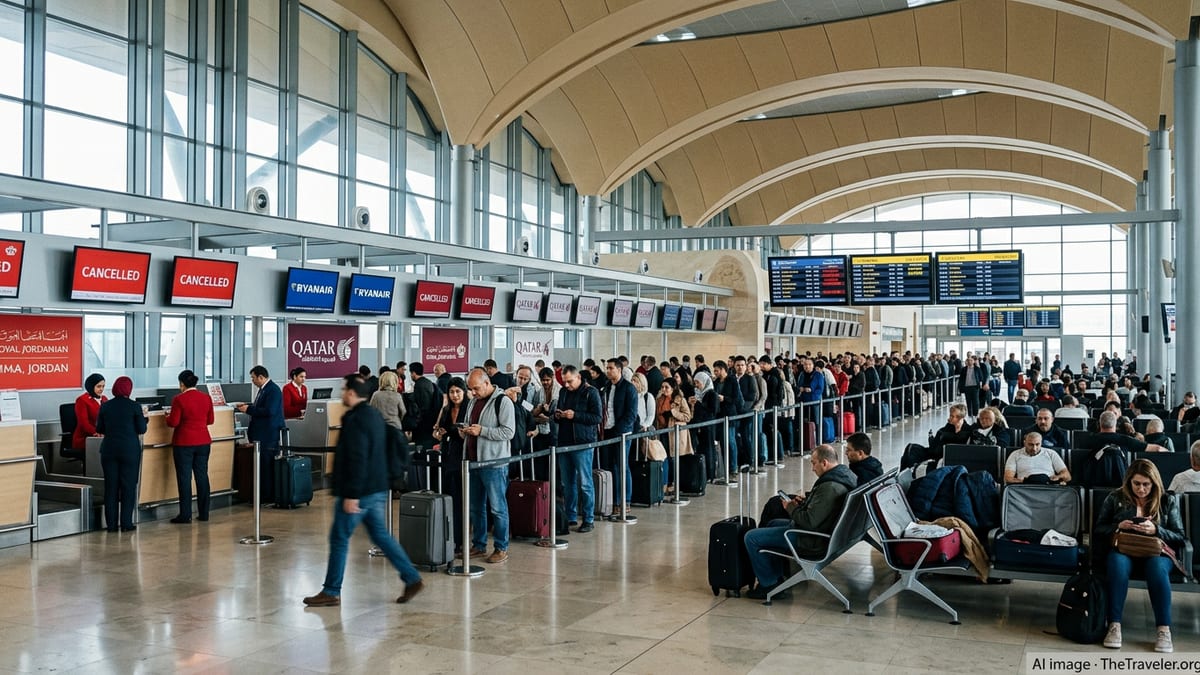
Hundreds of passengers have been left stranded across the United Arab Emirates, Saudi Arabia, Qatar, Bahrain, Kuwait, Oman, Egypt, Jordan and other destinations as a new wave of flight disruptions sweeps through the Middle East, with around 195 flights delayed and 31 cancelled across major hubs including Dubai and Jeddah.
Get the latest news straight to your inbox!
Fresh Turbulence in an Already Strained Regional Network
Publicly available flight tracking data and regional aviation reports indicate that Middle East carriers are once again grappling with knock on effects from conflict driven airspace restrictions and earlier airport shutdowns. Although the region has seen gradual attempts to restore regular schedules since extensive closures in late February and March, operational instability persists, particularly on high density corridors linking the Gulf with Europe, Asia and Africa.
Recent monitoring of operations at airports in Dubai, Jeddah, Doha, Kuwait City, Muscat, Cairo, Amman and Manama points to a cluster of 195 delayed flights and at least 31 cancellations tied to network imbalances, crew and aircraft dislocation and ongoing reroutings. These latest figures add to a broader pattern of disruption that has seen hundreds of services cut or heavily delayed on multiple days over recent weeks across the United Arab Emirates, Saudi Arabia, Qatar, Bahrain and Kuwait.
Carriers most visibly affected in this latest round include Emirates and FlyDubai out of Dubai, Saudia from Jeddah and Riyadh, Qatar Airways from Doha and EgyptAir from Cairo, alongside regional operators such as Etihad, Air Arabia, flyadeal, Flynas and Gulf Air adjusting schedules in response to shifting airspace availability. Reports indicate that delays are particularly acute on services transiting Gulf airspace toward Europe and North America, where rerouted flight paths and slot constraints compound congestion.
While the numbers fall short of the peak shock seen in late February and early March, when several thousand flights were cancelled or delayed across the wider Middle East, the concentration of today’s disruptions at major connection hubs has magnified the impact on transit passengers who rely on tight connections through Dubai, Doha and Jeddah.
Dubai and Jeddah at the Heart of Passenger Disruption
Dubai International, the region’s largest long haul hub, remains one of the epicentres of disruption. Earlier closures of surrounding airspace and temporary suspensions at the airport left tens of thousands of travellers stranded worldwide as airlines worked through extensive backlogs. Although Dubai has since moved from shutdown to limited service and then to a leaner but functioning schedule, the network remains fragile, making it highly sensitive to further airspace or operational constraints.
In the current wave, Emirates and FlyDubai appear to account for a significant share of the 195 delays and 31 cancellations, particularly on short haul and regional rotations that feed long haul banks. Aviation trackers and independent analytics show departure boards dominated by late running services within the Gulf and to South Asia, with some flights pushed back repeatedly as airlines prioritise long haul operations and reposition aircraft.
In Saudi Arabia, Jeddah’s King Abdulaziz International Airport has emerged as another pressure point. Saudia and its low cost affiliates have faced repeated schedule adjustments as air traffic control capacity tightens on remaining open corridors and as airlines continue to avoid sensitive airspace. Earlier tallies of disruptions across the region recorded dozens of delays in Jeddah alone on some days, and the latest data suggests that ripple effects are still being felt on flights between Jeddah, Riyadh, the Gulf states and onward international destinations.
The combined effect is that passengers travelling between major Middle Eastern hubs, or using them as transit points between continents, are experiencing extended waits, missed onward connections and, in some instances, overnight stays when rebooking options are limited.
Knock On Effects Across Qatar, Bahrain, Kuwait, Oman, Egypt and Jordan
While Dubai and Jeddah handle the largest passenger volumes, the latest disruption has also affected smaller but strategically important hubs in Qatar, Bahrain, Kuwait, Oman, Egypt and Jordan. Previously introduced partial airspace closures and route suspensions have already forced airlines to rebuild timetables with fewer routing options, and the lingering effects are visible in today’s punctuality patterns.
Doha based Qatar Airways has had to continually adjust its network in response to restricted flight corridors and congestion on alternative routings. Publicly available information and local aviation updates describe a mix of delayed departures and selective cancellations within its regional network, which in turn disrupts long haul connections to Europe, the Americas and Asia for passengers who rely on short transfer windows.
In Bahrain and Kuwait, where airspace and airport operations have at times been constrained or suspended, regional feeders and international services have seen intermittent interruptions. Recent industry updates point to service suspensions or heavy delays on certain routes touching these states, which reduces flexibility for rebooking and pushes additional demand onto the remaining open hubs such as Dubai, Doha and Riyadh.
Egypt and Jordan, whose airspace has largely remained open, have nonetheless experienced secondary impacts as carriers like EgyptAir, Saudia, Emirates, FlyDubai and others reconfigure flight paths and schedules. Cairo and Amman have absorbed diverted or retimed services, with passengers reporting extended layovers and changed routings as they attempt to bypass closed or restricted sectors of regional airspace.
Why 195 Delays and 31 Cancellations Matter for Travellers
On their own, 195 delayed and 31 cancelled flights may appear modest compared with peak crisis days when several hundred or even thousands of services were affected. However, regional aviation specialists note that the structure of Middle East hub and spoke networks means that even a relatively small number of primary disruptions can cascade quickly through interconnected schedules, particularly at banks of tightly timed connections.
Each delayed arrival into Dubai, Doha or Jeddah risks missing onward departure slots, leaving aircraft and crews out of position for subsequent rotations. Publicly available analyses of recent weeks’ irregular operations show that airlines have often opted to cancel shorter regional sectors or less critical rotations in order to preserve the integrity of long haul flights. While this helps keep intercontinental routes running, it can leave passengers on intra Gulf, Levant or Red Sea routes facing limited alternatives.
For travellers, the impact is compounded by the broader security driven constraints in the region. With several states maintaining partial airspace closures or restrictions, rerouting options are fewer and flight times longer, further stretching aircraft utilisation and crew duty limits. This explains why some passengers report multiple consecutive delays or cancellations as airlines struggle to re align complex networks that were designed for open skies rather than narrow corridors.
The latest figures also come at a time when many stranded travellers from earlier shutdowns are still working their way home or to their intended destinations. Aviation coverage has highlighted cases of passengers enduring repeated rebookings, extended hotel stays and the need to adjust visas or travel plans, particularly for those who were transiting through the Gulf when the initial wave of closures took effect.
What Passengers Can Realistically Expect in the Coming Days
Travel industry advisories and airline updates suggest that conditions are likely to remain fluid in the short term, even as carriers attempt to normalise operations. Airlines including Emirates, FlyDubai, Saudia, Qatar Airways and EgyptAir continue to publish rolling schedule changes, urging passengers to monitor official channels and flight status tools closely on the day of departure.
Public guidance circulating from aviation and travel risk consultants stresses that travellers should be prepared for same day timetable shifts, extended layovers and last minute reroutings via alternative hubs. Several analyses recommend that passengers avoid tight self made connections on separate tickets, build in additional buffer time for critical journeys and keep accommodation and insurance details readily accessible in case of unplanned overnight stays.
In many cases, airlines have introduced temporary flexibility measures, such as date change options or rebooking on alternative flights when services are cancelled, although the exact terms vary by carrier and fare type. With capacity constrained across multiple hubs, however, available seats on near term departures may be limited, particularly on popular long haul routes between the Gulf, Europe and major Asian cities.
For now, publicly available information from airports, carriers and travel risk bulletins indicates that passengers flying through Dubai, Jeddah, Doha, Kuwait City, Muscat, Cairo, Amman and neighbouring hubs should expect a continued risk of disruption as long as regional airspace restrictions and operational bottlenecks persist. The latest cluster of 195 delays and 31 cancellations underscores how even incremental shocks can reverberate through one of the world’s most interconnected aviation regions.