


More news on this day
Thousands of passengers traveling through the Middle East faced cascading disruption this week as Air Arabia, Royal Jordanian, Lufthansa and EgyptAir scrubbed 19 flights and logged at least 62 delays at Sharjah, Amman and Cairo international airports amid ongoing airspace restrictions and regional tensions.
Get the latest news straight to your inbox!
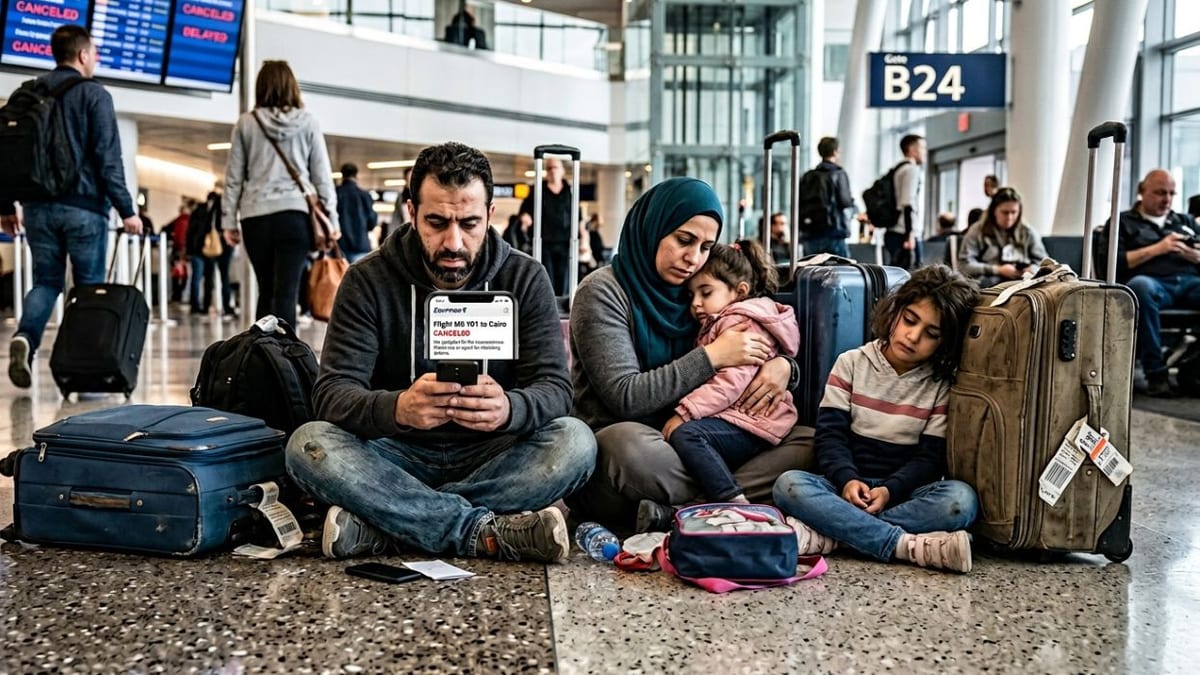
Targeted Suspensions Hit Sharjah, Amman and Cairo
Published flight data and regional aviation bulletins indicate that the latest wave of disruption is concentrated at three strategic hubs: Sharjah International Airport in the United Arab Emirates, Queen Alia International Airport in Amman, and Cairo International Airport. The combined effect of flight suspensions and rolling delays has left travelers stranded across the region, with many unable to secure same-day alternatives.
At Sharjah, low cost carrier Air Arabia has been operating a sharply reduced schedule after regional airspace closures forced the airline to suspend or reroute services touching high risk corridors. Coverage in regional travel media notes that operations from Sharjah, Abu Dhabi and Ras Al Khaimah remain limited, with short notice cancellations persisting on routes that typically connect South Asia, North Africa and the Levant via the UAE.
In Amman, Royal Jordanian has maintained core services but continues to cancel or delay flights to destinations affected by partial airspace closures. Advisories reproduced in logistics and port circulars show that flights between Jordan and parts of the Gulf, including Qatar and the UAE, remain suspended, while other regional links operate under tighter scheduling constraints and longer routings.
Cairo International Airport has become another pressure point. Publicly available airline statements and industry advisories show that EgyptAir suspended a number of flights from Cairo to Gulf and Levant destinations earlier in the crisis period and has only partially restored operations. Although Egypt’s airspace remains technically open, selective route suspensions and rerouting have produced a backlog of passengers seeking both outbound and connecting flights.
Lufthansa and EgyptAir Adjust Networks Amid Airspace Restrictions
The current disruption is rooted in a series of airspace restrictions introduced across multiple Middle Eastern countries starting in late February and early March. Travel rights organizations and aviation analysts describe these measures as the most significant regional network shock since the pandemic, with thousands of flights canceled, diverted or rerouted over alternative corridors.
Lufthansa and other airlines in its group have repeatedly extended suspensions on routes into key Middle Eastern hubs, including Dubai and Amman. European media and aviation outlets report that the group has halted passenger services to several cities across the region for weeks at a time, citing the volatile operating environment and the need to avoid closed or heavily constrained airspace. As aircraft and crews fall out of their usual rotations, secondary hubs such as Amman and Cairo experience additional knock-on delays unrelated to their own local weather or airport conditions.
EgyptAir has followed a similar pattern on a more regional scale. Port and shipping advisories that incorporate aviation updates note that EgyptAir suspended flights from Cairo to numerous Middle Eastern cities, including Gulf hubs and neighboring capitals, in response to the changing security picture. Although some flights to and from Gulf countries have gradually resumed, the carrier continues to publish reduced timetables on several routes, which in turn limits onward connectivity for travelers attempting to transit through Cairo.
These schedule cuts have compounded the strain at already busy airports. With fewer daily frequencies and extended block times on rerouted services, even isolated delays can quickly ripple through the system, resulting in clusters of cancellations and missed connections that match the latest counts of scrapped flights and dozens of delayed departures and arrivals across Sharjah, Amman and Cairo.
Air Arabia and Royal Jordanian Grapple With Operational Uncertainty
For Air Arabia and Royal Jordanian, the disruption has exposed the vulnerabilities of regionally focused networks that depend heavily on stable Middle East airspace. Both airlines rely on dense short and medium haul schedules that turn aircraft quickly through hub airports, a model that becomes difficult to sustain when rerouting and holding patterns add hours to each rotation.
Data compiled by flight tracking platforms and summarized by aviation analysts shows that Air Arabia’s operations from Sharjah were temporarily suspended at the height of the airspace closures, before returning in a limited form. Even after services restarted, passengers reported continued short notice cancellations and schedule changes on routes linking Sharjah with cities in the Gulf and Levant, mirroring the broader uncertainty affecting travel through the UAE.
Royal Jordanian, meanwhile, has kept Amman open as a functioning hub but with key routes still curtailed. Regional advisories state that flights between Jordan and certain Gulf states, including Qatar, the UAE, Bahrain and Kuwait, remain suspended, even as other destinations continue to receive service. The airline has encouraged customers, through public notices and website updates, to verify their flight status before heading to the airport, reflecting the fluid nature of schedules that can change with minimal warning.
For travelers, these partial resumptions can be difficult to interpret. While airport departure boards may show some flights operating, diminished frequencies and altered routings reduce options for rebooking, particularly for those holding separate tickets or complex itineraries that depend on tight connections through Sharjah, Amman or Cairo.
Stranded Passengers Face Limited Options and Longer Journeys
The combination of 19 outright suspensions and at least 62 recorded delays at the three airports has translated into long queues at transfer desks, crowded departure halls and widespread uncertainty for passengers. Travel assistance companies and passenger rights advocates report a notable uptick in claims and inquiries from people stranded in transit, many of whom discovered their cancellations only after arriving at the airport.
In some cases, airlines have been able to reroute travelers via alternative hubs in Saudi Arabia, Turkey or North Africa, using remaining open corridors that skirt restricted airspace. However, these detours often add several hours to total journey times and can require overnight connections, particularly when rebooked onto already busy services. For budget conscious travelers or those without flexible tickets, the additional costs of accommodation, meals and replacement tickets can be significant.
Observers note that knock on effects extend far beyond the Middle East. Long haul passengers traveling between Europe and Asia, or between North America and destinations in the Indian subcontinent, have encountered missed connections as aircraft and crew are repositioned around the closures. Even travelers not originally scheduled to transit Sharjah, Amman or Cairo can be affected when airlines consolidate services and funnel passengers through whatever hubs retain capacity.
The dynamic has created an uneven picture across the network. On some days, operations may appear close to normal with only minor delays, while on others, clusters of cancellations quickly push airports back into crisis mode, especially when new security advisories or temporary route suspensions are issued at short notice.
What Travelers Can Do as Disruption Persists
With airspace restrictions and airline suspensions expected to remain in place for at least the short term, travel experts caution that further disruption is likely across the region. Guidance from passenger advocacy organizations and travel risk consultancies consistently emphasizes the importance of monitoring bookings closely and allowing additional time for connections, particularly for itineraries that route through Sharjah, Amman or Cairo.
Publicly available information from airlines and regulators indicates that many carriers are offering flexible rebooking or refund options for affected flights, although the specific terms vary considerably by airline and ticket type. Some travelers have reported difficulties obtaining full refunds or timely alternatives, especially on lower cost fares, highlighting the need to review fare conditions and travel insurance coverage before departure.
Industry analyses also suggest that travelers may wish to consider routings that avoid the most constrained sections of regional airspace where practical, even if this involves backtracking or choosing less direct paths via Europe, North Africa or South Asia. While no route is entirely immune from disruption, hubs with more diversified long haul networks and multiple open corridors may provide additional options if schedules change at short notice.
For now, the situation at Sharjah, Amman and Cairo underscores how quickly localized airspace decisions can ripple through global aviation. As Air Arabia, Royal Jordanian, Lufthansa and EgyptAir continue to adjust their schedules in response to evolving conditions, passengers are likely to see further day to day variability in flights and delays across the Middle East’s key transit points.