


More news on this day
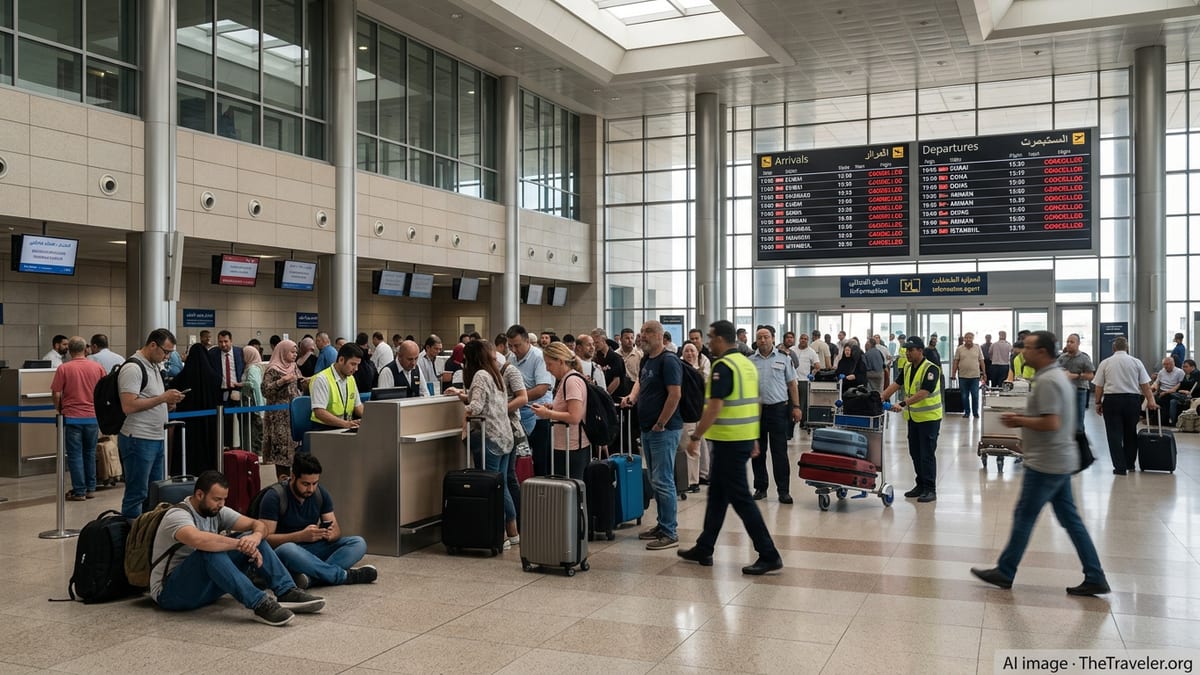
Escalating tensions and conflict across the Middle East are rippling through global transport networks, driving up fuel costs, squeezing airline capacity and sending a shockwave through key pilgrimage routes just weeks before millions are due to travel to holy sites.
Get the latest news straight to your inbox!
Fuel Shock And War Risk Push Costs Higher
Published economic commentary and aviation data indicate that jet fuel prices have climbed to some of their highest levels in years, driven by conflict-linked disruptions to oil flows and refinery output in and around the Gulf. The 2026 Iran war and the related blockage and restriction of traffic through the Strait of Hormuz have been described by international energy analysts as one of the largest supply shocks faced by the global oil market, with oil price gains feeding directly into higher travel costs.
Industry assessments suggest that fuel now accounts for up to 40 percent of airline operating costs on some regional and long-haul routes, leaving carriers with limited options beyond fare increases, fuel surcharges and capacity cuts. Reports from regional business media describe airlines in Asia, the Gulf and Europe raising ticket prices and adding surcharges on routes that cross or skirt Middle Eastern airspace, affecting not only business and leisure travelers but also the vast annual flows of religious pilgrims.
Shipping markets are under similar strain. Major ocean carriers have extended emergency fuel surcharges on routes linking the Mediterranean, Red Sea, Indian subcontinent and East Africa as marine fuel prices jump and vessels are forced to take longer, more expensive paths to avoid conflict zones. These higher maritime costs filter into the price of everything from catering and accommodation supplies in pilgrimage hubs to the packages sold by tour operators.
Economic briefings from multilateral agencies and regional research institutes warn that if the energy and transport disruptions persist, the combination of higher fuel costs and a strong dollar could add significantly to global inflation. For households saving over years to undertake a once-in-a-lifetime journey, even single-digit percentage increases in package prices can be enough to delay or cancel plans.
Hajj 2026 Under Pressure As Security Tightens
The current tension comes as Saudi Arabia enters the critical pre-season phase for Hajj 2026. Public information from Riyadh shows that the authorities have activated a high-security operating posture around the Makkah region, halting unauthorised entry and suspending certain Umrah visas ahead of the main pilgrimage period. Checkpoints on roads into the holy city are being reinforced as part of crowd management and safety plans designed for an expected turnout similar to or higher than the roughly 1.8 million pilgrims recorded in 2025.
These measures build on stepped-up permit controls and electronic platforms introduced in recent years to regulate who can enter pilgrimage zones and when. While framed around safety and crowd control, the restrictions also shape travel demand patterns, compressing journeys into narrower time windows and making air and land transport capacity more sensitive to any external shock.
Security concerns linked to the regional conflict are adding a new layer of complexity. Aviation advisories in Europe and the Middle East have encouraged airlines to route flights to Jeddah and Medina along southern corridors at higher cruising levels to reduce exposure to potential conflict zones. This lengthens flight times, increases fuel burn and can reduce the number of rotations aircraft are able to operate during peak days of the season.
Travel specialists following the sector note that the combination of rigid pilgrimage dates, reinforced security screening and war-related airspace constraints leaves little room for the flexible scheduling or off-peak pricing strategies that might otherwise cushion travelers from cost spikes. As a result, the impact of higher energy and insurance costs is being felt more directly in fares and package prices paid by pilgrims.
Asia’s Pilgrims Face Currency And Budget Strains
The financial strain is especially visible in large Muslim-majority countries that send significant numbers of pilgrims each year. In Indonesia, publicly available budget documents and press coverage show that lawmakers and analysts are warning of a shortfall in the state-backed Hajj program for 2026 after a sharp rise in jet fuel prices and a weakening rupiah. Estimates reported by national media point to an additional burden of up to one trillion rupiah on the pilgrimage budget.
Officials involved in managing these schemes, according to domestic reporting, are grappling with whether to raise participant fees, cut services or absorb the costs through subsidies. Since many pilgrims join multi-year savings plans to secure a place in the quota, sudden upward revisions to the total cost risk undermining trust in the system and delaying travel for those on lower incomes.
Similar dilemmas are emerging in South Asia and parts of Africa, where depreciation against the United States dollar magnifies the impact of dollar-denominated fuel and aviation charges. Travel industry commentary in these regions notes that the price of accommodation, food, local transport and insurance in Saudi Arabia is also edging higher, reflecting both global inflation and the costs of large-scale infrastructure upgrades in the holy cities.
For private tour operators catering to wealthier clients, the immediate response has been to repackage itineraries with fewer days on the ground or with lower-tier hotel options. For state-managed contingents, where standards and entitlements are often fixed in regulation, the scope to trim costs is narrower, increasing the likelihood that governments will seek emergency budget top-ups.
Airspace Rerouting Redraws Pilgrimage Corridors
Beyond fuel prices, the geography of the conflict is reshaping the physical routes used by pilgrims. Aviation analysis published in regional outlets highlights that several carriers have reduced overflights of Iranian, Iraqi and Syrian airspace, instead threading narrow corridors over safer territory or adding technical stops further south. Each detour adds minutes or hours to flight times and reduces the efficiency of aircraft and crew deployment.
In some cases, airlines have suspended services on marginal routes that mainly carried religious traffic, such as certain links to Najaf or smaller secondary cities serving shrines. Aviation experts quoted in recent analysis warn that smaller regional airlines which rely on pilgrimage traffic for a large share of revenue are particularly exposed to prolonged shutdowns or rerouting.
The turbulence extends to sea and land corridors. The long-running crisis affecting shipping in the Red Sea, combined with newer risks around the Strait of Hormuz, has prompted freight operators to divert via the Cape of Good Hope or alternative pipelines and ports. United Nations regional transport studies note that these detours increase travel times and operating costs while reducing overall capacity into key Red Sea ports that serve as gateways for both pilgrims and supplies.
While major Gulf hubs such as Jeddah have invested heavily in airport and port infrastructure to handle growing volumes, planners now face the challenge of managing flows in an environment where global carriers are recalibrating their networks, often at short notice, in response to evolving security bulletins.
Households And Operators Search For Safety And Stability
The combined effect of war risk premia, fuel surcharges, currency swings and regulatory tightening is a growing affordability gap for would-be pilgrims. Travel and tourism analysts caution that the impact may not be evenly distributed: wealthier travelers and those from countries with strong currencies are more able to absorb higher prices, while lower-income pilgrims risk being priced out or pushed into unregulated channels.
Government-verified guidance from Saudi Arabia has repeatedly stressed the importance of booking through authorised operators and platforms that comply with official pricing and safety standards. Yet as package prices climb, there is concern in industry coverage that some travelers may be tempted by cheaper, informal arrangements that lack proper permits or insurance, potentially increasing the risks associated with already complex journeys.
On the supply side, airlines and tour companies are trying to balance commercial pressures with the imperative to maintain connectivity to the holy sites. Some major carriers have historically added extra seasonal flights and tailored services for Hajj and Umrah, but the current environment of high fuel costs and geopolitical uncertainty is making such expansions harder to justify.
Analysts following the sector suggest that the coming Hajj season will be an important test of resilience for pilgrimage travel. If energy markets stabilise and conflict risks ease, costs could moderate over time. For now, however, millions of prospective pilgrims are confronting a harsher economic reality, forced to weigh spiritual obligations and aspirations against rising financial and security constraints.