


More news on this day
Persistent conflict risk across the Middle East is colliding with global supply chain constraints to slow airline fleet growth and redirect aviation investment strategies from Brazil to the Gulf and the United States, according to recent industry data and public reporting.
Get the latest news straight to your inbox!
Geopolitics Turns Airspace Into a Structural Constraint
Escalating tensions involving Iran, Israel, the United States and regional actors have transformed Middle Eastern airspace into a structural bottleneck for global aviation rather than a temporary operational challenge. A series of conflicts and retaliatory strikes since 2024 have triggered repeated closures or restrictions over Iran, Iraq, Syria and adjacent flight information regions, forcing passenger and cargo operators to adopt longer routings via Saudi Arabia, the Red Sea or the Caspian corridor. Industry analyses indicate that diversions between Europe and Asia can add hundreds of miles and more than an hour of flying time per sector, raising fuel burn and crew costs just as jet fuel prices rise.
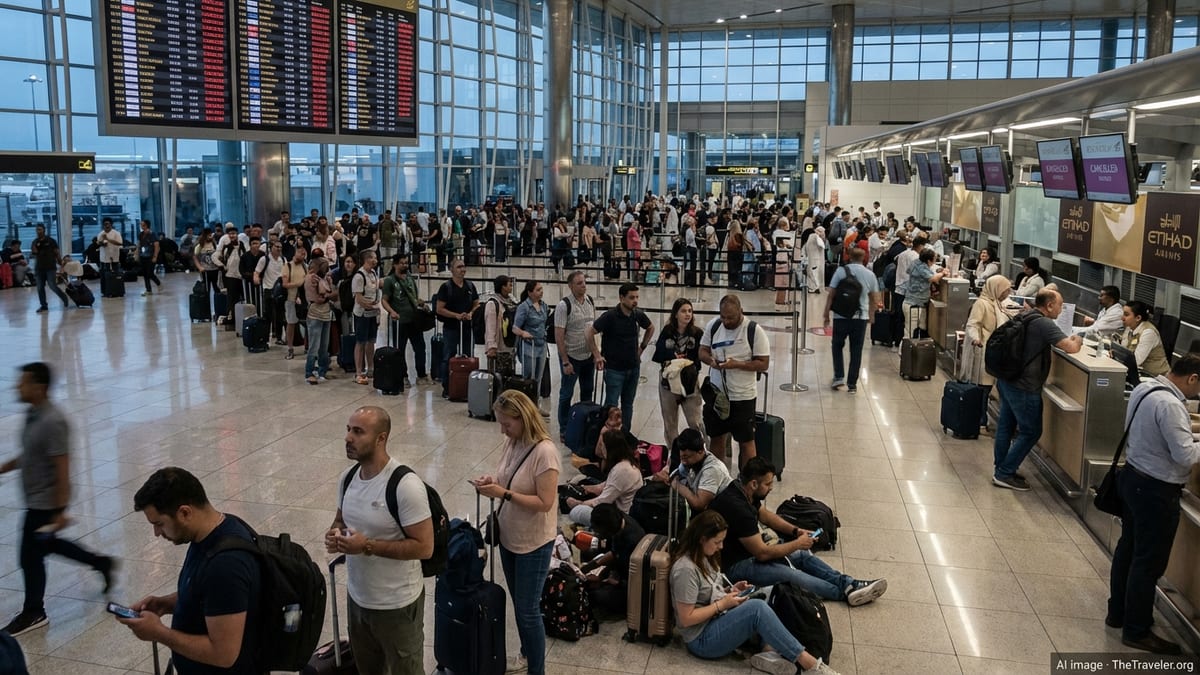
Data compiled by aviation associations in 2026 suggests that the Gulf’s role as a bridge between East and West has been sharply disrupted, with traffic flows between the Middle East and both Europe and Asia reduced and schedules cut back while airlines manage risk and costs. Reports describe periods in which a large share of flights to and from major Gulf hubs were canceled or rerouted when airspace closures coincided with military operations involving Iran and Israel. For travelers, this has translated into higher fares, tighter capacity and increased travel times on some of the world’s busiest long-haul corridors.
The United States military buildup across the region, including deployments around the Strait of Hormuz and Red Sea, has underscored the perception that the current environment is not a short-lived shock. Aviation consultancies note that carriers are embedding geopolitical risk into network planning, assuming that periodic airspace closures and rerouting events will recur over a multi-year horizon. This shift is pushing airlines and lessors to re-evaluate where they place widebody capacity and how quickly they commit to new long-haul aircraft.
Delivery Delays Collide With War Risk for Gulf and Levant Carriers
Middle Eastern airlines that had been counting on aggressive fleet expansion now face a double squeeze: conflict-driven operational disruption on one side and prolonged aircraft delivery delays on the other. Global backlog data shows that carriers in the United Arab Emirates, Qatar, Bahrain, Kuwait and Saudi Arabia hold some of the world’s largest orders for new-generation widebodies, but ongoing bottlenecks at Airbus and Boeing have already pushed many deliveries into the late 2020s. Analysts following manufacturer order books report that if tensions and supply chain issues persist, even deliveries penciled in for 2028 could become vulnerable to deferral.
War-related supply chain interruptions are adding further strain. Public corporate disclosures from aerospace manufacturers describe how fighting in and around Israel has disrupted production and component flows for business jets and commercial aircraft programs that rely on Israeli suppliers, reducing the number of aircraft expected to be handed over in 2024 and 2025. With key parts and maintenance, repair and overhaul capacity concentrated in the wider Middle East, consultants warn that continuing conflict risk could periodically restrict access to engines, avionics and structural components for airlines worldwide.
For carriers in the region itself, the combination of rerouting, higher fuel prices and uncertain delivery timelines is reshaping strategy. Some Gulf airlines are reported to be slowing the retirement of older widebodies to preserve capacity while deferring non-essential cabin retrofits and discretionary service upgrades. Others are exploring additional wet-lease arrangements and more flexible leasing terms rather than committing to outright purchases at a time when long-term demand on certain routes is harder to forecast. The result is a more cautious, modular approach to fleet planning than the large, headline-grabbing orders that characterized the previous decade.
Brazil’s Exposure Highlights How Far the Shock Travels
Brazil’s growing role as an agricultural and commodities supplier to the Gulf and broader Middle East illustrates how far the aviation and logistics effects of the conflict now reach. Recent trade and logistics reporting shows that Brazilian exporters serving markets such as Saudi Arabia, Jordan, Iraq, Kuwait, Qatar, Bahrain and the United Arab Emirates have been forced to reconfigure shipping and air cargo routes in response to war-related disruptions in the Red Sea and Persian Gulf. Container lines have publicized the use of alternative ports and multimodal “land bridge” solutions to maintain access to core Gulf destinations, often at higher cost.
Although much of Brazil’s Middle East trade still moves by sea, air cargo capacity remains essential for high-value and time-sensitive goods. When airlines divert flights around conflict zones or trim frequencies to hubs such as Doha, Dubai and Abu Dhabi, Brazilian shippers see longer transit times and more volatile pricing. Industry updates indicate that reefer and general cargo rates into the Gulf have risen sharply during crisis peaks, with some carriers introducing surcharges to cover extended routings and security risk.
Brazilian carriers and airport operators are responding by re-assessing their own fleet and network plans. Publicly available comments from executives and regulators point to a preference for versatile widebodies and freighters that can be reassigned quickly between South Atlantic, North American and Middle Eastern markets as conditions change. Rather than betting heavily on a single eastbound corridor via the Gulf, planners are examining more direct services to Europe and North America and cooperative agreements that can provide alternative connections should Middle Eastern hubs become constrained again.
United States Airlines Balance Demand With Risk Management
United States carriers have also been compelled to recalibrate their exposure to Middle Eastern routes in light of mounting security concerns. During previous peaks in Iran Israel tensions, major US airlines temporarily suspended or adjusted services to destinations such as Tel Aviv and Doha, citing the need to avoid specific airspace segments and reassess risk along certain corridors. Flight tracking data and travel advisories have documented several periods during which US bound and outbound traffic over parts of the Levant and Gulf was sharply reduced.
At the same time, demand from corporate and leisure travelers for links to key Middle Eastern financial and energy centers remains strong, even if more volatile. Airline strategy briefings suggest that US carriers are relying more heavily on partnerships and code shares with Gulf and Israeli airlines to maintain network breadth while limiting direct operational exposure. This includes a heavier use of connecting traffic via European hubs when overflight risks in the region rise, and more tactical deployment of widebody aircraft on days and times considered less exposed to disruption.
From a fleet perspective, US airlines appear reluctant to make large additional long-haul commitments tied specifically to Middle Eastern growth while security conditions remain uncertain. Instead, they are prioritizing flexible twin-aisle types that can pivot between transatlantic, transpacific and Middle Eastern duties as needed. This approach mirrors broader thinking across the industry that geopolitical risk is now a core variable in long-haul fleet allocation, rather than a peripheral concern.
Investment Strategies Pivot Toward Flexibility and Resilience
Across Brazil, the Gulf states, Iraq, Syria, Israel and the wider Middle East, as well as in the United States, the common theme in recent aviation strategy is a move away from maximum-efficiency, just-in-time fleet plans toward flexibility and resilience. Economic outlooks from global aviation bodies emphasize that aircraft delivery delays, engine reliability issues and conflict-driven airspace closures are acting together to cap capacity growth, even as passenger demand continues to recover and, in some markets, to set new records.
Airlines in the region and beyond are spreading their risk by staggering delivery schedules, diversifying sourcing for critical components where possible, and using leasing more actively to bridge capacity gaps. Airport and state-level investment priorities are also shifting. Governments in the Gulf and in countries such as Brazil are channeling more resources into cargo facilities, maintenance capability and alternative multimodal links that can keep trade moving if key air corridors are restricted again.
For travelers, these strategic adjustments may not be visible in aircraft order announcements alone, but they help explain the persistent mix of higher fares, occasional last-minute reroutings and fuller cabins on routes touching the Middle East. As geopolitical fault lines harden, Brazil, Bahrain, Iraq, Kuwait, Qatar, Syria, the United Arab Emirates, Iran, Israel and the United States are each recalibrating how much aviation growth they are willing to stake on a region where airspace can change overnight.