


More news on this day
Major Western governments are tightening travel advisories across the Middle East as renewed hostilities between the United States and Iran raise the risk of further regional escalation, airspace closures and disruption for foreign travelers.
Get the latest news straight to your inbox!
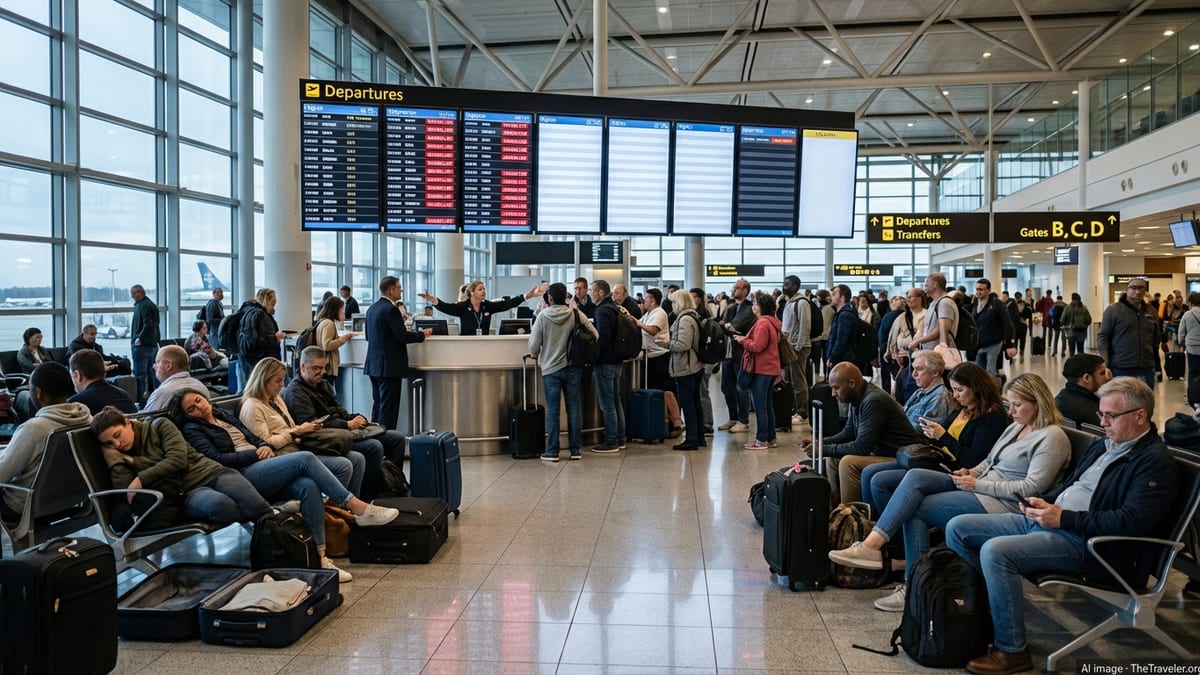
Worldwide alerts highlight risk of rapid escalation
Publicly available notices from the United States in recent days point to a broader security shift that now explicitly links global travel risk to the evolving confrontation with Iran. A worldwide caution released by the US State Department in late July urges American travelers to exercise increased vigilance everywhere, citing the potential for unforeseen escalation in the Middle East and the possibility that Iran-linked actors could target US interests or locations associated with Americans abroad.
The language marks a sharpening of earlier regional alerts issued after US combat operations against Iran began in late February. Previous statements emphasized the need for Americans in the Middle East to identify shelter locations and follow embassy security messages. The latest update goes further by advising travelers outside the region to reconsider itineraries that transit major Middle Eastern hubs, reflecting continuing concern about the vulnerability of aviation and transit routes to sudden disruption.
Analysts tracking government advisories note that such worldwide cautions are relatively rare and usually coincide with either large-scale conflicts or intelligence assessments of elevated threat to citizens overseas. The present alerts appear designed to capture both dynamics: an active US Iran confrontation with periodic missile and drone exchanges, and the risk of retaliatory or opportunistic attacks beyond the immediate theater of war.
The timing of the new warning also coincides with reports of attempted attacks on diplomatic and commercial sites linked to the United States outside the Middle East, underscoring officials’ concern that any further deterioration in US Iran relations could have rapid, geographically diffuse consequences for travelers.
Regional map dominated by Level 3 and 4 warnings
The formal advisory map for the Middle East is now heavily skewed toward the highest risk categories, according to State Department and allied government data. US advisories classify Iran, Iraq, Lebanon, Syria, Yemen and Gaza under Level 4, the strictest “do not travel” designation, citing factors such as armed conflict, terrorism, civil unrest, kidnapping risk and the danger of wrongful detention.
Neighboring states that serve as key air and land gateways, including Bahrain, Israel, Jordan, Kuwait, Oman, Qatar, Saudi Arabia and the United Arab Emirates, are generally rated at Level 3, urging travelers to reconsider nonessential trips. These ratings have remained elevated since the outbreak of fighting between the United States and Iran in late February, but the latest worldwide caution effectively reinforces them by warning that even transit through such countries may entail higher-than-usual risk.
Other governments have moved in parallel. Guidance from Global Affairs Canada advises citizens to avoid all travel to Iran and parts of surrounding countries due to the volatile security environment and the possibility of further strikes and reprisals. Canadian notices also highlight that tensions in the broader Middle East could disrupt trips even for travelers whose final destinations lie elsewhere, especially when itineraries rely on connections through Gulf hubs.
Independent security assessments and industry digests compiled in recent weeks show a convergence between US, Canadian, British and European Union advisories on the core message: travel to conflict-affected states is strongly discouraged, and journeys to nearby countries require heightened situational awareness, flexible planning and a low tolerance for risk.
Airspace closures and evacuations reshape travel patterns
Aviation disruptions remain one of the most immediate and visible consequences of the US Iran confrontation for travelers. Within days of the initial strikes in February, several Middle Eastern states temporarily closed portions of their airspace or imposed restrictions that forced rerouting of long-haul flights. Flight-tracking data and airline statements since then indicate repeated waves of diversions and cancellations whenever tensions spike or missile launches are reported.
US travel notices specifically warn of periodic airspace closures, possible delays in overflight permissions and the risk that airports could suspend operations at short notice. Executive briefings circulated within the travel and hospitality sector describe a patchwork of restrictions across flight information regions covering Bahrain, Iran, Iraq, Qatar, Saudi Arabia and the United Arab Emirates, resulting in longer flight times, higher operating costs and limited redundancy if additional routes close.
These aviation constraints have complicated evacuation planning. After the outbreak of hostilities, the United States and other governments urged their citizens to depart high-risk countries using commercial options while they remained available. Subsequent reporting by policy research services and travel risk consultancies documents tens of thousands of foreign nationals leaving the region in March alone, straining capacity on remaining routes and driving up fares.
For travelers who remain, governments caution that assistance may be severely limited if security conditions deteriorate further. Advisories emphasize that embassies can face movement restrictions, staff reductions or temporary closures, leaving citizens to rely on whatever commercial or private means of departure are still functioning.
Impact on tourism, business travel and pilgrimages
The tightening advisory environment has begun to reshape tourism flows and corporate travel decisions across the Middle East. Industry analyses compiled in June show a steep decline in leisure bookings to countries closest to the conflict, particularly Iran, Iraq and Lebanon, where many tour operators have suspended operations entirely. Even destinations that remain physically distant from front-line areas report higher cancellation rates, especially among travelers from North America and parts of Europe.
Business travel has also been curtailed. Executive risk briefings describe multinational companies postponing nonessential visits, relocating regional meetings to alternative hubs such as Istanbul or Athens, and relying more heavily on virtual engagements. Firms with critical operations in Gulf states are reportedly revisiting contingency plans, including temporary relocation of expatriate staff and diversification of supply chains to reduce exposure to cross-border disruptions.
Religious travel presents a more complex picture. Pilgrimage traffic to Saudi Arabia, in particular, continues, but updated advisories urge participants to maintain flexible itineraries, register their presence with consular services where available and follow local security guidance. Some governments flag the risk that sudden airspace restrictions or regional spillover could affect return journeys even if events remain peaceful at specific pilgrimage sites.
Travel analysts suggest that, while past crises in the region often produced short, sharp drops in visitor numbers followed by relatively quick recoveries, the combination of an ongoing US Iran conflict, expanded threat perceptions and structural changes in airline networks may lead to a more prolonged realignment of where and how travelers move through the Middle East.
Key considerations for travelers assessing essential trips
In light of the elevated advisories, governments and travel risk experts outline several considerations for individuals and companies determining whether travel to or through the Middle East is essential. Official guidance stresses the importance of carefully reviewing country-specific advisories, monitoring local and international news, and recognizing that conditions can change with little or no warning.
Publicly available information from consular services highlights the value of registering travel plans when systems such as the US Smart Traveler Enrollment Program or equivalent services in Canada, the United Kingdom and European Union states are offered. Enrollment can facilitate the delivery of security updates and information about transportation disruptions, although it does not guarantee evacuation or direct assistance.
Security consultants further recommend building flexibility into itineraries by allowing extra time for connections, avoiding tight layovers in higher-risk hubs and maintaining contingency routes that bypass the region altogether if tensions escalate. Travelers are also encouraged to ensure that insurance policies explicitly cover war and terrorism-related disruptions, as many standard plans exclude such contingencies or provide only limited benefits.
As the US Iran confrontation continues without a clear timeline for resolution, the overarching message from recent advisories is that travel involving the Middle East now carries substantially higher uncertainty than before the latest escalation. Individuals and organizations are being urged through public notices and industry guidance to weigh this uncertainty carefully before committing to new journeys or maintaining pre-crisis travel routines in the region.