


Departing from Milan Malpensa Airport can feel daunting, especially with new security rules, the Entry/Exit System for non-EU nationals, and two different terminals to navigate. This practical guide walks you step by step through a typical departure from Malpensa in 2026, from arriving at the airport and checking in to clearing security, finding a lounge, grabbing a last espresso, and boarding your flight on time.
Get the latest updates straight to your inbox!
Understanding Malpensa’s Terminals and Departure Layout
Milan Malpensa (MXP) is the main international airport for Milan and one of Italy’s busiest hubs. It has two passenger terminals. Terminal 1 is the large, modern intercontinental hub used by full-service airlines such as ITA Airways, Lufthansa, Emirates, Qatar Airways, Delta, United, American Airlines and most SkyTeam and Star Alliance carriers. Terminal 2, a few minutes away by shuttle, is the base for easyJet and a handful of other low-cost or seasonal services. Always check your booking and boarding pass carefully, as the terminal number is printed near the flight number; confusing T1 and T2 can cost you an hour in transfer time and easily a missed flight.
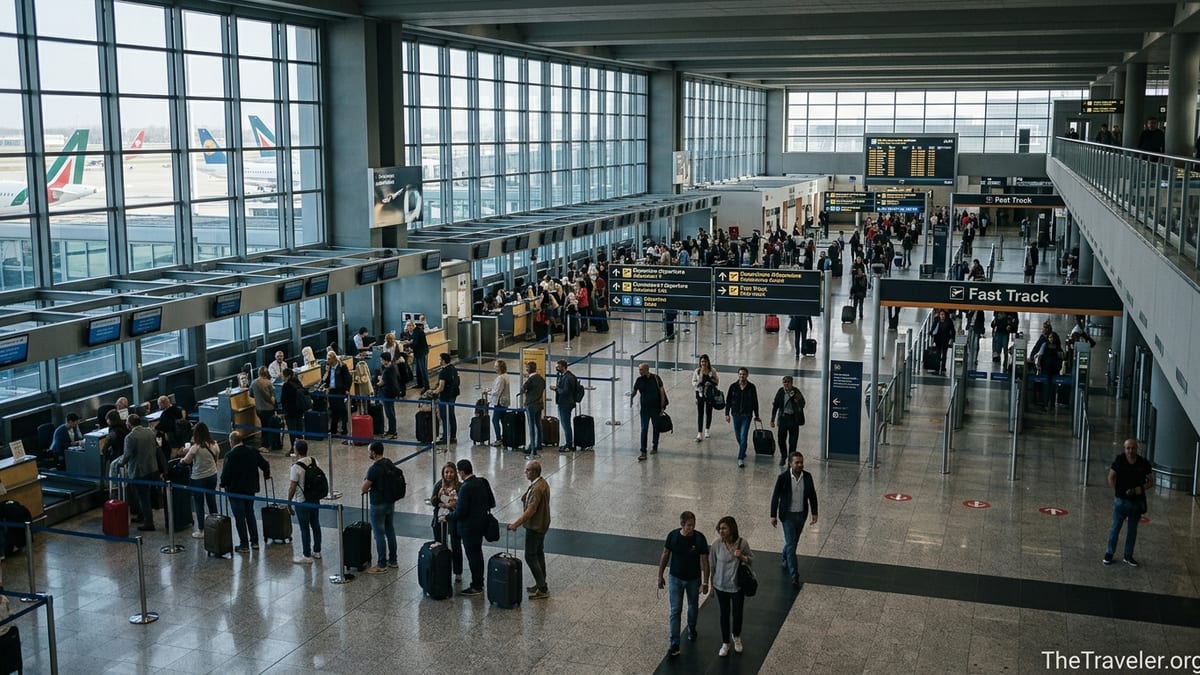
In Terminal 1, departures are on the upper level. You enter a large hall with long rows of check-in islands divided by airline and destination region, plus self-service kiosks in the central area. Above you, signs marked A, B and Satellite indicate Schengen and non-Schengen departure zones. In Terminal 2, the layout is simpler and more compact: a single departures hall with easyJet branded check-in desks on one side and security straight ahead, which many travelers describe as more straightforward but often very busy in the early morning.
Both terminals are connected to Milan city by the Malpensa Express train as well as several coach services. The train runs from Milano Cadorna and Milano Centrale stations directly into the airport, stopping at Terminal 2 and then Terminal 1. If you arrive by train to the dedicated Malpensa station at Terminal 1, you simply follow the signs upstairs to the departures hall. For Terminal 2, there is a separate rail stop and also a free shuttle bus linking the two terminals every few minutes, but transfers can still take 15 to 20 minutes once you account for walking and waiting time.
Wayfinding is generally clear, with bilingual Italian and English signage. If you are connecting from one airline to another on separate tickets, remember that Terminal 1 and Terminal 2 work almost like two separate airports. A passenger arriving on Air Canada at Terminal 1 and departing on easyJet from Terminal 2 must clear passport control, collect luggage, transfer by shuttle or taxi to Terminal 2, check in again and pass full security screening a second time. Plan generous connection time in these situations, especially in summer or holiday periods.
How Early to Arrive and Check-In Options
For most flights from Malpensa, airlines open check-in about 2.5 to 3 hours before departure and close it 45 to 60 minutes before take-off, with long-haul flights sometimes closing bags 60 to 75 minutes before. As a rule of thumb, aim to arrive at Terminal 1 or Terminal 2 at least 2 hours before a European Schengen flight and a minimum of 3 hours before a long-haul or non-Schengen departure. In peak periods, such as August holidays, Christmas, Milan Fashion Week or large trade fairs at Fiera Milano, adding another 30 to 60 minutes is sensible.
Online check-in is now the norm. Airlines like Lufthansa, British Airways, American Airlines and easyJet usually open mobile and web check-in 24 to 48 hours before departure. If you are traveling with carry-on only, this can significantly shorten your time at the airport because you can head directly to security once you arrive. For example, a business traveler on a morning Lufthansa flight to Frankfurt who checks in on the app, travels with a small cabin suitcase and uses Fast Track can often be at the gate within 25 to 35 minutes of arriving at Terminal 1 outside peak times.
If you have checked luggage, you still benefit from online check-in because you can use dedicated bag-drop counters. At Malpensa Terminal 1, several airlines have automated self-bag-drop machines in the central check-in islands. You scan your boarding pass, weigh and tag your baggage, and drop it on the belt under staff supervision. On a midweek afternoon, a family flying ITA Airways to Rome might queue 10 to 15 minutes for bag drop, compared with 30 minutes or more at the full-service counters during busy weekend mornings.
Passengers with special needs, large sports equipment, pets in hold or complex itineraries should plan extra time, as they usually need to use staffed counters instead of self-service machines. Lines can grow quickly when several wide-body flights check-in simultaneously, such as flights to New York, Dubai and Tokyo departing within a short window. In these cases it is safer to arrive closer to three hours early even for experienced flyers.
Security, Fast Track and the New Passport Controls
After check-in, your next step is airport security. At Terminal 1, there are multiple security lanes located just beyond the main departures hall. You will find a central bank of standard lanes plus one or more dedicated Fast Track entrances, clearly marked. Terminal 2 has a similar layout on a smaller scale, with security checkpoints directly ahead of the check-in area. Although Malpensa’s security lines are generally considered efficient by European standards on ordinary days, during busy mornings, bank holidays and major events some travelers report waiting 30 to 45 minutes, and occasionally longer when staff are stretched or equipment is under maintenance.
Fast Track is a paid or status-based service that gives access to a dedicated priority line at security. You can pre-purchase it via the official Milan Airports online shop or partner platforms, sometimes bundled with parking or lounge access. A single Fast Track pass typically costs a modest fee per person, often less than a casual meal at the airport, and is valid on the date shown on the e-ticket. Some rail tickets on the Malpensa Express and some premium credit cards, such as certain Italian American Express Platinum cards or Visa premium products, also include Fast Track access when used with a same-day boarding pass. This can be a valuable time saver if you are catching a mid-morning flight when most business and leisure travelers converge on the airport.
For non-EU and non-Schengen travelers, passport control is often the longest and least predictable part of departure. In 2026, the European Entry/Exit System is still being rolled out and is not yet perfectly smooth at Malpensa. Third-country nationals leaving the Schengen area for destinations such as the United States, United Kingdom or the Middle East may face additional biometric checks and longer queues, particularly in Terminal 1’s non-Schengen area. Recent passengers have reported unexpected delays, so it is wise to move to passport control as soon as you reach the airside area instead of lingering too long in shops if your boarding time is near.
Once you pass security and, if required, passport control, you enter the main departures lounge filled with shops, cafes and seating areas. At this stage, your primary tasks are to confirm your gate number on the flight information screens and to monitor any changes. Gates for non-Schengen long-haul flights at Terminal 1 are often in remote satellite piers that require a short walk or shuttle ride, adding another 10 to 15 minutes to your journey, which you should consider when deciding when to leave a cafe or lounge.
Lounges, Seating and Quiet Spots Before Your Flight
Milan Malpensa offers a mix of airline-operated and pay-per-use lounges, primarily in Terminal 1. Full-service carriers like Emirates, Qatar Airways and some alliance partners often direct their business and first class passengers to specific lounges located near their usual gates, especially in the non-Schengen area. For example, a traveler flying business class from Malpensa to Doha might be invited to a branded lounge with hot food, showers and quiet workspaces included in the ticket price.
There are also independent lounges accessible to any passenger for a fee or through membership programs such as Priority Pass and DragonPass. These lounges typically provide comfortable seating, complimentary hot and cold snacks, coffee and wine, Wi-Fi and charging points. The cost for a walk-up visit is usually a moderate flat fee per person for a stay of up to several hours. For a couple facing a three-hour wait before an evening transatlantic flight, paying for lounge access can compare favorably to buying multiple drinks and meals in the public areas, while also guaranteeing quieter space and access to power outlets for devices.
Fast Track and lounge access are often sold as a combined product in advance, allowing passengers to pass quickly through security and then relax in a lounge until boarding. For example, a visitor returning to New York on a Sunday evening could buy a package including priority security and a few hours in a lounge, avoiding the crowded general seating areas where families and tour groups gather, especially around school holidays.
If you prefer not to pay for a lounge, Terminal 1 has several quieter corners away from the main retail galleries, especially near the ends of the piers and around some of the less-used gates during off-peak times. Seating with power outlets is not abundant at every gate, so if you need to charge a laptop or phone before a long flight, look for designated charging stations or rows of newer seats with built-in sockets and claim a spot early. In Terminal 2, space is more limited and often densely occupied before early morning easyJet waves, so consider arriving at the terminal slightly earlier if you need to find seats for a group or family together.
Shopping, Dining and Last-Minute Essentials
Once airside at Malpensa, you have a wide range of shops and dining options, especially in Terminal 1. The airport promotes itself as a mini “boutique” center, and you will find Italian fashion brands, leather goods, cosmetics and duty-free stores as well as convenience kiosks. Travelers often use spare time to pick up last-minute gifts such as Italian chocolates, regional wines or designer accessories. While prices in airport boutiques can be higher than in the city, they are convenient for gifts when you have run out of time in Milan itself.
Food options range from quick espresso bars to sit-down restaurants. For a short-haul morning flight, many passengers grab a cappuccino and a brioche at one of the coffee bars scattered near the gates, often paying only slightly more than in central Milan. For longer waits, there are casual dining spots serving pizza, pasta and salads, as well as international chains familiar to many travelers. A family heading on a mid-day holiday flight to Spain might choose a self-service restaurant overlooking the apron where children can watch aircraft movements while adults have a proper meal.
If you are traveling with dietary restrictions, Malpensa has been gradually improving its options. You are likely to find at least a few places offering vegetarian and gluten-free dishes, along with simple items like salads, fruit cups and yogurt at many cafes. However, choice can still feel limited during late-night or very early morning hours, so passengers with specific needs sometimes prefer to bring snacks purchased in Milan or at the train station before heading to the airport.
Practical shops include pharmacies, newsstands and travel accessory stores where you can buy power adapters, headphones, neck pillows and small toiletries that comply with security liquid rules. This is particularly helpful if you are connecting from another European city where your bag was checked through and you could not access your luggage. An American traveler transiting to a long-haul flight to Asia, for example, might use this time to buy a European plug adapter and an eye mask rather than relying on limited airline amenity kits.
Boarding Process and Getting to Your Gate on Time
Boarding procedures at Malpensa follow standard European practice but can vary by airline and destination. Short-haul carriers often board 30 to 40 minutes before departure, while long-haul flights may start boarding 45 to 60 minutes ahead. Gate agents usually call passengers by zones, seat rows or priority groups. For instance, a large transatlantic flight from Terminal 1 might first invite families with small children and passengers needing assistance, followed by elite frequent flyers and premium cabin travelers, and finally the remaining economy cabins in predefined groups.
Some gates, especially for low-cost or regional flights, may require a bus ride to a remote stand instead of a jet bridge. In these cases, boarding time is often announced earlier and final call can come suddenly once the buses are loaded. A traveler who settles in a distant cafe at Terminal 1 with a gate closing time of 10:10 should aim to leave their seat when “boarding” first appears on the screens, as walking to a remote gate at the end of a pier and queuing for a bus can easily consume 15 minutes. It is better to wait by the gate with a book than risk missing the last bus.
For non-Schengen departures, you will often find an additional document check at the gate, where staff verify visas, return tickets or other entry requirements before allowing boarding. Passengers traveling to destinations like the United States or United Kingdom should keep passports and any required forms handy and expect questions about their stay. If you are traveling on separate tickets or carrying unusual items such as musical instruments or sports gear, consider approaching the gate staff early in the boarding process to clarify stowage or check-in questions before the area becomes crowded.
Announcements are made in Italian and English, sometimes also in the language of the airline’s home country. Display screens are the most reliable source of information, so do not rely solely on a boarding time printed on your original boarding pass that you downloaded the day before. Gates at Malpensa, particularly in Terminal 1, can change with relatively short notice. Checking the monitors every 15 to 20 minutes while you are shopping or dining is a simple way to avoid last-minute dashes across the terminal.
The Takeaway
Departing from Milan Malpensa in 2026 requires a bit of planning but rewards you with a fairly modern, well-equipped airport experience. The key decisions, such as choosing the right arrival time, whether to buy Fast Track, and whether to pay for lounge access, depend on your flight time, airline, terminal and personal tolerance for queuing. Non-EU travelers in particular should factor in extra time for passport control as the new Entry/Exit System continues to settle in.
Using online check-in, arriving at least two hours early for European flights and three hours for long-haul journeys, and heading promptly through security rather than lingering landside all help reduce stress. Once airside, Malpensa offers enough food, shopping and quiet corners to make the wait comfortable, whether you choose a branded lounge or a simple espresso bar near your gate.
If you remember that Terminal 1 and Terminal 2 operate almost like separate airports, keep an eye on gate changes, and allow extra time for passport control and remote boarding gates, your departure from Milan should be smooth. With expectations set correctly, Malpensa can be a practical, if sometimes busy, gateway between northern Italy and the rest of the world.
FAQ
Q1. How early should I arrive at Milan Malpensa before my flight?
For European Schengen flights, aim to be at the terminal at least 2 hours before departure. For long-haul or non-Schengen flights, 3 hours is advisable, and during busy periods like August holidays or major trade fairs, adding another 30 to 60 minutes provides a safer buffer.
Q2. What is the difference between Terminal 1 and Terminal 2 at Malpensa?
Terminal 1 is the main intercontinental hub used by most full-service and long-haul airlines, with extensive shopping and multiple lounges. Terminal 2 is smaller and mainly used by easyJet and some low-cost or seasonal flights. They are connected by a shuttle bus and train, but transfers can still take 15 to 20 minutes door to door.
Q3. Is Fast Track security at Malpensa worth paying for?
Fast Track can be very useful at busy times because it gives access to a priority security lane. It is most worthwhile for peak morning or evening departures, tight connections, families with children or travelers who value a predictable experience. For a quiet midweek midday flight with light queues, it may offer less benefit.
Q4. How long does passport control take for non-EU travelers?
Waiting times vary widely. At quiet times you may clear passport control in 10 to 20 minutes, but during peaks and while the Entry/Exit System is being implemented, queues can stretch significantly longer. Non-EU passengers should plan generous extra time and proceed to passport control soon after security instead of delaying in shops.
Q5. Are there good food options after security at Malpensa?
Yes. Both terminals, especially Terminal 1, offer a mix of Italian coffee bars, pizzerias, self-service restaurants and international chains. You can find quick snacks like sandwiches and pastries as well as full meals. Options are more limited late at night and very early in the morning, so bringing a small snack is wise if you have dietary restrictions.
Q6. What lounge options are available and how can I access them?
Terminal 1 has a variety of airline and independent lounges. Access is usually granted to business and first class passengers, certain elite status holders and holders of lounge memberships such as Priority Pass or DragonPass. Many lounges also sell day passes at the door or online. Terminal 2 has fewer options, mainly focused on easyJet and partners.
Q7. Can I sleep at Malpensa if I have an early morning departure?
Some passengers choose to arrive the night before an early flight, especially from Terminal 2, and rest on seats in the public areas or in nearby hotels connected by shuttle. While overnight stays in the terminal are generally tolerated, comfort is basic and lighting and announcements remain on, so light sleepers often prefer an airport hotel.
Q8. How do I get from Milan city center to Malpensa for my departure?
The Malpensa Express train runs from central Milan stations such as Milano Centrale and Milano Cadorna directly to the airport, with stops at both Terminal 1 and Terminal 2. Several coach operators also run direct buses from Milano Centrale. Travel time is roughly 50 minutes to 1 hour depending on the service and traffic.
Q9. What should I do if my flight departs from a remote stand?
If your gate information shows boarding by bus rather than jet bridge, leave shops or cafes as soon as boarding is announced. Remote stands require a bus transfer, and final calls can be abrupt once buses are filled. Arriving early at the gate reduces the risk of missing the last bus, especially for families or slower walkers.
Q10. Are there facilities for travelers with reduced mobility at Malpensa?
Yes. Malpensa provides assistance for passengers with reduced mobility, including dedicated meeting points, wheelchairs and staff support through check-in, security and boarding. You must request this service through your airline or travel agent at least 48 hours before departure so that appropriate staff and equipment can be arranged.