


Milan Malpensa Airport is the main international gateway to northern Italy and the wider Alps region. If you are landing here for the first time, its two terminals, long distances and many transport options can feel confusing after a long flight. This guide walks you step by step through Malpensa, from understanding the layout to getting into Milan, choosing parking or a hotel, and navigating arrivals and departures with confidence.
Get the latest updates straight to your inbox!
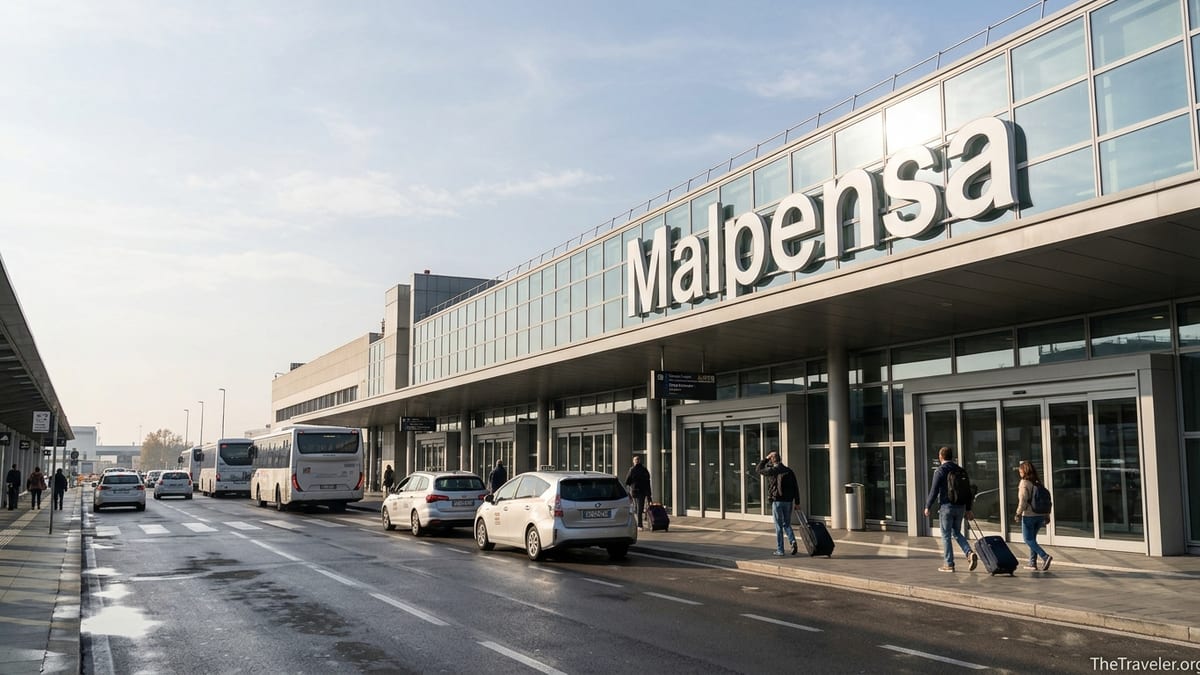
Understanding Milan Malpensa: Terminals and Layout
Milan Malpensa (airport code MXP) sits about 45 to 50 kilometers northwest of central Milan and is the largest airport in northern Italy. It has two passenger terminals, Terminal 1 and Terminal 2, which are several minutes apart by road and connected by a free shuttle. Terminal 1 is the main building most travelers see first. It handles the majority of full-service and long-haul airlines, including large intercontinental carriers and many European network airlines. Terminal 2 is smaller and dedicated almost entirely to easyJet, which uses Malpensa as a major base in continental Europe.
Terminal 1 is divided into three boarding areas, often labeled A, B and C, grouped broadly by Schengen and non-Schengen flights. If you are flying to or from North America, the Middle East or Asia with airlines such as Emirates, Delta, or Singapore Airlines, you will almost certainly use Terminal 1. Many intra-European flights on ITA Airways, Lufthansa Group carriers and others also depart from here. Terminal 2, by contrast, is much simpler: if your boarding pass shows easyJet and Terminal 2, you will follow clear orange and white easyJet branding from the train or bus straight to check-in and security.
Inside Terminal 1 you should expect a large, typically busy departures hall with check-in islands in the middle and arrivals on a lower level. Baggage claim and customs sit on the arrivals floor, with exits leading toward ground transport, taxi ranks and the train station on the underground level. Terminal 2 is more compact but can be crowded at peak times because easyJet schedules many departures close together. Allow extra time here for check-in and security, especially for early morning flights when lines can build quickly.
A free shuttle bus links Terminal 1 and Terminal 2 throughout the day and night, typically every 15 to 20 minutes in daytime and a bit less frequently late at night. Stops are well signposted outside each terminal; at Terminal 1, for example, the shuttle stop sits on the lower level close to the Sheraton Milan Malpensa Airport Hotel. If you accidentally go to the wrong terminal, do not panic: just follow the signs to the shuttle and factor in an extra 15 to 30 minutes to reach the correct building and clear security.
Airlines and Flight Types: Knowing Where You Belong
The simplest way to work out where you need to go at Malpensa is to check your airline and flight type. Legacy and long-haul carriers almost always use Terminal 1. Travelers flying from New York with Delta, from Dubai with Emirates, or from Singapore with Singapore Airlines, for example, all arrive and depart at Terminal 1. European full-service airlines such as Lufthansa, SWISS, Air France, KLM and ITA Airways also operate from this terminal, as do many codeshare flights sold by overseas partners but operated by European carriers.
Terminal 2, on the other hand, is effectively an easyJet world. If your booking confirmation shows easyJet but no terminal, you can safely assume it will be Terminal 2 unless you see a specific exception. This matters in practice because airport trains, shuttle buses and some car parks will explicitly mention which terminal they serve first. Malpensa Express trains, for example, run to both Terminal 1 and Terminal 2 on many departures, while some long-distance coaches list separate stop times for each terminal.
If you are connecting between airlines at Malpensa, check whether your flights both use Terminal 1 or if you must change to Terminal 2. A traveler arriving from New York on Delta and connecting to an easyJet flight to Naples will land at Terminal 1 but depart from Terminal 2. In this situation, you will clear immigration and customs at Terminal 1, collect your bags, then follow signs to the free terminal shuttle outside. It is sensible to allow at least three hours between flights on separate tickets to accommodate possible delays and the transfer time.
A final point for first-timers is that Malpensa is not the only airport that carries Milan in its name. When booking tickets or ground transport, double-check you are looking at Malpensa (MXP) rather than Linate (LIN) or Bergamo Orio al Serio (often called Milan Bergamo, BGY). All three are used for “Milan” but they sit in different locations and are served by different trains and buses.
Getting To and From Milan: Trains, Buses and Taxis
For most first-time visitors, the Malpensa Express train is the simplest and most reliable way into Milan. The train station is built into Terminal 1 and connected to Terminal 2 by both rail and shuttle, with clear red and white signage. As of mid 2026, a standard adult ticket from Malpensa to central Milan costs around 15 euros one way, with journey times of roughly 50 minutes to Milano Centrale and a little under that to Milano Cadorna. Trains typically run every 15 to 30 minutes during the day, early morning and evening, giving you flexibility if your flight is delayed.
If your hotel is near Milano Centrale, you can simply follow signs to the Malpensa Express, buy your ticket at the machines or staffed counters, and board the next train toward Centrale. Travelers staying near the Sforza Castle, Brera or the Duomo area often find it more convenient to ride the Malpensa Express to Milano Cadorna, which connects directly with metro lines M1 and M2. For example, a visitor staying near Cairoli station could take the train from Malpensa to Cadorna, then ride just one stop on the metro rather than crossing town from Centrale with heavy luggage.
Shuttle buses provide a cheaper but slower alternative, especially at night when train frequency may drop. Several operators, including Malpensa Shuttle and Malpensa Bus Express, run direct coaches between both airport terminals and Milano Centrale. Typical one-way fares are around 10 euros for adults, and many services run from early morning until late at night with departures roughly every 20 to 30 minutes during peak daytime hours. Travel time can range from about 60 to 70 minutes depending on traffic. Buses depart from clearly marked bays outside each terminal arrivals area, and tickets can be bought from kiosks, drivers or online in advance.
Taxis and app-based services are the most convenient door-to-door solution but also the most expensive. A licensed taxi from Malpensa to central Milan usually operates on a fixed fare system that is higher than public transport, making sense mainly for families or small groups with lots of luggage, or for very late arrivals when trains and most buses have stopped. For example, a family of four arriving after 23:30 might decide that a taxi directly to their apartment is worth the extra cost compared with four individual train tickets plus a metro or tram ride at the end. Always use the official taxi ranks outside the terminals and avoid unmarked or unsolicited drivers inside the arrivals hall.
Onward Connections, Parking and Car Rental
If you plan to drive in northern Italy, Malpensa is a practical place to rent a car because it sits close to major motorways toward Milan, Turin, the lakes and the Alps. International brands such as Hertz, Avis, Europcar and Sixt are present at the airport, with desks in both terminals and car pick-up areas in connected multi-storey car parks. Renting at the airport can be especially convenient if you are heading straight to Lake Como or the Piedmont wine region and prefer to bypass central Milan entirely.
For those leaving their own car at the airport, Malpensa offers official on-site parking as well as independent private lots in the surrounding area. On-site options include multi-level covered car parks attached to Terminal 1 and open-air lots a short shuttle ride away. Independent operators near the airport, such as AirParking Malpensa, run their own secured lots a few kilometers from the terminals and provide shuttle transfers. For a two-week trip in peak summer, for example, many travelers compare the convenience of parking in a covered official car park directly connected to the terminal versus saving money with a private lot that includes a five to ten minute minibus ride.
For short stays, such as dropping a rental car before a flight or picking up relatives, Malpensa has signed short-term parking areas near the terminal entrances. These typically charge higher hourly rates but keep walking distances minimal. Many first-time visitors find it reassuring to follow airport signage for “P” parking and select the first official lot attached to their terminal, especially if they are unfamiliar with the independent operators and prefer the predictability of on-site facilities.
Onward connections to other Italian cities are straightforward from central Milan. If you arrive on the Malpensa Express to Milano Centrale and need to reach Florence, Venice or Rome the same day, you can often transfer directly to high-speed Frecciarossa or Italo trains. A typical itinerary might see a traveler land at Malpensa in the morning, take the Malpensa Express to Centrale, then board a mid-afternoon Frecciarossa to Florence Santa Maria Novella, arriving by early evening without needing a domestic flight.
Airport Hotels and Where to Sleep Before an Early Flight
For very early departures or late-night arrivals, staying near Malpensa can be a smart choice, especially for first-time visitors not comfortable navigating public transport in the dark. The most convenient option is the Sheraton Milan Malpensa Airport Hotel & Conference Centre, which is physically connected to Terminal 1. Guests can walk from their room to the check-in area in a few minutes entirely indoors, using escalators and corridors that link the hotel directly to the departures hall. This convenience makes the Sheraton a popular choice for travelers catching 6:00 or 7:00 flights or overnighting after a late transatlantic arrival.
Another well-known airport hotel is the Moxy Milan Malpensa, part of the same international hotel group. Located near the terminals, it typically offers a more casual, youthful style and can be more budget friendly than the Sheraton on some dates. Guests generally reach it via a short shuttle ride or a brief walk depending on current access arrangements and terminal. This can work well for travelers who have a bit more time before their flight and are comfortable catching an early shuttle back to the airport.
Beyond these two headline properties, a ring of smaller hotels and guesthouses sits in nearby towns such as Somma Lombardo and Cardano al Campo. Many of these offer their own free or paid airport shuttles and can be good value for parties or families on longer layovers. For example, a family of five returning a rental car in the afternoon might choose a mid-range hotel in Somma Lombardo that offers parking, a simple dinner and a scheduled shuttle back to Malpensa the next morning. When booking, check the exact shuttle timetable and whether very early or very late transfers are guaranteed, as first-time travelers often underestimate how early they should be at check-in.
If you prefer to stay in the city instead of at the airport, consider a hotel near Milano Centrale or Cadorna and time your Malpensa Express train accordingly. A traveler staying in central Milan for several days before a morning flight might plan to check out, take a 06:25 train from Centrale, and arrive at Malpensa around 07:15 in time for a mid-morning departure. This approach gives you a more interesting base but requires a bit more planning than simply walking downstairs from an airport hotel.
Arrivals, Baggage Claim and First Steps in Italy
On arrival at Malpensa, follow the stream of passengers from your aircraft toward passport control and baggage claim. Non-EU passport holders will pass through standard immigration lanes, while EU and some other eligible travelers may be able to use automated e-gates. Processing times vary by time of day, but first-time visitors should allow at least 30 minutes to an hour from disembarkation to reaching the luggage carousel, especially after large long-haul flights.
Once you have collected your bags, you will pass through customs, which is usually a simple walk-through experience for most tourists with nothing to declare. Immediately beyond the customs doors you enter the public arrivals hall, where you will find information desks, ATMs, currency exchange counters, car rental agencies and signs to ground transport. If you have pre-booked a transfer service, your driver will typically wait here with a name sign. For those heading straight to the Malpensa Express, look for the clearly marked train icons and follow the arrows toward the lower levels of Terminal 1, where the platforms and ticket machines are located.
Many first-time travelers appreciate making a few basic arrangements before leaving the terminal. This can include buying a local SIM card, picking up an Italian coffee or snack, and withdrawing some euros from an ATM operated by a major bank. While credit and debit cards are widely accepted in Milan and across northern Italy, having a small amount of cash is handy for tips, small cafés and certain parking meters or ticket machines.
If you are transferring onward to another flight from Malpensa, read your itinerary carefully. Through-ticketed connections on the same airline alliance may be handled airside, meaning your bags are checked to your final destination and you simply follow transfer signs without entering Italy officially. However, many connections at Malpensa involve separate tickets and different airlines, especially when mixing full-service carriers with low-cost options. In these cases you should budget time to clear immigration, collect and re-check luggage, pass through security again and possibly move between terminals on the shuttle.
Departures, Security and Passenger Services
For departures, most long-haul and non-Schengen passengers should aim to reach Malpensa at least three hours before scheduled take-off, and two hours for most European flights. This is particularly important at busy times such as summer weekends, major trade fairs in Milan or peak holiday periods around Christmas and Easter, when queues for check-in and security can be noticeably longer.
On arrival at the terminal, consult the departure screens to locate your check-in area and counter number. Airlines with multiple daily flights, such as easyJet in Terminal 2 or large network carriers in Terminal 1, often open counters several hours in advance and close them strictly on time. Bag drop for online check-in may be separate from full-service check-in desks, so look carefully at the signage. Once your bags are tagged and boarding pass checked, you will head toward security screening, where standard liquids and electronics rules apply. Remove large electronics and liquids in containers of 100 milliliters or less, all placed in a clear plastic bag, before your tray reaches the scanners.
After security, passengers in Terminal 1 move into a spacious airside shopping and dining area, with Italian and international brands, duty free stores, cafés and restaurants. Typical options range from espresso bars serving quick cappuccinos and pastries to sit-down restaurants offering pasta, salads and wine. In Terminal 2, the selection is somewhat more limited but still includes essential services such as snack bars, fast-food outlets and newsstands. If you are boarding a long-haul flight, it can be wise to pick up a bottle of water and a small snack before you reach the gate, especially if you prefer not to rely solely on onboard catering.
Business and frequent travelers may access airline lounges in Terminal 1, many of which offer quiet seating, light meals, showers and charging points. Access rules vary: some lounges admit passengers flying in premium cabins, others welcome holders of certain credit cards or lounge passes. Even if you do not use a lounge, there are plenty of public seating areas with power outlets scattered throughout the concourses, which are useful if you need to recharge your phone before boarding.
Practical Tips for First-Time Travelers at Malpensa
First-time visitors often underestimate distances and walking times at Malpensa. Terminal 1 in particular is long, and gates for wide-body aircraft can sit several minutes’ walk from the main shopping area. Building in small cushions of time at each stage reduces stress. For example, if your train from Milan to the airport arrives at 08:30 for an 11:00 long-haul flight, you will have a comfortable margin of around 30 minutes for check-in and 60 minutes for security, passport control and walking to the gate.
Language is rarely a major barrier at Malpensa, as most frontline staff in airlines, shops and transport services speak at least basic English, alongside Italian. Still, it is helpful to know a few key phrases such as “binario” for train platform or “partenze” for departures. Signage throughout the terminals is bilingual or multilingual, with icons that are largely intuitive. If you are ever unsure, information desks and airport staff are accustomed to first-time travelers asking for help.
Money and tickets are another area where a little preparation goes a long way. For public transport, it is usually cheaper and easier to buy tickets from official machines or counters rather than from third-party resellers in the arrivals hall. Machines for the Malpensa Express, for example, accept cards and cash, and allow you to choose your final station in Milan. Many shuttle bus operators also sell tickets directly at their own counters or kiosks near the bus bays. Keeping a screenshot of your hotel address and any booking confirmations on your phone, ideally in Italian as well as your own language, can be very helpful when purchasing tickets or speaking to taxi drivers.
Finally, consider your luggage strategy. If you plan to spend a few hours in Milan between flights or before heading to another region, luggage storage services at Milano Centrale station allow you to drop off suitcases securely and explore the city unencumbered. A typical example would be a traveler landing at Malpensa in the morning, leaving bags at Centrale for a few hours of sightseeing and lunch near the Duomo, then returning to collect them and board an evening train to Venice or Florence.
The Takeaway
Milan Malpensa Airport can look complex on a map, but for first-time travelers it becomes manageable once you understand the basics: two terminals, clear separation of airlines, a reliable airport train and abundant bus and taxi options. Whether you are arriving on a long-haul flight from overseas, connecting to a regional hop or starting an Italian road trip, a bit of planning around terminal, transport, parking and accommodation will keep your journey smooth.
By familiarizing yourself with Malpensa’s layout, checking your airline and terminal carefully, and choosing the right way into the city for your schedule and budget, you can step off the plane confident rather than overwhelmed. From there, the cafés of Milan, the shores of Lake Como and the vineyards of northern Italy are all within easy reach.
FAQ
Q1. Which terminal will I use at Milan Malpensa Airport?
Most full-service and long-haul airlines use Terminal 1, while easyJet flights generally use Terminal 2. Check your ticket or airline app to confirm the terminal before you travel.
Q2. How do I get from Malpensa to central Milan?
The Malpensa Express train runs from the airport to Milano Centrale and Milano Cadorna in about 45 to 55 minutes, while shuttle buses and taxis offer slower or more expensive alternatives.
Q3. How much does the Malpensa Express train cost?
A standard adult one-way ticket between Malpensa and central Milan typically costs around 15 euros, with discounts sometimes available for children or return tickets.
Q4. Is there a hotel inside Milan Malpensa Airport?
Yes. The Sheraton Milan Malpensa Airport Hotel & Conference Centre is directly connected to Terminal 1, allowing guests to walk indoors between the hotel and the departures hall.
Q5. How early should I arrive at Malpensa before my flight?
Plan to arrive about three hours before long-haul international flights and at least two hours before most European flights, adding extra time during peak holiday periods.
Q6. Is there a free shuttle between Terminal 1 and Terminal 2?
Yes. A free shuttle bus operates between Terminal 1 and Terminal 2 throughout the day and night, usually every 15 to 20 minutes during daytime hours.
Q7. What is the best option for late-night arrivals?
For very late arrivals, many travelers choose an airport hotel such as the Sheraton or Moxy and transfer into Milan the next morning by train, rather than navigating public transport at night.
Q8. Can I rent a car directly at Malpensa?
Yes. Major car rental companies have desks at both terminals, with vehicle pick-up points in nearby multi-storey car parks, making Malpensa a convenient starting point for road trips.
Q9. Are there luggage storage facilities if I want to visit Milan before onward travel?
While Malpensa has basic services, many travelers prefer to use staffed luggage storage at Milano Centrale station, leaving bags there while they explore the city between flights or trains.
Q10. What should I do if I arrive at the wrong terminal?
Do not worry. Follow signs to the free terminal shuttle outside the building, allow at least 15 to 30 minutes for the transfer, and then proceed to check-in and security at the correct terminal.