


Driving to Milan Malpensa (MXP) can be the most convenient way to start or end your trip, but only if you know where to park and how the system works. With two terminals, multiple official parking areas, and a mix of short-stay, long-stay, and pickup zones, the choices can feel confusing on arrival. This guide walks you through Malpensa’s official parking options in clear, practical terms, with real-world examples of what different travelers actually use and pay, so you can choose the right solution for your flight and budget.
Get the latest updates straight to your inbox!
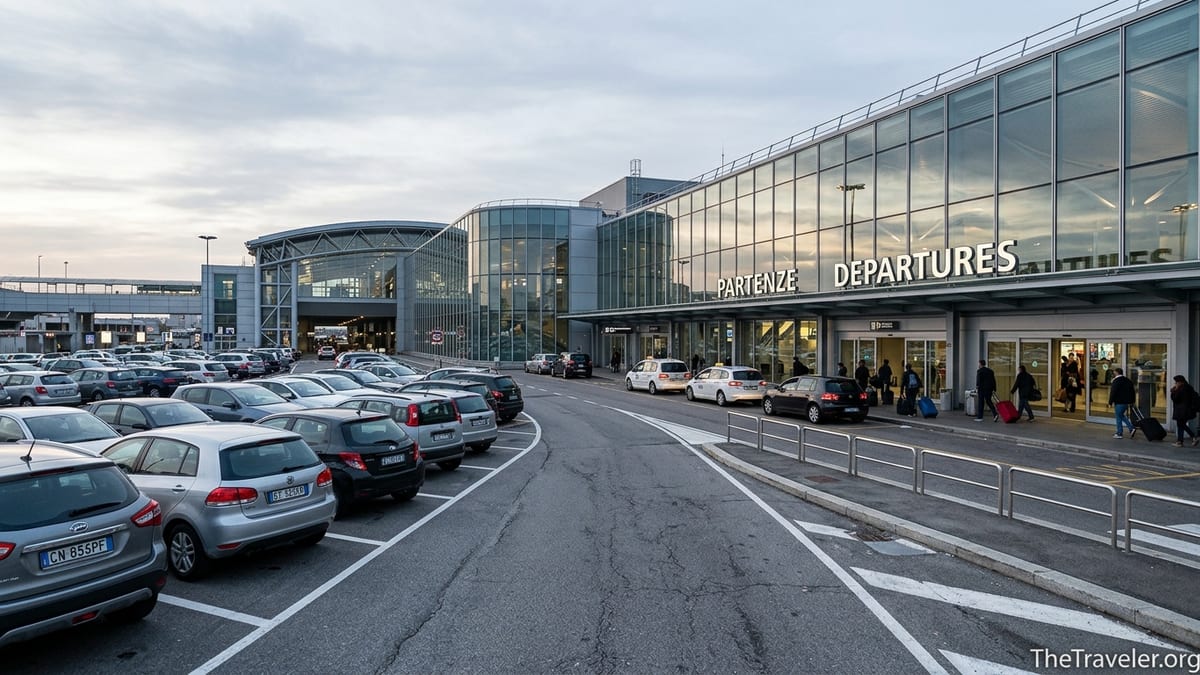
How Malpensa’s Terminals and Parking Are Laid Out
Milan Malpensa sits about 45 kilometers northwest of central Milan and has two main passenger terminals: Terminal 1 for most full-service and long-haul airlines, and Terminal 2, which is largely dedicated to easyJet and a few low-cost or seasonal operations. The two terminals are connected by a free internal shuttle bus and by the Malpensa Express train, so parking at one terminal and flying from the other is possible, especially if you want to lock in a cheaper long-stay rate and are comfortable allowing extra transfer time.
The official airport parking is marketed under the ViaMilano Parking and Milan Airports Parking brands. These are the car parks that sit on airport property and are directly managed or contracted by the airport operator. They are divided into several zones around Terminal 1 and Terminal 2, with covered multistory garages closer to the buildings and larger open-air long-stay lots placed slightly farther away but still well within a few minutes’ walk or shuttle ride.
For a first-time visitor, it helps to think of the options in three layers. Closest to the terminals are the short-stay and premium covered garages, suited to drop-offs, very short trips, or travelers who prioritize speed over price. Just behind these are standard covered or uncovered car parks used for weekend breaks or working trips of three to six days. Farthest out are the economy and long-stay areas that become attractive for week-long holidays and longer itineraries.
Signage on the access roads is generally clear, but many drivers still rely on their navigation app set to “Milan Malpensa T1 parking” or “T2 parking.” This will typically bring you to the main entrances for the ViaMilano car parks; from there, large illuminated signs and electronic panels guide you toward the right lot and display real-time information on free spaces.
Official Parking Options at Terminal 1
Terminal 1 is Malpensa’s main hub, handling most international carriers and intercontinental flights. Around this terminal, you will find several distinct ViaMilano Parking areas, commonly labeled with codes such as P1, P2, P3, and P4. The exact names and configurations may evolve, but the logic remains stable: P2-type structures are very close covered garages, P1 and P3 are mid-range choices, and P4-type areas are designed for economy and long stays.
As a rule of thumb, the multistory garage attached directly to Terminal 1 is the closest option, suitable for business travelers or anyone with heavy luggage or reduced mobility who wants to minimize walking distance. Drivers usually enter through a barrier, take a ticket or use a QR code from their online booking, and follow level indicators to park. From the car, it is often just a few minutes on foot under cover to reach the departures hall. You pay for that convenience with higher hourly and daily rates compared with more distant lots.
For people heading away for a long weekend or a five-day business trip, mid-range options such as the P1 or P3 style car parks can be a better balance. These are typically uncovered or partially covered areas within walking distance of Terminal 1, often five to eight minutes on foot. An example: a traveler leaving on a Thursday evening and returning Monday afternoon may find that booking P1 online costs noticeably less than booking the closest covered garage, especially if they catch one of the regular discounts offered for stays of three to five days.
When trips stretch beyond three or four days, the long-stay P4-type areas at Terminal 1 become especially attractive. These are usually open-air car parks a little farther from the doors but still well within the airport perimeter, often linked to the terminal via a short walk or a frequent shuttle. Families heading to the United States for two weeks in August, for instance, often choose P4 or a similar long-stay zone, because the per-day rate levels off significantly for stays above about four days, bringing the total cost down compared with closer garages.
Terminal 2 Parking and the EasyJet Factor
Terminal 2 at Malpensa is strongly associated with easyJet, so many of the passengers using its parking are leisure travelers, couples, and families flying to European destinations for a few days to two weeks. The official P5 Easy car park is the main on-airport option here and is designed with this profile in mind. It typically offers a large number of uncovered spaces and direct access to Terminal 2, meaning you park your car and walk to the check-in area without any shuttle bus.
Because P5 is aimed at value-focused passengers, its daily rates often start lower than the closest covered facilities at Terminal 1. For example, a family flying from Terminal 2 for a seven-night trip to Spain might find that pre-booking P5 online gives them a considerably lower total price than any day-of-arrival parking at Terminal 1. They can drive straight to the T2 access road, follow the P5 signs, enter through the barrier, and park within a few hundred meters of the departures entrance.
Some travelers with flights from Terminal 1 deliberately choose to park at P5 Easy if an online promotion makes it significantly cheaper than long-stay options at T1, especially outside peak holiday weeks. In that case, they park at Terminal 2 and use the Malpensa Express train or the free terminal shuttle to reach Terminal 1. For instance, a solo traveler heading on a ten-day trip in November might park at P5, then walk into Terminal 2 and board the Malpensa Express, which stops at Terminal 1 a few minutes later, effectively trading a short transfer for a lower parking cost.
If your airline uses Terminal 2 and you are traveling with bulky equipment such as skis or bikes, the direct access offered by P5 can be a practical advantage. You can unload right beside your car, wheel everything straight into the departures area, and avoid lifting gear onto shuttle buses or carrying it long distances. For many easyJet passengers who frequently fly from Milan, becoming familiar with the P5 layout is one of the simplest ways to reduce departure stress.
Short-Stay Parking, Kiss & Ride and Pickup Zones
Short-stay parking at Malpensa is intended for stays of a few minutes up to a couple of hours, covering situations such as walking an elderly relative to the check-in counters, waiting with a child until security, or having a coffee with someone during a layover. At Terminal 1 there are designated short-term areas right by the arrivals and departures fronts, often identified by separate signage from the long-stay entrances. Space is limited, so these are priced higher per hour than the main car parks and, at busy times, may be strictly enforced.
For pure drop-off or very brief pickups, Malpensa uses a combination of curbside lanes and a so-called Kiss & Ride concept. Cars enter the terminal access road, follow signs for departures or arrivals, and can stop for a short time to unload passengers and baggage. Enforcement cameras and airport security monitor these areas, and the focus is on keeping traffic flowing. Drivers are expected not to leave their vehicles unattended and to move on quickly after saying goodbye or collecting their arriving passengers.
To relieve pressure on the terminal frontage, Malpensa provides a “Wait Zone” between Terminal 1 and Terminal 2 where drivers can wait with their car for up to a limited period, often around one hour, without paying, as long as they do not abandon the vehicle. A common real-world pattern is for a friend picking someone up from a delayed evening flight to wait in this zone, checking the live arrival time on their phone. When the arriving passenger texts that they are at baggage claim, the driver leaves the Wait Zone, heads toward the arrivals frontage at T1 or T2, and performs a quick curbside pickup.
If you expect to need more time, for example to meet an unaccompanied minor, assist someone with limited mobility, or sort out lost luggage, you are usually better off entering one of the official short-stay or standard car parks near the terminal. Paying for an extra hour of parking can be a small price to avoid fines or being asked to move on repeatedly by traffic staff. Many locals who regularly collect relatives at Malpensa treat short-term parking as the default for evening arrivals, especially during busy summer months when curbside lanes get congested.
Long-Stay and Economy Parking: Best Value for Multi-Day Trips
For trips of four days or more, long-stay and economy car parks at Malpensa generally deliver the best value. These are larger open-air lots placed slightly farther from the doors than premium garages but designed specifically for multi-day and multi-week stays. The most typical users are families heading on summer holidays, couples taking road trips that start and end in Milan, and expatriates returning home for extended visits.
A common real-world scenario is a two-week holiday in August. A family from northern Italy might drive to Malpensa early on a Saturday morning and head directly to a long-stay car park associated with P4 at Terminal 1 or to P5 Easy at Terminal 2. By booking online several weeks in advance, they may secure a daily rate that brings the total cost for 14 days down to a level that feels reasonable compared with airport train tickets for four people. They park, note their sector number on their phone, and then walk or take a short shuttle to the check-in area.
Another example involves business travelers who need to leave their car at the airport during back-to-back trips. Someone based in Milan but working across Europe might buy a multi-day stay in an economy car park, leave the vehicle for 10 days while visiting three different cities, and return to find it right where they left it. They accept a slightly longer walk to the terminal compared with the closest garage, but the reduced cost can be significant over several such trips per year.
Travelers who want the lowest possible price sometimes compare official long-stay rates with off-airport private parking providers in nearby towns such as Somma Lombardo. These private car parks, often branded with names referencing Malpensa, typically include shuttle transfers to both terminals and may offer covered spaces or valet-style services where you hand over your keys. While they can be cheaper, especially for very long stays, you trade the simplicity of being on airport property for an extra transfer step, and some travelers are not comfortable leaving their keys with a third party. For risk-averse visitors, the official ViaMilano Parking network remains the most straightforward choice.
Online Booking, Discounts and Payment Tips
Booking Malpensa parking online in advance is strongly recommended, particularly during school holidays, long weekends, and major events in northern Italy. The official Milan Airports Shop site lets you choose your terminal, your arrival and departure times, and then see prices for each available car park. Online tariffs are often lower than the standard drive-up prices, and periodic promotions provide extra discounts for stays longer than three or five days or for certain car parks the airport wants to fill.
For example, a traveler planning a five-day midweek trip in October might check prices one month before departure and find that P3 at Terminal 1 is offered at a promotional rate if booked at least seven days ahead. By comparison, the same stay booked at the barrier on the morning of departure might cost noticeably more. Many Italian motorists with loyalty cards from organizations such as ACI or various professional associations can also access extra discounts on ViaMilano Parking by entering a code during online checkout.
Payment at the airport is straightforward. Drivers who did not book online can take a ticket on entry and pay at automated machines or cashier desks before exiting. These machines typically accept major credit and debit cards, and often cash as well. If you booked online, you either scan a QR code at the barrier or enter the license plate number associated with your booking so the system can recognize your car. On exit, the barrier opens automatically if your stay matches the prepaid booking; if you overstayed, the system calculates an extra charge, which you pay on the spot.
Keeping your booking confirmation accessible on your phone is important, particularly for longer stays. Airport staff may ask to see it if there is any issue with the license plate recognition, or you may need it to confirm which car park you reserved. Many seasoned travelers also take a quick photo of their parking spot and nearby signs, because, after a two-week trip, it can be surprisingly easy to forget whether you left the car in sector D2 or E5.
Practical Drop-Off and Pickup Strategies
Managing drop-offs and pickups smoothly at Malpensa is largely about timing and choosing the right place to wait. For outgoing flights, you should allow a generous buffer both for airline check-in and for potential queues on the airport access road. For most international departures, arriving at the terminal around three hours before the scheduled takeoff is common advice, especially at peak travel times. If you are only dropping someone off and not parking, consider adding an extra 20 to 30 minutes in case of traffic on the motorway or congestion near the departure level.
When picking up arriving passengers, monitor the flight’s actual arrival time through flight-tracking apps or your airline’s notifications. Malpensa can be busy, and it often takes 30 minutes or more after landing for travelers to disembark, clear passport control when applicable, and collect luggage. One practical approach is to wait in the free Wait Zone between Terminal 1 and Terminal 2 until the person you are collecting confirms that they have their bags. Then, you drive from the Wait Zone to the relevant arrivals frontage, where you can stop briefly for the pickup.
For more complex situations, such as helping older relatives or meeting someone who does not speak Italian, it is generally safer to use a short-stay car park and walk into the arrivals hall. For instance, a Milan-based resident collecting grandparents after a long-haul flight from North America might park in a short-stay car park at Terminal 1 for an hour, enter the building, and meet them just outside customs. This removes the stress of trying to coordinate a curbside pickup while they are tired and possibly without a working mobile phone.
If you are connecting between flights at Malpensa and someone is meeting you at the airport, plan the rendezvous in a clearly recognizable spot, such as the main arrivals exit at Terminal 1 or a particular café just beyond the doors. That person can park in a nearby car park for one or two hours, walk in, and spend time with you between flights. This is a common tactic among expatriate families who use Malpensa as a meeting point when relatives fly in from different countries.
Accessibility, Safety and Special Considerations
For travelers with reduced mobility or special assistance needs, Malpensa’s official parking network offers designated spaces reserved for PRM passengers inside barrier-controlled car parks. These spots are usually close to elevators or pedestrian exits leading directly to the terminal and are free or discounted when used according to the rules, which typically require a valid disability permit displayed in the car. It is still a good idea to mention any mobility needs when booking and again when you contact your airline or the airport assistance service so that help is ready when you arrive.
All official ViaMilano car parks are fenced, lit, and monitored, but they are still large open spaces, so basic precautions apply. Avoid leaving valuables visible inside the car, lock it carefully, and store any extra keys safely with you. If you plan to leave a car for several weeks, it can be sensible to check tire pressure and battery health before departure, especially in winter, as temperature swings and long idle periods can cause problems. Some travelers even schedule a service shortly before a long trip so that the vehicle is in good condition when it sits unused.
Parents traveling with children should factor in the logistics of moving from the car to the terminal with strollers and luggage. A frequent real-world tip is to pack one small cabin-sized wheelie bag with essentials for the walk and leave bulkier items stacked inside a checked suitcase. That way, you can manage the distance from the car park to the check-in desks more comfortably, regardless of whether you parked in the closest garage or a more distant long-stay area.
Finally, remember that weather can vary widely around Milan. In summer, uncovered long-stay car parks can be very hot, so consider leaving sunshades in the windows and parking under any available shade structures. In winter, early morning departures may coincide with frost or fog in the surrounding countryside, which can slow driving times. Building in a time buffer for the final stretch to Malpensa, and for finding a suitable parking spot once you arrive, is one of the simplest ways to keep stress levels low.
The Takeaway
Parking at Milan Malpensa does not need to be complicated once you understand the basic layout and the difference between short-stay, standard, and long-stay options. Terminal 1 and Terminal 2 each have a mix of official ViaMilano car parks that trade off distance against price, with covered garages closest to the terminals and economy or long-stay lots placed slightly farther away. For quick goodbyes or pickups, dedicated short-stay areas and curbside Kiss & Ride lanes are useful, while the free Wait Zone between the terminals helps drivers avoid circling the access roads while they wait.
For trips of more than a few days, booking a long-stay or economy car park online in advance is usually the smartest move, often producing savings compared with drive-up rates and guaranteeing a space even in busy periods. Travelers who value convenience over cost can choose the nearest covered garage, while budget-conscious passengers may prefer open-air long-stay areas or, in some cases, off-airport private parking with shuttle transfers. Across all scenarios, paying attention to timing, leaving a margin for traffic, and making use of the tools the airport provides will keep the start and end of your journey as smooth as possible.
By thinking through your parking strategy in advance, you turn Malpensa from an unknown into a familiar place. Whether you are dropping family at Terminal 2 for a weekend city break, leaving your car at Terminal 1 for a two-week holiday, or picking up relatives on a late-night arrival, the right parking choice can make the experience feel organized and stress-free from the moment you arrive at the airport.
FAQ
Q1. Do I really need to book Malpensa parking in advance?
Booking in advance is not mandatory, but it is strongly recommended, especially in summer and over holidays, because online rates are often lower and you are more likely to secure a space in your preferred car park.
Q2. Which car park is best if my flight departs from Terminal 1?
If you want maximum convenience, choose one of the covered garages directly attached to Terminal 1. For better value on trips longer than three or four days, look at the Terminal 1 long-stay or economy areas, which are slightly farther away but usually cheaper per day.
Q3. Is Terminal 2 parking only for easyJet passengers?
Terminal 2 is mainly used by easyJet, so most people parking there are flying with that airline, but there is no strict rule that only easyJet passengers can use those car parks. If parking at Terminal 2 is cheaper and you have time to transfer, you can still use it.
Q4. How long can I stop in front of the terminal to drop someone off?
Curbside drop-off is intended for very short stops only, just long enough to unload passengers and luggage. You should not leave the car unattended, and if you need more time, you should use a short-stay car park instead of staying at the curb.
Q5. Is there a free area where I can wait before picking someone up?
Yes, there is a designated Wait Zone between Terminal 1 and Terminal 2 where you can wait with your vehicle for a limited time, often up to about an hour, without paying, provided you remain with the car and respect posted rules.
Q6. Are there special parking spaces for passengers with reduced mobility?
Within the official ViaMilano car parks, there are marked spaces reserved for passengers with reduced mobility who hold a valid disability permit. These are usually close to pedestrian exits and elevators so that access to the terminal is as short and level as possible.
Q7. Can I park at one terminal if my flight departs from the other?
Yes, you can. The two terminals are linked by a free shuttle and by the Malpensa Express train, so parking at Terminal 2 and flying from Terminal 1, or vice versa, is possible if you allow extra time for the transfer.
Q8. Is it cheaper to use an off-airport private car park instead of the official ones?
Off-airport private car parks near Malpensa can sometimes be cheaper, particularly for very long stays, and they usually provide shuttle transfers. However, you trade airport-side convenience for an extra transfer step, and some services require leaving your keys, which not everyone prefers.
Q9. What should I do if my return flight is delayed and I overstay my parking booking?
If you stay longer than planned, the parking system will normally calculate an additional charge when you attempt to exit. You can pay this difference at the automatic machines or cashier desks before driving out of the car park.
Q10. Is it safe to leave my car for two weeks in a long-stay car park?
Official airport car parks are fenced, lit, and monitored, and many travelers leave their cars there for weeks without issues. As with any large car park, it is still wise to lock your vehicle carefully, remove visible valuables, and note your parking location before you travel.