


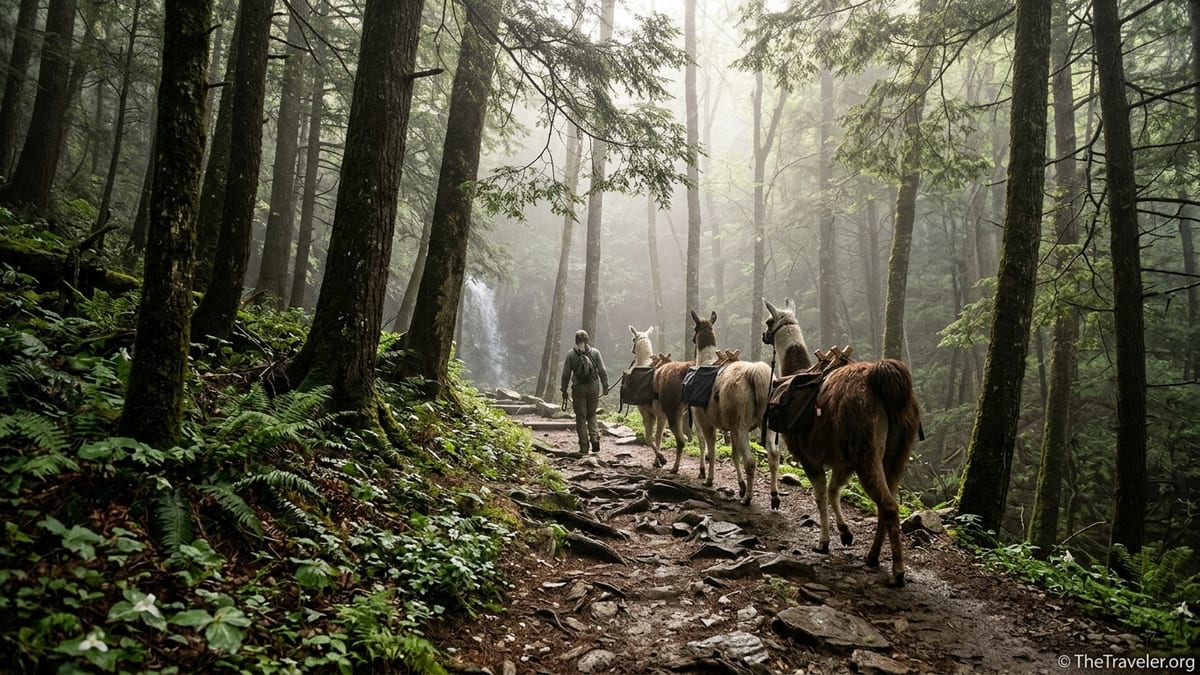
On most days, Trillium Gap Trail is a classic Great Smoky Mountains hike: mossy rocks, old-growth forest, and the cool mist of Grotto Falls. On certain mornings, though, it turns into something far more unusual. A pack train of llamas, loaded with supplies for the mountaintop LeConte Lodge, picks its way up the trail. If you time it right, you can share the path with these surefooted animals while still enjoying cooler temperatures and solid trail conditions. Here is how to plan your hike for the best combination of llama sightings, weather, and crowds.
Get the latest updates straight to your inbox!
Understanding Trillium Gap Trail and the Llama Train
Trillium Gap Trail climbs the northern flank of Mount LeConte in Great Smoky Mountains National Park, starting off the Roaring Fork Motor Nature Trail near Gatlinburg, Tennessee. Early on, it passes the popular Grotto Falls, then continues steeply through spruce and fir forest toward LeConte Lodge. It is the only stock trail to the lodge, which is why supply llamas use this route several times a week when the lodge is open.
The llamas are working animals that carry food, linens, and other supplies up to LeConte Lodge and bring trash and dirty laundry down. A single llama can carry significant weight, and a train of them means the lodge can operate without a service road to the summit. For hikers, that means a rare chance to encounter llamas on a backcountry trail in the eastern United States.
Most visitors only walk the lower 1.3 miles to Grotto Falls from the Trillium Gap trailhead. To increase your odds of seeing llamas, you will want to think beyond the waterfall and pay close attention to the lodge operating season, the llama packing schedule, and how long it takes them to move between the trailhead and the higher sections of trail.
When Llamas Use Trillium Gap Trail
LeConte Lodge typically operates from around late March or early April through late November, although exact opening and closing dates vary by year based on contracts and weather. Outside that window, the lodge is closed and there is no need for pack animals, so the llamas generally do not travel the trail during winter.
During the operating season, the llama train usually runs three days per week. In recent years, hiking reports and local lodging information have commonly mentioned early week and midweek runs, such as Mondays, Wednesdays, and Fridays or similar combinations, but the exact days can and do change. For example, one season several visitors reported seeing the llamas on Mondays, Wednesdays, and Thursdays between late spring and fall, while later seasons shifted days slightly to fit lodge logistics.
Because the schedule can change from year to year, the most reliable strategy is to call LeConte Lodge directly a week or two before your trip and ask which days the llamas are currently scheduled to use Trillium Gap. Staff typically know the plan for that season and can tell you which mornings the llamas leave the trailhead and approximately when they expect them to pass Grotto Falls.
On a typical packing day, the llamas start up from the Trillium Gap trailhead in the morning. Allowing for loading and a slow pace with frequent breaks, it is common for them to reach the Grotto Falls area by late morning. If your goal is to cross paths with them near the waterfall, starting from the trailhead around 8:00 to 9:00 a.m. on a llama day usually sets you up to meet them somewhere between the parking area and the falls, depending on whether you hike faster or slower than the train.
Best Seasons for Cooler Weather and Solid Trail Conditions
Trillium Gap gains well over 2,000 feet of elevation between the Roaring Fork trailhead and the top of Mount LeConte. Temperatures at higher elevations in the Smokies often run about 10 to 15 degrees Fahrenheit cooler than in nearby Gatlinburg. That cooling effect helps on hot days, but it also means chilly mornings and the possibility of ice or snow well into spring and again in late autumn.
If your priorities are cooler temperatures without significant ice and more stable trail conditions, aim for late April through early June or mid-September through late October. In late spring, daytime highs in Gatlinburg often sit in the 70s Fahrenheit, while the higher sections of Trillium Gap feel more like the low 60s, which is comfortable for steady climbing. The forest along the trail is also particularly lush at this time, with trillium, violets, and other wildflowers blooming around Grotto Falls and above.
By mid-September, the worst of the summer heat and humidity has usually broken, but full winter cold has not arrived at altitude. Skies are often clearer, and the trail surface tends to be drier than during the stormy midsummer period. Late September and October bring increasingly crisp mornings with daytime highs on the mountain often in the 50s and 60s, ideal for long uphill hikes with a pack.
Winter and very early spring hikes can be beautiful but are much more variable. Snow and ice may linger on shaded switchbacks above Grotto Falls, and Roaring Fork Motor Nature Trail, the one-way road to the main trailhead, closes for the winter season. That means access is more complicated, and there are usually no llamas on the trail during these months because the lodge is closed.
Month-by-Month Timing for Llamas and Weather
In March and early April, you may catch the very start of the LeConte Lodge season. Temperatures can swing widely from near-freezing mornings to mild afternoons, and higher elevations can still hold snow and slick mud. Roaring Fork Motor Nature Trail is often still closed, so hikers who do venture up Trillium Gap from lower connectors or snow-free segments typically do not see llamas yet.
Late April and May offer a strong balance for many visitors. Roaring Fork normally reopens for the season, giving easy access to the Trillium Gap trailhead. Lower elevation highs are usually in the 60s and 70s, which translates to pleasantly cool hiking temperatures higher up, especially in the morning. Lodge operations are underway, so the llama train is usually running on its regular weekly schedule, and the forest around Grotto Falls is alive with fresh foliage and wildflowers.
June through August bring the busiest visitation and the warmest, most humid conditions. Afternoon highs in Gatlinburg can sit in the 80s or higher, and afternoon thunderstorms are common. The higher elevations of Trillium Gap are genuinely cooler, but the long, steady climb can still feel steamy, especially after a rain. If you want llamas and cool conditions during summer, plan a very early start on a scheduled llama day and aim to be on the trail by sunrise to take advantage of lower temperatures and thinner crowds.
September and October are often considered prime hiking months in the Smokies. Temperatures are generally cooler, rainfall decreases compared with midsummer, and the forest begins to turn color. Llamas still pack to the lodge on their usual days, and you can often hike long sections of the trail in long sleeves without overheating. The main trade-off is that October is one of the single busiest months in the park, particularly for fall foliage, so expect heavy traffic on Roaring Fork and a crowded parking area on clear weekend mornings.
Choosing the Best Time of Day for Comfort and Llama Sightings
Even during the hottest weeks of summer, mornings on Trillium Gap Trail can feel remarkably cool, especially in shaded stretches near streams and waterfalls. Starting early also aligns well with the llamas. On a typical packing day, lodge staff and llama wranglers want plenty of daylight for the full round trip, so they generally begin moving shortly after sunrise.
For the best chance of encountering the llamas near Grotto Falls, aim to reach the trailhead shortly before or after they depart. Practically speaking, that means arriving at the parking area around 7:30 to 8:30 a.m. on a confirmed llama day. If you hike at a moderate pace, you may catch them near the falls, where the trail narrows and everyone pauses to negotiate the rocks and spray.
If you prefer to avoid crowding around the animals, consider starting a little later on non-llama days. A 9:30 a.m. start in May, for example, might still give you cool air under the forest canopy without putting you on top of the llama train. By late afternoon, especially in summer, the trail can feel warmer and more humid, and thunderstorms are more likely, which can quickly turn rocky sections muddy and slick.
Evening hikes can be tempting in midsummer when lower elevations remain hot, but Trillium Gap is not an ideal sunset outing for most visitors. The trail is long, roots and rocks are numerous, and fog can roll in unexpectedly. To avoid descending by headlamp on uneven ground, most day hikers should plan to be back to the trailhead by late afternoon, leaving evening hours for scenic drives or low-elevation strolls instead.
Trail Conditions and Safety Across the Seasons
Because Trillium Gap crosses multiple shaded, stream-fed ravines, the trail can stay damp even after stretches of fair weather. In spring, snowmelt and frequent rain can turn lower sections into muddy corridors, making trekking poles and waterproof boots helpful. Rocky steps near Grotto Falls can be especially slick from spray, so you will want footwear with good traction regardless of the season.
Summer brings lush green vegetation and full water flow at Grotto Falls, but also frequent short thunderstorms. A storm that rolls over Mount LeConte in the afternoon can leave upper sections of trail running with water for an hour or more, so hikers who start late may find themselves descending on wet, muddy slopes. Watch the sky and local radar before committing to a late-day ascent, and be prepared to turn around if thunder moves in.
By early autumn, conditions often stabilize. Trails dry out more quickly between less frequent storms, and cooler air helps keep exertion comfortable on the long climb. However, fallen leaves can hide roots and rocks, so careful footing remains important. As the lodge approaches its seasonal closure in late fall, the risk of overnight ice increases on upper switchbacks, particularly after clear, cold nights.
Winter and early spring hikers must be prepared for icy patches, snow drifts at higher elevations, and sudden changes in weather. Although experienced locals sometimes use traction devices and layered clothing to enjoy quiet winter days on the trail, most visitors who want both llamas and relatively safe footing will find the main operating season from late April through October more suitable.
Practical Planning: Parking, Access, and Local Examples
The Trillium Gap trailhead sits along the Roaring Fork Motor Nature Trail, a narrow, one-way scenic road that typically operates from spring through late fall. In winter, and occasionally during shoulder seasons with downed trees or storm damage, the road can close entirely, cutting off direct vehicle access to the main trailhead. Before you go, check the latest road status for Roaring Fork through Great Smoky Mountains National Park information channels, especially if your visit falls in March, early April, or November.
On a busy Saturday in October, it is common to see cars lined along the shoulder near the trailhead from early morning. A typical example: a family staying at a Gatlinburg hotel in mid-October leaves town at 7:30 a.m. and still finds the main lot nearly full by the time they reach Roaring Fork. Arriving even 30 to 45 minutes earlier often makes the difference between a straightforward parking experience and a long walk along the road before you even reach the trail.
Another practical example comes from a midsummer weekday in July. A pair of hikers hoping to see the llamas calls LeConte Lodge in advance and learns that the pack train is scheduled to leave the trailhead around 7:30 a.m. They arrive at 7:15, secure a close parking space, and begin hiking uphill at a comfortable pace. Within 40 minutes they hear bells and see the llamas climbing steadily toward Grotto Falls. After stepping to the uphill side of the trail to let them pass, they continue to the waterfall and still have time to relax in the cool mist before the day heats up.
Because Great Smoky Mountains National Park now requires a parking tag for vehicles staying more than a brief period at most trailheads, including access roads near Gatlinburg, you should purchase the appropriate tag before heading up Roaring Fork. Daily tags are relatively inexpensive compared with overall trip costs, and buying online or in town saves time at the park. Display the tag clearly on your dashboard so rangers can see it while they are checking lots.
The Takeaway
If you want to hike Trillium Gap Trail for llama sightings, cooler weather, and manageable trail conditions, aim for a window between late April and early June or between mid-September and late October. These shoulder seasons typically combine comfortable temperatures at higher elevations, active lodge operations that keep the llama train running, and more stable trail surfaces than you will often find in mud season or the stormiest part of summer.
Within those months, confirm the current llama schedule directly with LeConte Lodge, then plan to start from the Roaring Fork trailhead early on one of the designated pack days. An arrival around 7:30 to 8:00 a.m. usually offers a good blend of cool morning air, better parking options, and a strong chance of encountering the llamas near Grotto Falls.
Pay attention to road status for Roaring Fork Motor Nature Trail, carry layers suitable for temperatures that can run 10 to 15 degrees cooler than in Gatlinburg, and wear footwear with reliable traction for damp, rooty ground. With a bit of planning around season, time of day, and logistics, your Trillium Gap hike can include both a memorable llama encounter and a comfortably cool climb through one of the Smokies’ most atmospheric forests.
FAQ
Q1: On which days can I usually see the llamas on Trillium Gap Trail?
The llama train typically runs three days per week during the LeConte Lodge operating season, often on early and midweek mornings. The exact days vary by year, so call LeConte Lodge shortly before your trip to confirm the current schedule.
Q2: What months offer the best combination of llama sightings and cooler weather?
Late April through early June and mid-September through late October usually provide the best mix of mild temperatures, open access to the trailhead, and regular llama packing days to LeConte Lodge.
Q3: How early should I start hiking to see the llamas near Grotto Falls?
On a confirmed llama day, arriving at the trailhead around 7:30 to 8:30 a.m. generally gives you a good chance of crossing paths with the llamas somewhere between the parking area and Grotto Falls.
Q4: Is it possible to see llamas on Trillium Gap Trail in winter?
It is very unlikely. LeConte Lodge is normally closed in winter, which means there is no need for regular llama supply runs during that period, and Roaring Fork Motor Nature Trail may also be closed.
Q5: What is the weather like on the upper sections of Trillium Gap compared with Gatlinburg?
Temperatures on the upper trail and near Mount LeConte are often about 10 to 15 degrees Fahrenheit cooler than in Gatlinburg, with more wind and a higher chance of fog, especially in shoulder seasons.
Q6: When is the trail most crowded?
Trillium Gap is busiest on clear weekend mornings in summer and during the October fall color season. Parking along Roaring Fork can fill quickly, so arriving early is important if you plan to hike on those days.
Q7: Do I need special gear for spring or fall hikes on Trillium Gap?
In spring and fall, bring layers for changing temperatures, a waterproof shell for passing showers, and footwear with good traction. Trekking poles are helpful on muddy sections and on the long descent.
Q8: Can I touch or pose closely with the llamas?
No. The llamas are working animals, and handlers generally keep them moving with minimal interaction. Give them space, step to the uphill side of the trail as they pass, and follow any instructions from the wranglers.
Q9: What happens if the weather turns bad on a planned llama day?
If storms, high winds, or unsafe trail conditions develop, lodge staff may adjust or cancel that day’s llama run. Your hike can still be rewarding without the llamas, but it is wise to check the latest forecast and be prepared for changes.
Q10: Is Grotto Falls a good turnaround point if I do not want to hike all the way to LeConte Lodge?
Yes. Grotto Falls sits about 1.3 miles from the trailhead and makes an excellent goal for many visitors. You still follow the same Trillium Gap route used by the llamas, enjoy cooler air around the waterfall, and can easily return to the trailhead in a single morning.