


More news on this day
Foreign travel warnings for Mindanao are increasingly at odds with the island’s security realities and economic ambitions, according to recent public remarks from a senior Mindanao Development Authority (MinDA) official who described many advisories as rooted in outdated risk assessments.
Get the latest news straight to your inbox!
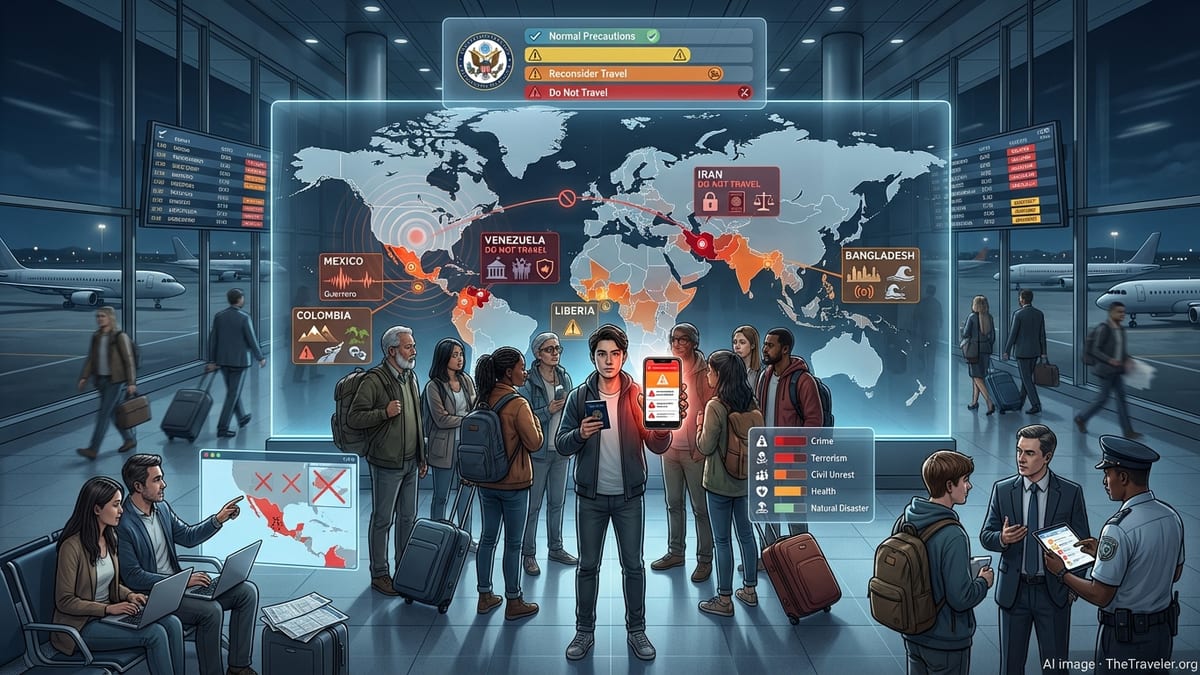
Advisories Lag Behind on-the-ground Changes
Recent coverage of a Philippine Economic Briefing event in Davao City on August 24, 2026, highlights MinDA’s concern that foreign governments continue to flag large parts of Mindanao as high risk based on incidents that peaked several years ago rather than current conditions. The comments, delivered by MinDA Assistant Secretary and Deputy Executive Director Romeo Montenegro, focused on how these perceptions still cast a shadow over the island’s growing portfolio of tourism and investment opportunities.
Publicly available information shows that many partners classify wide swaths of Mindanao at stricter warning levels than the rest of the Philippines. The United States, for example, maintains guidance to reconsider travel to much of Mindanao, while treating most of the country at a more moderate “exercise increased caution” level overall. Similar patterns appear in advisories from the United Kingdom, New Zealand, Canada and others, which continue to single out western and central provinces and the Sulu archipelago for the highest levels of concern.
Regional planners argue that such blanket categorizations do not always reflect a differentiated security picture on the island. Safer urban hubs such as Davao City, Northern Mindanao’s growth centers and popular surf destination Siargao have attracted increasing numbers of domestic and foreign visitors in recent years, even as some foreign advisories still treat Mindanao largely as a homogenous high-risk zone.
Security Landscape Shows Signs of Improvement
Conflict and terrorism remain part of Mindanao’s history, but official documents and international reporting point to gradual improvements in recent years. A United Nations report on children and armed conflict notes that in July 2023 the Philippine government lifted the state of national emergency in Mindanao that had been in place since 2016, describing the move as intended to ease travel restrictions and spur economic activity in the region.
At the same time, security forces have continued operations against remaining extremist factions, contributing to a decline in high-profile urban attacks since the Marawi siege in 2017. While sporadic clashes still occur in remote areas, many city centers and key tourism corridors have reported relative calm, enabling the expansion of infrastructure, new hotels and domestic route networks that support tourism flows.
Public guidance from several foreign ministries reflects a more nuanced picture than a decade ago, carving out exceptions for destinations that have demonstrated stronger security and governance. Current U.S. advisories, for instance, treat Davao City, Davao del Norte, Siargao Island and the Dinagat Islands differently from higher-risk parts of Mindanao, aligning with assessments that these areas have benefited from sustained peace and order efforts.
Mixed Signals From Foreign Governments
A patchwork of advisory levels across different countries has created a complex information environment for potential visitors. Some partners have begun to ease restrictions on parts of Mindanao, while others maintain longstanding warnings. The Japanese Ministry of Foreign Affairs revised its travel guidance for the island in late 2024, and subsequent public communications from its consular office in Davao explained that several areas moved to lower-risk categories for Japanese nationals.
New Zealand’s official travel advice, updated in December 2025 and still current as of mid-2026, retains “avoid non-essential travel” notices for parts of Mindanao but distinguishes these from the rest of the Philippines, where travelers are simply urged to exercise increased caution. The United Kingdom’s Foreign, Commonwealth and Development Office goes further by advising against all travel to certain western and central Mindanao provinces and to the Sulu archipelago, reflecting an overall conservative reading of security risks.
Canada, in guidance revised in late 2025, also highlights Mindanao as an area where travelers should be particularly vigilant, with some portions marked in higher-risk categories on publicly accessible maps. These varying positions illustrate the central point raised by MinDA: while domestic indicators suggest a steadily improving climate in many Mindanao localities, foreign risk mapping often changes slowly and leans heavily on worst-case scenarios and legacy data.
Economic Stakes for Tourism and Investment
The debate over travel advisories is not only about perception; it has material implications for Mindanao’s economic trajectory. Provincial reports, including those from Misamis Occidental, describe international investor missions visiting the island in early 2026 despite the presence of “red” advisories on some foreign government websites. Local officials in these accounts frame such visits as a sign that business communities are beginning to look beyond generic warnings to assess specific locations and projects on their own merits.
Mindanao’s development agencies regularly emphasize the island’s role in national growth, pointing to strong agricultural output, expanding logistics facilities and the potential for tourism offerings that range from dive sites and surf breaks to cultural and eco-tourism circuits. Travel advisories that treat the island largely as a single high-risk unit can complicate efforts to market these opportunities, particularly to risk-averse tour operators or investors constrained by corporate security policies.
Some governments, however, are increasingly engaging in dialogue with Philippine counterparts on the question of risk calibration. MinDA’s own news releases in recent years have highlighted consultations with diplomatic missions and international partners, including efforts to share updated security data and to organize exposure trips that showcase what planners describe as “normalcy” in many Mindanao cities. These initiatives seek to complement ongoing peacebuilding and development programs by gradually reshaping international perceptions.
Balancing Caution With a Changing Reality
Analysts generally acknowledge that travel advisories are designed as conservative tools, intended to err on the side of caution and to cover a wide range of potential scenarios. Governments often require consistent, multi-year trends before significantly lowering risk levels, a process that can lag behind improvements felt by residents and domestic travelers. In Mindanao’s case, this built-in caution helps explain why advisories may continue to highlight areas of concern even as headline incidents become less frequent.
For travelers and travel companies, this creates a dual responsibility: to take official guidance seriously while also consulting up-to-date, location-specific information. Many advisories themselves encourage this approach, urging visitors to monitor local media, maintain contact with tour providers and avoid areas where conflict or law enforcement operations are underway. Such recommendations are especially relevant in parts of western Mindanao and the Sulu archipelago, where security challenges remain more acute.
Mindanao’s development planners, for their part, appear focused on narrowing the gap between external perceptions and on-the-ground realities through data sharing and engagement with foreign missions. Whether these efforts translate into broad revisions of foreign advisories will likely depend on continued stability, progress in peace processes and the absence of major incidents that could reinforce long-held stereotypes about the island.
SunStar Davao coverage of MinDA briefing
U.S. Department of State travel advisory for the Philippines
New Zealand SafeTravel advice for the Philippines