


Fort Lauderdale has long been a gateway to South Florida sunshine, but for first-time visitors it can feel like a lot to take in: miles of beaches, a busy cruise port, a major airport, and a maze of canals that earned it the nickname “Venice of America.” This guide walks you through the essentials, from choosing the right beach base and exploring Las Olas and the Riverwalk to using the Water Taxi, picking a hotel near the airport or cruise port, planning nights out, staying safe, and making the most of your first South Florida vacation.
Get the latest updates straight to your inbox!
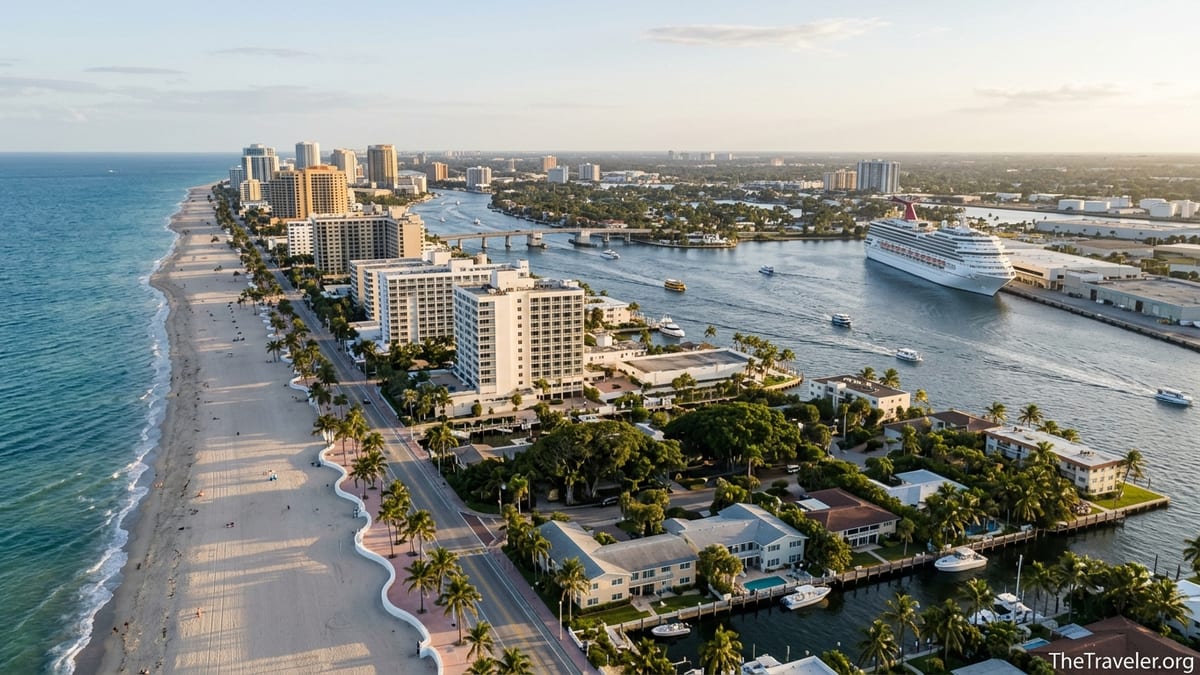
Getting Oriented: Neighborhoods, Seasons, and First Impressions
Most first-time visitors experience Fort Lauderdale as a triangle connecting three hubs: Fort Lauderdale Beach along A1A, the downtown and Las Olas corridor along the New River, and Port Everglades with Fort Lauderdale–Hollywood International Airport just west of the port. In practice, this means you can land at the airport and be at your beach hotel or cruise terminal in 10 to 15 minutes by taxi when traffic is light, which is a big reason many cruisers choose to fly in the day before sailing to avoid tight connections.
For a beach-focused visit, the most convenient area is the strip along North Fort Lauderdale Beach Boulevard, where you will find mid-range chains, upscale resorts, and smaller boutique properties across from the sand. If you care more about dining, nightlife, and walkable streets, you might base yourself near the eastern end of Las Olas Boulevard or close to the Riverwalk, where low-rise waterfront condos, hotels, and restaurants line the canal. Families who want space and easier parking often look just north and south of the main strip, near neighborhoods like Harbor Beach, Lauderdale-by-the-Sea, or Dania Beach, which have quieter sands and more vacation rentals.
Winter and early spring, roughly December through April, are peak season, with higher hotel rates, heavier traffic, and more cruise ships in Port Everglades. Expect beach chairs to fill by late morning and restaurant reservations to be essential on Friday and Saturday nights. Late spring and fall offer a compromise of warm water, fewer crowds, and often lower prices, though you should be mindful of the Atlantic hurricane season, which runs from June through November, and build some flexibility into your plans, especially if you are cruising.
Fort Lauderdale has a more relaxed pace than nearby Miami, but it has been steadily growing and urbanizing. Downtown now includes high-rise apartments, glassy new towers, and a Riverwalk park that links cultural sites and dining along the water. If you last visited years ago, you may be surprised to find that the city feels more walkable in its core than it used to, with improved sidewalks and a growing streetcar-style shuttle network that connects key areas.
Enjoying Fort Lauderdale’s Beaches
Fort Lauderdale Beach is the classic oceanfront postcard: a wide, sandy shoreline, turquoise shallows, and a palm-lined promenade with the city’s signature low white wave wall. Lifeguard towers dot the main stretch between roughly Las Olas Boulevard and Sunrise Boulevard, and this is where you will find the densest cluster of hotels, beach bars, and rental stands offering umbrellas and loungers for a daily fee that is typically comparable to other major U.S. beach destinations. If you are staying at an oceanfront resort, some properties include beach chairs with the resort fee, so it is worth asking at check-in.
Just north of the busiest area, near Hugh Taylor Birch State Park, the feel shifts to a quieter, more local beach scene with more dunes and tree cover. Many families like to split their day between the park and the shore, renting a kayak or paddleboard on the park’s lagoon in the morning, then crossing under A1A to swim and build sandcastles in the afternoon. Parking at the park is usually less expensive than some beachfront garages, and it gives you access to restrooms and shaded picnic spots that can be a lifesaver with kids or older travelers in the midday heat.
To the south, around Harbor Beach and toward the entrance to Port Everglades, the shoreline becomes more residential, with a mix of private condos and a few resort enclaves. This area works well if you are looking for a quieter stay pre- or post-cruise and do not mind driving or ridesharing to the busier dining zones. It is also one of the closest beach areas to the cruise terminals, which can reduce transfer times on sailing day to just a few minutes by taxi when traffic cooperates.
Whichever stretch you choose, sun protection and hydration matter more than many first-time visitors expect. UV levels stay high even on hazy days, and there is often a breeze off the ocean that can trick you into thinking the sun is softer than it is. Pack reef-friendly sunscreen, a wide-brimmed hat or cap, and a light long-sleeve shirt if you are prone to burning, and plan indoor breaks in the early afternoon, when the combination of temperature and humidity is at its peak.
Las Olas Boulevard, the Riverwalk, and the Water Taxi
Las Olas Boulevard is the city’s best-known strolling street, running from the beach area west into downtown and the financial district. The eastern stretch near the Intracoastal Waterway is a mix of boutiques, sidewalk cafes, and galleries, which makes it an easy first-night destination when you want to stretch your legs and ease into the city. Many visitors start with an early dinner at an outdoor table, watching a steady parade of convertibles, yachts, and pedestrians on their way to and from the beach.
West of the low bridge over the Intracoastal, Las Olas becomes more residential, with canals slicing south toward the New River. Here you will see some of the waterfront homes and yachts that define Fort Lauderdale’s “Yachting Capital” identity. A short walk or rideshare from Las Olas brings you to the Riverwalk, a landscaped path along the New River that connects parks, condos, museums, and a growing set of bars and restaurants. Evening walks here often include music floating from waterfront patios and a constant procession of pleasure boats heading out for sunset cruises or returning from the ocean.
One of the most distinctive ways to explore Las Olas and the Riverwalk area is by using the Water Taxi, a hop-on, hop-off boat service that follows a route along the Intracoastal and New River. Routes typically include multiple stops near major hotels, the beach, Las Olas, and shopping districts, allowing you to treat the canals as a kind of floating bus network. An all-day pass generally costs in the range of what you might spend on a couple of longer rideshares, and many visitors feel the added commentary from captains, who often point out notable homes, film locations, and local history, is worth the difference.
The Water Taxi can also be a practical tool for avoiding road congestion, especially on busy weekends or during events like the Fort Lauderdale International Boat Show, when traffic on 17th Street and A1A gets particularly heavy. Some travelers even use an early Water Taxi run as a kind of orientation tour on their first morning in the city, riding a full loop to get a sense of how the beach, Las Olas, and downtown fit together before deciding where to spend more time on foot.
Where to Stay: Beachfront, Las Olas, and Cruise Port Options
Choosing the right hotel area is one of the most important decisions for a first-time visit, because distances that look small on a map can feel longer once traffic and drawbridges are factored in. Beachfront hotels along North Fort Lauderdale Beach Boulevard put you directly across from the sand, but you should expect resort fees, valet parking charges, and higher nightly rates, especially in winter and during spring break periods. In return, you can walk to the beach in minutes, and many properties offer ocean-view pools and on-site restaurants, which can be helpful if you are arriving from a long flight or cruise and do not want to navigate the city immediately.
Downtown and Las Olas area hotels, including those near the Riverwalk and Broward Center for the Performing Arts, position you closer to the dining and cultural scene while still being a short drive or Water Taxi ride from the beach. This can be a good compromise if you are splitting your time between beach days and evenings out, or if you are attending a conference at the convention center and want a more urban feel. Nightly rates here can sometimes be lower than directly on the sand, though garage parking and daily fees can add up, so it is wise to check the total estimated cost for your stay, not just the base room rate.
If you are in town mainly to cruise, many travelers opt for hotels near the 17th Street Causeway, State Road 84, or near the airport that market themselves as “airport and cruise port” properties. These often provide simple perks that matter to cruisers, such as early breakfast hours on sailing days, luggage storage, or shuttle services to Port Everglades for a per-person fee. Some hotels bundle parking and shuttle transfers into pre-cruise packages that can be cost-effective if you are driving in and leaving your car for the week, compared with paying the daily rate at the official port garages.
Vacation rentals are common throughout the canal neighborhoods, from modern townhomes with private docks to older Florida bungalows. These can make sense for extended families, groups traveling together, or visitors planning a week-long stay before or after a cruise. When booking, pay attention to cancellation policies in case of tropical weather disruptions, and double-check whether a rental includes essentials such as beach gear, parking, and access to a pool, as amenities can vary significantly from one property to another.
Nightlife, Dining, and Family-Friendly Activities
Fort Lauderdale’s nightlife is more relaxed than South Beach but still active, with most first-timers gravitating to three main zones after dark: the beachfront strip, Las Olas Boulevard, and sections of the Riverwalk and Himmarshee Village downtown. Beachfront venues range from casual tiki bars attached to hotels to open-air patios offering live music and ocean views. Dress codes are generally resort casual, with sandals and light summer clothing widely accepted, though some rooftop bars and finer restaurants prefer closed-toe shoes and collared shirts in the evenings.
Las Olas offers a mix of upscale and laid-back dining: seafood restaurants showcasing local catches, Italian trattorias with sidewalk seating, wine bars with small plates, and dessert shops popular with families. Many restaurants put tables out under awnings and umbrellas, so you can dine al fresco almost year-round. If you are traveling with a group that has varied tastes, this is one of the easiest areas to wander until you find a menu that suits everyone, from creative small plates to burgers and pizzas for kids.
For families and travelers who prefer quieter evenings, Fort Lauderdale offers a variety of activities that do not revolve around bars. Early evening river cruises, including sightseeing boats and smaller gondola-style tours, appeal to multigenerational groups who want to see the skyline light up without walking long distances. Nearby attractions such as the Museum of Discovery and Science or the Bonnet House Museum and Gardens provide shaded, educational outings that work well on days when everyone needs a break from direct sun. Many families also schedule a half-day Everglades airboat tour from Fort Lauderdale or neighboring cities, combining wildlife viewing with a chance to experience the region’s unique ecosystem.
Dining prices run the gamut from inexpensive taco stands and beachside snack bars to special-occasion restaurants perched over the Intracoastal. A realistic mid-range dinner for two at a casual sit-down restaurant typically includes shared appetizers, main courses, and nonalcoholic drinks at a cost in line with other major U.S. coastal cities, before tax and tip. To keep costs in check, many visitors plan at least one or two self-catered meals if they have a kitchenette, pick up grab-and-go lunches for beach days, or target early bird and happy hour specials that are common along the beach and Las Olas, particularly on weekdays.
Port Everglades and Fort Lauderdale–Hollywood International Airport
Port Everglades is one of the busiest cruise ports in the world, with multiple ships often turning around on the same day during peak season. For first-time cruisers, the main advantage is how close the port sits to the rest of the city. The cruise terminals are only a short drive from Fort Lauderdale–Hollywood International Airport, downtown hotels, and the beachfront, which simplifies travel days. In practical terms, this means many travelers feel comfortable flying into Fort Lauderdale the day before their cruise, spending an evening at the beach or on Las Olas, and then taking a short taxi, rideshare, or hotel shuttle to the ship on embarkation morning.
Because the port spans several entrances and terminals, it is important to know your ship and terminal assignment before you set out, and to watch for electronic signs that direct vehicles to the correct area. On heavy cruise days, traffic around the 17th Street Causeway can back up, especially in late morning when departing and arriving passengers overlap. To reduce stress, many experienced cruisers aim to arrive at the port earlier in their designated arrival window, keeping a buffer of at least a couple of hours between their planned embarkation time and any fixed commitments like spa appointments on board.
Fort Lauderdale–Hollywood International Airport has grown in recent years, serving a mix of low-cost and legacy airlines with domestic and international routes. It is compact enough that walking between some terminals is feasible, but luggage and heat can make that less appealing, so many travelers rely on the inter-terminal shuttle system. With cruises returning early in the day, returning passengers commonly book flights departing from late morning onward to allow for disembarkation, customs, and ground transportation, with a bit of cushion for port congestion. If you book an early morning departure after your cruise, it can be wise to use self-assist disembarkation and be among the first off the ship to maximize your time margin at the airport.
For visitors renting cars, both the airport and port area offer on-site and nearby facilities. Many people choose to pick up a rental at the airport upon arrival, drop luggage at their hotel, and use it for day trips to nearby beaches or shopping areas, then return the car before cruising. Others rely on taxis and rideshares for their entire stay, which is increasingly common as parking fees rise. The choice often comes down to how many side trips you want to make beyond Fort Lauderdale itself, such as visiting Miami, West Palm Beach, or the Everglades during a longer South Florida itinerary.
Safety, Practical Tips, and First-Time South Florida Advice
Fort Lauderdale is generally accustomed to tourism, and most visitors who take basic precautions have uneventful stays. The primary safety concerns are less about crime and more about sun, heat, traffic, and water conditions. It is wise to swim near lifeguard towers, pay attention to colored flags that signal surf and rip current risks, and heed any posted advisories related to jellyfish or strong currents, which can appear at times, particularly after storms or shifts in wind.
Like many busy coastal cities, Fort Lauderdale has pockets that feel more comfortable than others after dark. Sticking to well-lit, busy areas such as the main beachfront strip, central sections of Las Olas, and the core of the Riverwalk helps most first-time visitors feel secure. As in any urban destination, it is sensible to keep valuables to a minimum at the beach, use the in-room safe at your hotel for passports and extra cash, and remain attentive in crowded spaces such as festivals, busy bars, and cruise embarkation areas.
Traffic and parking require some planning, especially if your visit coincides with major events like the boat show, spring break periods, or big cruise weekends. Allow extra time when crossing the 17th Street Causeway or other drawbridges, which open for vessel traffic at scheduled times and can cause short delays. Many locals and repeat visitors plan their days to avoid the heaviest beach-bound traffic by arriving earlier in the morning and returning to their hotels or heading to dinner before the largest crowds spill out.
For broader South Florida itineraries, Fort Lauderdale pairs well with Miami, the Keys, and the Gulf Coast. If you are driving between cities, factor in toll roads and potential congestion, especially along I-95 and the Palmetto Expressway around Miami. Consider building a flexible day at the end of your trip as a buffer in case of weather disruptions during hurricane season or other travel hiccups. Above all, pace yourself: between the heat, the beach, the nightlife, and possible cruise days on either side, a South Florida vacation can be surprisingly tiring if you overschedule.
FAQ
Q1. Is Fort Lauderdale a good base for exploring the rest of South Florida?
Yes, Fort Lauderdale works well as a base because it sits roughly between Miami and Palm Beach, has a major airport and cruise port, and offers easy highway access for day trips to places like Miami Beach, Hollywood, Boca Raton, and the Everglades.
Q2. How many days should a first-time visitor spend in Fort Lauderdale?
Many first-time visitors find that three to four full days is enough to enjoy the beach, explore Las Olas and the Riverwalk, take a Water Taxi ride, and fit in one or two side trips or an Everglades tour without feeling rushed.
Q3. Do I need a car to get around Fort Lauderdale?
You can manage without a car if you base yourself in a central area and rely on taxis, rideshares, the Water Taxi, and hotel shuttles, but a rental car becomes more useful if you plan multiple day trips beyond Fort Lauderdale or are staying in quieter neighborhoods away from the main beach and downtown.
Q4. What is the best time of year to visit Fort Lauderdale?
Winter and early spring offer the driest weather and mild temperatures but also bring the highest prices and biggest crowds, while late spring and fall can deliver warm water and fewer visitors, with the caveat that they fall within hurricane season so flexible plans and travel insurance are helpful.
Q5. Is Fort Lauderdale safe for families with children?
Yes, many families visit Fort Lauderdale each year and enjoy lifeguarded beaches, parks, and child-friendly attractions; as with any urban coastal destination, supervising kids near water, using sun protection, and staying in well-trafficked areas at night will help keep the experience smooth.
Q6. How close is Fort Lauderdale–Hollywood International Airport to Port Everglades?
The airport and cruise port are only a few miles apart, and in light traffic the drive can take around 10 to 15 minutes by taxi or rideshare, which is why many cruisers choose to fly into Fort Lauderdale instead of more distant airports when sailing from Port Everglades.
Q7. Can I visit the beach if I am only in town for a night before my cruise?
Yes, if you arrive by early afternoon, it is easy to drop bags at an airport or 17th Street hotel, head to Fort Lauderdale Beach by taxi or rideshare for a few hours in the late day light, and still return in time for dinner and a good night’s sleep before embarkation.
Q8. What should I pack for a first trip to Fort Lauderdale?
Packing light, breathable clothing, swimwear, reef-friendly sunscreen, a hat, sunglasses, comfortable walking shoes or sandals, and a light layer for strong air conditioning will cover most needs, with an upgrade to slightly dressier resort wear if you plan on upscale dining or nightlife on Las Olas or the beachfront.
Q9. Is the Water Taxi worth it for first-time visitors?
Many first-timers find the Water Taxi worthwhile because it doubles as transportation and a narrated sightseeing tour, giving an overview of the waterways, mansions, and downtown skyline while connecting the beach, Las Olas, and other key stops in one ticketed route.
Q10. Should I stay near the beach, Las Olas, or the cruise port?
If your priority is sand and ocean views, stay on or near Fort Lauderdale Beach; choose Las Olas or downtown for dining and nightlife; and consider airport or 17th Street hotels if your main focus is cruising and you want simple, quick transfers to Port Everglades and the airport.