


For many travelers, especially those moving between countries for weeks or months at a time, the ability to move cash quickly can be as important as a good flight deal. When cards fail, bank transfers stall, or you need to get emergency funds to yourself or someone else abroad, two names usually appear first: MoneyGram and Western Union. Both are global heavyweights in cash transfers, but they work slightly differently and can suit very different kinds of trips. This guide walks through how each service actually feels to use on the road, so you can decide which one makes more sense for your next journey.
Get the latest updates straight to your inbox!
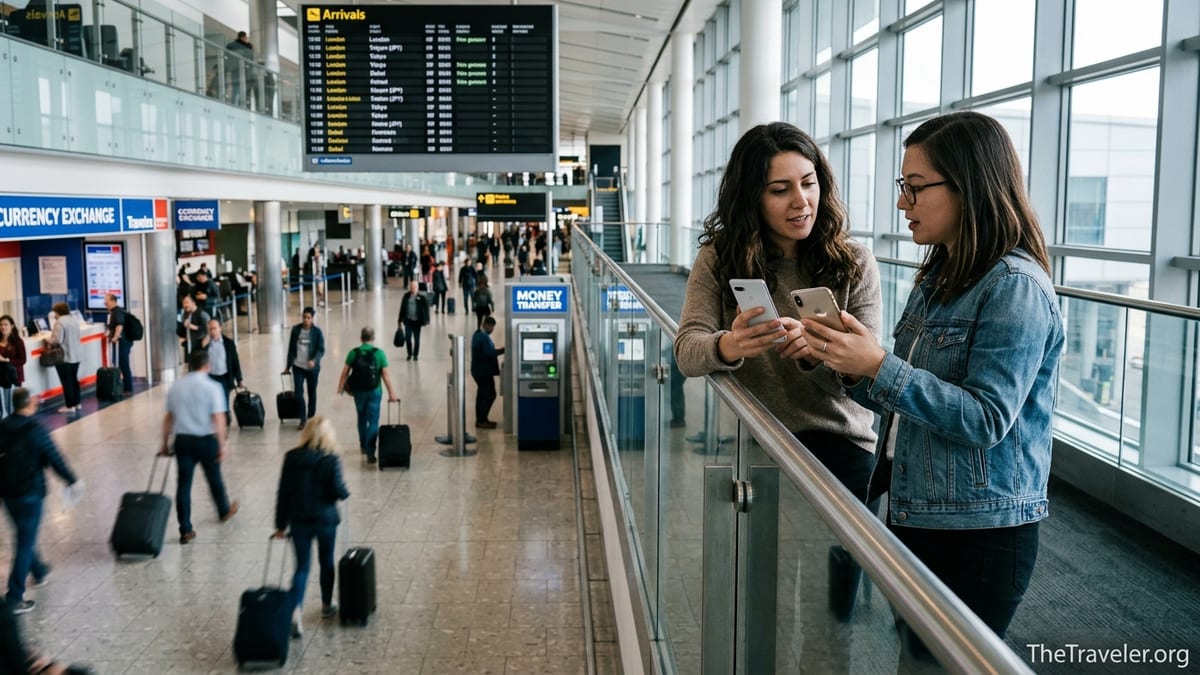
MoneyGram and Western Union at a Glance
MoneyGram and Western Union are both long established money transfer companies that specialize in moving cash across borders. MoneyGram, headquartered in Dallas, operates in more than 200 countries and territories and reports roughly half a million retail locations worldwide as of 2026, from small convenience shops in Mexico to supermarkets in Europe. Western Union has a similarly broad footprint, with hundreds of thousands of locations in over 200 countries, and is still the more instantly recognizable brand for many travelers in Latin America, Africa, and parts of Asia.
For a traveler, what matters is not just how big each network is on paper, but what that looks like in real life. In a mid sized city like Medellín, Colombia, you will typically find Western Union counters embedded in large grocery stores and dedicated remittance shops in the city center, while MoneyGram often appears inside pharmacies and small electronics stores. In a smaller town in Morocco or the Philippines, you might only find one or two agents of either brand, and opening hours can be irregular. The key difference most travelers feel is that Western Union tends to be slightly more visible in very remote places, while MoneyGram leans on partnerships with banks and mobile wallets in larger markets.
Both companies now offer modern online platforms and mobile apps where you can send money directly to bank accounts or mobile wallets in many countries, not just for cash pickup. A traveler in New York can, for example, send funds from a debit card in the Western Union app to a friend’s bank account in Spain, or use the MoneyGram app to send to a mobile wallet in Kenya. That means you may be able to do the entire transaction from your phone while sitting in an airport lounge, and your recipient collects at an agent or in their bank within minutes to a few hours, depending on the route.
Despite those similarities, the way fees, exchange rates, limits, and in person experiences work can differ meaningfully. When you are stranded after a card skim on a Friday night in Bangkok or trying to help a family member who lost their wallet in rural Guatemala, those small differences suddenly matter a lot.
Fees and Exchange Rates: What a Traveler Really Pays
Both MoneyGram and Western Union make money from two main sources: an upfront transfer fee and a margin built into the exchange rate. The transfer fee is the easier part to see. For example, Western Union itself illustrates that if you send 1,000 US dollars and the fee is 5.99 dollars, you will pay a total of 1,005.99 dollars out of pocket. MoneyGram typically follows a similar pattern, with fees for a few hundred dollars often ranging from a few dollars to around 10 dollars, depending on whether you use a bank, card, or pay in cash and whether the recipient is collecting cash or receiving to an account.
The exchange rate margin is where many travelers underestimate the cost. If the mid market rate for US dollars to Mexican pesos is around 1 USD to 18.00 MXN, you might see something closer to 1 USD to about 17.80 MXN within these services on a typical day, sometimes a bit better or worse depending on competition and promotions. That small difference of 0.20 MXN per dollar does not sound like much, but on a transfer of 1,000 dollars you are effectively paying roughly 200 pesos extra compared with the pure market rate. Western Union and MoneyGram both quote live rates in their apps before you confirm, so it is worth checking both when you have time and decent internet.
Imagine you are in Los Angeles and need to get emergency funds to a friend in Oaxaca, Mexico, who just had their wallet stolen. You pull up both apps. Western Union quotes a fee of around 5 to 10 dollars for a 500 dollar transfer to cash pickup, and MoneyGram offers something in a similar range. The deciding factor may be that Western Union’s peso rate is slightly weaker that day, so the recipient ends up with a bit less in pesos, even if the nominal fee is lower. Over a year of regular transfers while living abroad, that can add up to the equivalent of several restaurant meals or domestic train rides.
Travelers should also keep an eye on card related fees if using branded debit products. For example, MoneyGram warns that using its debit card at an international ATM can incur a fixed charge around 3 dollars plus a percentage based foreign transaction fee on top of any fee the local ATM owner charges, and you are still converting at MoneyGram’s exchange rate. Western Union branded cards and bank cards linked in its app can have similar bank imposed foreign transaction surcharges. Unless you have no other option, it is usually cheaper to use a dedicated low fee travel card for ATM withdrawals and keep MoneyGram or Western Union mainly for transfers.
Speed, Limits, and Reliability on the Road
Speed is one of the main reasons travelers turn to MoneyGram or Western Union instead of a traditional bank transfer. In many popular routes, such as sending from the United States to Mexico, the Philippines, or India, both providers can deliver cash pickup or wallet credit within minutes if you fund the transfer with a debit or credit card. Bank funded transfers tend to be cheaper but may take longer, often several hours to a day or more depending on time zones and local banking hours. For an American traveler in Lima who needs to pay a trekking guide the same day, a minutes based cash pickup transfer is often worth the extra fee.
Transfer limits matter as soon as you are dealing with bigger expenses, like placing a deposit on a long term apartment rental or paying a language school. Western Union commonly caps online transfers from the United States at around 5,000 dollars per transfer for many corridors, at least for new users, while some countries like Australia advertise higher limits domestically. MoneyGram tends to support similar ranges, though actual limits depend heavily on where you and your recipient are located and how thoroughly your identity has been verified. If you suddenly try to send 10,000 or 11,000 dollars to pay for a vehicle or tuition, expect additional compliance checks or outright blocks until you speak with support.
Reliability can vary by country and even by neighborhood. In major hubs like Bangkok, Istanbul, or Johannesburg, both companies usually maintain multiple agent locations, and you can often walk into a shopping mall and find a Western Union or MoneyGram sign within minutes. In practice, travelers report that some locations listed online may have closed, moved, or stopped working with the brand, especially after the pandemic reshaped the retail landscape. That means you should not rely blindly on the first pin that appears in the locator map the morning your rent is due in a foreign city. Where possible, call ahead or have a backup agent address in the same district.
On the digital side, both apps have improved but can still be finicky with foreign IP addresses or when your phone number does not match the country you are sending from. A traveler based in Europe but using a US registered phone, for example, may need to pass extra security checks. It is wise to set up your account and complete any required identity verification before you travel, so if you need to send or receive quickly from the road, you are not stuck waiting on document approval while your hostel bill is overdue.
Coverage and Payout Options in Real Destinations
Coverage is a point where Western Union historically had a slight edge, particularly in tiny towns and rural areas where its yellow and black logo has become part of the street scenery. That edge is narrowing as MoneyGram expands. As of 2026, MoneyGram emphasizes its presence across more than 200 countries and territories and hundreds of thousands of retail outlets, and it increasingly leans on partnerships with banks, mobile wallets, and even cryptocurrency platforms to widen its reach. Western Union, meanwhile, continues to advertise one of the largest cash pickup networks in the world, tapping into post offices, supermarkets, and standalone agents.
Consider a backpacker route through Southeast Asia. In Bangkok or Ho Chi Minh City, you can usually find both brands within a couple of city blocks. Western Union often appears in larger banks and shopping centers, while MoneyGram might sit inside mobile phone shops and travel agencies. Move to smaller islands or highland towns in Vietnam or Indonesia and Western Union tends to show up more frequently, though in some tourist focused areas MoneyGram partners with popular convenience store chains that stay open later than banks. If you do a lot of last minute evening transfers, those late opening hours can make MoneyGram the more convenient option.
The mix of payout options is just as important as the raw number of locations. In West Africa, for example, Western Union has built partnerships that allow funds to land directly into mobile money wallets, which are a daily tool for locals who do not use traditional bank accounts. MoneyGram, by contrast, has leaned heavily into connecting its retail network with digital wallets powered by newer payment rails. That means a traveler supporting family in Ghana or Nigeria might be able to send money with MoneyGram so that relatives can cash out through a partner wallet app or receive funds onto a prepaid card rather than lining up for cash.
Different options matter during crises too. If widespread protests or a natural disaster temporarily shut down brick and mortar agents in a city, having the ability to route funds to a bank account, prepaid card, or wallet instead of relying solely on cash pickup can be the difference between being stranded and making it out. When assessing whether MoneyGram or Western Union is better for your specific trip, look at the exact country pair and ask: Can I send to a bank? To a mobile wallet? To a card? Or is cash pickup the only realistic path?
User Experience, Apps, and Security for Travelers
Both MoneyGram and Western Union have spent the last several years upgrading their mobile apps and websites, in part to compete with younger digital transfer companies. Western Union’s app is widely regarded as slightly more polished in many developed markets, especially for users in North America and Western Europe. It typically offers a clear step by step flow where you select the destination country, choose payout method (cash pickup, bank, wallet), see fees and exchange rates, then confirm with a saved payment method like a debit card or Apple Pay. For a traveler sitting in a hostel common room with limited time before a tour, that kind of clarity matters.
MoneyGram’s app has improved but can still feel less intuitive in some markets. The company has also experimented with connecting its network to digital assets and stablecoin rails, which will not matter to every traveler but can be attractive for those already comfortable holding digital dollars and simply needing a cash out point. For instance, some crypto platforms now let users withdraw balances as local cash through MoneyGram locations in over 100 countries, drawing on its network of nearly 500,000 physical outlets. That may make MoneyGram more interesting if you are a long term nomad who gets paid in digital assets and wants a convenient off ramp while in countries with strict banking controls.
On security, both brands are heavily regulated in major markets and use standard protections like encryption, identity checks, and fraud monitoring. From a traveler’s perspective, the biggest risk is not that the companies themselves will mishandle funds, but that scammers will try to exploit the systems. Scams involving requests to send money via Western Union or MoneyGram to a stranger, a fake apartment host, or an online seller are common. Neither company can fully reverse a cash pickup once the money has been collected with a valid ID, so you should only send to people you genuinely know or verified businesses with which you have a trusted relationship.
Practical security steps for travelers include using strong unique passwords on the apps, enabling additional verification steps when available, and never sharing transaction reference numbers or codes in unsecured channels. If you lose your phone on the road, immediately log into your account from another device if possible and reset your password or contact customer support to block activity. Because many travelers use cybercafes or hostel computers, it is also wise to avoid logging into your transfer accounts on public machines unless absolutely necessary.
Real World Scenarios: When Each Service Makes Sense
Different trip styles call for different tools. Take a common scenario: You are an American digital nomad based in Lisbon for six months, and your parents in the United States are not comfortable with modern app based banks. Once a month, they want to send you a few hundred dollars as a cushion, and they insist on paying cash at a grocery store in their small Midwestern town. If that town has a Western Union counter inside the local supermarket but no active MoneyGram agent nearby, Western Union is the obvious choice. You could receive the money directly into your European bank account, avoiding the need to pick up cash at all.
Now reverse the situation. You are a nurse from the Philippines working in Dubai and frequently traveling between the Gulf and Southeast Asia. Your family back home prefers to receive money in a mobile wallet so they can pay utilities and school fees without waiting in line at a branch. If MoneyGram has stronger ties with your family’s preferred wallet provider, or runs regular promotions on transfers to that wallet, it may be the better default for you, even if Western Union has more total agents in your hometown.
Another example: You are on a backpacking trip through Central America and your debit card is suddenly blocked in Guatemala. Your bank can send a replacement card to your hostel, but it will take a week. In the meantime, you need a quick injection of funds from a friend in the United States. If your hostel owner confirms there is a Western Union agent in the same block but the nearest MoneyGram is in a town 30 kilometers away, it makes far more sense for your friend to send via Western Union, even if the fee is a few dollars higher. The cost in time and transport to reach the other agent would erase any savings.
Conversely, if you are house sitting in a mid sized European city like Porto or Kraków and both brands have multiple nearby locations, the better option might simply be the one that gives you the stronger exchange rate on that particular day. In those cities, it is easy to check the apps side by side over a cafe Wi Fi connection and choose the cheaper combination of fee and rate for each individual transfer instead of committing to one brand for your entire trip.
The Takeaway
For travelers, MoneyGram and Western Union are less about brand loyalty and more about having flexible backup plans when other payment methods fail. Western Union still has a slight real world edge in sheer visibility and familiarity, particularly in very small towns and rural areas where its logo has been a fixture for decades. Its app is generally smooth and well suited to travelers sending from North America and Europe to bank accounts, wallets, or cash pickup in popular destinations.
MoneyGram, on the other hand, has grown into a comparably large network and is increasingly focused on linking its physical locations with digital wallets, bank partners, and even stablecoin based payment rails. For travel styles that lean on mobile money, prepaid cards, or crypto funded incomes, that can make MoneyGram feel more future oriented. In major cities and heavily traveled corridors, MoneyGram’s combination of competitive rates and multiple payout options can make it a very strong alternative.
The smartest strategy is to treat both services as tools in your travel financial kit rather than as a single forever choice. Before a long trip, create and verify accounts with both MoneyGram and Western Union, familiarize yourself with their apps, and test a small transfer so you understand how pickup or bank credit works in your typical destinations. Then, when a wallet is lost on a night bus in Peru or a remote guesthouse only accepts cash, you can quickly compare prices and coverage routes and pick the service that gets you or your loved one out of trouble fastest at the lowest practical cost.
Ultimately, the better service for your travels is the one that is actually available, open, and affordable when you most need it. Checking local agent locations in your planned destinations, monitoring fees and exchange rates in the apps, and having a backup plan for emergencies will matter more than the name printed on the shop window.
FAQ
Q1. Which is cheaper for travelers, MoneyGram or Western Union?
In practice, neither is always cheaper. Costs depend on the corridor, whether you send to cash or a bank, and how you fund the transfer. On some popular routes, Western Union might offer a lower upfront fee but a slightly weaker exchange rate, while MoneyGram does the opposite. The best approach is to check both apps for your specific route and amount before confirming each transfer.
Q2. Which service has more locations worldwide?
Both cover more than 200 countries and territories and have hundreds of thousands of agents. Western Union has long been considered the largest cash pickup network, while MoneyGram reports a rapidly expanding footprint with roughly half a million retail points and extensive digital endpoints. From a traveler’s perspective, availability in your exact town or neighborhood matters more than the global headline number.
Q3. Is it faster to use MoneyGram or Western Union for emergencies?
For many popular routes, both can deliver cash pickup or wallet credit within minutes when funded with a card. Bank funded transfers can take longer. In an emergency such as a stolen wallet, the faster option is usually whichever brand has an open agent closest to you, not the theoretical speed rating of the service itself.
Q4. Can I send money to myself while traveling?
Yes. Both MoneyGram and Western Union allow you to send money in your own name and then pick it up in another country with your passport or other accepted ID. This can be useful if your card does not work abroad or if you want to avoid using ATMs in a high fraud area. Be sure your name on the transfer matches your travel documents exactly.
Q5. Are MoneyGram and Western Union safe to use on the road?
Both are regulated, long established companies and generally safe when used correctly. The main risks come from scams and human error. Never send money to strangers or to secure online purchases, be careful with your transaction reference numbers, and only use verified agents listed by the official locator tools of each company.
Q6. Can I send directly to a bank account or mobile wallet instead of cash pickup?
Yes. In many countries, both services let you send to bank accounts or mobile wallets as well as traditional cash pickup. For example, you can often send from the United States to a bank account in Europe or to a mobile money wallet in parts of Africa or Asia. Availability varies by country pair, so check payout options for your destination in each app.
Q7. What identification do I need to pick up money abroad?
You usually need a government issued photo ID that matches the name on the transfer, such as a passport for international travelers. Some countries may also accept national ID cards or resident permits. The agent may ask for the transaction reference number and sometimes the sender’s name and amount. Always carry your passport for pickups outside your home country.
Q8. Are there limits to how much I can send while traveling?
Yes. Both MoneyGram and Western Union set limits per transfer and often per day or per month, depending on your verification status and the corridor. Online transfers from the United States to many destinations commonly cap around several thousand dollars per transaction, and larger amounts may trigger extra checks. For big expenses like tuition or car purchases, plan ahead and discuss limits with customer support.
Q9. Is it better to use these services or just withdraw from an ATM?
For everyday personal spending, a low fee travel debit card used at local ATMs is often cheaper than repeated money transfers, especially if your bank refunds ATM fees and does not charge foreign transaction surcharges. MoneyGram or Western Union become more attractive when you need to get funds to someone else, when ATMs are unreliable, or when your cards are blocked or lost.
Q10. Should I set up MoneyGram or Western Union before I leave home?
It is a good idea to set up and verify accounts with at least one, preferably both, before you travel. Completing identity checks and testing a small transfer while you are still at home means that if you face problems abroad, you can send or receive money quickly without waiting for documents to be approved from a foreign hotel or internet cafe.