


More news on this day
Several major international airlines are extending suspensions or reductions of their Dubai services as regional security tensions and airspace restrictions continue to disrupt one of the world’s busiest long-haul hubs.
Get the latest news straight to your inbox!
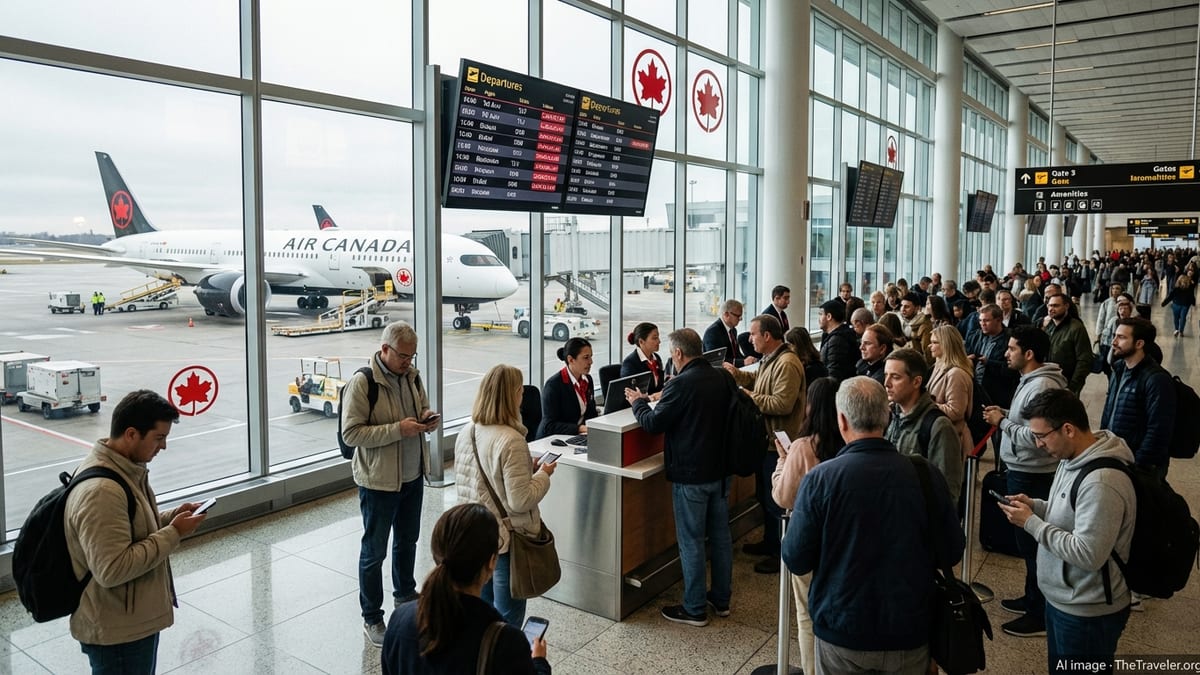
Foreign Carriers Slow to Return Despite Limited Reopening
Publicly available information shows that Dubai International Airport has moved from a period of full shutdown for foreign airlines to a limited reopening, but many global carriers have not fully reinstated flights. Industry data and regulatory notices indicate that the United Arab Emirates temporarily halted operations for non-UAE airlines in March after drone-related incidents near fuel facilities, then began a phased resumption of services.
While Emirates and flydubai now operate a significant share of reduced traffic, schedules compiled by aviation data providers and airport departure boards show that a number of European, North American and Asian airlines remain absent from Dubai’s rosters or are operating at sharply curtailed frequencies. Capacity figures suggest that Emirates and flydubai account for the overwhelming majority of available seats, leaving comparatively little room for foreign carriers while airspace limits remain in place.
Analysts quoted in regional aviation coverage describe the current pattern as a “UAE-first” recovery, in which local airlines rebuild networks more quickly than their international counterparts. Overseas carriers, by contrast, are weighing security assessments, insurance conditions and commercial demand before restoring pre-crisis levels of service to Dubai.
For passengers, this has translated into fewer non-stop options on traditional flag carriers and more reliance on connections via other Gulf hubs, Europe or Asia. Travel agents report that itineraries which previously routed naturally through Dubai are now being rebooked via alternative cities where airlines have greater operational flexibility.
Asia-Pacific and European Airlines Extend Suspensions
According to recent route updates in regional business media, several Asia-Pacific and European airlines have formally extended or clarified suspensions on Dubai routes into the northern summer season. Coverage of airline schedules notes that Singapore Airlines has pushed back the resumption of its Dubai services, initially paused when hostilities escalated in late February, and has advised customers that flights remain off sale until at least late May.
The same reports indicate that Hong Kong-based Cathay Pacific has halted services to Dubai and some neighboring markets until at least June, with the possibility of further adjustments depending on the evolution of regional airspace rules. These decisions are being taken against a backdrop in which aviation insurers and safety regulators are still reviewing risk assessments for corridors over the Gulf and parts of Iran.
European carriers are also moving cautiously. Travel advisories and schedule summaries compiled by consumer travel outlets suggest that some European airlines have removed Dubai from their summer timetables entirely, while others have trimmed weekly frequencies or shifted capacity onto alternative routes seen as less exposed to conflict-related disruptions. In many cases, suspended Dubai flights are not expected to return until late August, September or the end of the summer season.
Published guidance to passengers emphasizes that these are network-wide strategic decisions rather than short-term operational cancellations. Airlines are offering rebooking and refund options, but the extended nature of the suspensions means that travelers planning trips months ahead may still find limited or no availability on preferred carriers.
UAE Airlines Operate Reduced but Dominant Networks
In contrast to the cautious stance of many foreign carriers, UAE-based airlines have worked to maintain what they describe in public updates as “core networks” out of Dubai and other national hubs. Emirates and flydubai continue to account for the majority of flights at Dubai International, supplemented by Etihad Airways and Air Arabia from Abu Dhabi and Sharjah.
Operational summaries from airport authorities and airline statements to investors show that Emirates is currently serving fewer destinations than before the latest crisis, but is steadily rebuilding its schedule where airspace access allows. Travel rights organizations tracking delays and cancellations report that Emirates is flying a reduced number of routes compared with its usual global footprint, yet still connects Dubai to well over one hundred cities.
Flydubai and Air Arabia, both low-cost carriers focusing on regional and medium-haul markets, appear to be following a similar pattern. Published network maps indicate that they have restored many intra-Middle East and near-Asia routes, sometimes with fewer weekly frequencies or technical stops to avoid restricted airspace. However, connections into parts of the Levant and wider region remain constrained.
For travelers, this means that options with UAE airlines are comparatively more plentiful than with foreign competitors, but still subject to last-minute schedule adjustments. Passenger advisories stress the importance of monitoring flight status repeatedly, even after check-in, as operational conditions can change with limited advance notice.
Passenger Impact: Fewer Options, Longer Journeys
The continued suspension and curtailment of Dubai services by many global airlines is reshaping trip planning for both leisure and corporate travelers. Booking data shared in trade publications shows that some long-haul passengers who would previously have transited through Dubai are now being routed through other Gulf hubs or European gateways, often adding hours to total journey times.
Consumer travel guides note that itineraries between Asia and Europe, in particular, have been affected. With fewer foreign carriers operating into Dubai and some Asia-Pacific airlines extending suspensions, passengers are increasingly funneled through alternative hubs in Doha, Istanbul, Jeddah or major European capitals. This redistribution of traffic places additional pressure on already busy airports during the upcoming peak summer period.
Passengers whose flights are suspended entirely are generally being offered the choice of travel vouchers, date changes or refunds, depending on the fare rules and jurisdictions involved. Rights-focused organizations point out that in many cases, disruptions linked to regional security and airspace closures are classified as extraordinary circumstances, limiting eligibility for statutory compensation but not eliminating the obligation to provide rerouting and care.
Travel advisers recommend that passengers avoid self-connecting separate tickets when traveling via Dubai or neighboring hubs in the coming months. Instead, they suggest booking through itineraries on a single ticket and airline group wherever possible, which can make it easier to secure rebooking and support if schedules change at short notice.
Outlook: Gradual Recovery Tied to Security Climate
Industry forecasts published in aviation and business media point to a cautious but gradually improving outlook for Dubai’s role as a global transfer hub, provided the security situation stabilizes. Airport traffic figures for the first quarter of 2026 show that Dubai International has already handled tens of millions of passengers despite the recent shutdowns and airspace limits, underscoring its structural importance to global travel.
However, route databases and airline statements suggest that the full restoration of international services will depend heavily on the durability of recent ceasefire efforts and the pace at which insurers relax restrictions on overflying certain regions. Analysts expect that UAE carriers may continue to regain capacity faster than many foreign competitors, reinforcing Dubai’s position as a home-hub market while the broader network rebuild lags behind.
For now, travelers planning to fly to or through Dubai in 2026 are being advised in public guidance to treat schedules as provisional. Checking airline apps and airport information repeatedly in the days and hours before departure, allowing extra connection time, and maintaining flexible plans remain key strategies for navigating a landscape in which many global airlines continue to keep at least some Dubai flights on hold.