


Crushing through the frozen Gulf of Bothnia on the historic icebreaker Sampo is one of Lapland’s most dramatic winter experiences. But between Arctic weather, limited departures, and surprisingly complex logistics, it is also a trip that catches many first-timers off guard. Before you lock in a ticket to Kemi, it pays to understand what the cruise really includes, how the season and schedule work, and what practical details can make or break your day on the ice.
Get the latest updates straight to your inbox!
Understanding What the Sampo Experience Actually Includes
Many travelers click “book” on an Icebreaker Sampo cruise assuming it is a full-day expedition far out to sea. In reality, most winter sailings last about 3.5 to 4 hours on the ice, plus time on shore for check-in and transfers. Morning cruises typically run around 3.5 hours, while afternoon departures can stretch to roughly 4 hours and often include a lunch buffet on board. Within that window, you get the core highlights: watching the ship crush through solid sea ice, a guided tour of the engine rooms and bridge area, and time on the frozen sea surface itself.
One of the signature elements is the ice-floating session. After Sampo carves a pool in the ice, guests who meet the basic mobility and health requirements can don thick, insulated survival suits and float in the frigid water for around 10 to 15 minutes. This is less about swimming and more about lying back in buoyant gear, looking up at a pale Arctic sky while ice chunks clink against the suit. It is unforgettable but short, and you will share the pool with other guests in timed groups rather than enjoying a long, private soak.
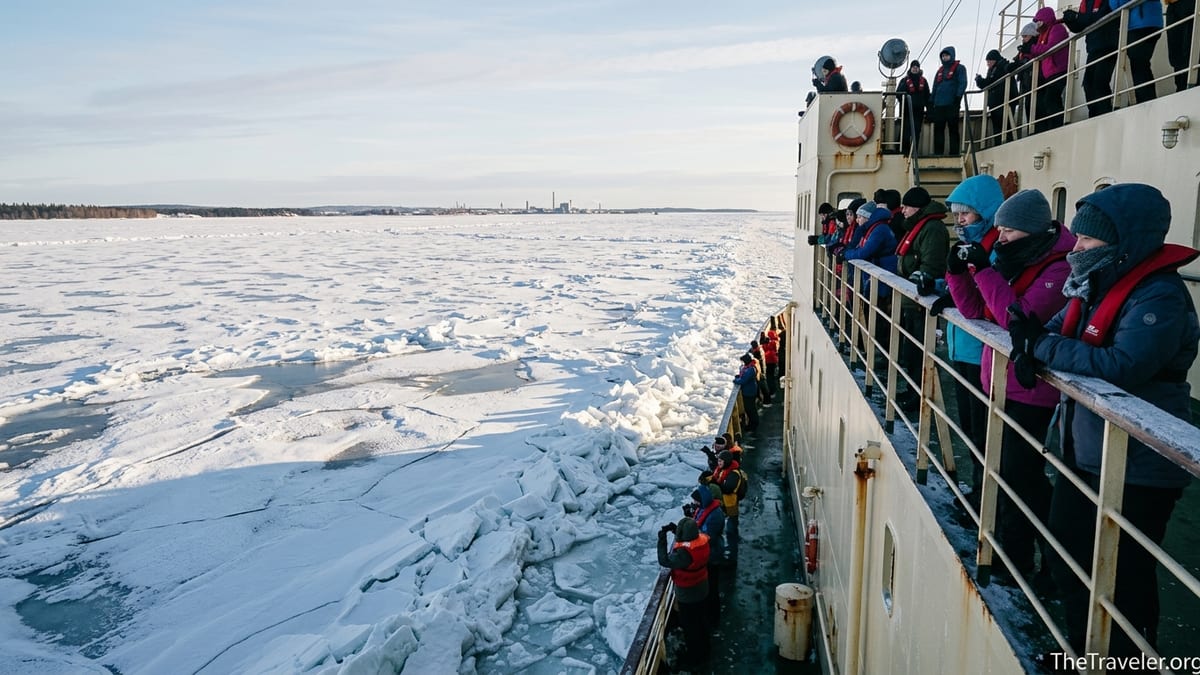
The walking-on-ice portion is another surprise for many visitors. Once the ship moors into the ice field, passengers can step off onto the frozen Gulf of Bothnia, wander a designated area, take photos beside the ship’s bow, and feel the crunch of sea ice under their boots. Conditions can be windy and brutally cold, especially in midwinter, and the “walk” is usually confined to a safety-marked zone. Expect a magical but fairly compact experience, not a long Arctic hike.
Because of these structured activities, it is worth mentally framing Sampo as a curated half-day experience rather than a loose, open-ended adventure. You will have free moments on deck to admire the landscape and warm up in indoor lounges, but the schedule is tightly choreographed. Travelers who arrive expecting hours of unstructured exploration sometimes feel rushed, while those who understand the format tend to appreciate how much is packed into each cruise.
Timing, Season, and Why Your Exact Date Matters
The Sampo season depends on real ice and typically runs from late December to early April, though exact start and end dates vary year by year depending on the Gulf of Bothnia’s freeze and thaw. In some recent seasons, departures ramped up only after sufficient ice thickness was reached, which meant late December start dates for regular cruises. On the other end of the season, warming in March and April can make ice conditions less predictable, occasionally affecting routes or the feel of the ice underfoot.
Given that variability, booking blindly for “winter” can lead to disappointments. For example, a traveler aiming for early December might discover closer to the date that cruises have not yet begun due to thin ice. Others who book very late in the season sometimes find that conditions are already shifting toward spring, with less dramatic ice fields. Before committing to flights and hotels, it is wise to confirm which dates Sampo is actually scheduled to run in the specific season you are planning for and to understand that early and late shoulder weeks may be more vulnerable to weather adjustments.
Time of day also changes the feel of the trip. Morning cruises in midwinter often take place in the low blue twilight that passes for daylight in northern Finland, with the sun barely skimming the horizon. Afternoon sailings later in the season may have brighter light and a slightly warmer feel, and some deep-winter departures can include sailing back as the light fades again. Travelers coming from southern latitudes are often surprised by how little daylight there is around the December and early January solstice, and this affects both your photos and your energy levels.
If you are trying to combine Sampo with other Lapland experiences such as husky safaris or Santa Claus Village in Rovaniemi, build in at least one buffer day on either side if your schedule allows. Winter weather can affect road travel times between Kemi and Rovaniemi, and in a region where your main goal might be to see the northern lights, having a degree of date flexibility is more valuable than squeezing everything into a single overstuffed 24 hours.
Costs, Inclusions, and the Real Price of the Trip
One of the biggest shocks for first-time visitors is how quickly the overall price of a Sampo experience climbs once transfers, meals, and add-ons are factored in. As of recent seasons, adult cruise tickets themselves are solidly in the premium-excursion category by Finnish standards, reflecting the specialized ship, short season, and small number of passengers per sailing. While exact rates shift each winter, travelers commonly report paying several hundred euros per adult when booking as part of a packaged day trip from Rovaniemi that includes bus transfers, the cruise, and sometimes a meal.
Booking directly for a cruise starting in Kemi without long-distance transfers can reduce costs. For example, a family staying in Kemi or arriving by train has been able to purchase “cruise only” tickets and then add a relatively inexpensive shuttle bus from Kemi city center or the train station to the Ajos port. By contrast, bundled excursions from Rovaniemi or even from across the border in Sweden often roll everything into a single, higher price. Agencies and tour operators add markup for coordination and guiding, which may be worthwhile if you prefer not to handle the logistics yourself.
What your ticket includes also varies by departure. Morning sailings generally include coffee or a welcome drink and access to the vessel’s interior spaces, plus the ice walk and floating experience, ship tour, and a participation diploma. Afternoon cruises frequently add a buffet lunch on board, which helps justify their slightly higher cost. Some guests expect an open bar or extensive snacks, but in practice food and beverage service is relatively modest, with emphasis on the lunch sitting rather than constant grazing.
If you are traveling as a couple or family, do a realistic budget breakdown before you book. Add together your cruise fare, road or rail transfers to Kemi, one or two nights of accommodation in either Kemi or Rovaniemi, winter clothing rental if needed, and incidentals such as restaurant meals and taxis. The all-in cost can easily approach or exceed what you might pay for multiple full-day excursions elsewhere in Lapland. That does not mean Sampo is poor value, but it is very much a once-in-a-lifetime splurge rather than a casual add-on.
Getting to Kemi: Transfers That Trip People Up
On a map, Kemi looks deceptively close to Rovaniemi, Lapland’s better-known tourist hub. In practice, the roughly 120 to 130 kilometer journey takes about 1.5 to 2 hours by road in winter conditions, and that is before you factor in check-in time at the port of Ajos outside Kemi itself. Many visitors underestimate this and attempt to squeeze a morning Sampo cruise into the same day as their arrival in Rovaniemi by plane or train, only to find the timing uncomfortably tight.
The simplest option is to book an organized day trip from Rovaniemi that includes round-trip bus transfers to Kemi, the Sampo cruise, and any SnowCastle or lunch arrangements. Operators run early-morning coaches from Santa Claus Village or central Rovaniemi hotels that are timed to meet specific sailings. This tends to be more expensive than arranging everything yourself but removes the stress of winter driving and port navigation. It also means that if minor delays occur on the road, the bus and the ship crew are at least in communication.
Independent travelers often choose the train. Finland’s national rail network connects Helsinki and other southern cities with Kemi, and there are daytime and overnight services that make it possible to arrive by sleeper train in the morning. From Kemi station, a shuttle bus or taxi can take you to the port. This is a popular option for visitors who want to avoid domestic flights, experience the romantic “Lapland night train,” and roll their Sampo trip into a broader rail journey through Finland.
Driving yourself is certainly possible and can be rewarding if you extend your trip to explore places like Oulu or the Swedish border towns around Tornio and Haparanda. However, winter roads in northern Finland demand respect. From December through February, you should expect snow-packed surfaces, icy patches, and darkness for much of the day. If you are not experienced with winter driving, or if your schedule hinges on making a single fixed departure, a shuttle or train plus local taxi is usually safer and less stressful than navigating national road 4 in a rental car under a tight clock.
What to Wear, Pack, and Realistic Comfort Levels
Photos of laughing passengers in bright red survival suits can make the Sampo experience look almost cozy, but Arctic reality is different. The survival suits are warm and buoyant in the water, yet underneath them you still need a proper winter base layer. Pack thermal long underwear, wool or synthetic socks (ideally two layers), and a warm fleece or sweater. In January and February, temperatures on the open deck can plunge well below freezing, and the wind chill over the ice is often the harshest element of the day.
On deck and during the ice walk, you will wear your own outerwear rather than the survival suit. That means a windproof insulated jacket, snow pants, or a serious ski shell paired with thick thermal layers. Footwear should be insulated, waterproof winter boots with good grip. Many disappointed travelers show up in city sneakers or thin fashion boots and quickly find their toes numb within minutes on the ice. Consider bringing disposable toe or hand warmers if you know you get cold easily.
Accessories make more difference than many people expect. A balaclava or neck gaiter under a hat helps seal out wind. Ski goggles or wraparound sunglasses can protect your eyes from both glare and blowing snow, especially on bright days in February and March. Gloves should ideally be a warm insulated pair plus a thinner liner so you can remove the outer glove briefly for photos without exposing bare skin for long.
Inside the ship, temperatures are much more comfortable. There are heated lounges, cafeterias, and corridors where you can warm up between forays on deck. However, the constant transition between indoor warmth and outdoor chill can be fatiguing. Travelers with young children or older relatives often appreciate bringing a small backpack with extra layers, spare mittens, a thermos of hot drink (if permitted), and simple snacks. The more self-sufficient you are with comfort items, the easier it is to enjoy the spectacle instead of counting minutes until the cruise ends.
Expectations vs Reality: Crowds, Photos, and Atmosphere
The romance of an icebreaker cruise naturally leads to high expectations: pristine Arctic silence, minimalist crowds, and endlessly photogenic moments of the bow smashing through sculpted ridges of sea ice. Some of that is real. At certain points, especially when the engines throttle down and the ship comes to rest in the ice field, the stillness and soft creaking of ice are incredibly evocative. On clear days you may see a pale sun haloing through thin clouds, with Sampo silhouetted against a white horizon like something out of an old polar expedition photograph.
What promotion photos do not always show is the number of people sharing those moments with you. Sampo carries a finite but substantial number of passengers per cruise, often with multiple tour groups on board. During popular holiday periods such as late December and early January, decks and gangways can feel busy. Expect to wait your turn for prime photo spots at the bow and for bridges or staircases when moving between decks, particularly just after check-in or when the ship first stops to let people onto the ice.
Photography itself is tricky in the Arctic environment. Phones and cameras drain their batteries much faster in sub-zero temperatures, and bare hands cannot stay on a metal camera body for long. Many seasoned travelers bring a second battery kept warm in an inner pocket, plus a simple wrist strap so they do not drop their phone on the ice. The light can be flat and blueish in midwinter, requiring some post-processing to bring out contrast, while March and early April often deliver stronger, more direct sunlight and crisper shadows on the ridged ice surface.
Language and guiding are generally well handled. English is commonly used for announcements and tours, and many crew members can answer questions about the ship’s history and icebreaking technology. Still, the experience is more observational than interactive. If you arrive expecting something like a theme park attraction with constant narration and theatrics, you may find the atmosphere relatively understated. Sampo feels more like a functioning work vessel that has opened its doors to guests, which is exactly its charm for many travelers.
Alternatives, Add-ons, and Who Sampo Is Best For
Not every traveler in Lapland needs to sail on Sampo to have a satisfying Arctic holiday. In recent years, other icebreaker-style experiences have appeared in the region, including cruises operating from Swedish ports closer to Luleå and day trips branded under different names in the northern Gulf of Bothnia. Some offer similar ice-floating sessions and ice walks in slightly different settings. If your itinerary is based in Swedish Lapland or on the Baltic coast far from Kemi, it can be more practical to consider one of those alternatives rather than reshaping your whole trip around a single Finnish port.
In Kemi itself, you can pair Sampo with the SnowCastle area, which is home to seasonal snow and ice structures, a snow hotel, and related winter attractions. Combining the cruise with time at SnowCastle, a night in an ice room, or a visit to the seaside park gives you more to do in the Kemi area and makes an overnight stay feel worthwhile. Many visitors also add a night or two in Rovaniemi to visit Santa Claus Village, take a reindeer or husky safari, or chase the northern lights on guided tours.
As a rule, Sampo is most rewarding for travelers who are genuinely excited by ships, polar history, and Arctic landscapes and who understand they are paying a premium for access to a very specific, unusual experience. Families with school-age children who are comfortable in the cold often rate the trip as a highlight, especially if the kids are old enough to appreciate the engineering and drama of the icebreaking itself. Very young children, travelers who dread cold weather, or those who primarily want cozy, low-effort winter activities may find other Lapland excursions better suited to their tastes and budgets.
If you are torn between Sampo and other big-ticket experiences such as multi-day husky safaris, glass igloo stays, or private aurora tours, consider your personal “wow factor.” For some, nothing beats watching an old icebreaker plough through meter-thick sea ice. For others, the memory of standing under rippling green auroras or driving their own dog team through forest trails will prove more powerful. Sampo is not the only way to feel the Arctic, but for the right traveler, it is a uniquely satisfying one.
The Takeaway
Before booking Icebreaker Sampo, it helps to strip away the Instagram gloss and look at the experience in realistic, practical terms. This is a tightly organized half-day excursion on a historic working vessel, operating in a harsh but beautiful Arctic environment with a limited season and a premium price tag. When expectations line up with that reality, most visitors step off the ship exhilarated rather than underwhelmed.
Choose your dates with care, allowing for both ice conditions and limited daylight. Budget not only for the ticket but for transfers to Kemi, appropriate clothing, and extra nights on the ground. Decide whether you want the simplicity of an all-inclusive day trip from Rovaniemi or the flexibility of organizing your own travel to Kemi by train or car. Pack serious winter gear, spare batteries, and a tolerance for cold, crowds, and a bit of logistical complexity.
For travelers who crave a once-in-a-lifetime brush with Arctic industry and the strange beauty of a frozen sea, Sampo delivers something that few other experiences can match. If you arrive informed, prepared, and honest with yourself about what you enjoy, the sound of that steel hull grinding through ice may well become one of the defining sounds of your time in Lapland.
FAQ
Q1. When does the Icebreaker Sampo season usually run?
Most seasons operate from roughly late December to early April, depending on when the Gulf of Bothnia freezes and when spring thaw begins. Exact dates vary each year based on ice and weather conditions.
Q2. How long is a typical Sampo cruise?
Expect around 3.5 hours for morning departures and up to about 4 hours for afternoon cruises, including time for the ice walk, ice-floating session, and guided ship tour.
Q3. Do I need previous swimming or cold-water experience for the ice floating?
No special swimming skills are required, but you should be comfortable in water and able to move independently in the survival suit. The floating area is carefully supervised and takes place in a sheltered pool cut in the ice beside the ship.
Q4. Is transportation from Rovaniemi or Kemi included in the ticket price?
It depends on how you book. Some packages sold through tour operators include round-trip transfers from Rovaniemi or Kemi, while “cruise only” tickets require you to arrange your own transport or pay separately for a shuttle.
Q5. How far is Kemi from Rovaniemi, and can I do the trip as a day tour?
The road distance is around 120 to 130 kilometers, typically 1.5 to 2 hours each way in winter. Many visitors do Sampo as a full-day excursion from Rovaniemi using organized tours that include early-morning pickup and evening return.
Q6. What should I wear on board and on the ice?
Dress in proper Arctic winter layers: thermal underwear, warm mid-layers, insulated jacket and pants, waterproof winter boots, hat, scarf or balaclava, and thick gloves or mittens. The survival suit for ice floating is provided, but it goes over your own clothing.
Q7. Is the Sampo cruise suitable for young children and older travelers?
Many families and older guests enjoy the cruise, but you should factor in cold temperatures, slippery surfaces, and multiple stairs on board. The ice-floating suit has minimum size requirements, so very small children may not be able to participate in that part of the program.
Q8. Can I see the northern lights during the cruise?
It is possible if you sail on a dark, clear evening, but most daytime departures focus on the ice and seascape rather than auroras. If seeing the northern lights is a priority, plan separate evening excursions on land around Kemi or Rovaniemi.
Q9. How far in advance should I book my Sampo ticket?
Popular holiday weeks and weekends can sell out weeks or months ahead, especially for packages from Rovaniemi. Booking early is wise if you have fixed travel dates or are traveling during Christmas and New Year.
Q10. Is Icebreaker Sampo worth the cost compared to other Lapland activities?
Value depends on your interests. If the idea of sailing a historic icebreaker through a frozen sea excites you, Sampo is a unique, memorable splurge. If you are more interested in cozy cabin stays, long husky safaris, or repeated aurora hunts, you may prefer to allocate your budget to those instead.