


More news on this day
On the morning of July 8, 1986, a freight train rolled toward the small city of Miamisburg, Ohio, in what began as a routine summer run and ended as one of the most consequential hazardous materials derailments in United States history, sending a towering toxic cloud into the sky and forcing tens of thousands of residents to flee.
Get the latest news straight to your inbox!
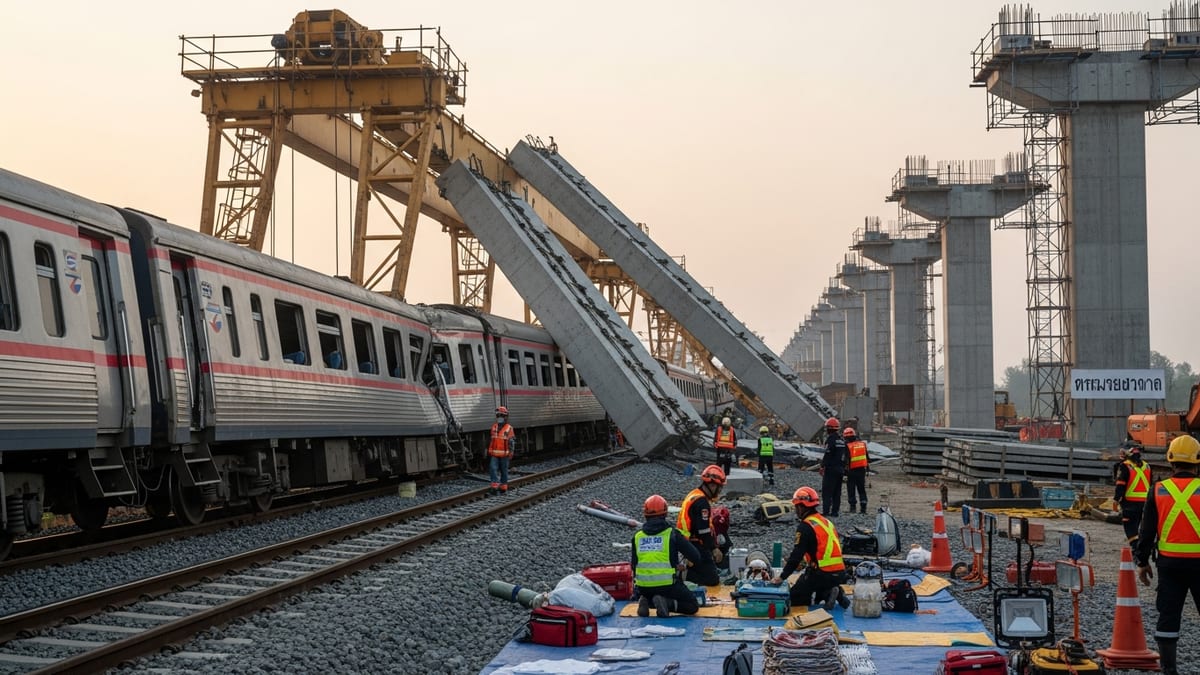
A summer afternoon turns into a toxic emergency
Public records describe how, at about 4:25 p.m. on July 8, 1986, a southbound Baltimore and Ohio freight train derailed on a trestle near Miamisburg, a community along the Great Miami River just southwest of Dayton. Fifteen cars left the tracks on the bridge, including tank cars carrying molten sulfur, tallow and a load of white, or yellow, phosphorus, a highly reactive chemical used in products such as rat poison, fireworks and luminescent coatings.
As one of the phosphorus tank cars ruptured and ignited, reports indicate that a dense, white plume rose roughly 1,000 feet above the derailment site. The chemical reacted with air and moisture to form a phosphorus oxide cloud that drifted over nearby neighborhoods. Initial injuries included respiratory problems and eye irritation, and emergency responders moved quickly to create a cordon around the burning train.
Published accounts note that an estimated 10,000 to 20,000 people were ordered out of the immediate area in the first hours after the crash, as the fire continued to burn and crews worked in heavy protective gear. Roads were closed, rail traffic was halted and the small city’s downtown briefly stilled as residents took shelter in schools, churches and public centers outside the affected zone.
By July 9, changing winds and an atmospheric inversion trapped the lingering phosphorus cloud close to the ground, prompting officials to expand the evacuation area dramatically. Some reconstructions of the event estimate that between 25,000 and 40,000 people were displaced across Miamisburg and surrounding communities, creating what was widely described at the time as the largest evacuation in Ohio history related to a train accident.
Five days of fire and one of the largest rail evacuations on record
Environmental and emergency management studies of the Miamisburg derailment portray a multi day struggle to contain the white phosphorus fire. The chemical’s tendency to reignite on contact with air meant that responders had to keep the tank car submerged under water sprays and firefighting foam, while also limiting runoff into nearby Bear Creek and the Great Miami River.
Reports from the period recount how, during salvage and cleanup efforts, a renewed release of fumes led to a secondary emergency that sent additional residents scrambling. An evening explosion like event during work on the tank car created another toxic plume, injuring dozens more people and triggering a second wave of evacuations that reached tens of thousands.
Across the five day incident, monitoring data collected by state and federal agencies tracked airborne phosphorus levels and potential contamination in soil and surface water. While long term environmental damage was ultimately assessed as limited, many local accounts reflect lingering concern about possible health effects, especially among those who lived closest to the derailment site or who reported acute symptoms during the evacuations.
The scale of disruption, together with the dramatic visuals of a brilliant white column of smoke rising above a Midwest river town, made Miamisburg one of the defining hazardous materials rail accidents of the 1980s. The evacuation was frequently cited in later technical literature as a benchmark scenario for community scale hazmat planning.
Legal fallout and community recovery
In the years that followed, Miamisburg’s derailment moved from a breaking news event to a complex legal and economic story. Court documents from consolidated lawsuits describe claims by residents, businesses and local institutions alleging property damage, lost income and health impacts tied to the release of phosphorus and the prolonged evacuation.
The litigation eventually reached the Ohio Supreme Court in a case often summarized under the title In re Miamisburg Train Derailment Litigation. The decision examined how federal rail safety laws intersect with state level tort claims arising from hazardous materials incidents, and it concluded that those federal rules did not automatically preempt all actions brought by residents affected by the derailment.
Beyond the courtroom, city and county records show that local leaders focused on both physical rebuilding and reputational repair. Cleanup work included removal of contaminated soil and long term monitoring at and around the crash site. Businesses sought to reassure visitors and customers that downtown Miamisburg was safe, while tourism and riverfront recreation gradually resumed.
For residents, recollections compiled in anniversary coverage emphasize both disruption and resilience. Families describe sudden departures with little more than a change of clothes, crowded stays with relatives or in temporary shelters, and the odd quiet that settled over empty streets. At the same time, community groups, churches and civic organizations mobilized to provide food, lodging and support as evacuees waited for word that it was safe to return.
Lessons for hazardous rail transport and emergency planning
Emergency management analyses published in subsequent decades highlight several lessons drawn from the Miamisburg derailment for communities that sit along busy freight corridors. One recurrent theme is the challenge posed by low probability, high consequence hazmat incidents, where a single tank car in an otherwise routine train can create outsized risk.
Studies of the response detail how coordination among local fire departments, state environmental agencies and federal teams evolved over the course of the incident, as crews confronted a hazardous material that behaved differently from more familiar fuels or industrial chemicals. Training materials that reference Miamisburg underscore the importance of specialized knowledge of substances like white phosphorus, including their reactivity with air, water and firefighting agents.
The derailment also fed into broader national discussions about rail routing, tank car design and emergency notification practices for trains carrying hazardous cargo. While specific regulatory changes cannot be traced solely to the Miamisburg incident, experts often group it with other major events of the era as a catalyst for re examining how and where dangerous goods move by rail through populated areas.
For cities that market themselves as riverfront or heritage travel destinations, the episode illustrates how quickly a transportation corridor can shift from economic asset to public safety concern. In Miamisburg, freight rail lines pass within sight of residential neighborhoods, historic districts and access routes used by visitors exploring the broader Dayton region.
Remembering Miamisburg in the context of modern rail disasters
Forty years on, the 1986 Miamisburg derailment is often revisited in coverage of more recent rail accidents involving hazardous materials, including high profile events elsewhere in Ohio. Commentaries draw parallels in the sight of dark or white plumes, emergency sirens and hurried evacuations, while also noting advances in monitoring technology and incident command practices since the mid 1980s.
Histories of rail safety point out that, even as derailment rates per mile have generally declined, the sheer volume of freight and the continued reliance on rail for chemicals and fuels keep the risk visible. Miamisburg stands as an early example of how a community’s emergency plans, communication channels and evacuation routes are tested when a hazmat train leaves the tracks close to homes and businesses.
For travelers passing through southwest Ohio today, little at ground level hints at the five day phosphorus fire that once dominated the skyline over the Great Miami River. Memorialization of the event tends to appear in local museum exhibits, historical markers and periodic anniversary retrospectives rather than large monuments.
Yet the derailment’s legacy persists in quieter ways: in updated hazmat response protocols, in legal precedents that frame community rights after industrial accidents, and in the collective memory of a city that once watched a summer afternoon turn into a toxic emergency within minutes. As rail routes continue to knit together industrial hubs and small towns alike, the story of Miamisburg remains a reference point for understanding what is at stake when hazardous cargo shares the tracks with everyday life.