


More news on this day
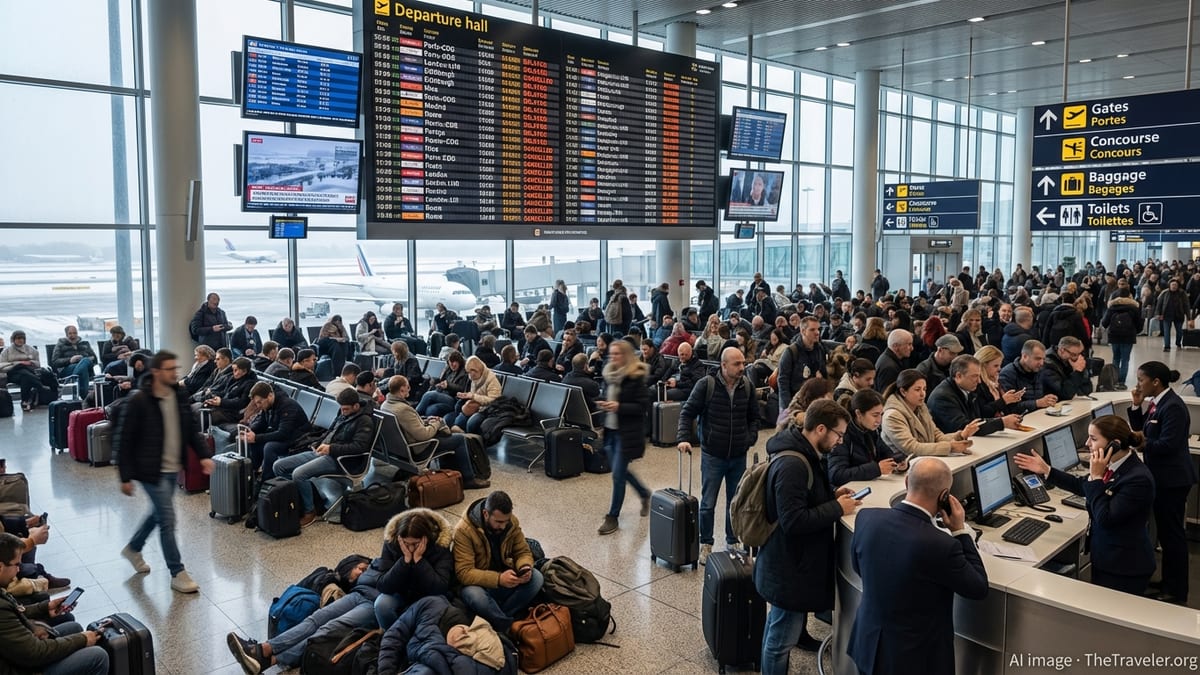
Air travellers across Europe faced another day of severe disruption this week, as operational data pointed to 1,905 delayed flights and 86 cancellations affecting key hubs in Austria, Norway, Denmark, France and beyond, with services operated by British Airways, Finnair, Eurowings and other major carriers among those hit.
Get the latest news straight to your inbox!
Delays and Cancellations Spread Across Northern Europe
According to flight tracking and airport monitoring data compiled over the past 48 hours, disruption has been concentrated in northern and central Europe, with airports in Austria, Norway and Denmark reporting a sharp increase in late and cancelled departures. The latest figures suggest 1,905 delayed flights and 86 cancellations across the region, underscoring how fragile airline schedules remain at the height of the summer travel rush.
Publicly available information indicates that Oslo Gardermoen and Copenhagen have both experienced knock on effects from earlier operational issues, with late arriving aircraft from other European hubs triggering further delays. Vienna International Airport has also seen schedule pressure, reflecting how even modest timetable slippage in one country can rapidly spread across interconnected networks.
Reports from aviation data providers show that many of the affected flights were short haul services within the Schengen area and to the United Kingdom, often operating on tight turnaround times. When one leg is delayed, subsequent rotations can quickly fall behind, resulting in a pattern of rolling disruption that can be difficult for airlines to recover during peak daytime periods.
British Airways, Finnair and Eurowings Among Affected Carriers
While no single airline has been solely responsible for the latest disruption, British Airways, Finnair and Eurowings feature prominently in the data. British Airways has faced delays at key gateways such as London Heathrow and Paris Charles de Gaulle, with some services into Oslo and Copenhagen arriving behind schedule and placing further strain on airport operations.
Finnair, which operates a dense network across northern Europe, has already warned of possible disruption linked to industrial action and airport constraints in parts of the continent this month. Combined with wider operational challenges, that has contributed to delays on feeder routes connecting Nordic cities with hubs such as Paris and Vienna, where aircraft and crew are in high demand.
Eurowings, part of the wider Lufthansa Group, has also been caught up in the congestion, particularly on its services to and from German and Austrian airports. Earlier decisions within the group to trim parts of the summer schedule in response to higher fuel costs and capacity constraints have reduced flexibility, leaving carriers with fewer spare aircraft to plug gaps when flights fall out of rotation.
Paris and Oslo Emerge as Key Pressure Points
Paris Charles de Gaulle and Oslo Gardermoen once again stand out as major pressure points, reflecting their roles as important connecting hubs for both intra European traffic and long haul routes. Data from recent days shows a significant volume of delayed departures and arrivals at Paris, affecting not only French carriers but also British Airways, Finnair, Eurowings and additional airlines using the airport for transfers.
In Oslo, delays have been compounded by a combination of local weather episodes, tight turnaround times and residual disruption from earlier cancellations. Published disruption trackers show that when services from London, Copenhagen or Vienna are held up, onward flights from Oslo to regional destinations in Norway or elsewhere in Scandinavia are vulnerable to knock on delays and, in some cases, outright cancellation.
The pattern reflects a familiar dynamic in European aviation: congestion at one or two large hubs can ripple outward to medium sized airports, particularly in peak season when spare slots, gates and staff are limited. As a result, passengers flying on seemingly routine routes such as Paris to Vienna or Oslo to Copenhagen can find themselves caught up in wider network problems that originate hundreds of kilometres away.
Weather, Capacity and Summer Demand Converge
The latest wave of disruption comes against a backdrop of sustained capacity pressure across European skies. Weather has played a recurring role in recent weeks, with thunderstorms and unstable conditions over parts of France, the United Kingdom and Scandinavia forcing air traffic managers to slow flows and reroute traffic, reducing the number of aircraft that can safely operate at any given time.
At the same time, airports and airlines are working close to their operational limits as summer demand remains strong. Recent European aviation summaries point to daily traffic levels that in some cases exceed pre pandemic norms, with air traffic control, baggage handling and ground operations all facing strain. When issues such as temporary staffing gaps, runway works or short lived technical outages occur, they can quickly translate into large numbers of delays.
The combination of high demand, constrained capacity and patchy weather has left carriers such as British Airways, Finnair and Eurowings with limited room to manoeuvre. Even when aircraft and crew are available, slot restrictions at busy hubs such as Paris and Oslo can force airlines to retime or cancel flights, a pattern that is likely to persist through the peak holiday period.
What Travellers Should Expect in the Coming Days
Consumer advocacy groups and travel information services suggest that passengers planning to fly through Paris, Oslo, Vienna, Copenhagen and other busy European hubs in the coming days should prepare for the possibility of further disruption. With schedules already stretched, any additional weather or technical issues could produce another spike in delays and cancellations.
Travellers are being advised by publicly available guidance to monitor flight status closely from 24 hours before departure, use airline apps or airport displays to track gate changes and allow extra time for connections, particularly when transferring between separate tickets. In some cases, airlines may offer free rebooking or flexible travel dates when forecasts or operational data point to significant disruption.
Under European and UK passenger protection frameworks, travellers whose flights are significantly delayed or cancelled for reasons within an airline’s control may be entitled to care, assistance or financial compensation. However, eligibility can depend on the exact cause of the disruption, the length of the delay and the route involved, meaning individual outcomes can vary widely even on the same day of irregular operations.