


Ocean cruises grab the headlines, but river cruises are where travel turns intimate. Ships glide past vineyard-cloaked hillsides, storybook villages and temple-studded riverbanks, docking right in the heart of historic cities and remote towns alike. If you are dreaming about your first river sailing or planning your next one, a handful of rivers stand out for sheer beauty and variety of experiences. Here is a look at the most beautiful river cruise destinations you can visit, and what it is actually like to be on board in each place.
Danube River: Storybook Europe From Regensburg to the Iron Gates
The Danube is the classic European river cruise, and for many travelers it is the first itinerary they ever book. Stretching from Germany to the Black Sea, it flows past imperial capitals like Vienna and Budapest, medieval towns such as Regensburg, and the steep vineyard slopes of the Wachau Valley in Austria. Modern ships from lines such as Viking, AmaWaterways, Avalon Waterways and Scenic work this route heavily, so you will find everything from slightly more budget-friendly options with compact cabins to high-end ships with splashy suites and fine dining.
On a typical one-week “Blue Danube” sailing, for example from Budapest to Passau, you might wake to sunrise over Budapest’s Parliament building, then spend the morning cruising through the Hungarian countryside before docking near Bratislava’s pastel Old Town. Another day might be devoted to Vienna, where many itineraries include a guided walk through the historic center and an evening classical concert. The river itself is a moving backdrop: low morning fog curling over the water, barges loaded with grain sliding past, and the spires of abbeys like Melk appearing suddenly around a bend.
Pricing varies widely. Recent brochures for seven-night Danube sailings in a standard French balcony cabin show lead-in cruise-only prices in the ballpark of 2,000 to 4,000 US dollars per person in shoulder season, with luxury lines charging more and Christmas market sailings often carrying a premium. Budget-focused operators and older hardware can sometimes undercut that significantly, especially in lower-deck window cabins, while promotions that include flights are common in the US and UK markets. When comparing fares, it is important to look at what is included: some lines bundle excursions, wine with meals and gratuities; others price excursions and drinks separately, which can add noticeably to your final bill.
First-time river cruisers should be aware that water levels on the Upper Danube can be unpredictable. In years with extreme heat or heavy rains, sections of the river may become too shallow or too swollen to safely navigate under bridges, and operators occasionally replace stretches of cruising with coach transfers. Reputable lines are upfront about this possibility and will keep you informed if an itinerary adjustment becomes necessary. Travel insurance that covers trip interruption is worth considering in case a low-water season impacts your plans.
Rhine River: Castles, Cliffs and Vineyard Terraces
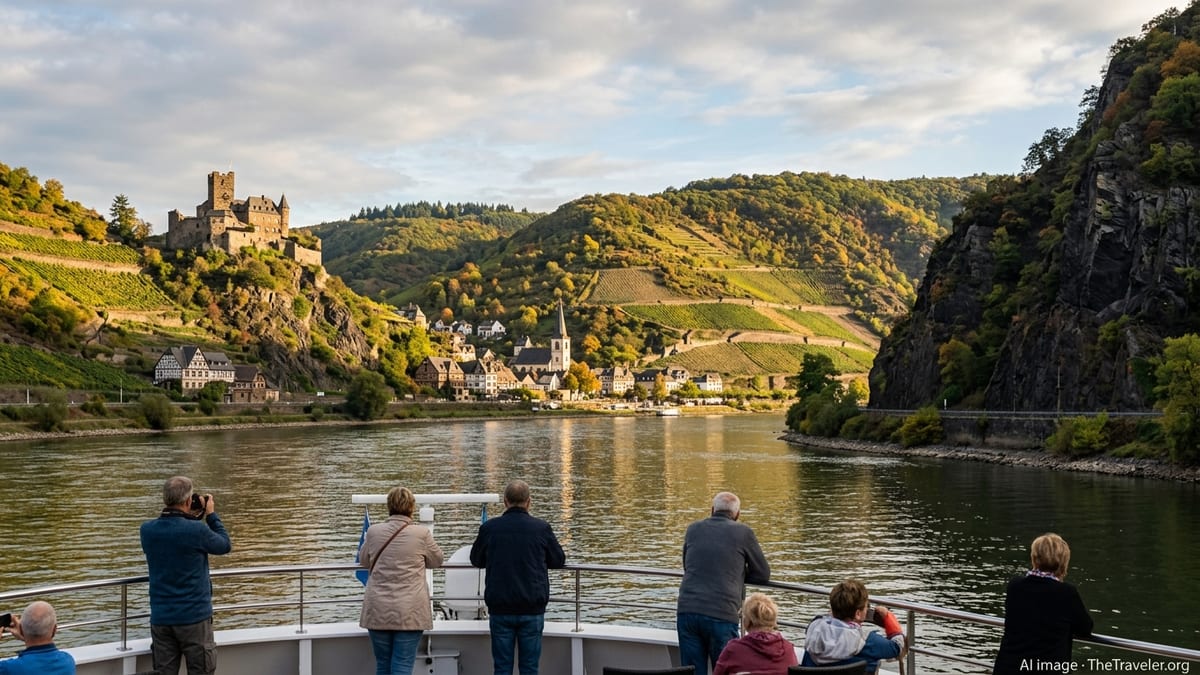
If the Danube is about grand capitals and varied cultures, the Rhine is about drama. The most photogenic stretch, the UNESCO-listed Upper Middle Rhine between Bingen and Koblenz, packs dozens of hilltop castles, terraced vineyards and tiny wine villages into roughly 40 miles. Many itineraries time this passage for daytime viewing, handing out maps that point out landmarks like Pfalzgrafenstein Castle, perched on its own tiny island, and the Lorelei rock, where the river narrows and legend says a siren once lured sailors to their doom.
Seven-night Rhine cruises commonly run between Amsterdam and Basel or reverse, linking the Netherlands, Germany, France and Switzerland. You might explore Cologne’s Gothic cathedral one day, sample Riesling in Rüdesheim the next, and then join an excursion to Strasbourg’s timber-framed Petite France district. Large river cruise brands including Viking, AmaWaterways and Avalon Waterways each operate several ships on the Rhine, and there are also smaller or regionally focused lines that aim at price-conscious travelers with more basic inclusions.
For travelers trying to gauge cost, travel advisors who specialize in river cruises often cite a realistic starting range of roughly 4,000 to 8,000 US dollars per person for a seven-night Rhine cruise in a balcony cabin on a mainstream to premium line, excluding flights, with higher-end, fully inclusive operators charging more. That figure usually covers most meals, daily excursions and coffee or tea, but beer and wine might be limited to lunch and dinner depending on the brand. If you are flexible on dates and cabin category, shoulder-season sailings in April or late October can be several hundred dollars per person cheaper than peak departures in June and September.
Spring and autumn are particularly beautiful on the Rhine. In April and early May, bright green vines, blossoming cherry trees and snow still dusting distant peaks create striking contrasts. By late September and October, grape harvest is underway, and you are likely to see workers in the vineyards and small trucks hauling crates of fruit down to riverside cellars. Cooler air and low-angle light make this an appealing time for photography from the open top deck, provided you bring a jacket and scarf.
Douro River: Golden Terraces and Port Wine Country
For travelers who have already sailed the big-name rivers, Portugal’s Douro has become one of the most coveted itineraries. Originating in Spain and cutting through northern Portugal, the Douro twists past steep, hand-built terraces planted with vines for Port and still wines. Most one-week Douro river cruises begin and end in Porto or nearby Vila Nova de Gaia, where historic Port lodges line the riverfront and the Dom Luís I Bridge frames classic views of tiled facades and bobbing wooden boats. Cruise critics note that Douro itineraries typically run from late March through November, reflecting the region’s long but very seasonal window for river operations.
Ships on the Douro are smaller than those on the Danube or Rhine because of lock sizes and bends in the river. Lines such as AmaWaterways, Uniworld, Viking and Avalon have all deployed custom-built vessels here in recent years, often with shallow drafts, sun decks built around small pools and large windows to maximize views of the terraced valley. Days usually alternate between tranquil cruising through the heart of wine country and guided excursions to quintas, or estates, where travelers can tour cellars, learn about the different Port styles and enjoy tastings paired with regional dishes like caldo verde soup and roasted cod.
In practical terms, the Douro can be more expensive per night than some central European rivers because of its shorter season, ship size limits and high demand. Travel agencies selling wine-focused departures typically advertise seven-night Douro sailings with hosted tastings and special events at a premium over standard departures, while local day-cruise operators in Porto offer shorter experiences that might cost closer to 50 to 100 euros per person for a few hours on the water with a simple meal. Because late-summer heat can be intense in the valley, many travelers favor late April to early June or late September to October for slightly cooler temperatures and softer light over the vineyards.
Porto itself rewards extra days on either end of a Douro cruise. Travelers often combine a sailing with a night or two in the riverside Ribeira district, where they can visit World of Wine, a large culinary and cultural complex overlooking the river, or take a separate six-bridges sightseeing cruise that focuses purely on the lower Douro near the city. Even a short pre-cruise evening spent watching the sun sink behind the bridge while locals fish from the quay can feel like a highlight of the trip.
Nile River: Ancient Temples and Desert Light
Few river journeys match the Nile in terms of historic impact. Most modern Nile cruises operate between Luxor and Aswan, a stretch that condenses thousands of years of Egyptian history into four or five days of travel. Ships depart close to the banks, so you step off into the swirl of daily life: children walking to school, farmers working their fields with the help of donkeys, and feluccas with white sails tacking silently across the current. Along the way, you visit monumental sites such as the temples of Karnak and Luxor, the Valley of the Kings, and the riverside temple at Kom Ombo.
Compared with European rivers, the Nile has a more varied fleet. You will find everything from simple, older riverboats with basic cabins to luxury ships with plunge pools and private balconies. International brands like Uniworld and Viking operate vessels here, as do a number of local Egyptian companies. Some itineraries include a short flight from Cairo to Luxor and then a four-night sailing to Aswan; others combine a longer cruise with extra nights in Cairo for visits to the pyramids and the Grand Egyptian Museum when it is open to the public.
Prices for Nile cruises can be relatively accessible if you choose a local operator and travel in summer, though you must be prepared for temperatures that regularly climb above 38 degrees Celsius. Many international tour operators quote approximate figures starting around the low thousands of US dollars per person for a weeklong package that includes internal flights, a four-night cruise, guided sightseeing and many meals, with upscale or boutique options costing more. Because political conditions and regulations can change, it is wise to book through a specialist or a well-established tour company that closely monitors local developments and provides clear information about safety and on-the-ground support.
The visual experience is what makes the Nile especially beautiful. The contrast of narrow ribbons of fertile green farmland against the bare ochre desert is striking when viewed from the sun deck. Sunrise and sunset are particularly memorable, when the low desert light turns the river copper and silhouettes the palm trees. In the evenings, many ships moor side by side along the bank, and you can hear music drifting across the water as travelers gather on deck to watch the moon reflect off the current.
Mekong River: Temples, Floating Markets and Rural Asia
In Southeast Asia, the Mekong River supports millions of people, and a cruise here offers an immersive look at river-based life. Most mainstream cruise itineraries operate on the Lower Mekong between Vietnam and Cambodia, typically covering the route between Ho Chi Minh City and Phnom Penh or Siem Reap. Ships such as AmaWaterways’ AmaDara and vessels from lines like Avalon Waterways and Scenic navigate muddy channels lined with stilt houses, lush rice paddies and small fishing villages where daily life still revolves around the water.
A standard seven-night Mekong itinerary might include visits to floating markets where vendors sell tropical fruit from low wooden boats, stops at river islands where families produce rice paper or coconut candy, and excursions by ox cart or tuk-tuk into the countryside. In Cambodia, many itineraries include solemn visits to memorial sites connected with the Khmer Rouge period, along with more uplifting experiences such as Buddhist temple blessings or silk-weaving workshops. This combination of cultural depth and gentle river scenery makes the Mekong one of the most rewarding but also emotionally complex river cruise destinations.
Because the Mekong’s climate is tropical, choosing the right season matters. Many travelers aim for the dry months roughly between November and February, when humidity and rainfall tend to be lower, though exact conditions can vary from year to year. Fares for these months are often at the higher end of the range. Shoulder seasons can be more affordable but may bring heavier rain and higher odds of itinerary tweaks if water levels affect navigation. Expect cruise-only prices for a weeklong sailing on an international brand to start in roughly the mid-thousands of US dollars per person, with some lines bundling pre- or post-cruise hotel stays in Ho Chi Minh City or Siem Reap into package pricing.
Western travelers should factor in the long-haul flight cost and time difference when planning. If you are flying from North America or Europe, it is sensible to arrive in Vietnam or Cambodia at least two days before embarkation to adjust to the time zone and reduce the risk of flight delays impacting your cruise. Many cruisers also choose to extend their trip with overland time in Hoi An, Hanoi, Angkor Wat or the Thai beaches to make the most of the long journey.
Columbia and Snake Rivers: Wild Landscapes of the American Northwest
For travelers based in North America who prefer to skip an international flight, the Columbia and Snake Rivers in the Pacific Northwest offer a scenic alternative. These rivers slice through the Columbia River Gorge, with its basalt cliffs and famous waterfalls, before continuing into the drier, canyon-streaked landscapes of eastern Washington and Idaho. Cruise lines such as American Cruise Lines and other regional operators run small ships here, often carrying fewer than 200 guests, which creates an intimate, expedition-like feel.
The typical itinerary runs between Portland, Oregon and Clarkston, Washington, covering about a week. Along the way, you might visit Multnomah Falls, one of the most photographed cascades in Oregon, or ride a coach up to viewpoints high above the gorge. Deeper inland, the Snake River winds through Hells Canyon, the deepest gorge in North America by some measures, where jet boat excursions take you past rugged cliffs and bighorn sheep habitat. The combination of temperate rainforest, basalt cliffs and open sagebrush country makes this journey unusually diverse for a single river cruise.
Cruise seasons on these rivers usually run from spring through autumn, with many departures clustering between April and early November. Spring trips showcase snowmelt-fed waterfalls crashing through green hillsides, while autumn brings wine harvest in nearby regions such as the Columbia Valley, where some itineraries offer tastings and vineyard visits. Because the fleet here is relatively small and itineraries include built-in excursions, per-night pricing often rivals or exceeds European premium river cruises, though you save on long-haul airfare if you live in North America.
These cruises also have a strong storytelling component. Onboard historians and guest speakers delve into the Lewis and Clark expedition, Native American history and the engineering of the river’s dam and lock system. If you are drawn as much to narrative and nature as to grand cities, the Columbia and Snake itinerary can feel like a moving seminar paired with big-sky vistas outside your cabin window.
Amazon River: Immersive Jungle Journeys
For travelers seeking something more adventurous, the Amazon River offers a very different style of river cruising. Rather than visiting centuries-old cities and vineyards, you spend your days slipping through flooded forests in small skiffs, listening for bird calls and watching for pink river dolphins or sloths in the canopy. Cruise companies that specialize in expedition-style travel operate small vessels in the Peruvian Amazon near Iquitos, as well as in Brazil, often with no more than a few dozen guests on board.
On a typical Amazon itinerary, mornings might begin with a dawn skiff ride when wildlife is most active, followed by guided walks on jungle trails or village visits that introduce you to local communities. Afternoon heat is often intense, so ships usually schedule another water-based outing as the day cools, often rewarding patient spotters with views of macaws, caimans and monkeys. While facilities on some Amazon boats are rustic, the higher-end vessels offer air-conditioned cabins, shaded observation decks and locally inspired cuisine featuring fish from the river and Amazonian fruits.
Because these itineraries are so remote, they are generally more expensive per day than most European river cruises, especially once you include the cost of flights into gateway cities such as Lima or Manaus. Packaged trips that combine time in cities, internal flights and four to seven nights on the river can run into several thousand US dollars per person, depending on cabin category and length. The physical demands are also higher than on European rivers: you will climb in and out of skiffs, walk on uneven jungle paths and contend with heat, humidity and insects. Travelers considering an Amazon cruise should be comfortable with a bit of expedition-style discomfort in exchange for access to one of the world’s most biodiverse regions.
Weather is a key factor. High-water season floods the forest and allows boats to penetrate deeper into tree-lined channels, while low-water season exposes more riverbank and sandbars and can concentrate wildlife near the remaining water sources. River cruise operators in the Amazon adjust outings and routes based on these conditions, so make sure you understand when your chosen departure falls in the local water cycle and what that means for likely wildlife viewing and activities.
The Takeaway
From the castle-studded cliffs of the Rhine to the terraced vineyards of the Douro and the temple-lined bends of the Nile, river cruises offer front-row seats to some of the world’s most beautiful landscapes. Unlike ocean voyages that often dock in industrial ports, river ships pull into the very heart of old towns and rural communities, turning every disembarkation into an easy stroll or a short coach ride to the sights you came to see. With fewer than 200 passengers on most vessels, the experience feels closer to a boutique hotel stay than a floating resort, and the scenery is a constant presence just beyond the rail.
Choosing the right destination comes down to what kind of beauty and cultural experience you value most. Europe’s Danube, Rhine and Douro deliver a tightly packed mix of history, food and architecture at a relaxed pace, while the Mekong and Nile add more intense cultural encounters and, at times, heavier emotional context. North America’s Columbia and Snake Rivers highlight dramatic geology and pioneer history, and the Amazon brings you face-to-face with dense jungle ecosystems. Each river has trade-offs in terms of cost, climate, comfort level and accessibility, so it pays to think honestly about your priorities before you book.
Whichever river you choose, it is wise to read recent traveler reports, pay attention to seasonal patterns such as water levels and heat, and work with a specialist or trusted advisor if you are investing in a higher-end trip. Focus on the overall value rather than the lowest headline fare: a sailing that includes most excursions, drinks and gratuities can end up costing less in practice than a cheaper base fare with many add-ons. Above all, remember that the real appeal of a river cruise is unhurried immersion. The most enduring memories often come not from the checklist of famous sites, but from quiet moments on deck as you watch daily life unfold along the water’s edge.
FAQ
Q1. What is the best river in the world for a first-time river cruise?
The Danube is often considered the best introduction because it combines famous cities like Vienna and Budapest with smaller towns and scenic countryside on relatively calm waters.
Q2. How much does a typical seven-night European river cruise cost?
Prices vary widely, but many mainstream and premium lines quote rough starting figures from around 2,000 to 4,000 US dollars per person in lower balcony cabins, with luxury or fully inclusive options costing more.
Q3. When is the best time of year to cruise the Rhine or Danube?
Late spring and early autumn are popular for comfortable temperatures and attractive scenery, though Christmas market sailings in late November and December are also in high demand despite colder weather.
Q4. Are river cruises suitable for younger travelers and families?
Yes, although the core demographic skews older on many lines. Some brands and itineraries are more family-friendly, particularly during school holidays, so it is worth checking age policies and onboard amenities.
Q5. How do river cruises on the Nile or Mekong differ from those in Europe?
Nile and Mekong cruises involve stronger cultural contrasts, warmer climates and, in some cases, more emotionally intense historical sites. Ships may be smaller and the daily rhythm often includes more time off the vessel in villages, temples or markets.
Q6. Do river cruise fares usually include excursions and drinks?
Many river cruise lines include at least one guided tour in each port and wine or beer with lunch and dinner. However, policies differ, so always read what is included carefully to avoid unexpected onboard expenses.
Q7. How worried should I be about water levels affecting my river cruise?
Water levels can impact certain rivers in some years, especially the Upper Danube and parts of the Rhine. Completely canceled cruises are relatively rare, but sections may occasionally be replaced by coach transfers when conditions require it.
Q8. Is a Douro River cruise very different from other European river cruises?
Yes. Douro ships are smaller, the river is narrower and more winding, and the focus is strongly on wine, food and rural scenery rather than large cities. Itineraries feel more intimate and relaxed but can be priced higher per night.
Q9. What level of fitness is needed for an Amazon or Mekong river cruise?
Travelers should be comfortable walking on uneven surfaces, climbing in and out of small boats and dealing with heat and humidity. Most operators can accommodate a range of abilities, but these itineraries are more physically demanding than typical European cruises.
Q10. How far in advance should I book a popular river cruise itinerary?
For in-demand routes such as the Douro, peak-season Danube or holiday sailings, booking six to twelve months ahead usually provides the best mix of cabin choice and pricing, especially if you prefer specific dates or cabin categories.