


Choosing between an adults-only cruise and a family-friendly cruise is no longer a simple question of whether you are traveling with kids. In 2026, the cruise industry offers sharply different onboard atmospheres, price structures, and itineraries depending on whether a ship is designed for child-free travelers or multi-generational groups. Understanding how those differences play out in the real world can help you decide which style of cruise is truly better for your next vacation.
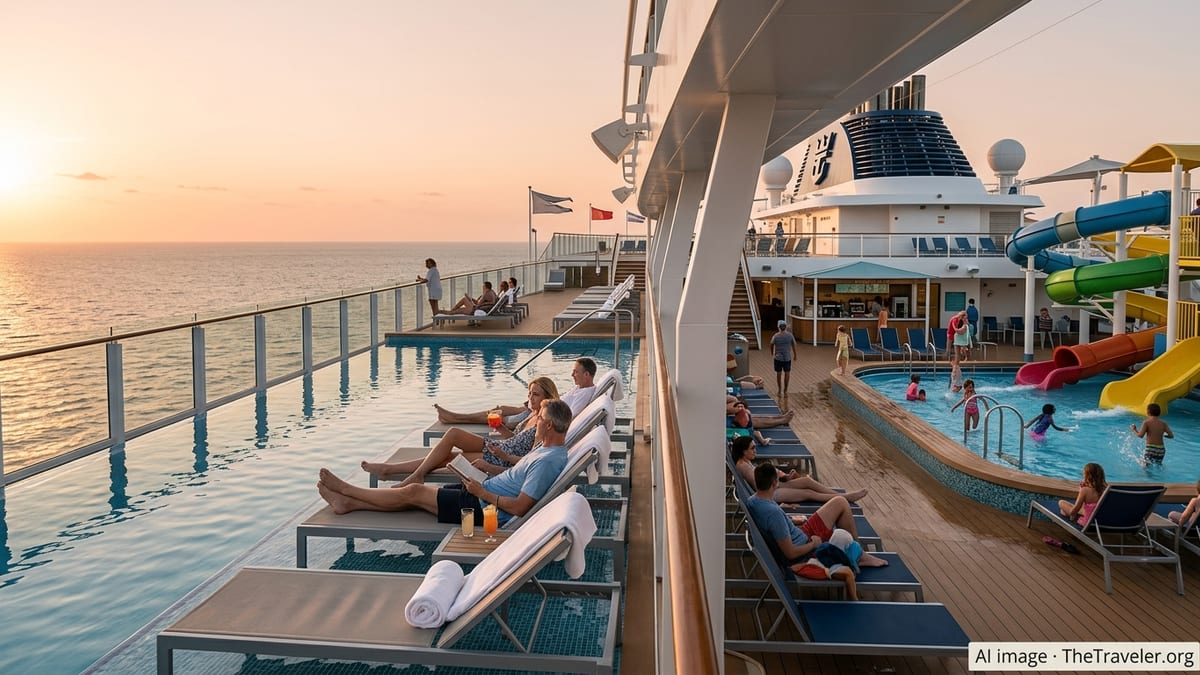
How Adult-Only and Family Cruises Differ in 2026
At the broadest level, adults-only cruises are designed for travelers aged 18 or 21 and over, with no children allowed onboard. Lines such as Virgin Voyages, Saga Cruises, and certain P&O and Marella ships market a quieter, more sophisticated environment, often with later nightlife, upscale dining, and wellness-focused amenities. On these ships you will not find character parades or water playgrounds aimed at small children, and the entertainment is curated with adults in mind.
Family-focused cruise lines such as Royal Caribbean International, Disney Cruise Line, Norwegian Cruise Line, Carnival Cruise Line, and MSC Cruises aim to keep all ages busy from morning to night. Their newest ships resemble floating resorts, with features like multi-story waterslides, kids clubs that run from early morning until late evening, character meet-and-greets, and family-friendly production shows. A sailing on Disney Wish or Royal Caribbean’s Icon of the Seas feels very different from a week on Virgin Voyages’ Scarlet Lady even if both itineraries visit similar Caribbean ports.
The differences are not just about who is allowed on board. Adults-only cruises tend to concentrate their resources on food, lounges, spa spaces, and late-night entertainment rather than large waterparks or sprawling kids facilities. Family ships, especially the newest megaships, devote prime real estate to kid-centric neighborhoods, sports courts, and family pools. Understanding where a ship invests its space and budget is key to choosing the right environment for your travel style.
It is also important to recognize that some family-oriented lines run individual sailings or specific ships that are designated adults-only, and many family ships include adults-only zones. For example, P&O Cruises’ Arcadia and Aurora are adults-only vessels, while other P&O ships include child-free sun decks and spa areas. Similarly, Royal Caribbean and Carnival ships offer 18-plus solariums and retreat-style spaces that give adults an escape from the family buzz without committing to a fully child-free cruise.
Real-World Price Comparisons: Who Really Costs More?
One of the biggest myths around adults-only cruises is that they are always more expensive. In practice, pricing often depends on what is included. Virgin Voyages, for example, positions itself as a “premium-inclusive” adults-only brand with Wi-Fi, gratuities, basic non-alcoholic drinks, group fitness classes, and all specialty dining included in the fare. A six-night Caribbean sailing from Miami to Honduras, Mexico, and Bimini might start around a mid-range price per person before taxes and fees for an inside or sea-view cabin, yet it wraps in many extras that other lines charge for separately.
By contrast, a large family-friendly line like Royal Caribbean can advertise eye-catching base fares on similar Caribbean itineraries. Independent analyses in 2026 show that Royal Caribbean sailings in the Caribbean, Bahamas, and Bermuda are on average more than 60 percent cheaper than Disney Cruise Line on a base-price basis for much of the year, and typically cheaper than Virgin Voyages at first glance. However, once you add daily gratuities, Wi-Fi packages at roughly 15 to 25 dollars per device per day, and specialty dining charges that can range from about 35 to 80 dollars per person per meal, the final bill can narrow the gap with a more inclusive adults-only fare.
Disney Cruise Line remains at the top of the price spectrum for mainstream family cruises. Travel writers and comparison sites in 2026 regularly note that Disney sailings can cost roughly half again to nearly double comparable Royal Caribbean itineraries to destinations like the Bahamas and Caribbean, particularly on newer ships such as Disney Wish, Treasure, and Adventure. A family of four booking a seven-night balcony cabin in peak summer might easily see a total fare several thousand dollars higher on Disney than on a non-Disney family line, before adding premium experiences or concierge-level cabins.
Budget-conscious families often find stronger value on Carnival or MSC, where base fares on older or mid-sized ships can undercut Disney and Royal Caribbean significantly. Meanwhile, adults without children often discover that the apparent premium of an adults-only brand like Virgin Voyages or an adult-centric line like Viking Ocean is partially offset by included amenities and a lack of constant upcharges. The “better” financial choice depends on whether you prioritize a low upfront price or a simpler, more inclusive bill at the end of the cruise.
Onboard Atmosphere: Vibe, Noise Level, and Social Life
Atmosphere is where the gap between adults-only and family cruises really opens up. On a Virgin Voyages ship, you can expect a playlist-driven vibe in public spaces, more contemporary design, and late-night events such as Scarlet Night pool deck parties, drag brunches, and immersive theater performances that lean into adult humor and themes. Bars and lounges stay active well into the early hours, and the average passenger age often skews from mid-20s to mid-50s, with a mix of couples, solo travelers, and friend groups.
On a large family ship during school holidays, the experience is entirely different. Onboard a Royal Caribbean Oasis- or Icon-class ship, for example, the Boardwalk, Surfside neighborhood, and Splashaway Bay can be packed with young families by mid-morning. Teens cluster around sports courts, FlowRider surf simulators, and arcades, while younger kids bounce between the kids club and pools. The soundscape includes laughter, running feet in corridors, and excited chatter, especially on sea days. After dinner, you might find Broadway-style productions, ice-skating shows, and family game shows drawing multi-generational crowds.
Even within the same brand, different ships can feel worlds apart. A smaller, older Carnival ship sailing a short three-night itinerary from Florida may lean heavily into party energy, with loud poolside music and late-night deck parties that appeal to budget-minded groups of friends. Meanwhile, a Disney cruise to its private islands may feel more curated and orderly, with structured character appearances, early dinner seatings, and many children tucked into bed by 10 p.m., leaving the lounges comparatively calmer later at night.
Adults who prefer a quieter, more spa-like atmosphere often gravitate toward adult-only cruises or adult-oriented premium lines such as Viking Ocean, which are known for subdued entertainment, enrichment lectures, and a focus on dining and destination immersion rather than loud pool games. Those who enjoy a lively, high-energy environment and do not mind sharing spaces with children might find the buzz of a family megaship more exciting than a quieter, more restrained adults-only vessel.
Cabins, Dining, and Amenities: What You Actually Get
Cabin design and amenities are tailored differently for adults-only and family cruises. On adult-only lines, cabins often prioritize stylish design, mood lighting, and features aimed at couples or solo travelers. Virgin Voyages’ Sea Terrace cabins, for example, feature convertible beds that can be arranged for lounging or sleeping, along with hammocks on many balconies for quiet relaxation. Storage and room layouts are built around two adults rather than four-person families.
Family-focused ships, by contrast, devote many cabins to flexible sleeping arrangements. Royal Caribbean’s newest ships offer Surfside Family Suites, split-level Ultimate Family Suites with slides and game areas, and interior cabins with bunk-style Pullman beds that can sleep three or four. Disney ships are known for split bathrooms that allow a parent to bathe a child while another family member uses the sink, a small but practical design tweak that matters when four people share one room.
Dining tells a similar story. Adults-only lines invest heavily in restaurant variety and quality, often eliminating the traditional main dining room and buffets in favor of multiple small venues. Virgin Voyages includes more than 20 eateries, many with menus from chefs linked to Michelin-starred restaurants, all included in the fare without extra cover charges. Wine bars, craft cocktail lounges, and specialty coffee venues underscore the adult focus.
On family ships, dining structure can range from casual buffet-and-burger-joint setups to rotational dining like on Disney, where families cycle through themed restaurants such as an animation-inspired venue or a Marvel-themed space. Royal Caribbean’s Icon-class ships may include everything from hot dog stands on the Boardwalk to upscale specialty restaurants requiring reservations and additional fees. Kid-friendly menus and early dining times are standard. While adults can absolutely enjoy the food on these ships, the system is built first around feeding large numbers of families efficiently.
Entertainment and Activities: Waterparks vs Wellness
Entertainment programs reveal some of the sharpest contrasts between adults-only and family cruises. On a family megaship, you can expect top-deck waterparks with several multi-story slides, splash pads for toddlers, and poolside games throughout the day. Royal Caribbean’s Icon-class ships, for instance, feature six full-size waterslides, a dedicated Surfside neighborhood aimed at young families, and headline attractions like surf simulators and aquatheaters. Disney ships complement their signature AquaDuck and AquaMouse water coasters with live musicals based on popular films, pirate-themed deck parties, and constant character appearances.
Adults-only ships allocate that same square footage very differently. Rather than a waterpark, you might find a larger spa thermal suite, additional hot tubs, and extended sundecks with daybeds and cabanas. Virgin Voyages focuses heavily on group fitness classes, sunrise yoga, and wellness activities during the day, shifting into nightlife anchored by DJ sets, aerial performances, and cabaret-style shows after dark. Viking Ocean and other adult-oriented lines substitute water slides with observation lounges, libraries, and live classical or jazz performances.
The activity schedule highlights another dividing line. Family cruises feature scavenger hunts, science workshops, craft sessions, teen dance parties, and supervised kids club sessions broken down by age groups, often from early morning through late evening. Adults can dip into trivia, wine tastings, dance classes, and casino tournaments, but much of the programming is deliberately built around families vacationing together. Adults-only cruises, on the other hand, stack the daily schedule with mixology classes, spa seminars, cooking demonstrations, casino play, and late-night comedy without needing to fit around nap times or bedtime hours.
For some travelers, the presence of children in shows and pool areas does not detract at all from their enjoyment; in fact, watching kids delight in shipboard attractions can be a highlight. For others, especially couples on a honeymoon or friends celebrating milestone birthdays, the ability to lounge by a pool without cannonballs or to attend a comedy show without content being toned down for families is a major reason to choose an adults-only cruise.
Private Islands and Shore Experiences
Many major cruise lines now operate private islands or beach clubs that further differentiate the adults-only and family experiences. Disney’s Castaway Cay and its newer Bahamian destination, Lookout Cay, are classic examples of family-focused private islands, featuring calm lagoons, supervised kids clubs on the sand, character greetings, and family bike paths. While both islands have adults-only beach zones, much of the atmosphere remains based around children, with water play structures and family snorkeling areas.
Royal Caribbean’s Perfect Day at CocoCay mirrors this approach with a massive waterpark, wave pools, family beaches, and dedicated zones for young kids and thrill-seeking teens. Even here, however, the line has carved out an upscale adults-oriented section in the form of Coco Beach Club and dedicated 18-plus pool spaces, offering a quieter experience for those who pay for access or choose the right area of the island.
Adults-only cruise brands offer different types of private experiences. Virgin Voyages guests visiting Bimini Beach Club in the Bahamas encounter a curated, music-driven adults-only beach club with pool parties, cabanas, and late-night bonfires, and no children in sight. The atmosphere feels closer to a stylish beach club in Miami or Ibiza than a traditional family beach day. Adult-oriented lines in Europe sometimes use small, remote ports where the focus is on cultural sightseeing and wine tasting rather than beach toys and inflatable water trampolines.
On regular port days, adults-only cruises frequently lean into longer stays in port and later departures, recognizing that their guests are more likely to enjoy late dinners ashore and evening cocktails. Family cruises prioritize excursion options suitable for children, from dolphin encounters in Cozumel to zip-line parks in Jamaica and character-hosted beach days. Those differences matter if your ideal vacation is strolling a wine bar in Santorini at sunset versus racing back to the ship after a morning at a waterpark.
Who Should Choose Adults-Only Cruises vs Family Cruises?
Adults-only cruises tend to be a better fit for couples seeking romance, groups of friends celebrating milestone birthdays or bachelorette trips, solo travelers who prefer quieter nights, and repeat cruisers who have already done the classic family megaship experience. A couple in their 30s might choose a five-night Virgin Voyages sailing from Miami knowing they will find late-night DJ sets, craft cocktails, and creative dining rather than character parades and children’s choirs. Empty nesters might favor adult-oriented lines like Viking Ocean or Saga for their small-group excursions and educational lectures.
Family cruises clearly excel for travelers bringing children, especially if the kids enjoy activities that revolve around characters, splash pads, and socializing with peers. Parents with grade-school-aged children frequently point to Disney Cruise Line as the gold standard in terms of kids clubs, shows, and service, acknowledging that the cost is high but the payoff in child happiness can be enormous. For families with teens, many 2026 rankings highlight Royal Caribbean as a top choice because of its adrenaline-focused activities, from rock climbing walls and zip lines to surf simulators and multi-slide waterparks.
Multi-generational groups, where grandparents, parents, teens, and toddlers all travel together, often find family megaships the most flexible option because they offer something for every age. A large Royal Caribbean or Norwegian ship, for example, allows grandparents to enjoy quieter lounges and the adults-only solarium while kids are entertained in the youth clubs and parents try the waterslides or relax in the spa. It is more challenging for such diverse age groups to share an adults-only cruise, because children are simply not permitted.
The choice is less clear-cut when adults without children at home consider sailing on a family ship simply because of price or itinerary. Many adults enjoy Disney or Royal Caribbean cruises even when traveling without kids, particularly if they appreciate elaborate stage productions and theme-park-style design. Others discover that they rarely use the kid-focused amenities they effectively subsidize, and that they get more value out of an adults-only ship where every venue is designed with their interests in mind. Honest reflection on your tolerance for noise, your preferred bedtime, and how you want to spend sea days can guide the decision better than any marketing slogan.
Timing, Itineraries, and When “Family” Ships Feel More Adult
The time of year you sail can have as much impact as the cruise line you choose. Family-friendly ships during peak school holidays, such as spring break and summer, naturally fill with children and teens, and the onboard energy reflects that. The same ship on a two-week transatlantic relocation cruise in October may feel almost adult-oriented, with far fewer children and a schedule tilted toward lectures and live music rather than character appearances.
Adults who want the hardware and amenities of a family megaship but a calmer vibe often look to longer itineraries, shoulder-season dates, and less kid-centric destinations. A twelve-night Mediterranean cruise in late September on a Royal Caribbean or Celebrity ship, for instance, will typically have a higher average age and quieter pools than a three- or four-night Bahamas run in July. Similarly, itineraries that include more remote or culture-focused ports, such as Northern Europe fjord sailings or Japan routes, often attract an older, more adult-heavy passenger mix even on family brands.
Adults-only lines are also pushing into broader itineraries. Virgin Voyages continues to expand from Caribbean and Mediterranean routes into longer repositioning voyages and seasonal sailings from ports such as Los Angeles, with Panama Canal crossings and Alaska itineraries planned around 2026. Adult-oriented lines like Viking Ocean and Saga have long emphasized destination-rich routes to Scandinavia, the Mediterranean, and Asia, often including overnights in ports such as Venice, Barcelona, or Tokyo that enable late-night exploration.
It is worth considering how much time you plan to spend onboard versus ashore. Travelers who view the ship as the destination in itself, eager to ride every waterslide and test every restaurant, may lean toward large family ships regardless of age. Those who pick cruises primarily for the destinations and shore excursions, and who treat the ship as a comfortable floating hotel with good food and a quiet spa, may find an adults-only or adult-oriented line more aligned with their priorities.
The Takeaway
The question of whether adults-only cruises or family cruises are “better” has no universal answer. Instead, it hinges on who you are traveling with, what kind of atmosphere relaxes you, how sensitive you are to noise and crowds, and how you prefer to allocate your vacation budget. Adults-only cruises concentrate resources on food, wellness, and nightlife for grown-ups, and often simplify pricing by including items like Wi-Fi and gratuities. Family cruises, especially on major brands such as Disney and Royal Caribbean, deliver unmatched entertainment for children and teens, extensive kids clubs, and private islands designed for all ages.
If you are a couple, a group of friends, or an empty nester looking for sophisticated dining, late nights, and quiet pool decks, an adults-only cruise line such as Virgin Voyages or an adult-oriented line like Viking Ocean is likely to feel more tailored to your needs. If you are traveling with children or planning a multi-generational reunion, the variety and infrastructure on a large family ship will almost certainly provide a smoother and more entertaining experience for everyone involved.
The most reliable way to decide is to start with your non-negotiables. If you cannot imagine your vacation without waterslides and character breakfasts, a family cruise is the obvious choice. If your dream is sipping a cocktail in a peaceful infinity pool with no kids around, then an adults-only cruise is the better match. Once you are clear on the atmosphere and inclusions that matter most, compare a handful of real sailings on specific dates, tallying up the total cost after extras, and choose the ship and sailing that align best with your travel style rather than the label on the brochure.
FAQ
Q1. Are adults-only cruises always more expensive than family cruises?
Adults-only cruises are not always more expensive. Their base fares can look higher, but they often include Wi-Fi, gratuities, and specialty dining that family lines charge separately for. When you add those extras on a family ship, the total bill can be similar.
Q2. Can adults enjoy a family cruise even if they are traveling without children?
Yes. Many adults enjoy family-branded ships for their entertainment, dining variety, and itineraries. Broadway-style shows, comedy clubs, spas, and specialty restaurants on lines like Royal Caribbean, Disney, and Norwegian can appeal to adults even when they are not traveling with kids.
Q3. Which cruise lines are fully adults-only in 2026?
Virgin Voyages operates adults-only ships, generally for guests 18 and over. In the United Kingdom market, Saga Cruises is also adults-only, and certain ships from P&O and Marella are designated exclusively for adults on specific itineraries.
Q4. How do Disney Cruise Line prices compare to other family cruise options?
Disney Cruise Line is usually the most expensive mainstream family option. Independent comparisons in 2026 regularly show Disney’s Caribbean and Bahamas sailings costing roughly half again to nearly double the price of similar Royal Caribbean itineraries, especially on newer Disney ships.
Q5. Is the food better on adults-only cruises?
Food quality is subjective, but adults-only lines like Virgin Voyages place heavy emphasis on restaurant variety and chef-driven menus, with specialty dining included in the fare. Family lines also offer excellent food, yet their primary goal is to serve many different age groups efficiently, so the experience can feel more mass-market on busy sailings.
Q6. Will I find quiet spaces on a family cruise ship?
Most large family ships include adults-only or adults-focused areas, such as solariums, spa thermal suites, or retreat-style sun decks. These spaces are designed to be quieter, though the overall ship will still reflect a family atmosphere, especially during school holidays.
Q7. Are adults-only cruises better for solo travelers?
Adults-only cruises can be a strong choice for solo travelers because many events and venues are designed for adult socializing. Some lines host solo meetups, shared dining tables, and bar-centric entertainment that make it easier to meet other adults than on a ship dominated by families.
Q8. Do adults-only cruises visit different ports than family cruises?
Itineraries overlap, but there are differences. Adults-only and adult-oriented lines may favor longer stays, more culturally focused ports, and late departures, while family lines emphasize beach days, private islands, and kid-friendly excursions. Both styles visit popular regions such as the Caribbean and Mediterranean.
Q9. What is the minimum age for an adults-only cruise?
Minimum age policies vary by line. Virgin Voyages typically requires all guests to be at least 18, while some other adult-focused brands set a minimum age of 16 or 21 on certain sailings. It is important to check the specific line’s policy before booking.
Q10. How do I decide between an adults-only and a family cruise for a couples getaway?
Start by considering your ideal onboard atmosphere. If you want quiet pools, adult-focused entertainment, and a higher chance of late-night nightlife without children, an adults-only cruise is the better fit. If you are drawn to large ships with big shows and do not mind kids around, a family line in a quieter season may work well.